


From David Lynch to Agnès Varda: 10 movies that will change your perspective on life

‘This movie will change your life’ is the kind of gushing review of a film that you’d find on a billboard in Piccadilly Circus or a bus going through rural Hampshire. Yet, when you go to see the said film, you find yourself walking out with the same sigh of disappointment. The review had, indeed, lied; your life hadn’t been changed by Transformers: Rise of the Beasts in 3D.
Yet, this isn’t to say that cinema doesn’t have the power to dramatically alter your perspective on life, with some of the greatest films of all time providing audiences with new ways to look at life, loss, love and the mysteries of the wider universe. Indeed, some filmmakers have made careers trying to specifically do just this, with the idiosyncratic German creative Werner Herzog crafting existential documentaries that directly probe your conscience.
Elsewhere, other movies aim to capture a slice of life through epic pieces of cinema that break down the life and times of an entire family. The scope and size of such films make them difficult to ignore, sticking in your mind as if they were unforgettable tapestries that embody something greater and more significant than their mere three-hour runtime.
Explore below ten movies that will genuinely change your perspective on life, ranging from niche documentaries to grand cinematic epics.
10 movies that will change your life:
Dreams of a Life (Carol Morley, 2011)
Carol Morley’s British documentary from 2011, Dreams of a Life, is the kind of film that came and went at the time but has changed the life of anyone who has been lucky enough to see it. Telling the true story of a woman who died alone in her flat in London but whose body wouldn’t be found till three years later, this sad tale is one that speaks to existential loneliness and will have you calling your estranged loved ones right after.
The film is essentially a biopic of a completely normal person who lived an extraordinary life, with Morley speaking to her close friends and colleagues, who each discovered more about the central individual as the film went on. A truly beautiful film, Dreams of a Life demonstrates the value of human connection.
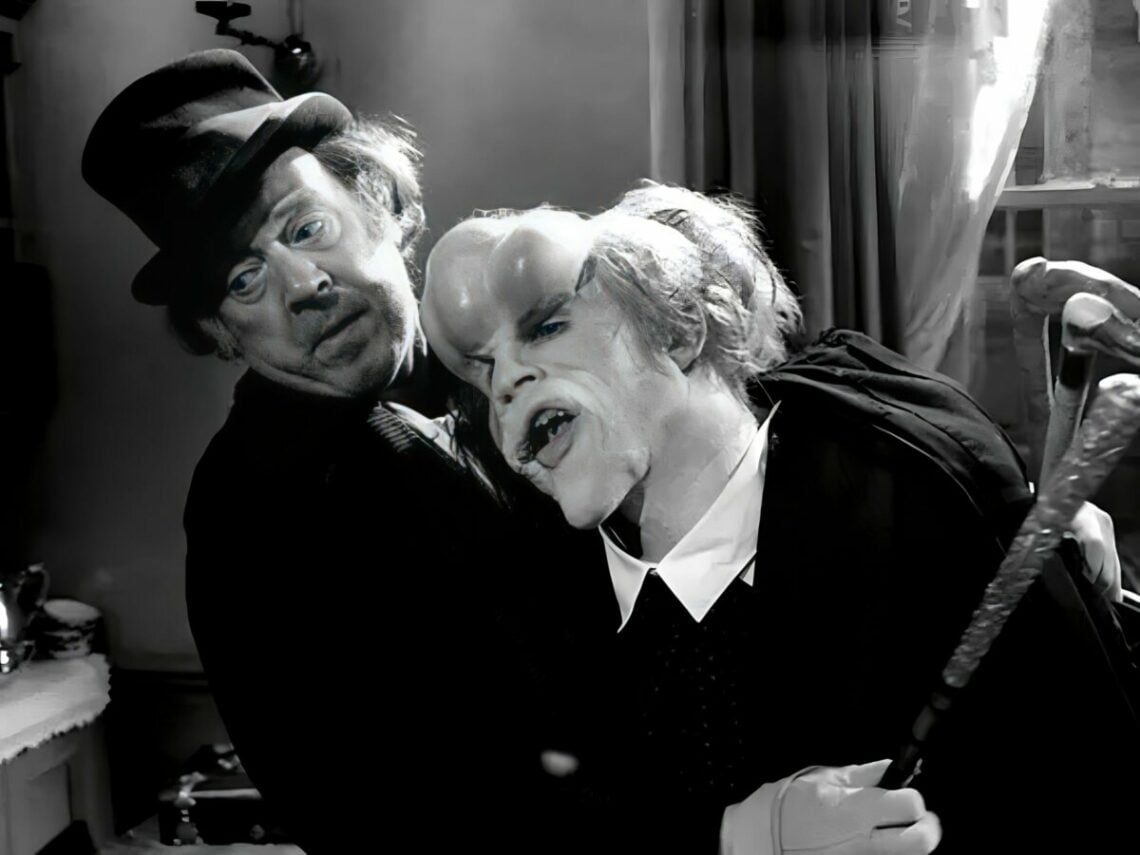
The Elephant Man (David Lynch, 1980)
If any movie on this list is going to make you cry, it’ll probably be The Elephant Man. Arguably David Lynch’s most emotional work, the movie sees John Hurt take on the role of John Merrick, whose severe bodily deformities cause him to be treated as a mere animal by others. The Elephant Man might be set in Victorian-era England, but its message is pretty universal. The kindhearted Merrick is just as normal as anyone else, and it is important not to judge anyone by appearance.
In fact, Merrick embodies the meaning of humanity considerably better than anyone in the film, always assuming the best of others. Despite the immense struggle, he remains positive and full of hope, with Lynch’s film acting as a true reminder of what it means to be kind and live a purposeful life. While The Elephant Man has a tragic end, it might just inspire you to consider any prejudices and judgements you might unconsciously hold.
Eternal Sunshine of the Spotless Mind (Michel Gondry, 2004)
Anyone who has ever experienced a breakup will look at Michel Gondry’s 2004 masterwork and week at the accuracy of its poetry. Starring Jim Carrey in one of his first dramatic roles alongside a red-haired Kate Winslet, the film follows two former lovers who agree to undergo a procedure to erase their memories of each other in order to better move on with their lives and form new connections without the guilt of the past.
A melancholy study on the beauty of human connection, Gondry’s film, penned by the great Charlie Kaufman, suggests that true love is possible without the pain and emotions you must also dedicate to any good relationship.
Harold and Maude (Hal Ashby, 1971)
Dark humour and a powerful reminder to stick to your own guns intersect in Harold and Maude, which will have you wiping your eyes one moment and laughing out loud the next. In Hal Ashby’s charming romantic comedy, the young Harold meets the 79-year-old Maude and the pair bond over a love for funeral services. While Harold likes to be reminded of death, funerals inspire Maude to appreciate life; soon, the pair strike up an unlikely relationship from which they can both learn.
As Harold constantly stages fake suicides, much to his parents’ annoyance, Maude lives freely in an old railroad car. She isn’t phased by rules, and soon Harold finds a new appreciation for life as he spends more time with her. Tender, witty and extremely poignant, Harold and Maude is a classic for a reason: there’s no denying its life-altering qualities.
Ikiru (Akira Kurosawa, 1952)
Japanese filmmaker Akira Kurosawa is most popularly known for his iconic samurai action flicks, yet one of his very best works came in the form of a gentle human drama. 1952’s Ikiru tells the story of a bureaucrat who desperately searches for the meaning of life after years of dedicating his life to his job, with his recent diagnosis of terminal cancer giving him an entirely new perspective.
Indeed, it’s not just the protagonist who finds a new perspective with screenwriters Kurosawa, Shinobu Hashimoto and Hideo Oguni crafting a piece of cinema that asks the viewer what they’re doing with the precious time they have on Earth.
It’s Such a Beautiful Day (Don Hertzfeldt, 2012)
A film doesn’t have to be a three-hour epic to change your life. For proof, just look at Don Hertzfeldt’s It’s Such a Beautiful Day, which clocks in at just over one hour. A beautifully simple animation about a man who struggles with an undisclosed neurological issue, the film is a mesmerising musing on existential dread, exploring loneliness, perceived insanity and the definition of one’s own identity.
Using humour and a dive into several schools of philosophy, Hertzfeldt’s film asks the viewer to look inward and ask themselves the same questions that are arising in the film, with the answers to these likely having the ability to switch your perspective on existence.
Jeanne Dielman, 23 quai du Commerce, 1080 Bruxelles (Chantal Akerman, 1975)
Chantal Akerman’s 1975 film Jeanne Dielman, 23 quai du Commerce, 1080 Bruxelles is a defining piece of feminist cinema which utilises a slow narrative structure to convey the mundanity of the female experience under the confines of an androcentric society. For any woman watching the film, drawn-out scenes of Jeanne, played by Delphine Seyrig, engaging in laborious activities in the trappings of the domestic space feel painfully familiar.
Jeanne Dielman is a challenging watch, but one that begs us to think about the repressive nature of the patriarchy and just how deep-rooted female oppression is in our everyday. Akerman’s film still feels hauntingly relevant, and if you’ve got three-and-a-half hours to spare, Jeanne Dielman has the potential to change your life, although you might come away from it feeling incredibly more existential than before.
Secrets and Lies (Mike Leigh, 1996)
Mike Leigh knows how to make a really good film about Britain. He’s been doing so for decades, depicting the lives of predominantly working-class characters with equal doses of potency and humour. While all of his films seem to possess the ability to change your outlook on life, especially when it comes to themes such as class, poverty, family and gender relations, Secrets and Lies is one of his most profound works.
Released in 1996, the film depicts a black woman’s discovery that her birth mother is actually white. Hortence embarks on a journey to connect with her biological family, which causes significant emotional confusion for all involved. Leigh’s movie is a moving look at the power of family that will undoubtedly encourage you to contemplate your own relationships. The film suggests that we should remove secrecy from our lives and embrace the strange and unexpected events that we are often dealt.
Vagabond (Agnès Varda, 1985)
Agnès Varda’s Vagabond is proof of the French New Wave director’s effortless storytelling abilities. Made in the ‘80s, after the end of France’s innovative filmmaking era, which brought her to prominence, Varda highlighted herself as one of Europe’s most enduring and vital cinematic voices. Vagabond stars Sandrine Bonnaire as Mona, whose dead body is discovered by locals during the first scene of the film. From here, we trace back through her time as a homeless woman with a desire to escape the trappings of a vacuous society.
After working a tiring job, she embarks on a journey of supposed freedom, something she partly achieves, although, as the opening scene suggests, this remains only fleeting. Despite the hardships she faces, Mona is defiant in her quest to live life on her own terms. As she encounters a range of colourful characters on her journey, Varda highlights the multifaceted nature of humanity. The inevitable fact of life – death – is on our minds from the very first scene, forcing us to think about how its looming presence shapes our decisions and encounters with others.
Yi Yi (Edward Yang, 2000)
A lot has been said on this list about multi-hour cinematic epics, so it only feels apt to end on one such similar movie. From Taiwanese filmmaker Edward Yang, Yi Yi is a methodical portrait of the life of a middle-class family living in Taipei. Struggling with life, death and the maintenance of relationships, the film is an exploration of the trials and beauty of life itself, where every day is the first time to experience something new, challenging and fulfilling.
Feeling like a living organism that pulses with a human heartbeat, Yi Yi is a delicate analysis about why it’s so good to be alive, and if this doesn’t re-affirm your belief in humanity, there isn’t a film that will.
