


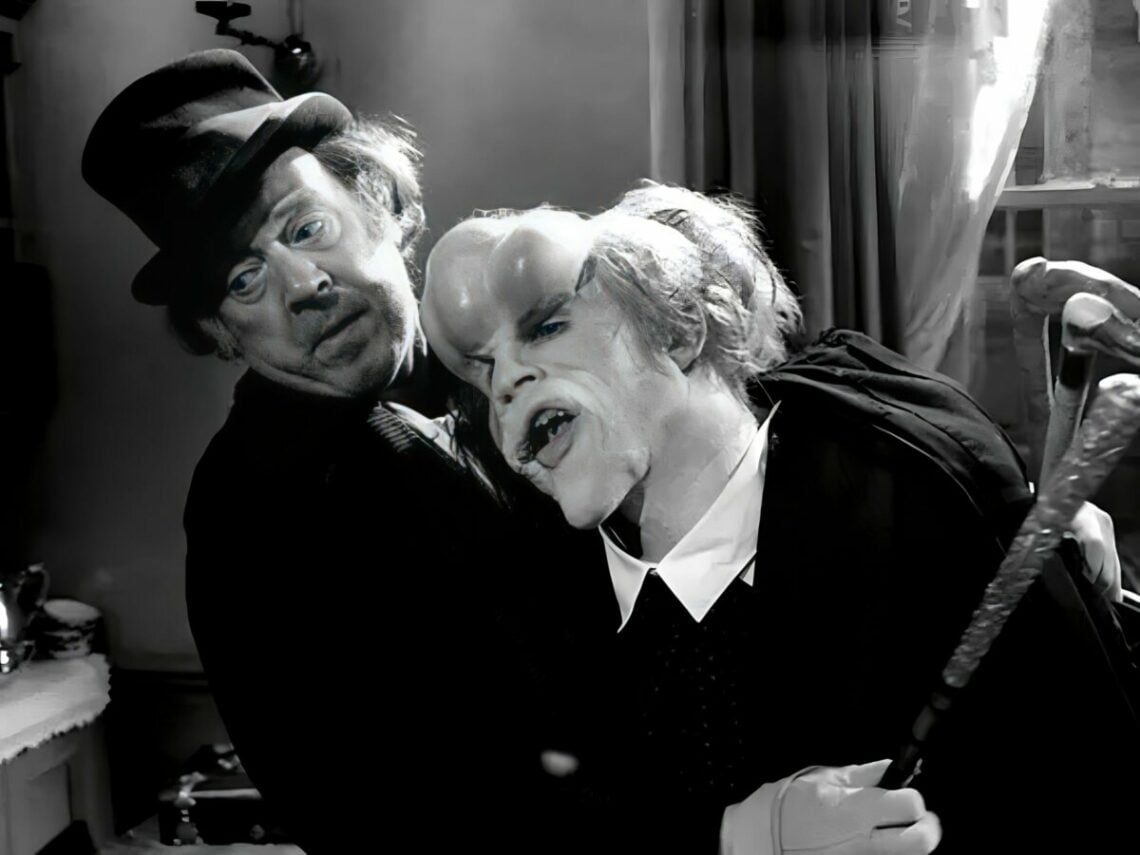
Kindness, the meaning of true humanity and ‘The Elephant Man’

After David Lynch made his debut feature Eraserhead, which quickly earned cult status, he made the Mel Brooks-produced film The Elephant Man. However, the movie is far from comedic, with Brooks keeping his involvement quiet to avoid confusing audiences. Rather, Lynch’s sophomore film is one of the most emotionally devastating things he’s ever made.
The movie tells the tale of John Merrick, based on the real Joseph Merrick, who was dubbed The Elephant Man because of his severe bodily deformities. Set in the Victorian era, John is exhibited in a freak show like a zoo animal, treated as anything but human. After a respected surgeon stumbles upon him, he takes John away to be examined, quickly discovering that he is able to communicate just like any normal human – because that’s, of course, what he is.
Soon, John becomes just as much of an attraction to upper-class members of society – who believe that their interest in him reflects a sense of open-mindedness – as he was in the freak show. John cannot escape the gaze of others, who fail to see him as an ordinary human.
Out of all of Lynch’s characters, John Merrick is perhaps his most pure – representative of ultimate good and innocence, and untainted by nihilism and cruelty despite the hard life he has had to endure. The filmmaker routinely dissects the violence and darkness lurking beneath the surface of the everyday world in his oeuvre, exploring the idea that true kindness and morality are actually hard to come by. His cinematic world is littered with murderers, abusers, and bizarre characters who blur the lines between good and evil. While there are many characters who are ‘good’ in Lynch’s universe, John is easily the greatest example of someone who possesses true humanity.
Ironically, barely anyone around him treats him as human, with Lynch pointing out how easily people can come to hate someone just for their appearance and differences, despite John only ever being kind and pure-hearted. In one heartbreaking scene, he is chased and mobbed at a train station, and the cover he wears to shield his face from others is removed. He is defiant in spite of this display of inhumane behaviour, declaring, “I am not an elephant! I am not an animal! I am a human being! I am a man!”
John is an exemplary human being, yet, in Lynch’s world, such kindness and naivety to the realities of the world will not get you far. He dies after his health rapidly deteriorates, choosing to lie in a position that ends up suffocating him and fracturing his neck. After finally being treated like a human following a trip to the theatre, his desire to be more like a normal human (despite being the most human out of everyone in the film) and sleep in the same way as others leads to his tragic death.
While it is debated whether John purposefully chose to die because of his declining health or if it was an accident, his death suggests that it is impossible for someone so kind, so devoid of malice, to survive in this complicated world.
John Hurt’s performance as John Merrick is beautifully acted, communicating sheer gratefulness and faith in the kindness of others, regardless of how he has been treated. Lynch’s film forces us to question what it means to be human and how we interact with others, encouraging us not to judge people for something as superficial as their appearance. The character of John Merrick teaches us to offer up a little more compassion, but ultimately, The Elephant Man reveals how cruel this world can be.
