


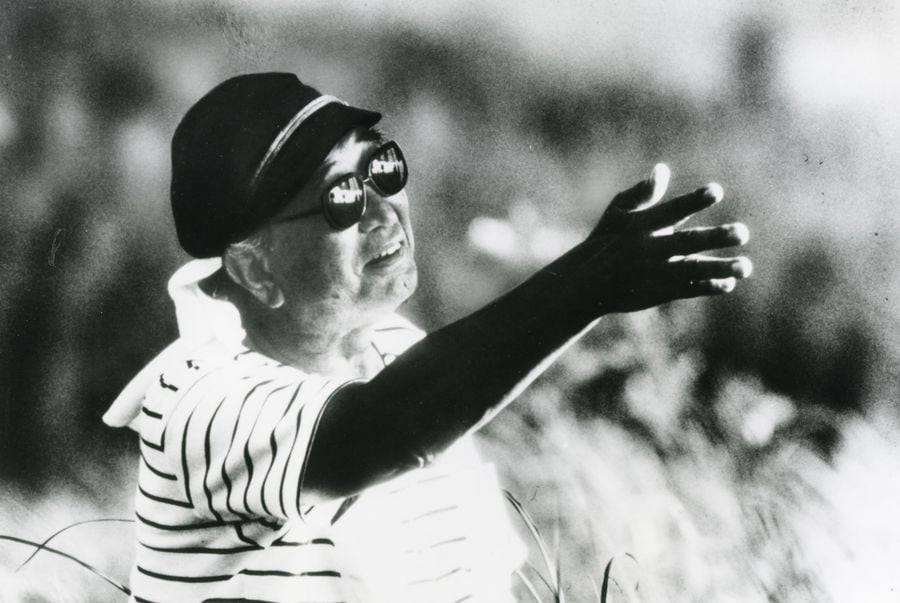
Celebrating 70 years of ‘Ikiru’ – Akira Kurosawa’s existential parable

“Life is brief. Fall in love, maidens before the crimson bloom fades from your lips, before the tides of passion cool within you,” Takashi Shimura’s Kanji Watanabe sings in the memorable final moments of Akira Kurosawa’s gentle 1952 classic toys with life’s most existential questions. For a director so well known for his samurai flicks and comparisons to the likes of John Ford, Sergio Leone and Martin Scorsese, the climax of the 70-year-old classic demonstrates the versatility of a master at work.
As one of the very best filmmakers ever to grace the silver screen, Kurosawa helped to form the building blocks on which western cinema would thrive, creating the sacred texts of Rashomon, Yojimbo, and Seven Samurai in 1961, 1950 and 1954, respectively. Too often is the Japanese artist thought of as an action filmmaker however, seen as no different from the innovative mind of Ford or Leone.
Such is proved false by his 1952 classic Ikiru, a tender tale of human morals that translates directly to To Live. Examining the struggles of a terminally ill Tokyo bureaucrat named Kanji Watanabe, who finds it hard to accept the fact that he is dying, Kurosawa tells a heartbreaking story inspired by Leo Tolstoy’s 1886 novella The Death of Ivan Ilyich.
A bureaucrat working a stuffy job in the city, Kanji is a Scrooge-type character, omitting the needs of those poorer than him to fulfil his own career instead. Often being selfish in his actions, looking for the solution to any problem that will best serve his interests, his opinion on life is transformed after hearing of his illness, as he takes up an aimless quest around the city, shuffling like an already empty soul, drinking his sorrows away.
Meeting an eccentric novelist, who feels like the kind of character who called walk out of a Leone western, the pair engage in drinking and dancing in the Tokyo twilight but fail to find new life. Instead, it is only when Kanji re-addresses his life as a bureaucrat and attempts to right the wrongs that he enacted does he begin to find personal redemption, finding enlightenment through the life of a young female subordinate at his work who is quitting to pursue making toys.
Breaking down the folly of bureaucracy, the importance of authentic living, and the legacy of family, Kurosawa answers some of life’s most existential questions, using the protagonist as his mouthpiece for such ponderous thoughts.
Rejecting much of the bureaucracy he had long lived his life by, Kanji turns his back on the hierarchy of such stuffy businesses and eventually works to push through the repair of a children’s playground that has long needed attention. In turning his attention to this cause, Kurosawa’s leading man attempts to give meaning to his life and imminent death by giving back to the next generation, effectively providing for the family he had long neglected.
Despite the success of Kurosawa’s samurai flicks, there’s something to be said for his attention to detail in this gentle human analysis of a life in turmoil and attempted absolution. There are truly few better endings than seeing Kurosawa’s protagonist sway gently on a swing of his own creation as snow softly falls before him, “for there is no such thing as tomorrow, after all”.
