


10 very long movies that are actually worth watching

There is no answer to the question, ‘how long should a movie be?’. Ask the question to Martin Scorsese, Steven Spielberg, Quentin Tarantino or Denis Villeneuve, and they’d toss the figurative string back in your face and shame you for being a philistine. You can’t restrict an artist, limit the boundaries of their canvas or steadily clip their wings feather by feather, or can you?
As long as a director can justify their film’s length, there is truly no limit to how long any given movie can be. Take the 2005 animated movie Valiant, which also happens to be the shortest feature-length film we can think of off the top of our heads. Gary Chapman’s weird WW-II movie did everything it could have done in just 76 minutes, leaving audiences wanting utterly nothing more by the time the credits rolled.
On the other hand, consider the 1965 David Lean drama Doctor Zhivago, a romantic epic that speaks of the hardships of WW-I and Russia’s October Revolution, which uses up its entire runtime without a gasp of baggage. Indeed, a film can be any length a director desires, with our list of ten very long movies that are actually worth watching including various classics from across world cinema.
Including films from the likes of Peter Jackson, Chantal Akerman, Edward Yang, Béla Tarr and Sergio Leone below.
10 long movies that are worth watching:
A Brighter Summer Day (Edward Yang, 1991) – 3h 57m
The Taiwanese filmmaker Edward Yang is known as one of the greatest modern filmmakers, creating such classics as Yi Yi, Du li shi dai and A Brighter Summer Day before his death in 2007. His 1991 movie A Brighter Summer Day is considered to be one of his very best, telling a coming-of-age story that oozes romance and more that follows a young boy who is caught in a violent conflict between two gangs.
With a runtime of almost four hours, the length of Yang’s movie might be daunting, but once you start venturing into his beautifully shot and absorbing tale, you’ll find it hard to rip your attention away.
As I Was Moving Ahead Occasionally I Saw Brief Glimpses of Beauty (Jonas Mekas, 2000) – 4h 48m
Our fourth longest movie on our list is Jonas Mekas’ experimental film As I Was Moving Ahead Occasionally I Saw Brief Glimpses of Beauty. A deeply intimate movie, Mekas’ film is a biographical evaluation of his own life, using 30 years worth of private home movie footage to construct a tale of his own life that transcends time and space, putting the viewer into a meditative state of awe.
Beautifully composed, Mekas’ film is an odyssey of human existence, taking you on a journey that is melancholy, humorous and bulging with an adoration for the moving image.
Eureka (Shinji Aoyama, 2000) – 3h 37m
This list is all about long movies, and Shinji Aoyama’s Eureka is long, but at three hours and 37 minutes, we think this one’s doable. A deeply complex and emotional drama, Aoyama’s movie tells the story of a group of traumatised survivors of a murderous bus hijacking who reunite and take a road trip in an attempt to get over their fears and piece together their fragile selves. This becomes complicated, however, when it turns out that another serial killer is running rampant.
Starring Kôji Yakusho, who also appears in Kiyoshi Kurosawa’s classic Cure, Eureka is a masterpiece of atmosphere, taking a harrowing look into grief and the psychological consequences of serious trauma.
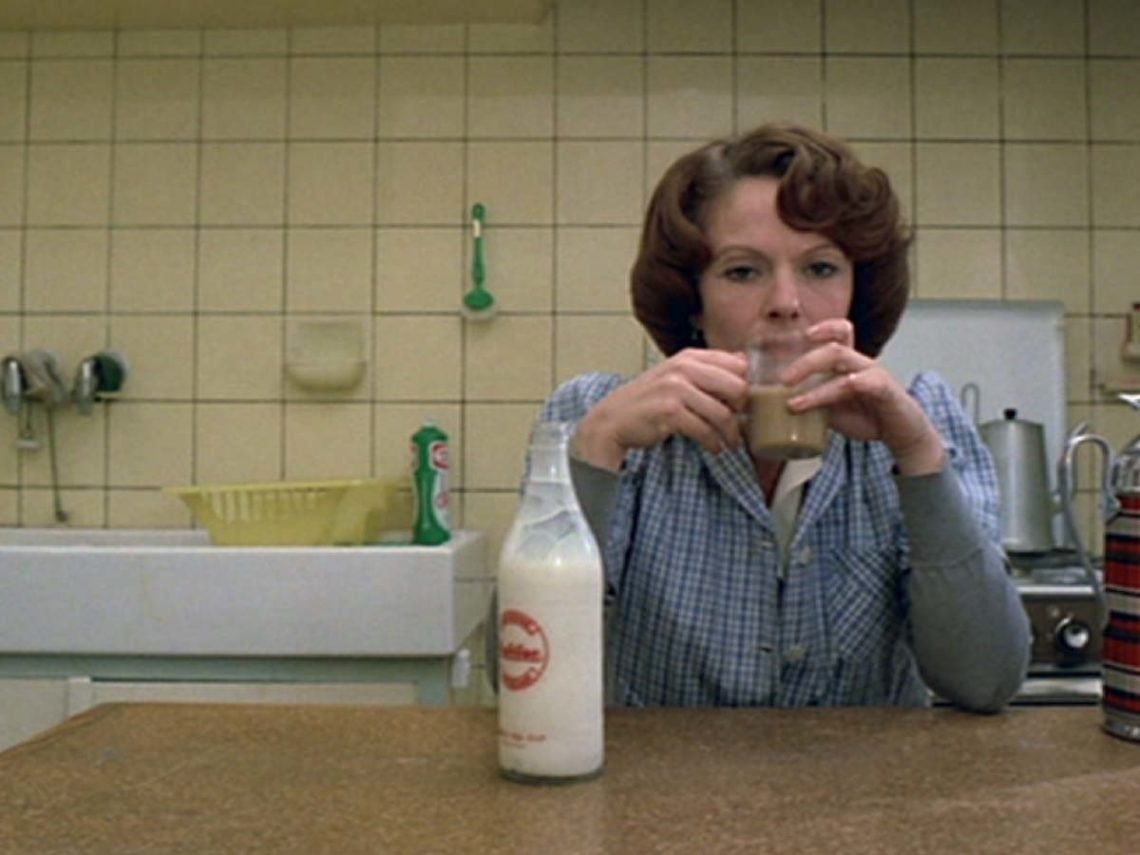
Jeanne Dielman, 23, quai du Commerce, 1080 Bruxelles (Chantal Akerman, 1975) – 3h 22m
The Belgian filmmaker Chantal Akerman has long been celebrated in the landscape of modern cinema, with her 1975 movie Jeanne Dielman, 23, quai du Commerce, 1080 Bruxelles often being considered her very best. Recently named the greatest movie of all time in a poll by Sight & Sound, Akerman’s three-hour and 22-minute film is a slow and steady feminist masterpiece that is stuffed with careful nuance.
Akerman’s movie tells the story of Jeanne Dielman, played by Delphine Seyrig, a lonely widow who goes about her daily life taking care of her teenage son until an unpredictable event changes her life.
Lord of the Rings: The Return of the King (Extended Edition) (Peter Jackson, 2003) – 4h 12m
Everyone has a friend who has been trying to get them to watch the over four-hour cut of Lord of the Rings: The Return of the King for months. We know you might have seen the original three-hour version, but trust us, the extended version is well worth your time too. The final film of Peter Jackson’s epic fantasy trilogy, The Return of the King, sees Aragorn, Gandalf, Legolas, and the rest of the crew take their final stand against the creatures of Mordor.
With a ton of additional scenes that each lusciously adds to the lore of the fantasy series, each of Jackson’s extended editions proves just how proficiently made his trilogy was, offering hours and hours of new material that were crafted with as much love as the original cut.
Near Death (Frederick Wiseman, 1989) – 5h 58m
Of all the movies on this list, we feel as though this one might be the toughest sell. Near Death, by the iconic American documentarian, Frederick Wiseman, is a nearly six-hour movie that tells the story of the patients of Beth Israel Hospital in Boston, Massachusetts, who are each experiencing some of the final moments of their lives. As well as patients, Wiseman’s movie also focuses on doctors, nurses and physicians too.
This is by no means an easy watch, but the way in which Wiseman allows life in front of the lens to effortlessly unfold makes for an intense, emotional and surprisingly enlightening film.
Once Upon a Time in America (Sergio Leone, 1984) – 3h 49m
Everyone’s seen Sergio Leone’s western trilogy, which stars Clint Eastwood as the ‘Man with no Name’, but too few film lovers have taken the time to sit down and watch his 1984 crime classic Once Upon a Time in America. Starring Robert De Niro, Elizabeth McGovern, Joe Pesci, James Woods and Jennifer Connelly, the film tells the story of a former Prohibition-era gangster who returns to his hometown 35 years later, where he is forced to confront the sins of his past.
Where other crime classics enjoy indulging in the violence of their lead characters, Leone’s film prefers to reflect on the horrors of each individual’s violent past, making for a gangster flick that better resembles a ghost story.
Sátántangó (Béla Tarr, 1994) – 7h 19m
The Hungarian filmmaker Béla Tarr is the best modern director you may never have heard of, with the iconic creative helming such modern classics as 2000’s Werckmeister Harmonies and 2011’s The Turin Horse. Back in 1994, however, he took on a seven-hour epic, directing Sátántangó, an epic drama that tells the story of the residents of a collapsing farm who see the return of a former coworker on the eve of a big payment being due.
Though bleak and slow-moving, Tarr’s direction has a rhythm that makes Sátántangó flow with uncorrupted life, effortlessly transporting the viewer to a monochrome time and place with a masterful visual scope and absorbing soundscape.
Shoah (Claude Lanzmann, 1985) – 9h 26m
The longest film on our list may also be the most quintessential, with Claude Lanzmann’s Shoah being recognised as not only one of the best documentaries ever made but one of the most important films of all time. Recounting the horrifying events of the Holocaust using direct accounts from witnesses, survivors, and even perpetrators, Shoah is an essential historical document.
An earth-shattering documentary that rightfully asks a lot of questions of its viewer, Shoah examines and evaluates the horrors of the Holocaust, asking how such cruelty was ever allowed to happen in the first place.
The Sorrow and the Pity (Marcel Ophüls, 1969) – 4h 11m
The horrors of WWII are so far-reaching that it’s no surprise that Marcel Ophüls’ documentary The Sorrow and the Pity clocked in at over four hours. An exploration of the various reactions of the French people to the invasion of the Nazis in May 1940, Ophüls’ landmark documentary gives remarkable insight into life under occupation, interrogating the viewer as to how they would have gone about reacting to a similar threat.
Undoubtedly one of the greatest documentaries about WWII, The Sorrow and the Pity is essential viewing that transports viewers back to the 1940s and provides an unprecedented view of life during wartime.
