


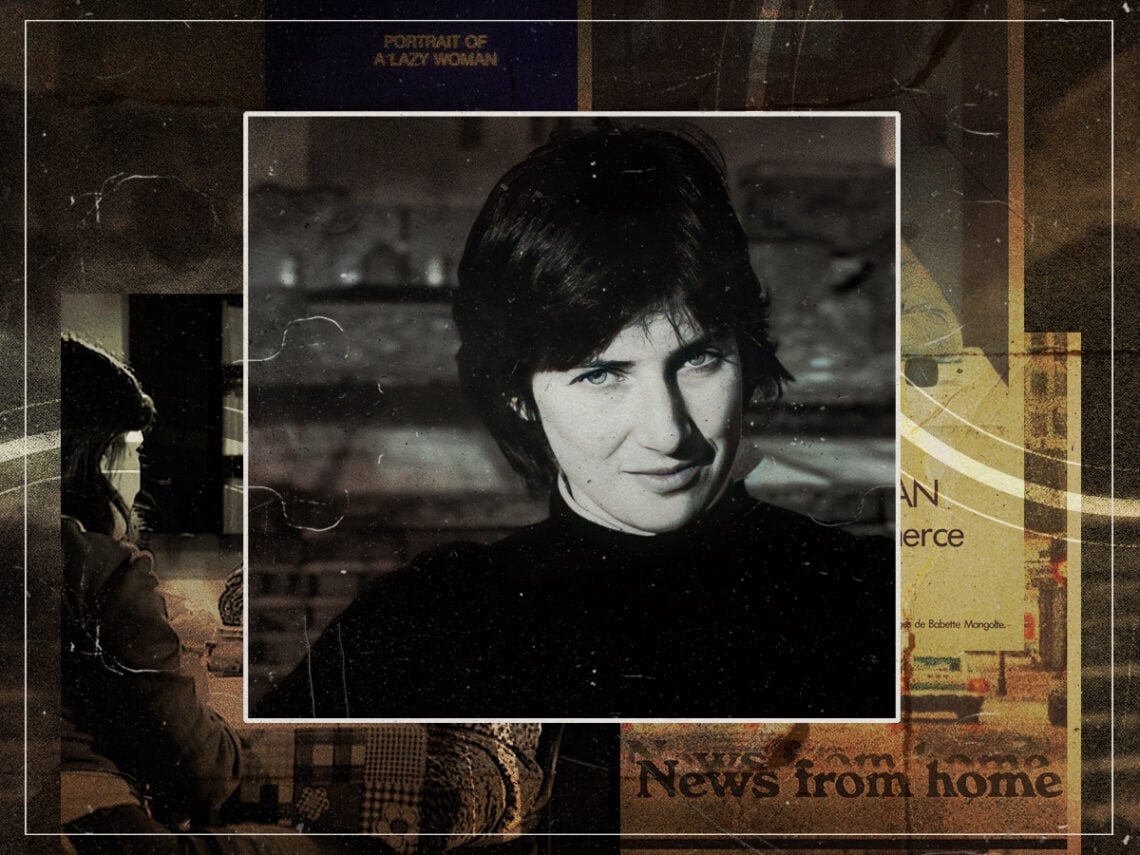
Chantal Akerman: the ultimate feminist filmmaker

In 2022, BFI’s decennial Sight and Sound poll named Chantal Akerman’s Jeanne Dielman, 23, quai du Commerce, 1080 Bruxelles the greatest film of all time. Yet, when Akerman made it, which is over three hours long, she was just 24, and she had no official training in filmmaking – just a personal fascination with the medium. It is quite revolutionary, really, that someone with little experience in the world of cinema could make something so groundbreaking, but perhaps that is why.
With little understanding of what was considered proper filmmaking technique, Akerman retreated into her own world of cinematic experimentation and made works so bold and uncompromising that she cemented herself as one of the most influential artists of her generation. Growing up the daughter of a Holocaust survivor, tragedy lingered in Akerman’s home life – her grandmother had not made it out of Auschwitz alive. She grew up in Brussels and lived in New York City for a short while, making her first short, Saute ma ville, in 1968.
This film was the first sign of Akerman’s boundless creativity and preoccupation with themes of repression and feminism, something that was present throughout the whole of her career. Akerman prioritised characters who were marginalised in some way, taking inspiration from her own identity as a queer Jewish woman. However, she didn’t limit herself to specific boundaries. Saute ma ville sees Akerman attack the kitchen as a space of female oppression, playfully depicting herself in the domestic sphere before ‘blowing it up’ (the sound of an explosion is heard after the screen goes blank).
This idea is expanded on in Jeanne Dielman, which features Delphine Seyrig as the titular character, a single mother who spends much of her time cooking and cleaning at home. Akerman employs long static shots of Jeanne peeling potatoes or washing dishes, forcing us to sit with these banal activities in silence. It is a testing film, yet one that ultimately exposes the patriarchal restrictions and repression placed on women, something that still resonates with many viewers today. Jeanne also engages in sex work to earn money for herself and her ungrateful son – even at home, she cannot escape the trappings of societal, patriarchal expectations. While men are typically granted respite from the outside world once they’re home from work, women are suffocated by the demands of domesticity and pleasing others.
The radical work, released in 1975, solidified Akerman as one of the most potent feminist voices on the scene. She had only made one feature before this, Je tu il elle, which was also a revolutionary release – it featured the first real lesbian sex scene put to film. At a time when lesbianism was considerably more taboo, Akerman placed it front and centre on the big screen, unafraid to highlight the different facets of female sexuality that were rarely explored in mainstream media.
Akerman made many feature-length and short films in her career, some of which were injected with subtle uses of humour, such as Portrait of a Lazy Woman. Elsewhere, Akerman’s exploration of identity, her relationship with her mother, and her dissection of the male gaze and the patriarchy are simply devastating, bringing viewers to tears. There is something so moving about News From Home, which sees Akerman read letters from her mother over scenes from New York. Tender and almost spectral, the film is one of Akerman’s finest achievements, interrogating the unique connection between mother and daughter like few have done before.
The filmmaker continued making movies until her death in 2015, weaving between fiction and documentary. Yet, her fictional movies were never far from reality, always forcing us to consider the world around us through her unconventional use of form, such as long, uninterrupted takes. Her radical resistance to creating anything remotely similar to a standard Hollywood affair was refreshing and, subsequently, a more accurate representation of the truth.
For Akerman, freedom of expression was the most important element of filmmaking, and she paved the way for countless female directors, inspiring names from Sofia Coppola to, more recently, Charlotte Wells (director of Aftersun). Akerman’s work acknowledges the importance of giving women a voice that cannot be ignored, exposing the complexities of the female experience through unusual formal techniques and unflinching honesty.
