


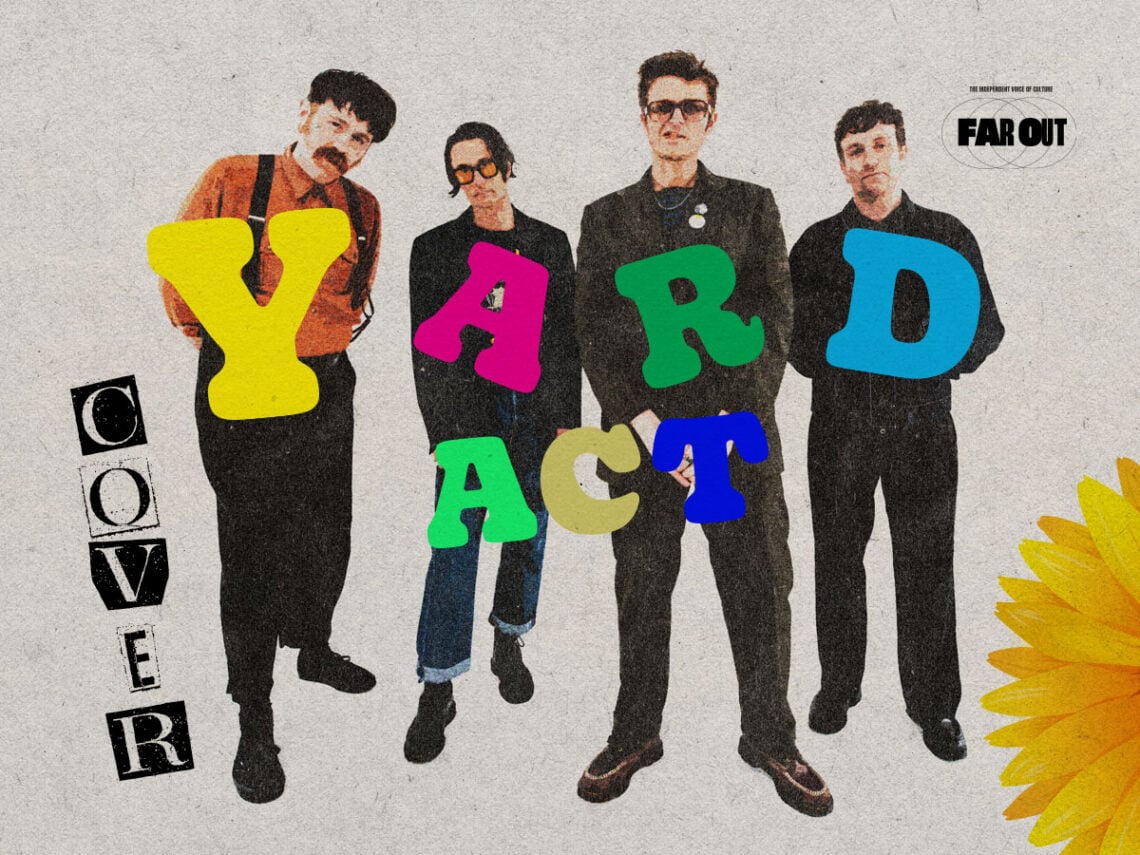
Los Angeles, London, and Leeds: Yard Act talk new beginnings, school runs, and the music industry’s north-south divide

There comes a point in the life of every successful band when they are forced to choose between staying true to their roots and resigning themselves to a career of cult success, or upping sticks and relocating to the musical hubs of London, LA, or New York for fame and fortune. Yard Act, ever the contrarians, have managed to balance both.
An unavoidable entity in the post-punk landscape since the release of their inaugural singles during the pandemic days of 2020, Yard Act have graduated through the ranks of alternative stardom far quicker than most. From an outside perspective, with an Island Records deal under their belt, and an upcoming album partially recorded in the sun-soaked studios of Los Angeles, the group are living the archetypal lives of successful English rock stars. Yet, geographically at least, they haven’t changed much at all.
Having left my car in an area of Meanwood, Leeds, that a local estate agent might describe as ‘up-and-coming’, the band greeted me in their studio, a brisk walk away from the various local venues where their sound was first carved out a few short years ago.
Even if you have never been blessed with the opportunity to visit Leeds, you can probably work out that the West Yorkshire city is thousands of miles away from Los Angeles, both physically and spiritually, and according to frontman and lyricist James Smith, Yard Act’s upcoming record, You’re Gonna Need A Little Music, is indebted to both of those cities in equal measure.
Putting the LP in a category alongside Henry Rollins’ first solo record, as one of potentially only two records recorded between Leeds and California, Smith revealed, “We did the album in two parts, mainly because we booked that Hives tour and ran out of time”.
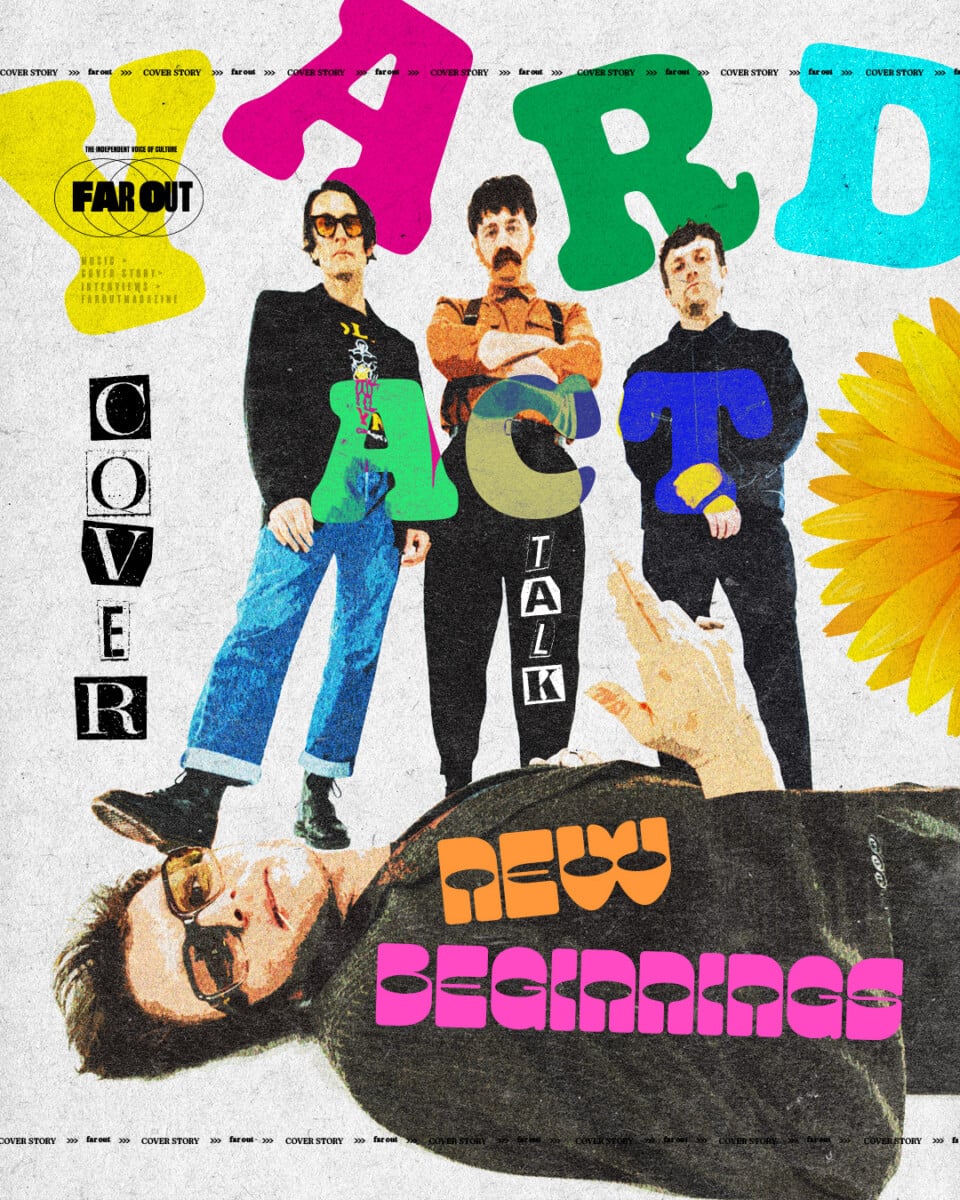
According to the songwriter, the album’s sensibilities were very much influenced by that half-and-half process. “If we’d have come back after Christmas to a month in the dark in Leeds, it would have been a different record,” he said, “So that optimism and that shine at the end of it really did help, because it was like perfect weather in LA”
Nevertheless, he added, “If you’ve got no ideas and you throw an exotic place into the mix in hopes of inspiration, I don’t know how much that will inspire, but it definitely shaped the record.”
Alongside the rock and roll fantasy of recording an album in the heart of California, Yard Act’s upcoming LP was very much influenced by the mundanity of everyday life for the band, outside of their recording sessions, extensive tours, and cult fanbase.
“The first five weeks we did in Leeds, there was distractions,” Smith explained, “Shippo [guitarist Sam Shipstone] was moving house, I was doing school runs, everyone had personal lives to tend to, and it was like bolting in and out of the studio.” Thankfully, then, the band have yet to entirely lose themselves in the rockstar lifestyle.
Both in their output and sensibilities, Yard Act are forever tied to the north of England, and even the allure of Los Angeles couldn’t negate that fact entirely.
“Making a record in LA, it’s like doing the thing, doing the clichéd thing,” bassist Ryan Needham chimed in, “but it was important to get the start of the writing and the groundedness of the album in Leeds, because obviously this part of the world is quite important to our identity and rise.”
He added, “It’s just an intrinsic part of Yard Act, really. So, yeah, we didn’t want to go too Hollywood sunshine, because it would just…it’s not us, is it?”
On the topic of rock and roll clichés, bands who hail from the north of England, even those for whom that northern sensibility is as intrinsic to their sound, have a habit of relocating to London as soon as they gain any degree of tangible success. Yet, from their home base a few hours further up the M1, Yard Act reassured me that they have no desire to bow down to the accepted pressures of the music industry.
“I have no regrets about the fact we’re not in London,” Smith declared, “or definitely not in fucking America”. However, the music industry in the UK is still largely based in London, despite recent PR opportunities like the Brit Awards and Mercury Prize seeming to suggest that things were moving outside of that bubble.
“We’d have more opportunities if we were in London,” the songwriter admitted, “But I’m starting to see how being removed from that and being more immersed in a quiet life outside of the job, actually feeds into our creativity and our viewpoint on things.”
From their very beginning, and even in the pre-Yard Act days of Post War Glamour Girls, Menace Beach, and Hookworms, all previous projects of the respective band members have been flying the flag for regional voices in music, and their colossal degree of success and notoriety hasn’t changed that.
“We are outside the capital, and it’s important to not make a media hub that sucks out the diversity of regional voices and regional opinions around the country,” Smith said, “It’s a hard fight, and Leeds is an easier place to do it, because it’s got a really solid grassroots infrastructure.”
Confronted with the idea that nearby Manchester is increasingly becoming a stronghold of the music industry, he quickly retorted, “Manchester’s got nothing to fucking moan about anymore. The idea that Manchester’s struggling is bullshit”. Perhaps in an effort to make Tony Wilson turn in his grave, Smith jabbed, “It’s just north London”.
“Everyone’s overwhelmed, and everything’s oversaturated, and everyone’s just trying to go viral, which is not community-based. The music community on an indie level and on a DIY level is the foundation for everything. There was a time, for a long time, where bands could exist in that without having to have more ambition.”
James Smith
That said, Shipstone theorised that Yard Act might have taken a different path had they been slightly younger. “I bet you age is a factor,” he said, “If we were 22, we’d be moving to London”. Though, as Needham pointed out, “I think if this level of success had hit all of us at that age, god knows how we’d have dealt with it”.
Despite the ongoing battle between north and south, both within the music industry and in the wider context of this sceptred isle, Smith and the band are well aware of just how much the music industry is changing at current, and not always for the better.
“In the early 2010s, when I started in Leeds, no one had a press agent,” he recalled, harking back to simpler times, “You just fucking burnt off 100 CDs, and you had a physical address, and you posted it, and then randomly those loads of zines and bigger magazines would randomly review you.”
That’s gone,” he continued, “and it’s depressing, because it’s not been replaced by something easier. Everyone’s overwhelmed, and everything’s oversaturated, and everyone’s just trying to go viral, which is not community-based. The music community on an indie level and on a DIY level is the foundation for everything. There was a time, for a long time, where bands could exist in that without having to have more ambition.”
North or south, it seems the mechanics by which groups like Yard Act were able to form, only six years ago, it is worth remembering, are eroding. While there is still a landscape of incredible independent groups across the nation, a handful of which Yard Act themselves have given a platform to through their ZEN FC independent label, which has put out records by the likes of Nuha Ruby Ra, Benefits, and Thank, there is a sense that the kind of success afforded to Yard Act isn’t easy to come by.
A core part of that difficulty, outside of appeasing the music industry and its increased focus on virality and guaranteed success, is appeasing audience members, something which Yard Act have never really attempted. For a group that has experimented with so many different genres during their relatively short tenure, from the core to their post-punk The Overload sound to the ESG-styled no-wave dance music of ‘The Trenchcoat Museum’ to their dub reggae collaboration with Mad Professor, each new project has had its detractors.
“I think ‘Redeemer’ brought a lot of new people on board who were like, ‘Finally they’re doing this cool rock music’,” Smith theorised, talking about the recently released lead single from You’re Gonna Need A Little Music, “And then they heard ‘New Beginnings’ and were like, ‘This is shit’.”
On the other hand, he went on, “Other people were like ‘I don’t know what they’re doing with this ‘Redeemer’ song, it’s gonna be a bad album,’ and then they went ‘Oh, I love ‘New Beginnings‘”.
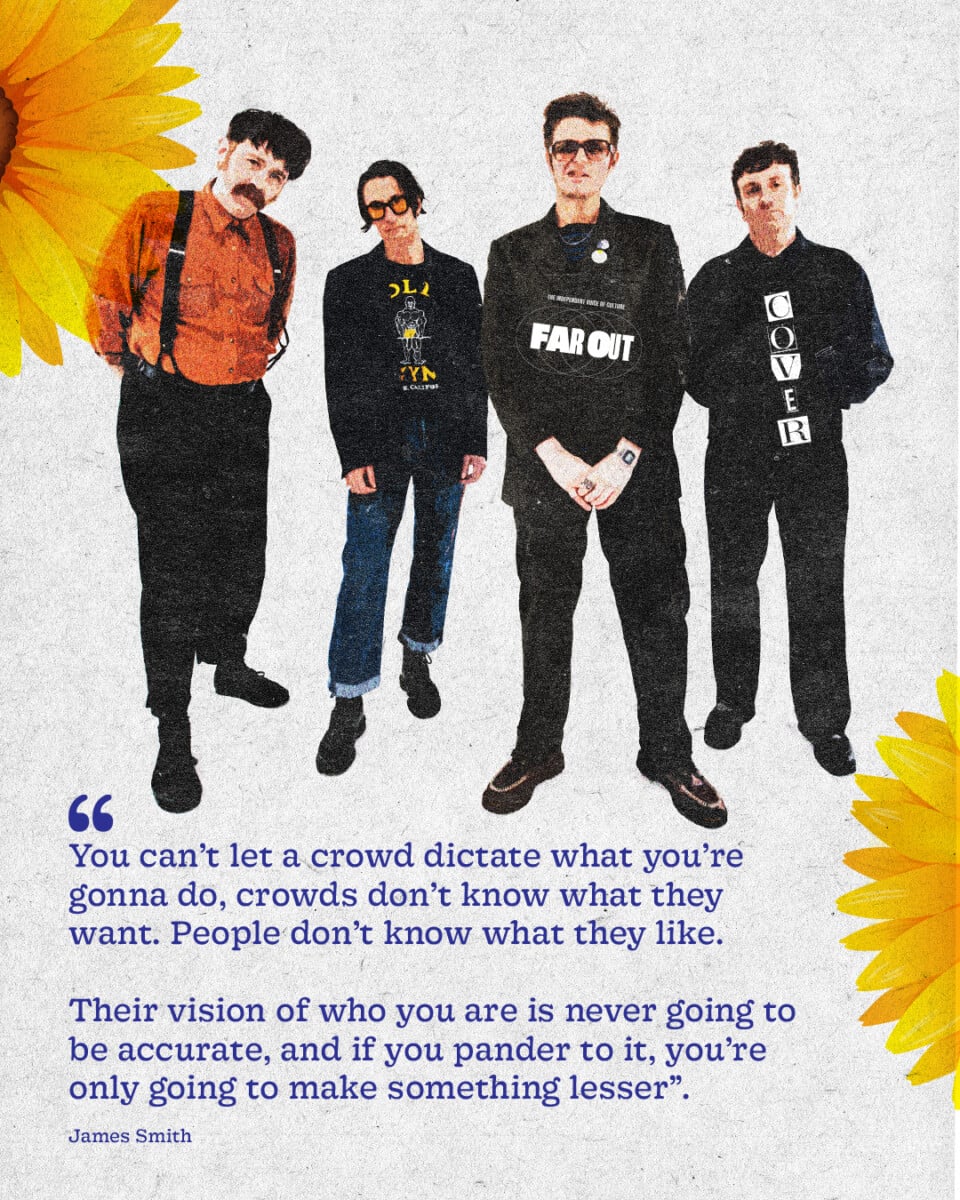
“You can’t let a crowd dictate what you’re gonna do,” he summarised, “Crowds don’t know what they want. People don’t know what they like”. Sending a stark message to any other budding songwriters out there, he stated, “Their vision of who you are is never going to be accurate, and if you pander to it, you’re only going to make something lesser”.
While The Overload was an album that looked outwards at society, and Where’s My Utopia? saw Smith on a more introspective level, “while my brain was in the back of a van for two years”, as he put it, this new album seems to reach for something else entirely.
“This time it was like, I can’t do either of those things again,” he said, “So the only thing you can do is lean into this subconscious trust that writing can evoke moods, first and foremost like a feeling to a listener that maybe you don’t understand yourself and, beyond that, thoughts and feelings and opinions.”
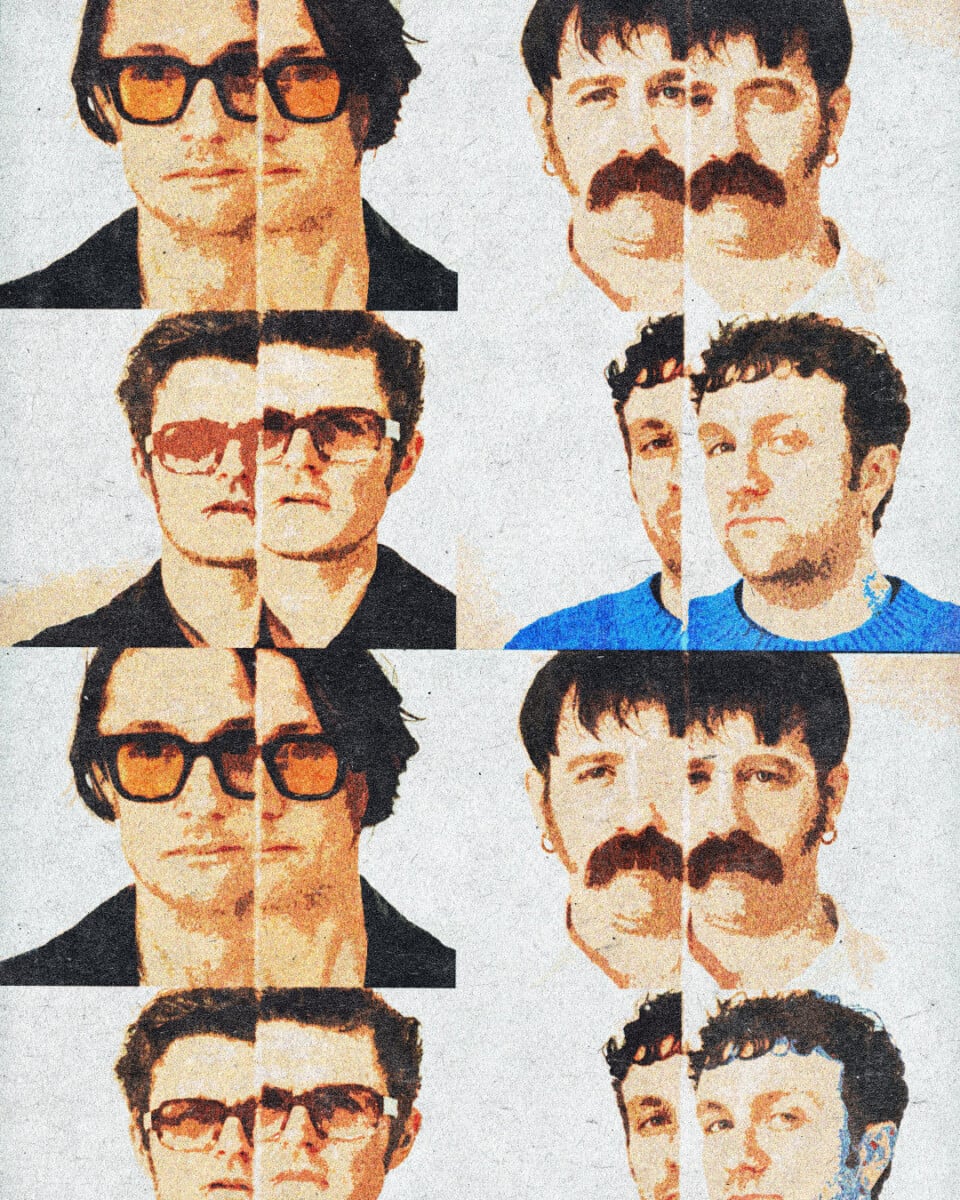
It’s an abstract concept, and one which probably doesn’t come across as clearly in print as it did in that recording studio, but Smith explained, “There’s no way I can state anything about society, there’s no way I can state anything about myself that will resonate harder than not knowing. I think that’s the only way any writer can go forward once they reach that space.”
“When you get it right, which is subjective, it’s elevated higher than anything that can be explained and justified, and that’s where all great art sits,” he concluded, hoping that You’re Gonna Need A Little Music stands on that pedestal of evoking emotion inherently, rather than making his lyrics as overt as on previous projects.
Seemingly, that new echelon of songwriting was rather fruitful, as the band were forced to trim down the tracklisting of their new album, and have an extensive plethora of off-cuts to revisit in time. “We’re hoping to do the deluxe edition You’re Gonna Need A Lot of Music, which could probably have eight [non-album tracks] on it, and be good, and wouldn’t be filler,” Smith said, “There’s probably about 20 that are shite, but you can’t write a good ‘un every time.”
Still, Yard Act have managed to pull off enough “good ‘uns” to see them into yet another new era of songwriting that promises to be their most expansive, experimental, and rewarding thus far. They might not have strayed far from their West Yorkshire origins, but You’re Gonna Need A Little Music has enough LA fantasy within it to create an album beyond geographical confines, and certainly beyond the clutches of the London-centric music industry.

Never Miss A Beat
The Far Out Post-Punk Newsletter
All the latest Post-Punk content from the independent voice of culture.
Straight to your inbox.