


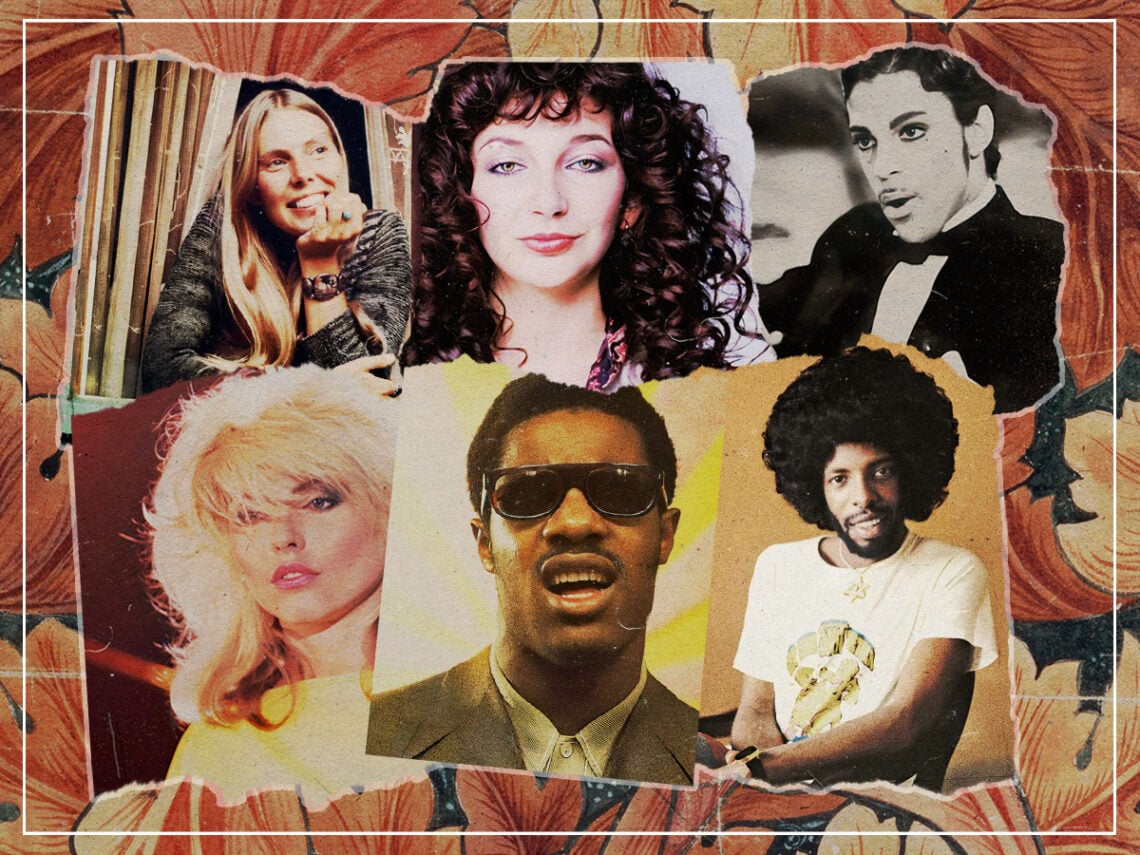
The Masters: 10 philosophers of modern music

A prominent challenge facing the music industry lies in its perpetuation of white normativity. For instance, when discussing the most influential artists of all time, figures such as Bob Dylan, David Bowie, Mick Jagger, Pete Townshend, John Lennon, and Paul McCartney typically dominate the discourse, overshadowing luminaries like Joan Jett, Stevie Nicks, Stevie Wonder, Prince, and Tina Turner. This imbalance significantly underscores the industry’s under-appreciation of diverse voices and talents.
While all of these male counterparts, of course, possess indisputable brilliance, many figures that are often ignored or deemed lesser are actually the ones who paved the way for open conversations about race, sexuality, and gender – while others used lyricism as a conduit to examine crises like AIDs or war, while some spearheaded movements that sought to bring better equality for all.
Dylan, for example, is undeniably renowned as a pioneer of protest anthems, but the annals of musical history are replete with figures who have made equally as profound contributions to the genre. Artists like Sinéad O’Connor, The Cranberries, and Nina Simone, to name a few, have wielded their artistry as a powerful force for social change. The landscape of protest music is vast, and overlooking the profound impact of visionaries like Sly Stone, Carole King, and Stevie Nicks is a testament to a lack of imagination.
Furthermore, the realm of protest music extends far beyond any single artist. Icons like Stevie Wonder, Prince, Marvin Gaye, Jimi Hendrix, Tina Turner, and James Brown all used their musical platforms to shed light on pressing social issues, challenging the status quo and inspiring change. To disregard their significant contributions is to overlook a rich tapestry of musical activism that has reverberated through generations, transcending boundaries and inspiring countless listeners to take a stand.
The list of influential connoisseurs of music would be enough to fill many books, but as an initial glimpse, let’s introduce ten figures who persistently inspire, empower, and redefine the realm of music every single day. These icons stand as some of the most profound philosophers in the world of music.
10 master philosophers of music:
Stevie Nicks
The queen of witches herself, Stevie Nicks, stands out as a true trailblazer who fearlessly challenges conventional gender norms. Her journey with Fleetwood Mac began when the band sought a new vocalist and guitarist, eventually leading to the inclusion of Lindsey Buckingham. He agreed to join under the condition that Nicks be welcomed into the group as well.
Since then, however, Fleetwood Mac has become synonymous with the enchanting presence of Nicks, a pioneer in musical lyricism and melodies with the unique ability to take quintessential female experiences – such as heartbreak and adversity – and transmute them into symbols of empowerment. Nicks’ personal relationships have often served as a focal point for her chart-topping hits, showcasing her remarkable talent for drawing strength from moments of vulnerability, a quality that sets her apart from many of her male peers.
As the only woman who has been inducted into the rock and roll hall of fame twice, Nicks recognises her own ability to break “a big rock ’n’ roll glass ceiling”, a deliberate attitude which first manifested with a pact she made with bandmate Christine McVie: “We made a pact at the very beginning that if we were ever in a room of super famous guitar players that didn’t treat us with the respect that we thought that we deserved, that we would just stand up and say, ‘This party’s over’ and we would walk out,” she explained.
Janis Joplin
Janis Joplin‘s breakthrough moment arrived when she graced the stage at the Monterey Pop Festival in 1967 alongside Big Brother and the Holding Company, instantly catapulting her to fame. Despite a relatively brief career, Joplin left an unmatched mark on the industry, thanks to her extraordinary vocal talents characterised by an enchanting mezzo-soprano style.
What set Joplin apart was her incredible ability to channel her emotions directly into her singing, delivering performances brimming with intense, unfiltered passion. Simultaneously, she showcased impeccable control, effortlessly transitioning to softer, more delicate moments, thereby demonstrating her impressive vocal range.
Since Joplin’s untimely passing in 1970, she has emerged as one of the most influential musicians in history, serving as a vital source of inspiration for countless rock vocalists. Her performances, dynamic and unforgettable, continue to define her legacy, with iconic renditions of timeless classics such as ‘Summertime’ and Big Mama Thornton’s ‘Ball and Chain’.
Grace Slick
Grace Slick, a prominent figure during San Francisco’s Haight-Ashbury era, the epicentre of the summer of love psychedelia, stands as an undeniable pioneer for women in the realm of rock and roll. However, she was more than just a groundbreaking artist; she was also a fearless provocateur.
Throughout her career, which spanned bands like The Great Society, Jefferson Airplane, Jefferson Starship, and Starship, Slick fearlessly manoeuvred through the challenging, male-dominated landscape of the music industry — a position she seldom relinquished.
Reflecting on those days, Slick humorously remarked, “I shaved my legs, but I talked like a truck driver.” Yet, it was not her appearance but her extraordinary vocal talent and magnetic presence that ultimately secured her place in music history. Her creative genius gave birth to iconic psychedelic anthems like ‘White Rabbit’ and ‘Somebody to Love’, which quickly skyrocketed to the top of the charts, forever cementing her legacy. Slick’s contributions not only shattered gender barriers but also left a lasting impression on the sonic landscape of the genre.
Prince
Prince‘s unparalleled ability to effortlessly traverse musical genres remains one of the cornerstones of his legendary status, making a compelling case for his title as the greatest guitarist of all time. Beyond crafting infectious pop anthems, irresistible dance floor grooves, and heartrending ballads that could move you to tears, Prince also had a knack for weaving intricate baroque pop masterpieces into his repertoire, showcasing his multifaceted talents.
One standout testament to his artistic prowess is the timeless classic ‘Sign o’ the Times’. After parting ways with his backing band in 1987, many doubted whether the diminutive genius could live up to his own formidable legacy. Yet, the eponymous album that followed proved to be one of his greatest achievements. In ‘Sign o’ the Times’, Prince not only tackled weighty subjects like the Challenger space disaster, the AIDS epidemic, and the crack cocaine crisis but did so with an innate grace that avoided any hint of contrivance or manipulation.
Here, we witness an artist at the peak of his craft, effortlessly fulfilling what artists do best: keenly observing the world around them and skilfully retelling it through their unique lens.
Stevie Wonder
Since the 1960s, Stevie Wonder has reigned supreme as an artist whose endeavours have impressively dominated many spaces of the musical landscape. His single ‘Fingertips’ was a number one hit on the Billboard Hot 100 in 1963, at the age of 13, making him the youngest artist ever to top the chart. During the 1970s, his success hit its peak, with ‘Superstition’ becoming one of the most famous examples of the sound of the Hohner Clavinet keyboard. His albums Innervisions, Fulfillingness’ First Finale and Songs in the Key of Life all won the Grammy Award for ‘Album of the Year’, making him the only artist to have won the award with three consecutive album releases.
Transitioning from a child prodigy at Motown to a fully realised adult artist, Wonder was determined to assert his creative prowess and prove his worth from day one. As he approached his 21st birthday, a pivotal moment presented itself: his contract with Motown was on the verge of expiring, opening up the possibility of exploring new horizons and attaining greater artistic freedom.
Seizing this opportunity, Wonder engaged in negotiations with Berry Gordy, Motown’s founder. The outcome was in his favour: complete artistic control over his work. This newfound autonomy granted him the freedom to compose his own songs, oversee his recording sessions, and curate his albums without any external interference from Motown’s executives. Making the leap to Tamla Records, a subsidiary of Motown, Stevie Wonder embarked on a journey where he was the master of his own destiny, a move that would define his creative legacy in the years to come. Even now, he still uses his platform for good, speaking out against reforms and supporting institutions that mirror his values.
Joni Mitchell
How many singers have truly possessed such a knack with words as Joni Mitchell? The Canadian singer emerged during the ’60s folk movement as a songwriter before picking up the microphone herself and releasing her debut album, Song to a Seagull, in 1968. Known for her strikingly personal lyrics, often exploring her romantic relationships with refreshing honesty, Mitchell defined an era. By incorporating jazz influences into her folk tunes, Mitchell eventually carved out a new and innovative sound, although she always let her stunning voice take precedence.
With countless gorgeous albums like Clouds, Ladies of the Canyon, Blue and The Hissing of Summer Lawns, Mitchell proved herself to be an incredibly skilled wordsmith. “I’ve looked at love from both sides now/ From give and take and still somehow/ It’s love’s illusions that I recall/ I really don’t know love/ Really don’t know love at all,” she sings on ‘Both Sides Now’, approaching love with such a beautiful sense of vulnerability and frankness.
As folk singers like Bob Dylan and Leonard Cohen dominated the genre, Mitchell emerged as one of the leading female figures of the movement. The enduring success of her music worldwide only reflects the potency of her words, which have touched people, especially women, incredibly deeply for decades.
Marvin Gaye
Few people have had such an influence on the development of genres such as rhythm and blues and soul as Marvin Gaye. The singer was born in 1939, beginning his singing career when he was just a child, performing in churches from as young as four. Gaye’s talent was clear from the very beginning, and by the time he was a teenager, he was a member of vocal groups like The Marquees. In the early 1960s, he signed with Motown’s Tamla label, and he found success through the decade with songs like ‘How Sweet It Is (To Be Loved by You)’.
However, Gaye’s most significant contributions were his albums What’s Going On (1971) and Let’s Get It On (1973), which transformed the soul genre. The musician experimented with the album format, with the former being a concept record sung from the perspective of a Vietnam War veteran. However, with Let’s Get It On, Gaye established himself as a sex icon, with many critics calling it one of the dirtiest, erotically-charged albums ever made.
Gaye’s music significantly altered the course of music, helping to popularise genres like funk and aiding the development of others like neo-soul. Whether he was writing about economic disparities or the power of love, Gaye was always on top form, becoming one of the 1970s’ most influential performers.
Debbie Harry
Best known as the lead vocalist of Blondie, Debbie Harry has enjoyed a successful career as a pioneer of the new wave genre, as well as embarking on other endeavours like acting, appearing in movies such as Videodrome and Hairspray. Clearly a woman of many talents, Harry formed Blondie with Chris Stein in 1974, gaining underground popularity by frequently playing at venues like CBGBs. With the release of their third album, Parallel Lines, in 1978, the band found mainstream acclaim, known for songs like ‘Heart of Glass’ and ‘Hanging on the Telephone’.
Harry is the heart and soul of Blondie, never compromising her innate femininity to fit into an overtly masculine music industry. In her book Face It, she wrote, “I was playing up the idea of being a very feminine woman while fronting a male rock band in a highly macho game. I was saying things in the songs that female singers really didn’t say back then. I wasn’t submissive or begging him to come back, I was kicking his ass, kicking him out, kicking my own ass, too.”
Blondie championed a wide variety of genres, from punk and disco to rap, making them one of the most innovative outfits of their time. Harry has become a significant source of inspiration for many female artists, including Madonna, who considered her a “role model” during the early days of her career.
Sly Stone
Despite being one of the most important pioneers of funk, Sly Stone still doesn’t receive the amount of recognition he deserves compared to many of his contemporaries. Yet, with his band Sly and the Family Stone, he revolutionised the genre, adding rich psychedelic grooves which proved incredibly popular. Moreover, his lyrics were often overtly political, calling for peace and togetherness.
As a child, Stone performed gospel music before forming Sly and the Family Stone in 1966. The band – the first major act to have a diverse lineup – scored many successful hits, such as ‘Dance to the Music’. Since the band’s heyday, their songs have been sampled countless times by modern musicians, particularly hip-hop and rap artists. For example, ‘Sing A Simple Song’ has been sampled on almost 500 occasions.
Bootsy Collins once summed up his brilliance in an interview with Mojo. He said, “The most talented musician I know is Sly Stone. He’s more talented than anybody I ever have seen – he’s amazing. I worked with him in Detroit from 1981 to ’83, and to see him just fooling around, playing, jamming, is a whole other trip. He’s the most amazing musician.”
Kate Bush
Although Kate Bush experienced a resurgence in popularity following the use of ‘Running Up That Hill (Deal With God)’ in Stranger Things, her influence has never been absent from pop music. Bush’s singular, unconventional style has led her to be cited as a critical influence by artists ranging from Björk to Lady Gaga and Charli XCX. The musician began writing songs at a very young age, scoring her first hit with her debut single, ‘Wuthering Heights’, based on Emily Brontë’s novel of the same name, in 1978.
Written when she was just 18, Bush released the song to instant success, becoming the first woman to score a number one in the United Kingdom with a self-written track. It remained on the top of the charts for four weeks straight, proving Bush’s incredible talents. Within a few years, Bush was producing her albums, like her seminal 1985 release Hounds of Love, harnessing her own idiosyncratic vision.
Not only has Bush inspired countless artists with her theatrical approach to pop music, wielding a unique voice that has never quite been replicated, but she also helped develop the headset so she could sing and dance hands-free.
