


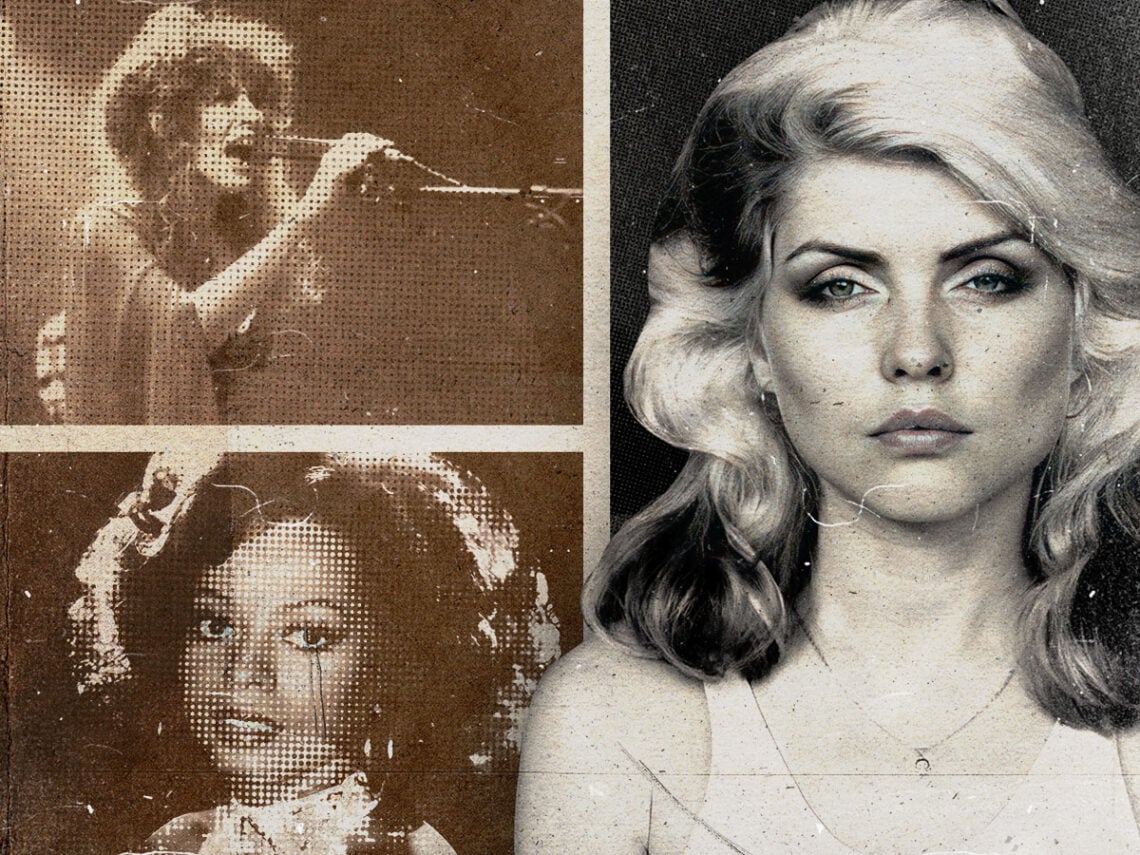
The 15 greatest frontwomen of all time

From Debbie Harry to Janis Joplin, fronting a band takes an immense amount of musical skill, the ability to captivate an audience, and a whole lot of guts—no easy feat for anyone. And for a while, the music scene seemed to showcase only all-male bands who were challenged to take on those tasks. But when women started to take their place at the front of the gang and were under the spotlight, the world found that they excelled and did it with more style and grace than ever before.
Navigating the ropes of the male-dominated music industry and doing it with the utmost mastery and excellence, these women showed the world that being in a band is certainly not a boy’s club. As part of our focus on female representation in the arts, we are bringing you the 15 greatest frontwomen of all time.
As in most male-dominated industries, the rock world was a tough place for women for a long time. Hell, it’s still a tough place to be. But there’s no doubt that without the pioneering women mentioned below, the world would be worse off. Each singer delivered songs and performances that not only matched the men in their field but surpassed them with guts and gusto time and again.
While other notable singers from the music world don’t make our list because of their more prominent singer-songwriter accolades (Billie Holiday, Aretha Franklin, Cher, Kate Bush — to name a few), it’s still brimming with talent and the kind of legendary statuses that ensure their names will be in the annals of music history.
15 greatest frontwomen of all time:
15. Courtney Love (Hole)
There was no way that Hole frontwoman Courtney Love was not going to be on this list. A bewitching performer whose secret was to surprise in their glory days, for all those lucky enough to have seen Hole in action, it was Love, with her husky voice, provocative lyrics and influential guitar-playing style that marked them out.
Not afraid to cause a scene, there are many reasons why Love is hailed as both an alternative rock legend, and one of music’s great performers. Straddling the line between ironic and serious, there’s no one quite like Courtney Love.
14. Kathleen Hanna (Bikini Kill, Le Tigre)
Although Kathleen Hanna is someone who is very much revered, it’s safe to say that she does not get nearly as many plaudits as she deserves in the mainstream for the giant steps she made for women in music.
The unrelenting creative force behind riot grrrl pioneers Bikini Kill and dance-punk heroes, Le Tigre, she is one of the many that original punks such as Poly Styrene and Siouxsie Sioux opened the gates for. The definitive character of the third-wave feminism of the early 1990s, and a bringer of copious amounts of energy to the live setting, Hanna still has it to this day.
13. Poly Styrene (X-Ray Spex)
What Poly Styrene did for music cannot be understated. One of the few people of colour in the first wave of British punk, the X-Ray Spex frontwoman was also one of the first female vocalists in the entire genre, two momentous points cannot be understated. Without her work, we could say goodbye to future stars such as Skin from Skunk Anansie and more contemporary ones such as Nova Twins.
Political, comedic, and a wholly individualistic performer often dressed in colourful garb, Spex’s debut single ‘Oh Bondage Up Yours!’ is one of the ultimate politicised punk anthems. It was all down to Poly.
12. Hayley Williams (Paramore)
Let’s be honest; much of Paramore’s world-beating success is down to the swashbuckling brilliance of Hayley Williams. She owns the two things that make a truly great performer – one hell of a voice and a commanding stage presence.
Her striking hair colour and eye-catching costumes combine with her mesmerising energy to give Paramore their figurehead, which continues to earn them fans in the live setting. From their emo days to the dynamic indie pop heights of recent times, Williams is Paramore, and without her, they’d be nothing.
11. Ronnie Spector (The Ronettes)
Ronnie Spector was one of the first great frontwomen. Sometimes referred to as the original “bad girl of rock and roll”, she co-founded and fronted the girl group The Ronettes, who delivered classic 1960s hits such as ‘Be My Baby’ and ‘Baby, I Love You’.
An example of defiance in the face of great adversity, thanks to the abuse she suffered at the hands of her husband Phil Spector, in the studio, live setting and in broader life, Spector was unfailingly righteous. From her younger days to her last ones, her performances never failed to stir something deep within. Class is natural.
10. Dolores O’Riordan (The Cranberries)
Dolores O’Riordan, the Irish lead vocalist and lyricist for the alternative rock band The Cranberries, wowed the public with her unconventional singing techniques and quickly established herself to have one of the most recognisable female voices in the 1990s rock scene.
O’Riordan, who sadly passed away in 2018, left an everlasting mark on the world and was even praised by Irish President Michael D Higgins, who noted the band’s “immense influence on rock and pop music in Ireland and internationally.”
Her passion and unequivocal vocal performances mean she’s guaranteed a spot on our list.
9. Siouxsie Sioux (Siouxsie and the Banshees)
Siouxsie Sioux’s contributions to the post-punk genre (among others) are indisputable. Along with her aloof demeanour and impressive musicianship, her signature dramatic cat-eye makeup, red lipstick, jagged hair, and all-black clothing would be imitated for years to come. Simply put, she changed the way a generation behaved.
With a string of UK top 20 singles, Sioux led Siouxsie and the Banshees to mainstream success and proved a force to be reckoned with in her ability to successfully reinvent the band’s sound, from punk to goth to psychedelia. Dave Sitek of TV on the Radio said about Sioux, “Her voice is, in its own right, the common thread through all of it. There is no one who sings like that. And I think there are a lot of people who were influenced by it, but even if you try and sing like her, you can’t do that.”
Siouxsie Sioux did the most difficult things and remains artistically daring and commercially relevant throughout her career.
8. Chrissie Hynde (The Pretenders)
As the founding member, guitarist, lead vocalist, and primary songwriter of the rock band The Pretenders, Chrissie Hynde has proved herself an ever-present force in the industry, continuing her legacy well into the twenty-first century.
After spending much of the ‘70s in Europe working odd jobs with a few failed band attempts under her belt, Hynde formed The Pretenders in 1978 and found almost effortless success.
With her signature choppy fringe, punk attire, and incredible talent, vocally and musically, Hynde’s status as one of the greatest frontwomen ever is a rightful achievement.
7. Ann Wilson (Heart)
Being a part of the first hard rock band fronted by only women surely guarantees a spot on the list alone. But it’s Ann Wilson’s extraordinary artistry that truly established her. Her incredible vocals in songs like ‘Crazy on You,’ gifted musicianship, edgy appearance, and outspoken nature all led her to icon status.
Wilson said of navigating through the tough music atmosphere in her prime, “It was darn nigh impossible for women in rock in the ’70s. There wasn’t a mould if you were a woman and you were in the entertainment in the ’70s. You were probably a disco diva or a folk singer, or simply ornamental. Radio would play only one woman per hour.”
Thankfully, her influence didn’t go unnoticed, and in 2013, she was inducted into the Rock and Roll Hall of Fame as a member of Heart — a well-deserved feat.
6. Janis Joplin (Big Brother and the Holding Company)
A Texas girl with the soul of a beat poet and an incredible bluesy voice, Janis Joplin is one of the most remembered artists in the history of rock ’n roll. Coming off the back of the polished 1950s, Joplin won audiences over with her unconventional hippie appearance and unbelievable chops. But this natural brilliance didn’t come without its tribulations.
After a failed stint in the Haight-Ashbury district in 1963, she moved back home and continued singing, which eventually attracted the attention of San Francisco-based psychedelic rock band Big Brother and the Holding Company.
Leading the band into legendary territory with songs like ‘Summertime’ and a performance at Monterey Pop Festival in 1967, Joplin is remembered today as one of the most influential frontwomen ever.
5. Joan Jett (The Runaways and The Blackhearts)
Founding member of The Runaways, Joan Jett paved the way for all punk rockers; with her bold move to come out with songs like ‘Cherry Bomb’ amid the disco-crazed ‘70s, she cemented a spot in the collective consciousness.
Taking a cue from glam rockers like T. Rex’s Marc Bolan and making the style her own, Jett is the epitome of a successful bandleader.
With their risqué subject matter and stage attire, which included the young girls sporting lingerie and Jett in her signature red jumpsuit, the band was certainly ahead of their time. Now, they are appreciated more than ever, and Jett is noted for her brilliant and trailblazing contributions to the punk rock genre.
4. Grace Slick (Jefferson Airplane)
A key figure in San Francisco’s Haight Ashbury, summer of love psychedelia, Grace Slick was undoubtedly one of the pioneers for women in rock ‘n’ roll and a daredevil antagonist too.
Performing with bands The Great Society, Jefferson Airplane, Jefferson Starship, and Starship, she easily navigated a tough male-dominated musical climate. It’s a position that Slick has rarely climbed down from.
“I shaved my legs, but I talked like a truck driver,” she said. But it was her incredible vocal talent and entrancing aura that established her in the end, creating psychedelic tunes such as ‘White Rabbit’ and ‘Somebody to Love,’ which become instant smash hits because of her genius.
3. Diana Ross (The Supremes)
Diana Ross is impossible to overshadow with her old Hollywood-esque charm and divine energy, which makes having her unbelievable chops even more captivating. Beginning her career with iconic Motown group The Supremes, she played an instrumental role in catapulting the group into stardom and making what is still of the world’s best-selling girl groups to date.
Rock Journalist Robert Christgau said about Ross’s contribution to The Supremes, despite their strictly curated image, “They were transcended with the vivacity that is Diana Ross’ great gift. No matter how she is stylized, no matter what phony truism she mouths, this woman always lets you know she is alive.”
There’s no doubt that Ross deserves her spot on our list as one of the queens of the band world.
2. Stevie Nicks (Fleetwood Mac)
Stevie Nicks’s resurgence in popularity with the younger generation only further cements her status as a timeless icon. But as effortless as she makes it seem, Nicks’ lengthy career began with years of obscurity and intense work.
Since her early days with Fleetwood Mac, she has enchanted audiences with her flowing shawls and mesmerising vocals. Friend and collaborator, Heartbreakers guitarist Mike Campbell encapsulates this best. “Stevie is strong-willed,” he says. “And at the same time, she’s vulnerable and fragile. And that’s a really great combination. She became this icon for girls – and probably most guys in the Seventies wished they had a girlfriend like Stevie Nicks.”
With a hard-rocking yet dreamy range of hits, Nicks proved that women could be vulnerable, feminine, and serious rock ’n rollers— all at the same time.
1. Debbie Harry (Blondie)
Coming from a background of being a waitress, secretary, go-go dancer, and even a Playboy Bunny, no frontwoman has completely shattered notions of what it means to be a rock ’n roller than Debbie Harry.
Using the name she got catcalled to her advantage, “Blondie”, the band quickly captivated audiences, with most credit due to their star player— Harry, with her bleach blonde hair and androgynous style. Harry has always been an advocate for women’s rights and isn’t afraid to speak her mind. “The only place left for rock to go is toward more girl stars. There’s nothing left for men to do,” said Harry in an interview. “There’s bound to be more male stars, but they can’t express anything new.”
Her impressive vocal range, innovative style, and fearlessness on the stage, often prowling like a caged animal, make her one of the most notable, fascinating and beloved frontwomen of all time.
