


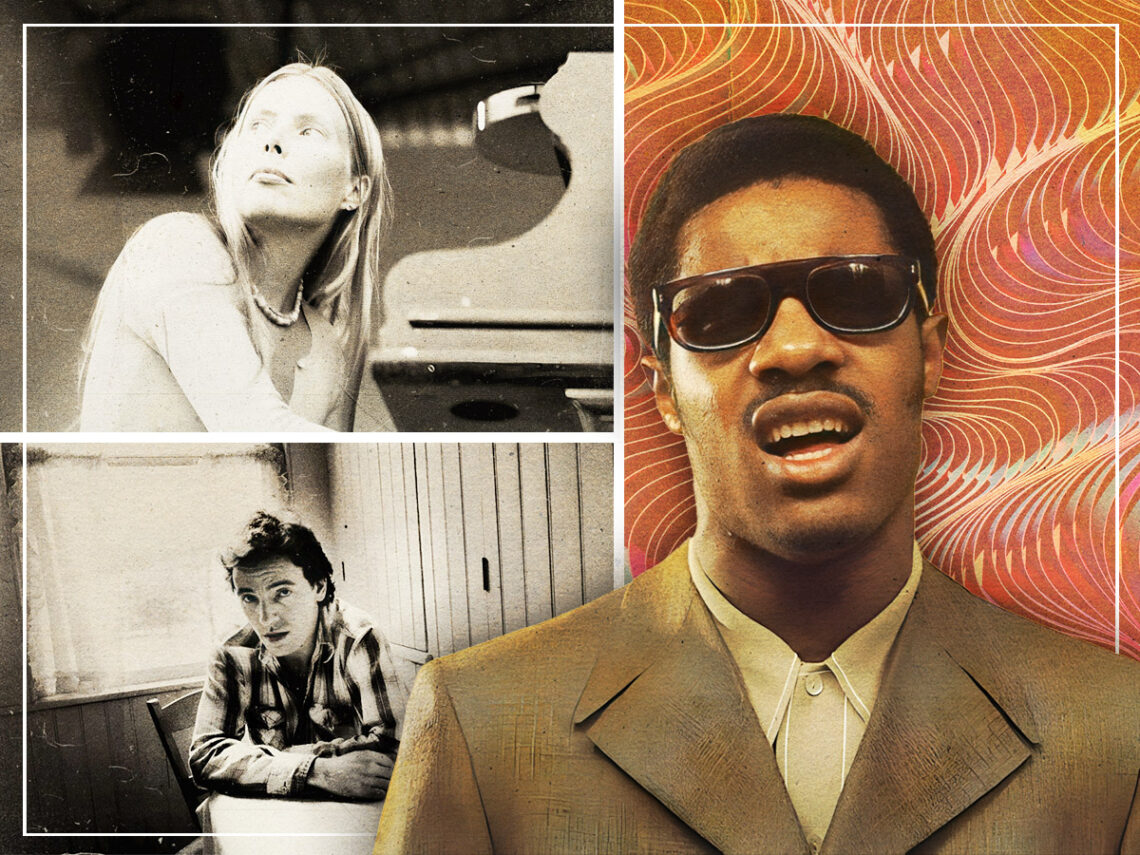
10 classic rock songs recorded by one person

One of the biggest jolts that can come from playing music is the communal experience among friends. No matter how someone approaches their instrument, a certain magic comes from hearing a live band getting together and unleashing hell to anyone within earshot. While the group mentality might be fun, some acts like The Beatles and Foo Fighters realised that playing solo could be easy.
Although some bands might thrive on their interaction in the studio, some songs work better with just a solo voice playing with a guitar or piano. Even though it might have left some bruised egos amongst the other members of the band, the reason why the solo performance works is the human connection, with the listener relating to the person playing rather than the traditional wall of noise.
It might be fun to fly solo now and again, but it also comes with its own set of challenges. Since most have to work off the rest of their bandmates, flying without anyone else is like doing a trapeze without a net, with everything completely exposed. Fortunately for the listening public, all of these are far from trainwrecks and show the musicians at their most vulnerable in the exact right way.
Even without the strength of their bandmates, some songs have become classic because of their solo interpretation, becoming even greater than any full band arrangement could have done. The band mentality might emphasise all for one and one for all, but many would be surprised what could be done when all musicians are given is a guitar and a big heart.
10 rock songs recorded by one person
10. ‘Pink Moon’ – Nick Drake
The entire road to creating Nick Drake’s final album is one of emotional despair. Throughout his life, the folk singer had always dealt with mental and emotional stress and would often detail it in his songs. Although the lyrics are pitch black when taken on their own, his knack for melody on the title track is one of the most mellowing experiences one can have wearing headphones.
As Drake talks about a pink moon being on its way to overtake the skyline, the soothing sounds of his finger-picked acoustic guitar greet the listener like a warm hug. Being played in a strange open tuning, it’s pretty much impossible for anything not to sound good on the guitar, especially when paired with the buttery voice of Drake, almost like he’s welcoming in an old friend he hasn’t seen in a while.
Then again, the slight shakiness of his voice denotes the real problem at play here, almost signalling that something isn’t quite right in the mix. While Drake’s problems wouldn’t resurface for a few months after recording his parts for the album, this may as well serve as the calm before the storm in the history of the folk-rock icon.
9. ‘Both Sides Now’ (live) – Joni Mitchell
Of all the folk-rock legends that came before her, Joni Mitchell was of a slightly different breed. While she still had the same sense of romantic wordplay that other wordsmiths had before, her approach was far more artistic, like she was painting a picture for the listener across those few minutes. Once she had the bells and whistles removed from albums like Blue, her singular voice and guitar did wonders for songs like ‘Both Sides Now’.
As she strums away on her open-tuned guitar, Mitchell starts talking about the wonders that she’s seen around the world while still being relatively young. Even though there is a much brighter world ahead of her, there’s a pearl of worldly wisdom that she brings across in this tune, almost like she already knows that her words can inspire future generations. However, this was far from the last time the song got its special treatment.
After being kept at a distance for some time, Mitchell eventually recorded the song again with a string section decades into her career, finally feeling old enough to inhabit a song like that. Even though the re-recording has its place in rock history these days, this live rendition is still one of the superior versions of the tune, as a legend slowly strums away and waits for her congregation to join her.
8. ‘When Doves Cry’ – Prince
Prince was never one to wait around for the rest of his band to work on material. From the beginning of his career to his final days, ‘The Purple One’ almost seemed too gifted to be limited to one instrument, often playing anything and everything he could on every one of his records. Even though Purple Rain was his only project that got a co-branding with his band, the Revolution, ‘When Doves Cry’ is ripped straight out of Prince’s chest.
Coming midway through the production of the movie soundtrack, ‘Doves’ is a relationship song that works on various levels. When taken on its own, Prince is dissecting his relationships with everyone around him, blaming his upbringing as one of the reasons why he’s either never satisfied or too bold to take on any woman. Although the groove is still impressively full, Prince’s greatest strength in the song comes with his restraint.
Looking to give the song its unique character, Prince all but removed the bass line from the final track, giving the rest of the vocals and synthesisers space to breathe in the mix. Compared to the non-stop party that seems to be going on throughout most of the record, ‘When Doves Cry’ is the closest Prince would come to making something truly haunting.
7. ‘Highway Patrolman’ – Bruce Springsteen
Part of the appeal of getting a Bruce Springsteen record is how he will work off the E Street Band. Even though Springsteen’s lyrics have always been paramount to every project he has worked on, each would have been nothing were it not for the screeching saxophone of Clarence Clemons or the amazing piano lines from Roy Bittan. When combing through some of the darkest tales he could muster, ‘The Boss’ needed to go on his own through most of Nebraska.
While much of the songs on the record come from various tapes that Springsteen had recorded in his bedroom, the song most suited to the style is ‘Highway Patrolman’. Telling a story of a policeman going to crack down a barroom fight, he is shell shocked when he finds out the man he might be sentenced to life in prison is his brother. As the story unfolds, Springsteen gives the listener every detail of these siblings’ lives, as they spent their nights as kids before the younger one turned his back on his family.
Instead of trying to apprehend him and doing his job properly, the patrolman decides to chase him to the border before finally slowing up and watching his brother’s taillights fade into the distance, never to be seen again. Many of Springsteen’s characters usually do the right thing by the end of the song, but sometimes the blood connection is too much for someone to overcome.
6. ‘Head Like a Hole’ – Nine Inch Nails
At the start of the ‘90s, change was already in the air for rock and roll. Although the hair metal craze was still in full swing for the first few years, something more angsty was bubbling up from the surface, waiting to wreak havoc on the charts once it got its opportunity. While Nirvana may have cracked down the boundaries for angry music, Nine Inch Nails beat them to the punch a few years earlier on ‘Head Like a Hole’.
Written and recorded in 1989 by only Trent Reznor, this has all the hallmarks that came with heavy industrial rock. Featuring a blistering guitar riff and thousands of different synths and sample patches, Reznor is frothing at the mouth with anger, telling this sorry excuse for a human being that they will get what they deserve after doing him wrong.
While Reznor’s pain would only get more pronounced as he reached the ‘90s, the rest of the band delivered on every promise the studio version had, with guitarist Richard Patrick becoming a staple of their live show before cutting things off with Reznor to form Filter. The makings of The Downward Spiral may have been a distant fantasy, but there’s still something to respect about a man boiling with rage making something as emotionally potent as this by himself.
5. ‘Blowin’ in the Wind’ – Bob Dylan
Before The Beatles hit it big, there was no such thing as a major rock band. Even though there may have been some great acts that had come and gone on the charts, they were normally limited solo artists that just happened to have a backing band behind them. Though anyone would need a backing group to communicate their feelings, Bob Dylan needed a guitar and some of the harshest words the ‘60s generation had ever known.
Having gone through some of the most pressing political times in American history, Dylan is looking for answers throughout ‘Blowin’ in the Wind’, asking how many times the American people have to roll over and suffer before the government lets up on them. Right at the start of the ‘60s, this became one of the firestarters for the counterculture, with every new American rock band adopting some sort of folk-rock tinge to their songs to make them worthy successors to Dylan.
Even The Beatles started paying attention, with John Lennon famously wanting to adopt Dylan’s aesthetic on future songs like ‘I Should Have Known Better’ and ‘You’ve Got To Hide Your Love Away’. For all of the finger-pointing going on, Dylan doesn’t claim to have all the answers. He’s just here to ask questions, and the rest of the world started to take his questions to heart.
4. ‘Higher Ground’ – Stevie Wonder
At the start of the ‘70s, Stevie Wonder had landed the opportunity that most artists only dream of. For the first time since he was a teenager, he was free from the shackles that Motown put him under and was finally ready to make some of the most ambitious music of his career. Although plenty of famous musicians would have given their left arm to work with Wonder, he could get a groove going just fine by himself.
Throughout the album Innervisions, Wonder delivers a masterclass in both character portraits and musical showmanship, playing most songs by himself, like ‘Living for the City’. Although there are different effects going on in various songs, ‘Higher Ground’ is the product of Wonder kicking back with what he knows best, featuring an amazing bass line and one of the most soulful vocals he ever laid down, doing everything he can to reach the highest ground.
Though Wonder’s take on the tune was always known as a soulful cut in the world of R&B, the song also got a makeover in the late ‘80s, becoming a favourite amongst the Red Hot Chili Peppers, who turned in a fantastic cover with Flea doubling Wonder’s original bass line. For everyone in the know, though, nothing will eclipse anything with Wonder’s name on it.
3. ‘Pennyroyal Tea’ (Unplugged) – Nirvana
For the longest time, Nirvana frontman Kurt Cobain always felt insecure about his songwriting. Despite being responsible for knocking down everyone’s illusions of what rock and roll was supposed to be, Cobain always felt at arm’s length compared to other songwriters, thinking he was more known for noise than anything nuanced. In one fell swoop, though, his performance on MTV broke down any barrier between him and classic songwriters.
After allegedly not going well during soundcheck for the show, Cobain elected to sing ‘Pennyroyal Tea’ by himself when showtime started. With no real rehearsal and audible nerves coming from him before he starts to sing, Cobain offers up one of the most gripping performances of his career, as he desperately sings while sounding like he’s in legitimate pain behind the microphone.
Although there is one technical foul-up when coming into the final verse, Cobain even finds a way to turn that into a small victory, hitting the next chord strong to sound like he’s coming down from an artificial high. While no one may have known the mechanics behind the show’s broadcast until Cobain’s death, this is like hearing Cobain playing live at his own funeral.
2. The debut Foo Fighters album – Foo Fighters
For the first few months following Kurt Cobain’s death, Dave Grohl had no idea what he was going to do. After being in one of the biggest bands in the world, Grohl had to face the prospect of everything he had worked towards crumbling down around him. Instead of spending the rest of his life sulking about it, Grohl picked himself up by working at a studio a few minutes away from his house with a small idea of Foo Fighters brewing.
Outside of one guest appearance from Greg Duhli of Afghan Whigs, the first proper Foo Fighters album is comprised of Grohl playing every single instrument. When discussing the recording process, he remembered being excited that he could get the entire thing done on his own, including songs that would later become staples in the group’s catalogue, like ‘Alone + Easy Target’ and ‘I’ll Stick Around’.
All that was left was to put together a band, with Grohl tapping Pat Smear of Nirvana and the rhythm section of Sunny Day Real Estate to go out on the road with him for the next few years. While some of these songs may have worked wonders if restructured for Nirvana, hearing Grohl sing them was the first step he needed to properly heal.
1. ‘Blackbird’ – The Beatles
By the time The Beatles got to making The White Album, there was no room for compromising anymore. Although John Lennon and Paul McCartney always thrived on working together to make classic songs, the cracks were beginning to form in their partnership, oftentimes working on songs by themselves before bringing them to the rest of the band. While most of the album seems like every band member performing with a backing band, Macca found a way to make it work with just an acoustic guitar.
Based on Bach’s famous ‘Bouree in E Minor’, McCartney conceived ‘Blackbird’ as a song of hope in dedication to the black community in America still in the throes of the civil rights movement. Picking out pieces of melody as he ascends the fretboard, McCartney’s voice is the personification of the titular bird taking flight, with the guitar providing a subtle nudge to push everything forward.
Without the rest of the band, most of the additional instrumentation comes from the sound of various blackbird sounds archived at Abbey Road as well as a metronome slowly keeping time alongside McCartney. Although The White Album is packed to the gills with amazing tracks from every one of The Beatles, the beauty of McCartney’s melody comes from the simplicity he incorporates into every word he sings.

Never Miss A Beat
The Far Out Beatles Newsletter
All the latest stories about The Beatles from the independent voice of culture.
Straight to your inbox.