


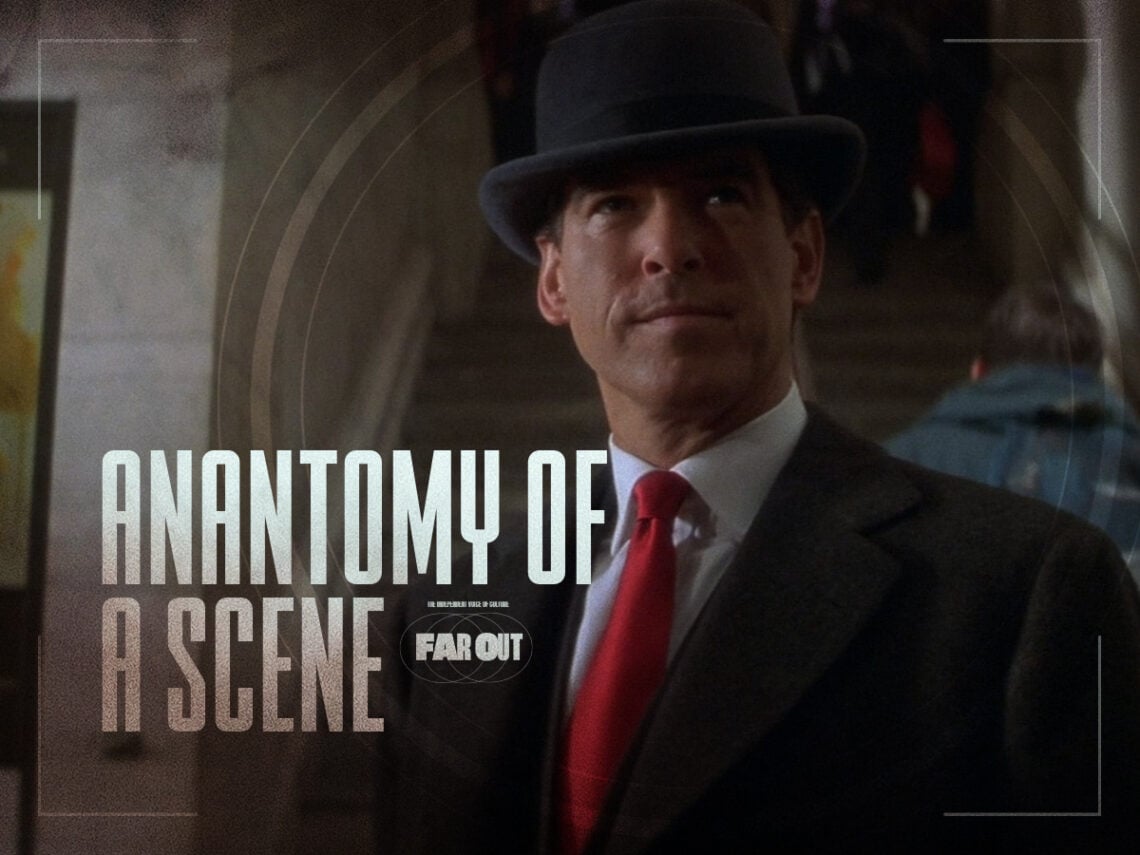
Anatomy of a Scene: Returning a stolen painting in ‘The Thomas Crown Affair’

It’s rare for a remake to justify its existence, let alone outdo the original. 1999’s The Thomas Crown Affair accomplishes the latter, not just matching Norman Jewison’s 1968 caper but clarifying and expanding upon it to make a true 1990s classic.
It stars Pierce Brosnan as the titular billionaire who also happens to be an art thief. When he steals a Monet painting from the Metropolitan Museum of Art, Rene Russo sweeps in as Catherine Banning, an insurance investigator sent by her Swiss bosses to track down the masterpiece. Despite being on opposite sides of the law, they are two sides of the same coin, and they inevitably strike up a torrid romance.
Shortly before the end of the film, there is one last heist. After a blissful trip to Martinique, Banning is blindsided when she sees photos of Crown with a young employee. Unable to explain the true nature of his relationship with the young woman, he tells Banning that he will return the Monet so that they can be free to run away together. She can either meet him afterwards and continue their romance or tell the authorities and ensure that he is caught red-handed. She chooses the latter.
When Brosnan enters the museum lobby, he is being watched by a team of detectives and police officers, including Banning. He stands in full view of the cameras, wearing an overcoat and bowler hat and holding a briefcase. Staring directly at one of the cameras, he removes the hat and spins slowly on the spot, making sure the detectives in the room and off-site can see him. Putting the hat back on, he strides into the gallery as the needle drops on Nina Simone’s ‘Sinnerman’.
Director John McTiernan said in the DVD commentary that he wanted to use that particular track because it was propulsive but not cacophonous. He wanted it to drive the scene rather than drown it, and that’s exactly what it does. The heist is an intricate dance, meticulously choreographed by Crown to be a spectacle.
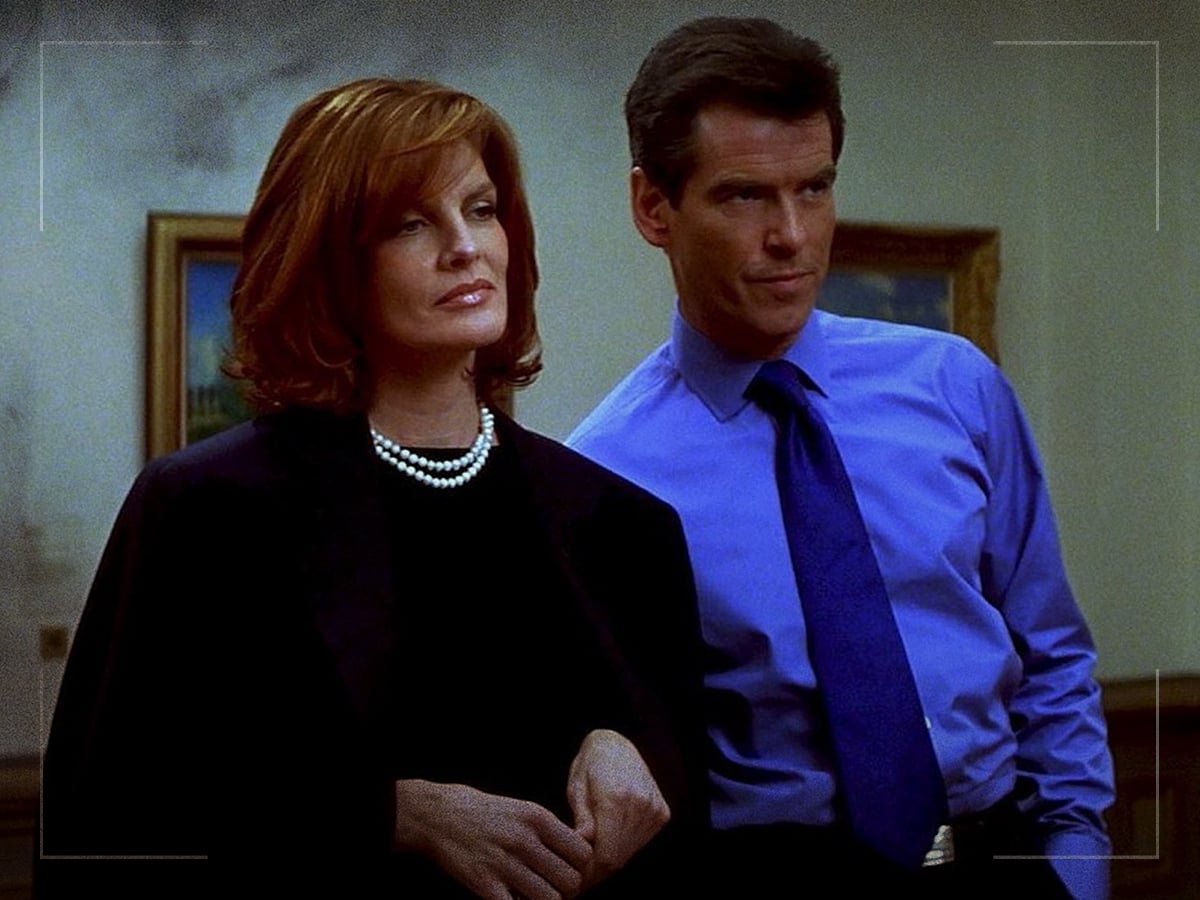
As he strides through the crowded museum, trailed by detectives, he sets down his briefcase and picks up an identical one, which is picked up by a man wearing an identical outfit. More men in bowler hats and overcoats carrying briefcases filter through the museum, sending the detectives in circles. Watching from the control room, Banning’s face shifts from confusion to realisation to delight.
When he reaches the gallery where the Monet belongs, Crown throws smoking flares under the security gate and pulls the fire alarm to activate the sprinkler system. Earlier in the film, he had loaned the museum a Pissarro to hang where the Monet had been. As water falls from the ceiling, the Pissarro painting dissolves to reveal the Monet, which had been hiding in plain sight under the water-soluble forgery.
Despite its intricacy, this scene was never scripted. On paper, according to McTiernan, it was only a basic action sequence. You might expect the director of Predator and Die Hard to leave it at that- a pulse-pounding action sequence built around the revelation of a stolen painting – but he saw it as something completely different. He wanted it to be an elaborately stage romantic gesture, not a heist. It wasn’t about stealing a painting or putting it back, it was about Crown trying to put things right with the woman he loved. “He outwitted the cops in order to save the two of them,” McTiernan said. “That’s what the audience was rooting for.”
Ultimately, it’s the editing that helps solidify this conceit. As the scene unfolds, the camera cuts between the emotion flitting across Russo’s face and Brosnan’s triumphant showmanship. He looks like a man who is publicly going for broke to win back his girlfriend, not a self-satisfied conman who enjoys sticking it to the man. It’s the heist movie equivalent of that New Year’s Eve speech in When Harry Met Sally, but Crown doesn’t have to say a single word to get the point across.
The scene encapsulates the key difference between the 1968 film and the remake. In the original, Steve McQueen’s Crown is a cool, calculating bastard who gets a thrill out of his daredevil antics. Faye Dunaway plays his female adversary, an independent investigator named Vicki Anderson. Their attraction is predicated on opposition and danger.
His final heist is not to return the painting to free them of any ethical qualms, but to steal another one. There is no romance about it. Like Banning, Anderson chooses to tip off the police about the heist, but unlike in the 1999 film, McQueen’s Crown is more than happy to leave her crying and alone in a cemetery while he flies away, victorious.
They see each other as opponents from beginning to end, with sex as a pleasant byproduct. In contrast, the competitiveness between Crown and Banning in the remake is quickly drowned out once they fall for each other. At that point, the cat-and-mouse game becomes a question of trust, not winning and losing. It would be tempting to get all of this across to the audience via dialogue, but McTiernan wisely chose to let the actors and the action do the talking. The final heist explains it all.
