


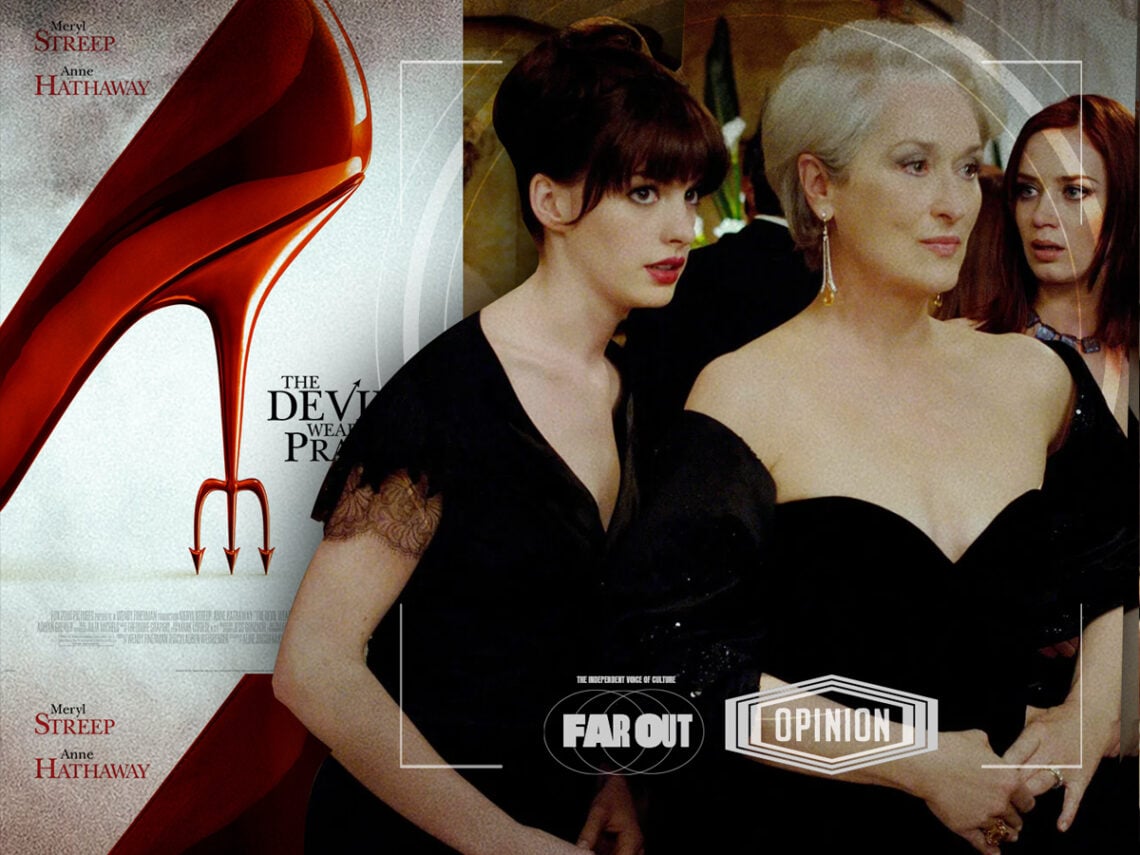
Why ‘The Devil Wears Prada’ has never gone out of style

It’s been 20 years since The Devil Wears Prada was released. Following an aspiring journalist who reluctantly becomes the personal assistant of a famous fashion magazine editor, it was a hit, becoming the 12th highest-grossing film of 2006. But its legacy has far outstripped its initial success.
Thanks to the infinitely quotable script and Meryl Streep’s now-iconic performance as editor Miranda Priestly, it has become an unlikely cultural touchstone despite fitting into a genre that is rarely respected. With a long-threatened sequel now in cinemas, it’s worth considering why a comedy about unattainable beauty standards and workplace exploitation has remained such a feel-good classic.
The 2000s were full of romantic comedies about career women, but it was the last gasp of a dying genre. Bookended by When Harry Met Sally in 1989 and Notting Hill in 1999, that golden age of rom-coms was on its way out, as proven by the increasingly dire offerings like 2003’s How to Lose a Guy in 10 Days and 2005’s Hitch. The Devil Wears Prada featured a similar metropolitan setting and airy tone, but instead of placing its hapless Manhattanite heroine in a romantic predicament, it placed her in a professional one.
The film owes a debt to Sex and the City, of course, with its preoccupation with fashion and cosmopolitan women who can do it all (in stilettos, no less), but it is also a one-off. You could spill an endless amount of ink dissecting its portrayal of the cutthroat world of fashion, the chronic mistreatment of personal assistants, and the demonisation of women who put their careers ahead of their inadequate partners, but let’s be honest: it all comes down to the script and the actors. Every once in a while, the universe conspires to put the right people in the right place at the right time, and The Devil Wears Prada is one of those instances.
Aline Brosh McKenna is the first pivotal element. Her script, with its brutal one-liners and carefully constructed monologues, is the backbone of the film. She found a way to make all the female characters sympathetic but not universally likeable, which is still a rarity two decades later. Miranda might be a nightmare of a boss, but there is no question that she has earned her influence. McKenna described her script as “competence porn,” highlighting the professional prowess of the main characters. This distinguishes it from many movies at the time that constantly placed women in glitzy jobs but never showed the audience what the work looked like or how it shaped them.
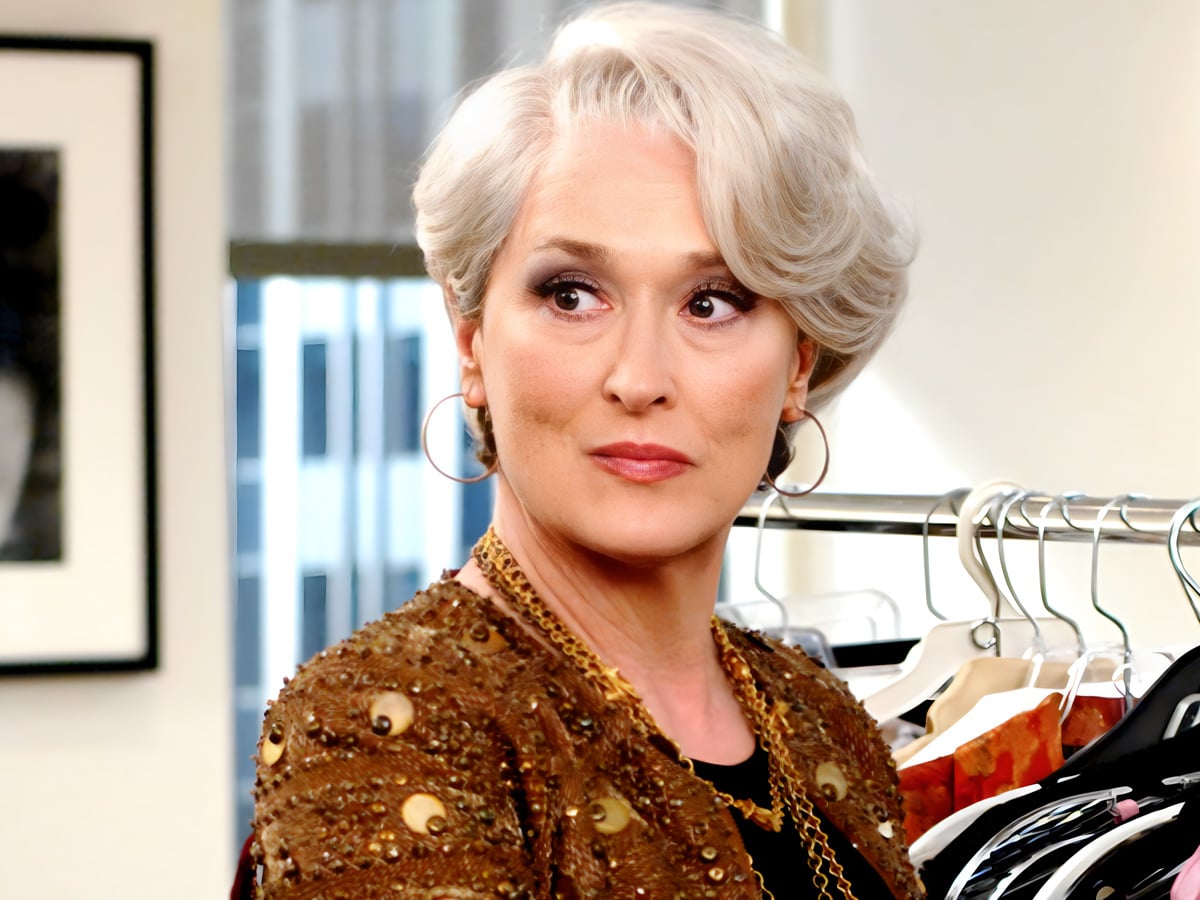
Streep is the second element. Without her line delivery of fleeting phrases like “That’s all,” “Groundbreaking,” and “Why is no one ready?” the film would not be a classic. In fact, you can imagine other actors either over-egging those lines or underselling them. Her delivery of the monologues is equally unparalleled. The one about the cerulean jumper, an airtight defence of the influence of fashion that would rival the closing arguments in a homicide trial, has attained cult status in its own right. Until Dan Levy teamed up with Catherine O’Hara for Schitt’s Creek in 2015, the alchemy of McKenna’s writing and Streep’s line delivery was unmatched.
You can’t discount the other performances as well. Anne Hathaway as the hopeful journalist-turned-fashion insider, Andy, is perfectly cast, as long as you ignore her beauty and thinness in the “ugly duckling” phase at the beginning of the film. Her thousand-watt smile and over-eagerness make her the mirror image of Miranda’s steely authority, but when she turns her back on the fashion world to follow her journalistic dreams, we believe that she has what it takes to succeed in an equally cutthroat profession.
Then, there’s Emily Blunt. This was just her second film following an auspicious debut in Paweł Pawlikowski’s under-appreciated 2004 drama My Summer of Love. She had a handful of supporting roles in TV shows as well, but there was nothing to suggest that she could out-act Meryl Streep in what would become her 14th Oscar-nominated performance. As Emily, Miranda’s long-suffering, utterly committed assistant, Blunt is withering, muttering insults and rolling her eyes to devastating comedic effect. It’s no wonder the sequel upgrades her character to the primary antagonist.
There are many reasons to find fault with The Devil Wears Prada. Hathaway’s costumes occasionally look like she just stepped out of Hannah Montana’s closet, and the parodying of the early 2000s obsession with skeletal thinness is so gentle that it occasionally comes across as approval. The storyline has some holes in it, and the men (aside from the infallible Stanley Tucci) are generally reprehensible. But all of that is window dressing. This is a movie that has demonstrably outlasted whatever narrative quibbles one might have with it, and will outlast its sequel too, no matter how disappointing it might be.
