


The only line in ‘The Devil Wears Prada 2’ that makes sense

20 years after the first film skewered the cutthroat world of fashion and magazine publishing, The Devil Wears Prada 2 is out in cinemas, and it struggles mightily to justify its existence. None of the actors have changed in two decades.
Their faces appear to have been preserved in amber or cryogenically frozen or injected with salmon sperm, or whatever it is they get up to in Hollywood these days. They could have set this film one month after the events in the first movie, and no one would have questioned it. In contrast, the characters seem to have undergone personality transplants.
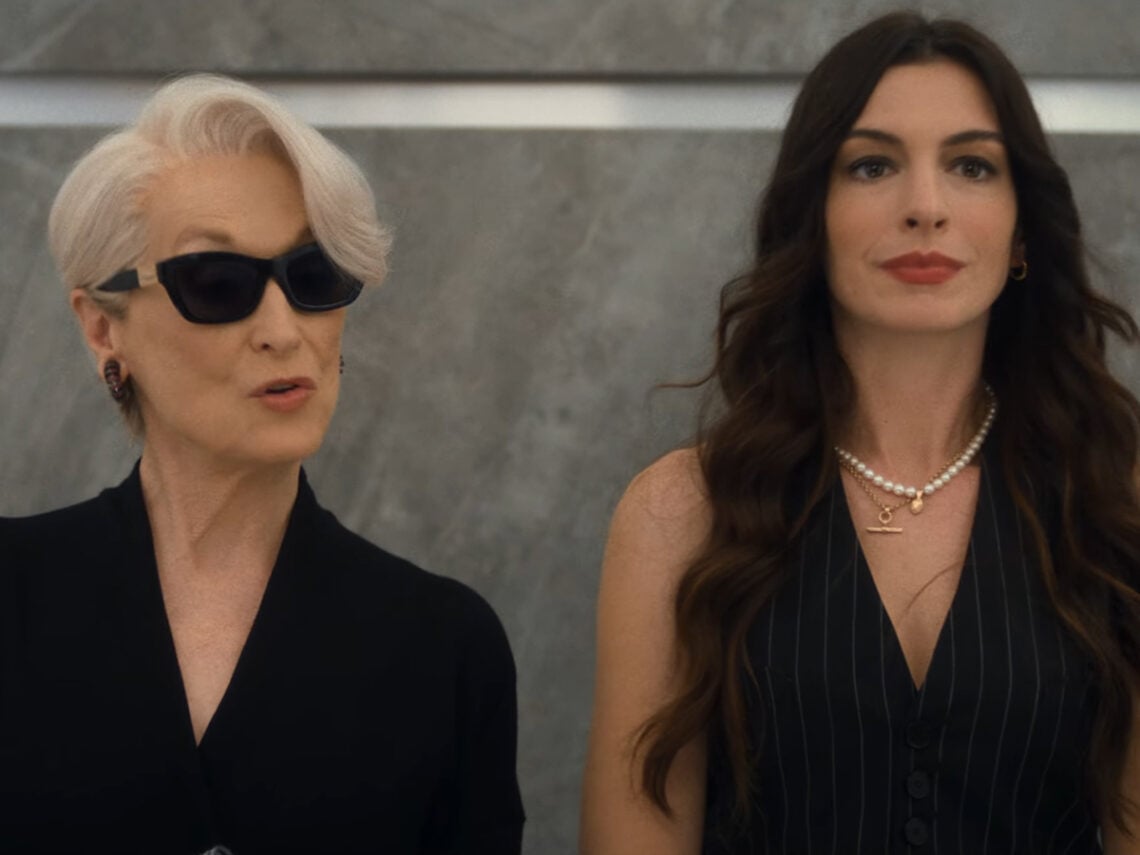
Meryl Streep’s Miranda Priestly has no edges. A few of her lines seem designed to wither, but instead, they fall stiffly and awkwardly, like the hem of a polyester dress. We see her in relaxed settings more than once, which is an absolute sacrilege. She even wears slacks in one scene. There is a clear attempt to bring in a modern HR perspective to the proceedings. During meetings, Miranda’s minions try to restrain her from using offensive language.
But the transformation isn’t just about Gen Z workplace culture. Miranda is no longer a titan. She’s just a corporate stooge. We don’t get any scenes in which she wields her expertise like a weapon; we just see her letting her guard down so often that she seems to be in a permanently vulnerable state. It’s as if screenwriter Aline Brosh McKenna didn’t go back and read her script for the first film before writing the script for the sequel.
Anne Hathaway’s Andy is equally alien, but for the opposite reason: she does not seem to have experienced anything in the past 20 years. We are told that she has been living all over the world doing “serious journalism”, and yet, when she is brought back to Miranda’s magazine, Runway, it’s as if the previous two decades are wiped from her memory. Unlike Miranda, Andy is so similar to her previous self that she hardly seems like an adult.
She finds childish ways to earn Miranda’s approval, batting her eyes, loitering around her office, and exuding all the pick-me energy of Hermione Granger on day one at Hogwarts. She’s just won a journalism award for something. She wrote a two-piece spread on the Federal Reserve. But now, she’s giggling over couture and flying into a panic about tracking down a billionaire divorcée so Miranda can produce viral clickbait.
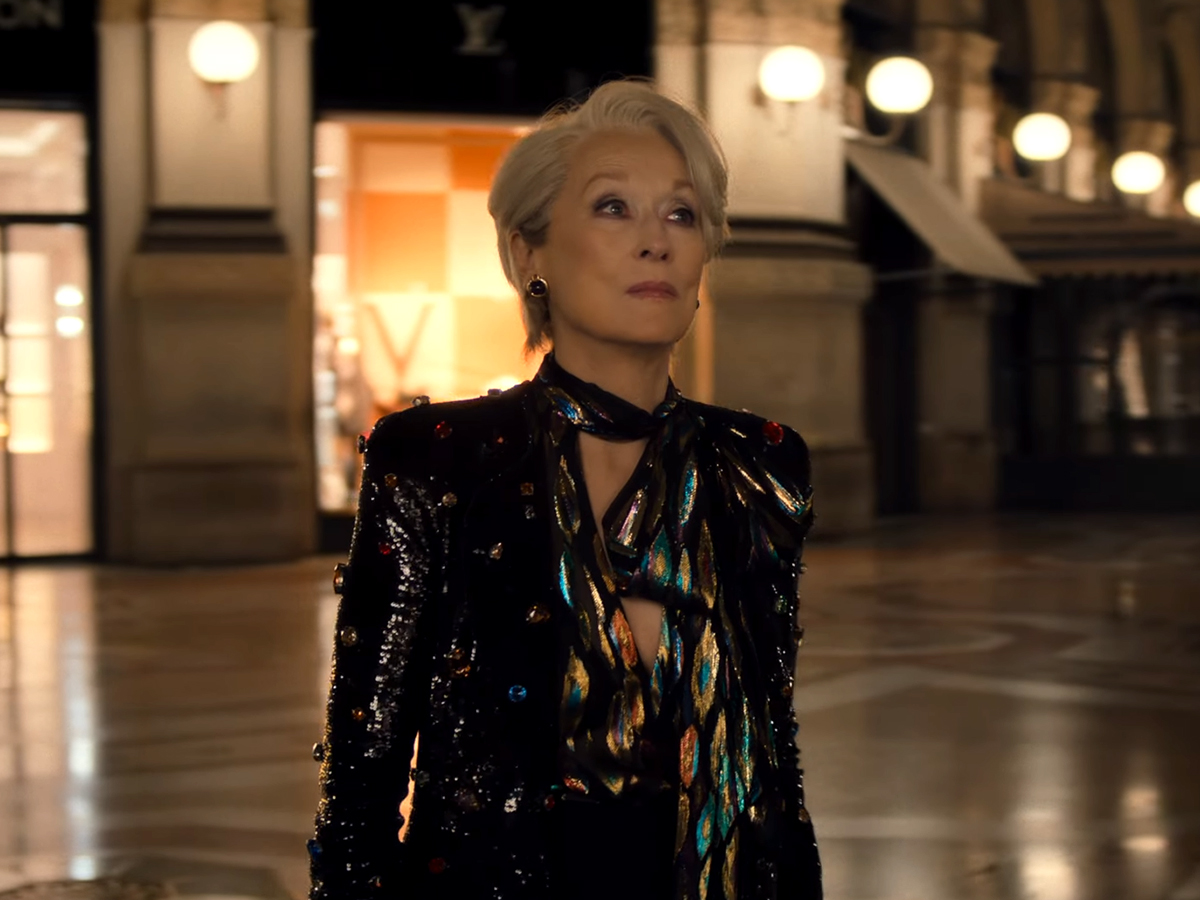
The only characters who seem like plausible continuations of their previous selves are Emily Blunt’s Emily, who now works at Dior and is dating a Jeff Bezos-style dipshit, and Stanley Tucci’s Nigel, who is still peering at film negatives through a tiny shot glass and wearing three-piece suits on a Wednesday. Unfortunately, they are not the main characters, so we are left with two extraterrestrial creatures who have commandeered the impossibly youthful bodies of Meryl Streep and Anne Hathaway.

Amongst the fog of poor writing and product placement, however, there is one shining line of dialogue that breaks through. It takes place near the end of the movie, after the script has floundered in callbacks and then vomited a flurry of plot machinations to turn Runway into the underdog. Miranda and Andy are in the back of a car, pleased with themselves about a successful bit of Succession-style c-suite diplomacy, and they’re feeling misty-eyed about the future of their rapidly deteriorating industry. “I just love the work,” Miranda says simply. “Don’t you? I just love working.” For a moment, it’s as if Meryl Streep had entered the building again, both as the real Miranda Priestly and maybe even as herself.
One of the reasons the original Devil Wears Prada became so revered is that it focused on women in the workplace. Using the same light, witty tone as a rom-com, it centred women at work instead of in romantic relationships, passing the Bechdel test with flying colours at a time when movies like How to Lose a Guy in 10 Days and The Ugly Truth were taking feminism back to the Stone Age. Screenwriter Aline Brosh McKenna went on to co-create the series Crazy Ex-Girlfriend, which was an even more direct send-up of the rom-com genre, but The Devil Wears Prada managed to get the point across by omission rather than parody.
There are no real villains in the original film. Miranda is a tough boss whose conduct toward her underlings wouldn’t fly in 2026, but her competence is never called into question. She is the best at what she does. There is no question that she earned her position. All those one-liners and eye rolls are simply the flip side of a person who is always one step ahead of everyone else. It’s a joy to see someone excel so completely at their job. As McKenna put it, the film is “competency porn” more than anything else. It’s an early version of The Pitt, set in the world of fashion.
The only actual bad guys in the first Devil Wears Prada are the men Andy dates, and they’re so insignificant that they can’t truly be classified as villains. Andy is driven by her journalistic ambitions and is then briefly sidetracked by her ambitions at Runway, but at no point does her motivation switch to pleasing the men in her life. They complicate things, of course, but they never become her reason for existing. It’s a relief that, in the sequel, there is not a single mention of either of her boyfriends from the first film. Instead, Andy meets a man who is crazy about her, in awe of her career, and completely unthreatened by it. Most importantly, he isn’t on screen very much. Again, it’s about the work.
The Devil Wears Prada 2 is a disappointment on almost every level, and it’s hard to view it as anything other than a shameless cash grab, but that one line from Miranda stands out. It could be spoken by the Miranda of the first film, or Andy, or even Emily. It could be spoken by Meryl Streep herself. All of them are driven by their careers. We see them struggle to balance this with their personal lives, but we also see how it brings out the best in them. It’s not about glorifying America’s relentless “grindset”, it’s about showing women who are defined by what they can accomplish, not by who they can attract.
