


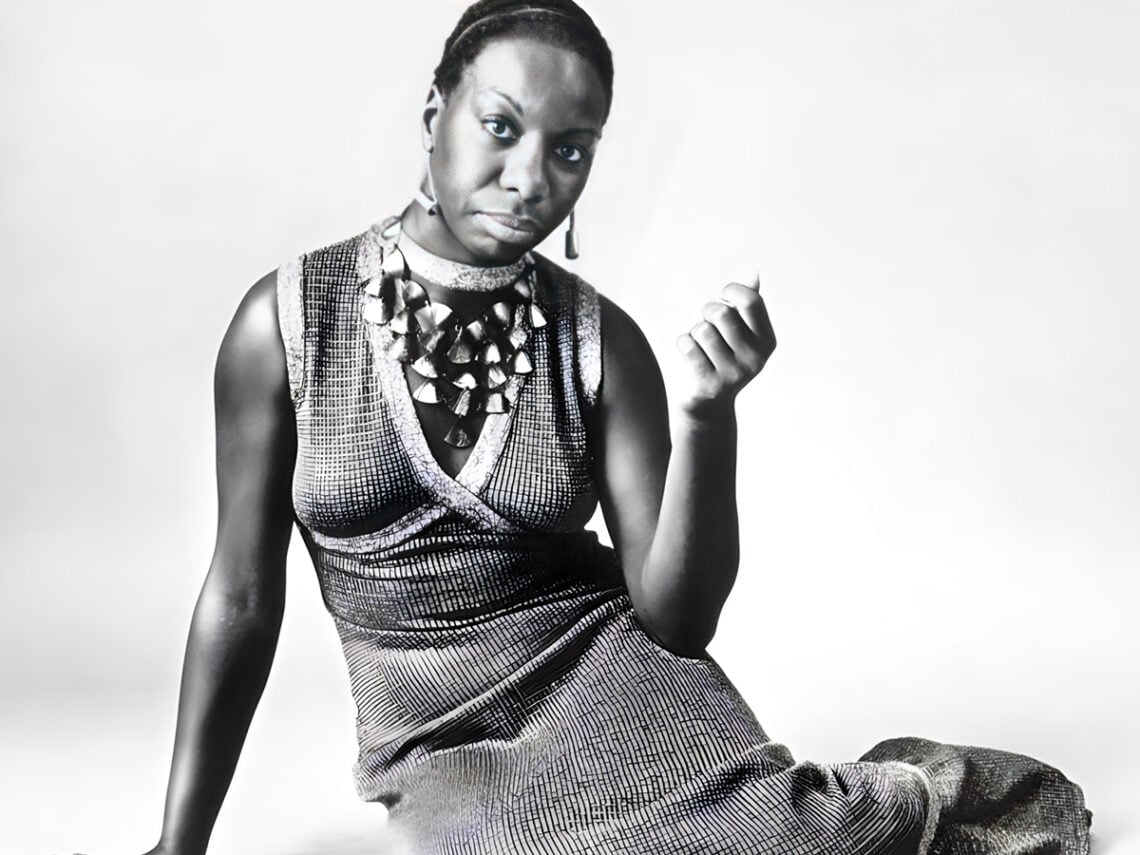
Who was the ‘Sinnerman’ in the classic Nina Simone song?

Serving as the climactic final ten minutes of her album Pastel Blues, ‘Sinnerman’ must go down as one of Nina Simone’s greatest artistic achievements. Although it’s not one of the artist’s own compositions in the vein of ‘Mississippi Goddam’ or ‘Four Women’, it’s just as original and significant in the pantheon of great African-American music in its own way.
Like Simone’s later recordings of musical theatre medley ‘Ain’t Got No, I Got Life’, the song is a radical reinterpretation of its source material. But unlike the contemporary show tunes Simone borrowed from the musical Hair for that subsequent single, the origins of ‘Sinnerman’ lie somewhere much deeper in the heart of her cultural heritage.
Typically spelt ‘Sinner Man’ prior to her version of it, the piece is an African-American spiritual of unknown authorship, which almost certainly dates back to the 19th century. Its incessant, driving rhythms and repetitious rounds ending in the refrain “all on that day” are hallmarks of spiritual music, which originated as work songs sung by slaves in the cotton fields of the southern United States.
Drawing on her mastery of the classical piano, Simone delivers the most extraordinary instrumental performance of her career by transforming the basic rhythm into a flowing stream of jazz, which quickens and slows, rises and descends, according to what the lyrics demand. At several points, free-flowing African rhythms are introduced, including a mesmerising section led by hand-clapping and followed by top-handed piano.
Simone first came across the song during gospel renditions aimed at reviving the Christian faith at her mother’s Methodist church. Yet her own version includes the instruction “go to the Devil”, which at first appears contrary to the religious teachings that inspired the song. The compelling call-and-response repetition of the word “power” mimics a religious conversion event that Simone would have witnessed as a child, but more in form than in content. The word seems to take on further significance when Simone and her band repeat it with such potency.
Which “sinner man” is she referring to?
The original spiritual ‘Sinner Man’ was ostensibly based on a story in the biblical Book of Exodus, in which a man attempts to run from God’s judgment on humankind’s Day of Reckoning, but in the end fails to escape his fate as a sinner. Somehow, Simone turns what should be an ominous warning to those who don’t follow the righteous path of God into a formidable statement of defiance.
The first extended calls of “power” and “kingdom” come immediately after Simone admits she “ran to the Devil” on the Lord’s instruction. She seems to be invoking the true experience of African Americans, who were brutalised and oppressed to such an extent by white slaveowners and the Jim Crow South that they had no choice but to rise up and fight back.
Simone repeatedly expresses her exasperation at the apparent limitations of God and religion in resolving the plight of black Americans. ”Don’t you see me down here prayin’?” she cries out before returning with an even more direct question in the song’s final lines: “Don’t you know I need you, Lord?”
She makes it very clear that turning to the Devil is ultimately the only option the “sinner man” has at his disposal. And not only the Devil but the Devil’s music, otherwise known as the blues. The music took the spiritual away from religious themes and gave rise to all other traditions of popular music in the United States thereafter, thanks to the cultural influence of former slaves from Africa. Not least, Simone’s own potent mix of jazz and unholy gospel.
And so, although the “sinner man” she’s referring to isn’t any particular person, he’s certainly more specific than the generic human sinner referred to in the Book of Exodus. He’s a black American forced into a corner from which he has to fight his way out. Through the black struggle, black power, and black music.
Three things in which Simone herself was an active and influential participant for most of her life, from the civil rights movement, her protest songs and association with the Black Panther Party, and her time living in Liberia. Nina Simone was the sinnerwoman she was singing about.
