


10 horror movies that deserved so much better

It’s fair to say that, in recent times, horror movies have become some of the most popular cinematic offerings. For whatever sociological or psychological reason, the audience seems to love the experience of being scared, and the result has been that many horror films are enjoying unprecedented commercial and critical success.
Over the last few years, films from the likes of Ti West, Robert Eggers, and Ari Aster have captivated horror fans’ attention, but that doesn’t mean that every single horror movie is capable of delivering quality. In fact, history has proven that horror films frequently arrive without being able to make good on their promise.
There are several reasons that a horror movie might fail even though it seems that, on the surface, it should succeed; a brilliant cast might fall victim to a poor script, or the scares of a film just might not land. Whatever the reason, though, it’s always a disappointment when we watch a shitty horror film that we hoped would do the real business.
We’ve compiled a list of ten horror movies that ought to have been better considering their premises, casts or origins. So, from completely overhyped supernatural offerings to dodgy remakes and sequels, here is a selection of admittedly terrible horror films that had so much promise.
10 horror movies that deserved to be better:
Longlegs (Osgood Perkins, 2024)
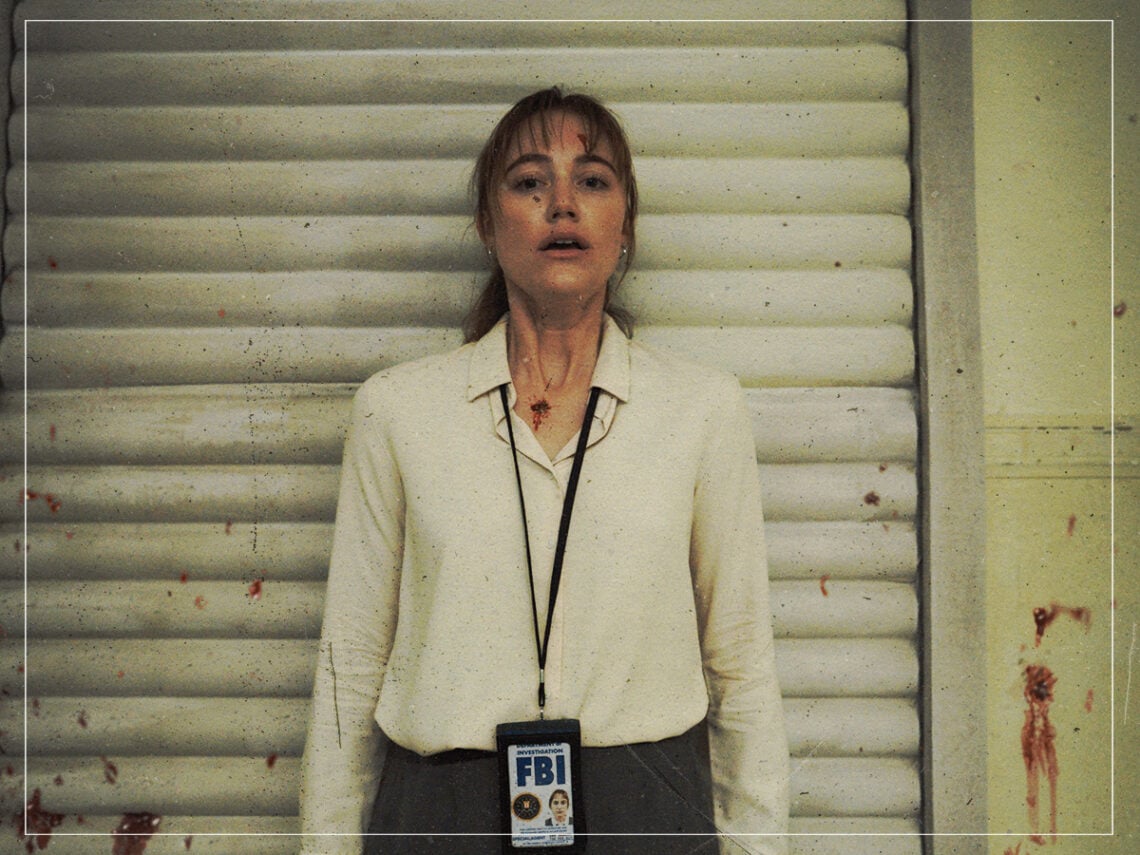
We begin with an instance of sheer hype. Looking at the press material that preceded the release of Osgood Perkins’ supernatural horror Longlegs, the film should have been one of the scariest of all time, but sadly, by the time the final credits had rolled, one couldn’t help but feel a touch disappointed by the lack of genuinely terrifying moments on offer.
Longlegs focuses on Maika Monroe’s young FBI agent, who is tasked with looking into a string of gruesome murders initiated by a creepy occultist played by Nicolas Cage. Both give commendable performances, and there is plenty to admire and be shocked by throughout the runtime, but overall, the film really deserved better, considering the hype surrounding its release.
Alien vs. Predator (Paul W.S. Anderson, 2004)
With two of the most iconic science fiction horror franchises serving as its backdrop and influence, there was every chance that the worlds of Alien and Predator colliding would have resulted in at least a half-decent mish-mash of cinematic brilliance, but the reality of Paul W. S. Anderson’s Alien vs. Predator, written with the original Alien writers Dan O’Bannon and Ronald Shusett, was admittedly shambolic.
Inspired by a 1989 comic book, the writing of Erich von Daniken and Aztec mythologic, AvP attempted to weave a story focusing on a group of scientists caught in the terrors of an ancient battle between the Xenomorphs and the Predators. Sure, the entire concept is daft, but the film, which itself relies on gore over story and shock, ought to have been left in the further reaches of outer space, never to be found again.
The Wicker Man (Neil LaBute, 2006)
There’s always going to be a danger when a beloved and classic horror film is made into a modern remake, but when Neil LaBute’s 2006 version of The Wicker Man arrived with Nicolas Cage in the lead role, 21st-century American horror reached a new all-time low. Bringing Robin Hardy’s 1973 original to a contemporary audience could have been a stroke of genius, especially with Cage in tow, but the results were nothing short of dreadful.
Hardy’s film told of a police officer who is sent to a remote Scottish island to find a missing girl, only to discover that the island’s inhabitants are all strange and violent Celtic pagans. Cage’s analogous character heads out the Pacific Northwest and proceeds to deliver some of the worst horror moments in cinema history, so bad that they border on the comical. A remake is always a tough challenge, but this one perhaps deserved better.
Jaws: The Revenge (Joseph Sargent, 1987)
As with a remake, there’s a great difficulty in bringing the brilliance of an original movie into a sequel, as we found when Joseph Sargent drove the final nail into the Jaws franchise. Steven Spielberg announced himself as a household name and made everyone shit-scared of sharks with his 1975 underwater terror, but its excellence could not be remotely replicated a dozen years later in Jaws: The Revenge.
Focusing on the widowed Ellen Brody and her belief that a vengeful great white shark is hunted down her family in the Bahamas, Sargent might have hoped that bringing Michael Caine to proceedings might have doused the fourth Jaws movie in an element of class. However, Caine would later admit that the 1987 film is “terrible”, and he wouldn’t be wrong, leaving Sargent to lament what might have been and the Jaws franchise in critical shreds.
The Happening (M Night Shyamalan, 2008)
The films of M Night Shyamalan are known to have some of the most surprising twists of all time, but there was only one real twist when it came to the American director’s science fiction effort, The Happening, and that was that it was utter crap. In 2008, the filmmaker of Sixth Sense, Signs and Unbreakable got it all wrong and delivered a film that completely negated his previous commendable offerings.
With Mark Wahlberg, Zooey Deschanel and John Leguizamo all featuring, The Happening, which tells of a strange natural disaster that causes mass suicides, stood every chance of being another crowning moment in Shyamalan’s career, but unfortunately, it ended up having a limp twist surrounding vengeful plants. Critics, actors and even Shyamalan himself ended up admitting that it wasn’t the director’s best, but, oh, how it might have been…
Insidious (James Wan, 2010)
So many people seem to love Insidious and consider the jump scare one of the best in 21st-century horror. But it’s not. It’s a bad film in every sense of the word. From the direction to the performances, special effects, and the movie’s overall look, there’s not much to redeem James Wan’s so-called cult classic. Yet, at its core, there’s a good idea to be found. We follow a couple as they move into a new house, hoping for a nice new beginning with their two young children.
Horror soon creeps into their life as their son, Dalton, begins acting strangely. After hitting his head, he falls into a coma before subsequently becoming a vessel for odd and supernatural happenings. The movie descends to pure chaos, but Wan fails to execute the film with any real expertise. It’s a huge letdown that could’ve been much better than it was.
Ma (Tate Taylor, 2019)
Not all horror movies have to be serious; some of the best use comedy to offset the scarier moments, subsequently luring us into a false sense of security. With Ma, we’re left to question if we’re meant to be laughing half as much as we are, with the titular character’s lines, such as “Don’t make me drink alone,” becoming meme fodder because of their sheer ridiculousness.
Ma was a failure, but at its core is a story that could’ve been told well. We follow Octavia Spencer’s character, a lonely middle-aged woman, who begins to surround herself with teenagers, finally making her feel popular. When she realises that she is being taken advantage of so they can party in her house, she begins to torture and murder them. The result is far-fetched, cheesy, and plain terrible.
Candyman (Nia DaCosta, 2021)
It’s always bold to choose to make a sequel to a pre-existing horror classic, which Nia DaCosta attempted in 2021 with Candyman. Updating the movie’s themes for the present day, Candyman is ambitious and certainly entertaining, but it is let down by stuffing too many ideas into the runtime, making it feel a little too overdone.
Yet, DaCosta presents many interesting concepts here, specifically regarding the racial issues that define the Candyman film series. Unfortunately, these concepts aren’t developed enough, and the movie fails to be truly scary. Horror remakes and sequels seem to be one of the most controversial aspects of the genre—rarely do they surpass the original.
Men (Alex Garland, 2022)
Alex Garland has directed many acclaimed movies, like Ex-Machina and Annihilation, while also penning movies like 28 Days Later and the novel The Beach. Sadly, his 2022 folk horror Men failed magnificently, suggesting that male directors probably aren’t the best people to make films with a main message that preaches that the patriarchy is bad. The film, starring Jessie Buckley, follows her character as she retreats to a country house following the death of her husband, only to be constantly harassed by the men who live in the surrounding area.
It’s an interesting idea, with the decision to use Rory Kinnear as every man, dressing him up as everything from a creepy garden streaker to an odd child, presenting real potential. Instead, it soon becomes clear that a female perspective was well-needed when penning the script, offering no solution to misogyny, simply pointing it out and moving on.
The Strangers (Bryan Bertino, 2008)
Somehow, The Strangers has spawned multiple sequels despite the first one being rather bad. Home invasion slashers are nothing new – from Halloween to Scream, the best slashers usually involve a masked intruder breaking into a secure-looking home and causing chaos. With 2008’s The Strangers, Bryan Bertino failed to do anything groundbreaking, which is a shame because a good slasher can be incredible cinema.
The movie just isn’t that scary, and you constantly find yourself frustrated with the characters rather than rooting for them. They’re useless, tripping over their own legs as they try to run away; there really is no hope for these characters we’re meant to empathise with. Bertino claims that he took inspiration from the Manson murders, but there’s nothing here to really suggest that, despite a home invasion.
