


A waste of time, money, and effort: 10 terrible movies that were much better off in development hell

Development hell has shown itself to be a very tricky place to escape from, and any movie that’s lucky enough to flee from its maw can go one of two ways.
On one side of the coin, there are the projects that come close to the starting line multiple times over a number of years only to be kicked back down into the darkest depths, only to emerge on the other side as Mad Max: Fury Road, one of the modern era’s most remarkable filmmaking achievements.
One Flew Over the Cuckoo’s Nest, Gangs of New York, Deadpool, and The Princess Bride are just a smattering of the others who paid their dues in development hell before reaping the rewards of perseverance, but not every film gets to be so lucky.
Sadly, there are more than a few features to have kept plugging away at their escape plans, only to proudly announce to the world from the second they hit screens that they should have stayed there, and there aren’t many more egregious offenders than these ten.
10 movies better off in development hell:
10. Alien vs. Predator (Paul W.S. Anderson, 2004)
First teased on-screen when a Xenomorph skull was spotted in the background of Predator 2, the long-awaited crossover between the sci-fi icons wasn’t worth the wait.
Alien vs. Predator was first pitched in 1991, but it would be more than a decade before 20th Century Fox—which owned the rights to both franchises—pulled the trigger. It would have been much better if it hadn’t because the results were dire.
Watering the film down to a PG-13 rating was only one of its many problems, with Paul W.S. Anderson’s limp clash of the titans blighted by bloodless action, one-note characters, a tedious story, and the lingering feeling that it was a cynical exercise designed to reinvigorate two flagging brands in one money-spinning swoop.
9. Death Note (Adam Wingard, 2017)
Director Adam Wingard originally signalled his intentions to make two sequels to the Netflix adaptation of the popular manga, only for the filmmaker to delete his social media accounts after taking a barrage of abuse from fans of the source material.
Wingard was hardly the first filmmaker to board the production, which was first announced in 2007 and confirmed to be entering pre-production two years later. Shane Black was brought on to direct, Gus Van Sant was rumoured to have dropped out, and nobody was thrilled when Death Note finally made it to the screen.
Those familiar with the source material and newcomers were equally perplexed and disappointed by what they found, never mind the whitewashing backlash that dogged the film from the very beginning, which could have been negated somewhat were it not so thunderously dull.
8. The Dark Tower (Nikolaj Arcel, 2017)
J.J. Abrams attached himself to The Dark Tower in 2007, and when the finished feature finally crawled into cinemas ten years later, the ambitious Stephen King fantasy had clearly been butchered beyond recognition.
A lavish, sprawling, and engrossing fantasy world, it was abundantly clear that Sony had taken the scissors to The Dark Tower in post-production when it clocked in at a measly 95 minutes, with producer Ron Howard admitting the ball had been dropped fairly spectacularly.
Hilariously in hindsight, there were once plans for an entire universe that would cross-pollinate across film and television, only for The Dark Tower to exit theatres with its tail tucked firmly between the legs before being placed into the much more capable hands of Mike Flanagan for a reboot.
7. Supernova (Walter Hill, 2000)
On paper, the combination of genre specialist Walter Hill and the legendary Francis Ford Coppola was a match made in heaven, only for Supernova to shit the bed so brazenly that the former had his name removed from the credits in favour of the pseudonym Thomas Lee.
Entering development in 1990, cameras didn’t start rolling until almost a decade later, with Hill revealing the budget was cut midway through production to effectively tie one arm behind his back. Jack Sholder was brought on to steer reshoots, only to discover that some turds can’t be polished.
Coppola came aboard to try and whip Supernova into shape in the editing room, and when the sci-fi horror finally released two years behind schedule in January 2000, there’s no world in which it was worth the wait.
6. Atlas Shrugged: Part I (Paul Johansson, 2011)
There needs to be a cut-off point that mandates any movie to spend a certain amount of time in development hell doesn’t get made at all because anyone who spent 40 years patiently waiting for Atlas Shrugged deserves both a refund and an apology.
Ayn Rand’s self-proclaimed magnum opus was first broached as a feature-length consideration in 1972, but the next four decades saw a revolving door of producers, writers, and directors come and go, until Paul Johansson finally brought it across the finish line.
When he did, it was eviscerated by critics and shunned by paying customers, rendering the entire exercise as redundant. Remarkably, though, it ended up getting two sequels to close out the story, which somehow conspired to be even worse.
5. Gemini Man (Ang Lee, 2019)
Gemini Man spent so long in development that Tony Scott was at one stage planning to direct Clint Eastwood in the lead role, with Darren Lemke’s high concept spec script creating plenty of buzz when it was sold to Disney in 1997.
Mel Gibson shot test footage as the veteran assassin being hunted by his younger self, while writers Stephen J. Rivele, Christopher Wilkinson, Jonathan Hensleigh, and David Benioff took a pass at the script as Curtis Hanson, Joe Carnahan, Andrew Niccol, and Brian Helgeland all circled at one stage or another.
Ang Lee and Will Smith should have been a winning combination given their respective standing in the industry, but the director was so preoccupied with his shiny new technological toys that the rest of Gemini Man suffered exponentially as a result. The de-aged leading man looked OK as long as he didn’t move, and after more than 20 years, all anybody had to show for it was a catastrophic flop.
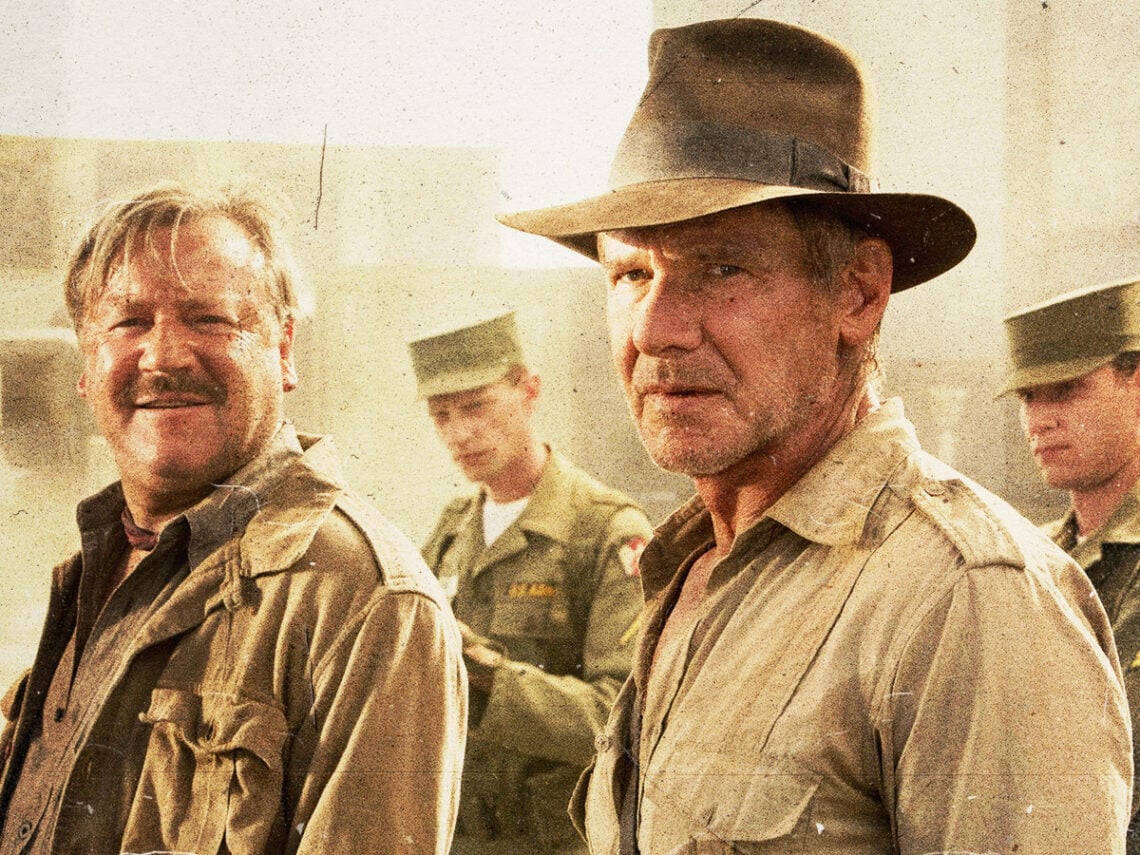
4. Indiana Jones and the Kingdom of the Crystal Skull (Steven Spielberg, 2008)
Harrison Ford’s Indiana Jones literally rode off into the sunset at the end of The Last Crusade, but seeing as Steven Spielberg and George Lucas signed a five-picture deal back in the late 1970s, they felt compelled to meet their contractual obligation.
Jeb Stuart, Jeffrey Boam, M. Night Shyamalan, Tom Stoppard, Stephen Gaghan, Frank Darabont, and Jeff Nathanson all took a crack at breaking the story before David Koepp, and apparently, the best anybody could come up with was CGI gophers, fridge-nuking, Shia LaBeouf swinging from trees, and little grey men from outer space.
It did at least earn a tonne of money at the box office, something that can’t be said of sequel Dial of Destiny, with the last two entries in the franchise hinting that maybe Indy was much better off as the star of a trilogy and nothing more.
3. The Postman (Kevin Costner, 1997)
Author David Brin spent ten years persevering with Hollywood to turn his post-apocalyptic novel into a movie, and the money he made from selling off the rights probably made him one of the very few beneficiaries to emerge unscathed from The Postman.
The writer admitted on his website that “the resulting script – despite at least half a dozen dubious rewrites – became notorious” to the point it was actively dissuading talent from taking it under consideration until Kevin Costner came aboard and embarked on a major overhaul.
What he had to show for it at the end of the day was a self-directed vanity project that imploded at the box office, swept the board at the Razzies by winning all five of the trophies it was nominated for, and effectively drew a line under Costner’s time as a mainstream concern.
2. Cats (Tom Hooper, 2019)
It would have saved everyone a whole lot of trouble had the adaptation of Andrew Lloyd Webber’s musical Cats been made in its intended form when Steven Spielberg’s Amblimation was toying with an animated feature in the mid-1990s.
Webber kept hinting that Cats was coming to the big screen sooner rather than later, with Universal taking a punt on the feline song-and-dance spectacular in 2013. Tom Hooper was confirmed to direct three years later, and another three years after that, he unleashed something truly awful on the world.
There’s never been a film quite like Cats, and not in a good way. An unintentionally terrifying phantasmagorical body horror that should never be watched under the influence of hallucinogenic; spare a thought for the poor effects artist who had to comb through the footage and clean up all the buttholes.
1. Space Jam: A New Legacy (Malcolm D. Lee, 2021)
It might have a certain nostalgic appeal to the generation it was aimed at first time around, but Space Jam is not a good film. It’s an innocent and inoffensive one, to be fair, which can’t be said of its reprehensible sequel.
After 25 years in development hell, Space Jam: A New Legacy stepped into the light and revealed itself to be a 115-minute advertisement for Warner Bros, the studio’s array of recognisable characters, and an assortment of the properties that could be found exclusively on streaming service Max, which had not-so-coincidentally launched the previous year.
It was a nauseating example of self-serving corporate synergy, which could have at least been forgiven if there was a semblance of heart, humour, or spirit to be found within. Of course, there was none of that, it’s just two hours of LeBron James being bad at acting and mouthfuls of Memberberries.
