


Hear Me Out: ‘Men’ was the worst horror movie of 2022

Most of the greatest horror movies take a nuanced look at the dichotomy between femininity and masculinity, highlighting the dangers of male aggression and exploring innately female fears. Horror is the perfect vehicle for deconstructing the female anxieties surrounding topics such as motherhood, sexuality and male violence. Moreover, the genre can be used to attack societal mechanisms, both directly and indirectly, which manifests in different forms, such as violent gore or a mysterious shadowy figure.
Last year, Alex Garland, the man behind acclaimed projects such as 28 Days Later, Ex Machina and Annihilation, released his third feature film as a director, the folk-horror-inspired Men. Starring Jessie Buckley and Rory Kinnear, the film follows Harper, who retreats to the countryside following the death of her abusive husband. Once she arrives at the quaint country house, her holiday is soon disturbed by strange men, who manifest in various forms, all bearing Kinnear’s face. These men terrorise Harper, who is suffering from intense feelings of guilt surrounding the cause of her husband’s death. Flashbacks reveal that he threatened to kill himself to ruin Harper’s life, and whether his fall was an accident remains a mystery to us – and Harper.
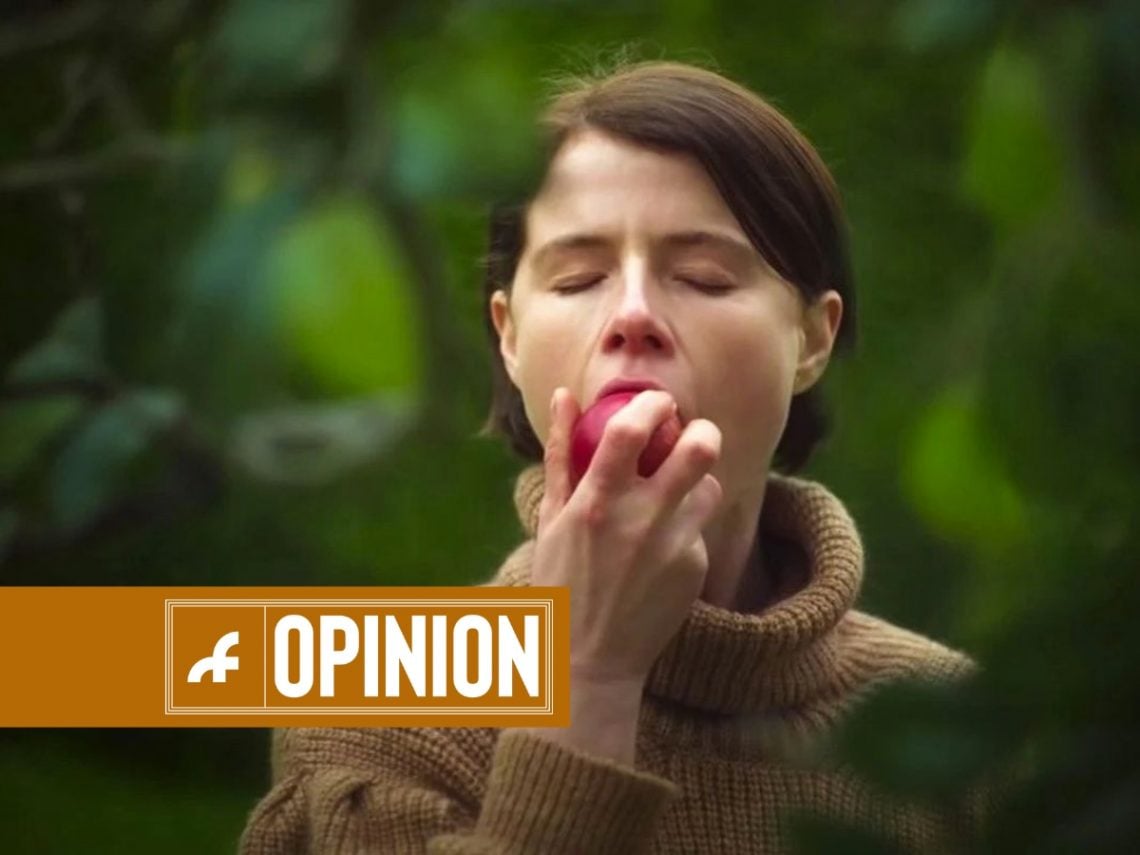
The premise is certainly interesting, yet Garland’s execution leaves little to be desired, making Men one of the worst horror films to emerge from 2022. Clunky, on-the-nose metaphors pad out the film, with Harper plucking an apple from a tree before entering the country house. The message is clear: she has touched the forbidden fruit (Kinnear’s Geoffrey even lectures her about doing so), and now she will reap the consequences of her ‘sins’. You wouldn’t expect this overused metaphor from such an esteemed filmmaker, but that’s only scraping the surface of why Men is so bad.
After watching the film, the message of Men remains unclear, and when dealing with such an intricate topic as misogyny and male violence, that isn’t good enough. Garland points out that misogyny is a real, terrible thing, illustrating his observations through depictions of male characters, all bearing the same one-size-fits-all face, indulging in sexist behaviour. Sometimes the men are subtle with their misogyny and aversion to womanhood, such as Geoffrey’s inability to speak the word ‘tampon’. Otherwise, the men are downright terrifying, with one following Harper back to the house, staring through the window, naked and bleeding.
Garland uses the folk horror sub-genre to illuminate the rich history of men being… men. Folklore imagery, such as the Green Man and sheela-na gigs, paint the screen, suggesting that male violence is as old as ancient myths and symbols. That’s true. However, to make a good film about misogyny, you need to do much more than point out that it exists. Any woman can tell you that. Garland’s film essentially mansplains misogyny to an audience that will most likely have their own lived experience. Watching a male director subject a flimsily-written female character to almost two hours of torture without a sprinkle of nuance is, quite frankly, insulting. Furthermore, this begs the question: who is Men actually for?
In brutal, nihilistic honesty, it seems that Men’s target audience is pseudo-feminist males desiring absolution from being part of a patriarchal system that, consciously and unconsciously, upholds female oppression. Garland’s portrayal of misogyny is one-dimensional and offers nothing more than a perspective that women know all too well. The body horror ending, which piggybacks off Julia Ducourneau’s intricate and successful use of the sub-genre, falls flat. The sequence depicts men giving birth to men through their mouths, all bearing the same scars as Harper’s husband, who was impaled as he fell to his death. By implying that all men are the same and suggesting that male violence is unending, Garland fails to highlight the intersectionality of race and class in relation to gender.
The issue is that Garland points the finger at misogyny, recognises its existence, and moves on. As a male filmmaker, he can move on, taking the profits of female oppression with him. He fails to use his privilege to offer any form of a solution to the issues that he raises, or to provide a statement that goes further than recognising the existence of a universally acknowledged truth.
Although many male filmmakers have critically analysed misogyny with much success, Garland clearly wasn’t equipped to do so. Instead, Men appears half-hearted and borderline offensive to female viewers, offering little more than cliche metaphors and poorly-written characters, grasping on the coattails of successful recent female-directed horrors dealing with misogyny yet failing to reach their heights.
