


The curious movies that inspired Julia Ducournau’s ‘Titane’

Julia Ducournau made waves when she became the second woman ever to win the coveted Palme d’Or at Cannes Film Festival. She was awarded the prize for her second feature, 2021’s Titane. After impressing critics with her debut Raw, a coming-of-age tale about a girl’s desire to taste human flesh, Titane received even greater acclaim.
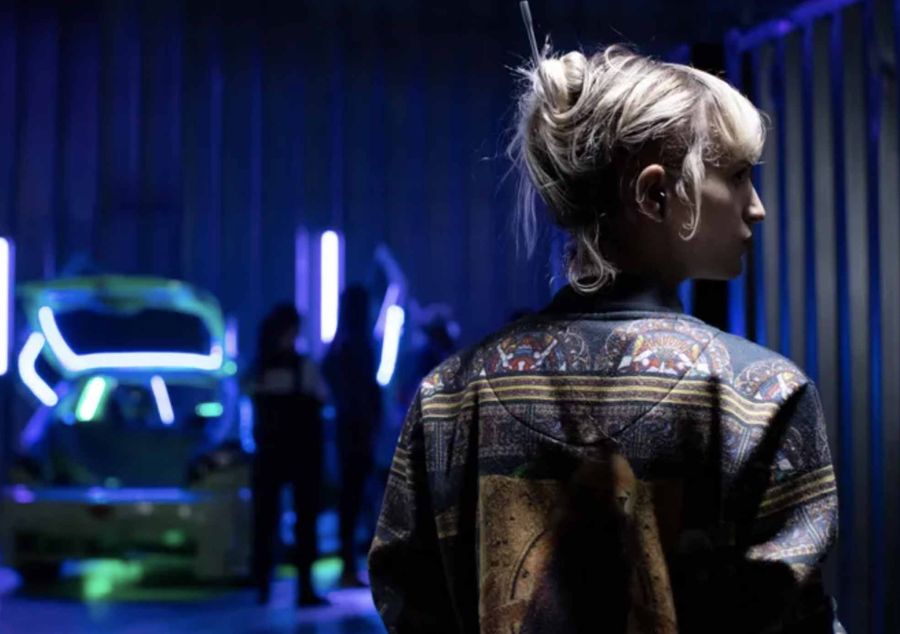
The film follows Alexia, a dancer with a titanium plate inside her head from a childhood car accident. Frequently performing erotic routines at car shows, Alexia goes on a killing spree after a man makes unwanted advances towards her. This leads her to assume the identity of a missing boy, despite a growing pregnancy becoming increasingly hard to disguise.
As bizarre as the film sounds, Titane is one of the most jaw-dropping body horrors of modern cinema. Agathe Rousselle does an excellent job as Alexia, especially considering her non-professional status. Ducournau nurses a tenderness between Alexia and Vincent, the father of the real missing child, despite the violence that permeates throughout the rest of the film.
Upon the film’s release, critics were quick to draw comparisons to the master of body horror, David Cronenberg, more specifically, his psychosexual drama Crash. The 1996 film starring James Spader, Holly Hunter, Rosanna Arquette and Elias Koteas follows a group of symphorophiliacs who are aroused by car crashes. However, Ducournau asserts that Crash was not an inspiration for her film.
The director shared, “I knew already when I was writing that this was going to happen, but at the same time, it’s so different; it’s not even the same POV and not the same energy, and that’s not even the same intention. Obviously, Cronenberg is someone who journalists will always ask me about because of how foundational it has been for me in my life. And it will always be. But at the same time you can’t make a good scene by trying to mimic someone else’s scene.”
Ducournau looked at films for technical inspiration instead of thematic. She told the Los Angeles Times. “With the forest scene, I knew I wanted a very artificial light to it. And we both had just seen 1917, which is, like, outstanding in terms of technique. It’s amazing, the lights and the camera movements in this. I love this film. And so we decided to go for something very artificial, like the city that is burning in 1917.” She also noted that she takes technical inspiration from paintings. When filming Titane, she looked to Magritte’s ‘The Empire of Light’, Winslow Homer’s ‘Summer Night’ and the works of Caravaggio.
When it came to creating a morally disagreeable character, Ducournau wanted to find a way to keep audiences relating to her and engaged in her story. She uses Henry: Portrait of a Serial Killer as an example, saying, “It is incredibly remarkable in the way it bends the audience’s morals. […] Henry is a horrible character, a serial killer, and he doesn’t have any empathy whatsoever, but compared to Otis’ relationship with his own sister, you root for Henry when he says, ‘Don’t touch her.’ And all of a sudden, as an audience, your morals are completely twisted. You feel empathy for Henry at this moment when you actually were horrified by him from the start. I think that’s brilliant.”
To help audiences connect to serial killer Alexia, the director decided “to make [viewers] relate to her body. […] When she has the whole killing spree in the house and stuff, you really feel her fatigue. […] It’s the first time that you can actually bond with her.”
