


Six women who revolutionised the horror genre

If you were to ask a person to name influential horror directors, the list would probably appear particularly masculine: Wes Craven, John Carpenter, Sam Raimi, Dario Argento and countless others. Sadly, female horror directors are continuously overlooked, despite their incredible impact on the industry.
Over recent years, there have been some incredible female-directed horror pictures, such as Saint Maud, Censor, and A Girl Walks Home Alone at Night, yet this is no new phenomenon. Women have been pioneers of the horror genre since its inception. After all, Mary Shelley’s novel Frankenstein is one of the earliest examples of science fiction and one of the most influential horror stories ever written, inspiring countless tropes that now define horror cinema.
Female horror directors often take an innovative approach to the genre, gifting audiences with new perspectives on female characters, and subverting the all-too-common trope of women in horror as helpless, sexualised victims.
As Halloween approaches, we’ve compiled a list of female directors that have revolutionised the horror genre, spanning the 1890s to the present day.
Six women who revolutionised the horror genre:
Alice Guy-Blaché
Not only did Alice Guy-Blaché help to revolutionise the horror genre, but she was the first female director and one of the first filmmakers to create a narrative fiction film. Blaché is one of the most influential figures in cinema history, experimenting with early special effects and colour-tinting.
Between 1896 and 1920, Blaché made hundreds of films, including La Fée aux Choux, Danse Serpentine, and A Fool and His Money, which had an entirely African-American cast. She also shot several horror films, such as The Vampire and The Monster and the Girl, as well as adapting Edgar Allen Poe’s The Pit and the Pendulum.
Alfred Hitchcock once cited the French filmmaker as a major inspiration, stating: “I was thrilled by the movies of D.W. Griffith and the early French director Alice Guy.”
Lois Weber
Hired as an actress by Blaché in 1908, Lois Weber soon became a filmmaker herself, pioneering techniques such as the spilt screen in her 1913 film Suspense. She has been coined as one of the first-ever auteurs – writing, directing, acting, and even developing her own negatives. Weber became the first American woman to direct a feature film and own a film studio.
Suspense features actor Lon Chaney, who became one of the most important horror actors of all time, later starring in films such as The Phantom of the Opera and The Hunchback of Notre Dame. In fact, the director of the former, Rupert Julian, who made many early horror films, studied under Weber as an actor and prop boy.
Maya Deren
Maya Deren remains a relatively obscure name to non-cinephiles; however, the avant-garde filmmaker’s work has inspired some of the biggest names in cinema, notably David Lynch and Alfred Hitchcock. Her best-known film is Meshes of Afternoons, a gorgeous black-and-white short that experiments with shadowy imagery of keys, knives, flowers, mirrors and stairs, evoking the surreal and otherworldly.
Although Deren wasn’t necessarily a horror director, her experimental techniques, including double exposure, slow motion, superimposition, and clever use of motifs and imagery, have inspired many directors that work within the genre.
Ida Lupino
Another actress-turned-director, Ida Lupino, became one of Hollywood’s most prominent female figures during the 1950s. She made her horror debut with Outrage in 1950, which was highly controversial due to its exploration of rape. She continued working through the 1970s, directing episodes of The Twilight Zone (the only woman to do so), Alfred Hitchcock Presents, and Thriller.
Lupino was uncompromising in her vision to make “pictures of a sociological nature… to tackle serious themes and problem dramas,” much of which veered into horror territory. She mentored Sam Peckinpah and hugely inspired Martin Scorsese too, who described Outrage as “a subdued behavioural study that captures the banality of evil.”
Jennifer Kent
Inspired by the films of Lars von Trier, Australian actress Jennifer Kent decided to become a director, completing her first feature film in 2014 with The Babadook. The film was critically lauded for its portrayal of motherhood within a horror framework. She explained that she “was always quite fascinated by people who could suppress really dark, deep, painful experiences and [she] wanted to explore the idea that perhaps pushing down on those terrible experiences is harder than facing them.”
Kent has been an active voice in speaking out against the lack of female directors in horror, saying, “It will shift as the world shifts. Women do love watching scary films. It’s been proven, and they’ve done all the tests. The demographics are half men, half women. And we know fear. It’s not like we can’t explore the subject.”
Julia Ducournau
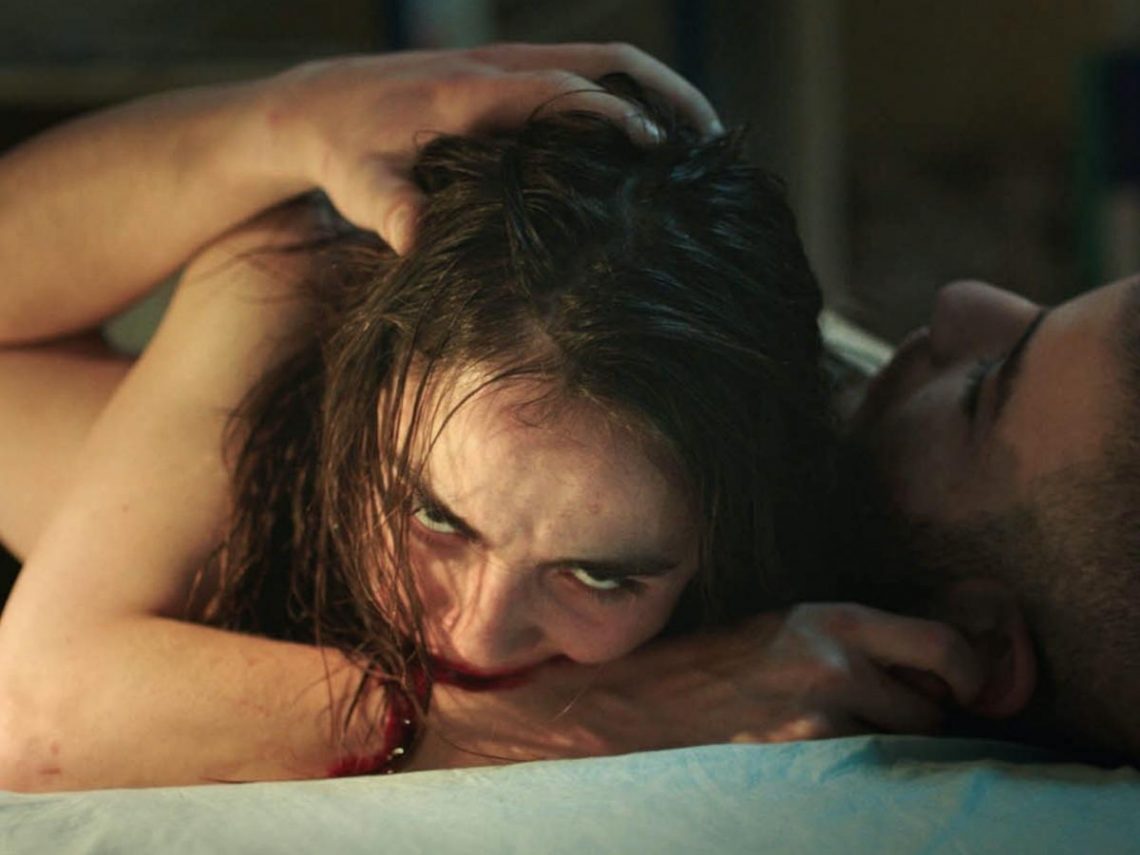
With two feature films under her belt, Raw and Titane, Julia Ducournau is quickly becoming one of the biggest names in horror. The French director never shies away from showing “graphic body horror” whilst exploring the twisted realities of a female coming of age and being a woman. She stated that “the element of monstrosity in teenage years is incredibly enduring and real.”
Titane won the Palme d’Or during the Cannes Film Festival last year, and Raw won an award at London Film Festival for being the most original first feature. Ducournau’s courageous lens and unflinching attitude towards depicting the grotesque have helped to shape a new wave of films that blend gender studies with body horror and science fiction.
