


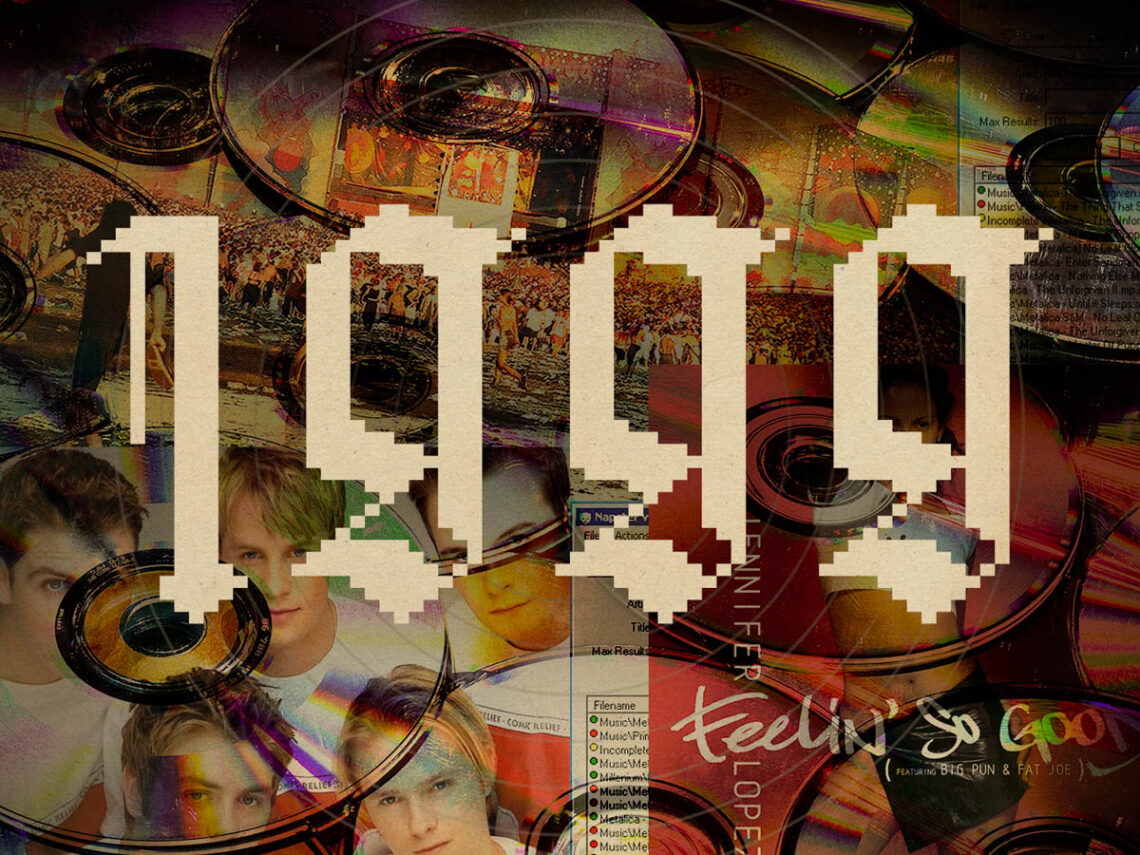
Was 1999 the worst year in music history?

About a year ago, Far Out writer Michael Gordon wrote a piece positing the idea that the year 1999 just might have been the best in Western cinema history.
He offered up a memorable mix of cult comedies (Office Space, Election), groundbreaking sci-fi (The Matrix), the first ‘found footage’ horror (The Blair Witch Project), twisty surprise blockbusters (The Sixth Sense), and a full slate of future must-have Criterion Blu-rays (Magnolia, Fight Club, Being John Malkovich, Eyes Wide Shut) by acclaimed directors.
It’s possible, I suppose, that so much juice was squeezed out of the orange for Hollywood that year that nothing much was left for the music industry, but that would suggest that it wasn’t a fruitful financial year for the big record companies. In fact, sales were through the roof, as the major labels enjoyed one of their last glorious moments before widespread file-sharing began to threaten the old world order. The problem at this point wasn’t the quantity of units getting moved, it was the quality.
Artificial intelligence supposedly didn’t exist 27 years ago, at least not in the form it does now, but everything about the music of 1999 feels like the result of calculated machine reasoning, a spewing out of the most controllable and commercially dependable sorts of dreck of the past 30 years, filtered and watered down into a flat brown cola designed exclusively for 15-year-old middle-class white kids.
Two of the more interesting trends of the early ‘90s, the convergence of hip hop into hard rock and dance pop, were driven off a cliff by the end of the decade, transformed into the ugly aggro posturing of nu metal and the endless proliferation of fly-by-night, frosted-tipped boy bands. In both cases, the formula was a callback to the 1950s, when the most caucasian man on earth, Pat Boone, used to make hit records performing vanilla versions of Little Richard songs. Nu metal routinely drained the politics out of its hip hop DNA, while manufactured boy bands from Orlando or Sligo covered old R&B hits with all the soul and anguish of a Chipmunks novelty record.
In America, MTV’s daily video countdown show Total Request Live was the weird epicentre of these new dark ages, as cardboard host Carson Daly oversaw the carnage from his perch above Times Square, just a few miles from CBGB, and Dylan’s old folk haunts, and the jazz clubs where Coltrane made his bones. This is where we’d ended up with Y2K lurking on the horizon, waiting to see if Limp Bizkit could leapfrog the Backstreet Boys to the top spot, or whether former Mickey Mouse Club child star Britney Spears would beat out former Mickey Mouse Club child star Christina Aguilera that week. And did we hear that one of them might be dating former Mickey Mouse Club child star Justin Timberlake of N Sync?!
Every song or album in 1999 had to have some sort of lazy reference to the fact that it was 1999, as well. The Backstreet Boys had a CD called Millennium, and Will Smith had a CD called Willennium, and people paid money for them, while skate punk, like nu metal, was also selling like hot cakes, partially because bands had moved away from politics to better suit the tone of the American Pie soundtrack. Oh, and there was that Santana album that was everywhere, Supernatural, which did feature some nice guitar playing, but loads of incredibly obnoxious guest vocals from the likes of Matchbox 20’s Rob Thomas.
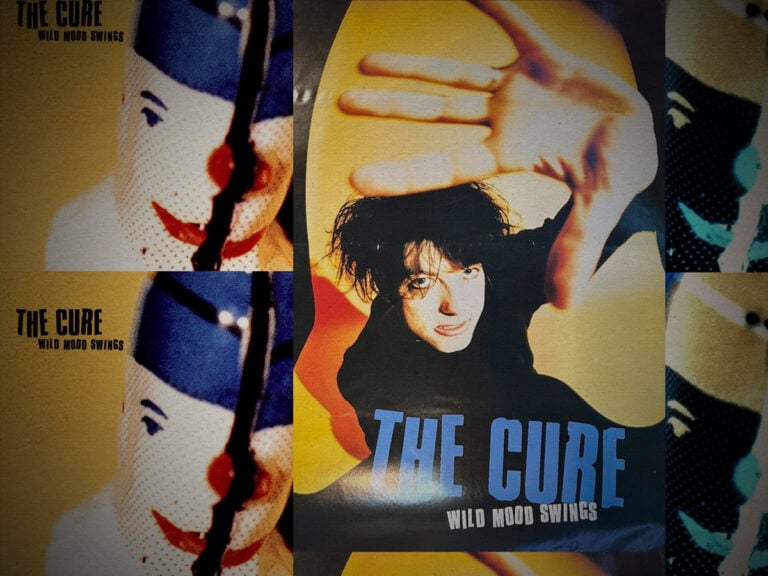
Not everything was terrible, of course. Dr Dre had a nice comeback album in 1999, TLC put out ‘No Scrubs’, The White Stripes released their debut, and there were great, lesser-heard records by The Roots, Wilco, Beck, Fiona Apple, Mogwai, The Dillinger Escape Plan, and The Magnetic Fields, and even Travis was a nice story in the UK, turning a heart-on-the-sleeve indie-pop record into one of the big sellers of the year. Overall, though, staring into the abyss of the 2000s from the rickety pier of the 20th century was a rough scenario for anyone not keen on spending their last $17 on the latest volume of Now That’s What I Call Music.
Five further examples of why music sucked in 1999:
Grunge somehow devolved into Creed
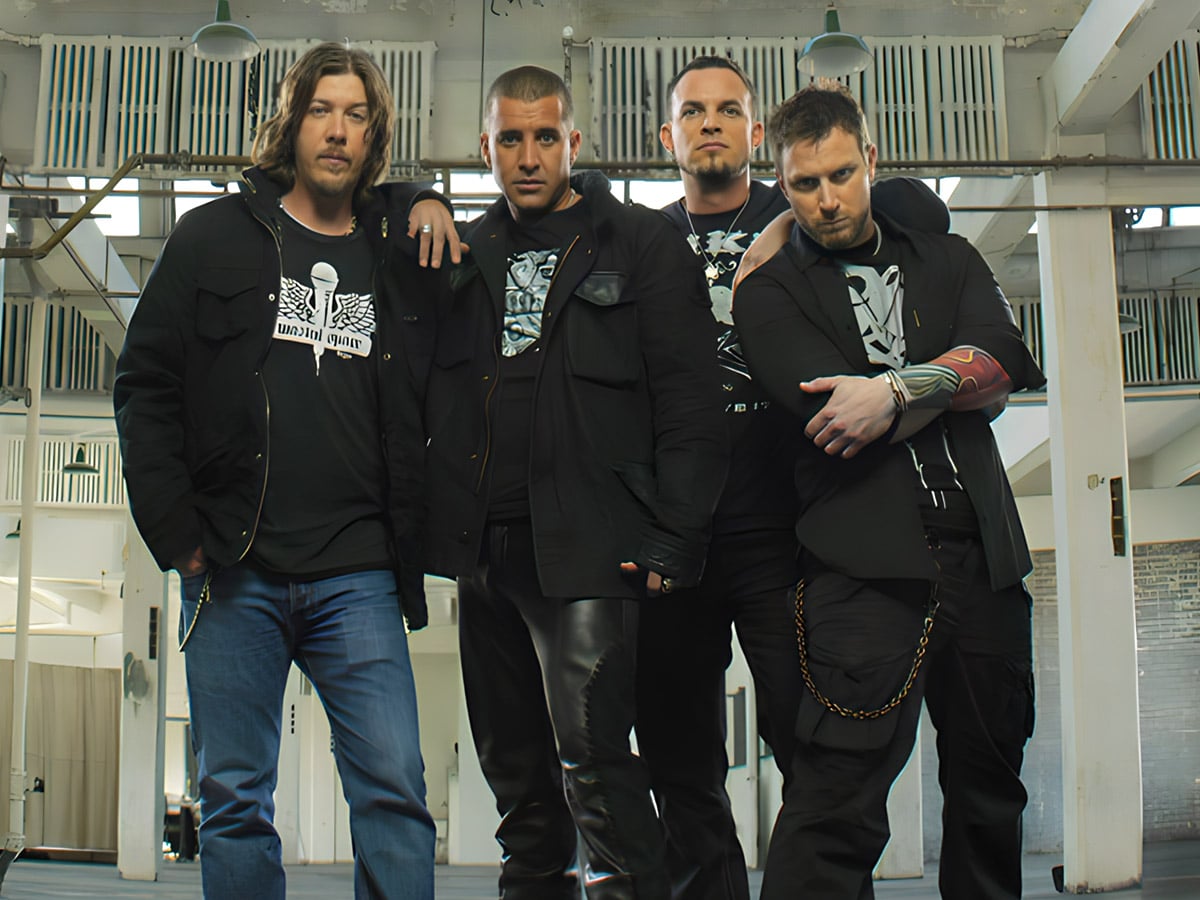
By 1999, the raw, abrasive, and rebellious spirit of early ‘90s grunge had been thoroughly sanded down into something far more palatable and far less interesting. Where bands like Nirvana, Soundgarden, and Alice in Chains had once channelled disaffection and unease into something unpredictable and occasionally dangerous, putting their open wounds effectively on display, their unfortunate, inevitable lineage was a thin photocopy of that gestalt, in the form of the glossy, radio-friendly bombast of Creed.
With their arms-wide-open earnestness and pseudo-spiritual arena rock, Creed were a bizarro Pearl Jam, representing a strange corporate afterlife for a genre that had once rejected corporate polish altogether. It wasn’t just Creed, either, but bands like Staind and Nickelback were on the rise as well, offering up the heavy licks and scratchy-throated vocals of their predecessors without any of the meat or bones. What had begun as a rejection of mainstream excess ended up becoming one of its most reliable products, with angst repackaged as background tunes for a barbecue.
The UK and Ireland established their own special boy-band factories
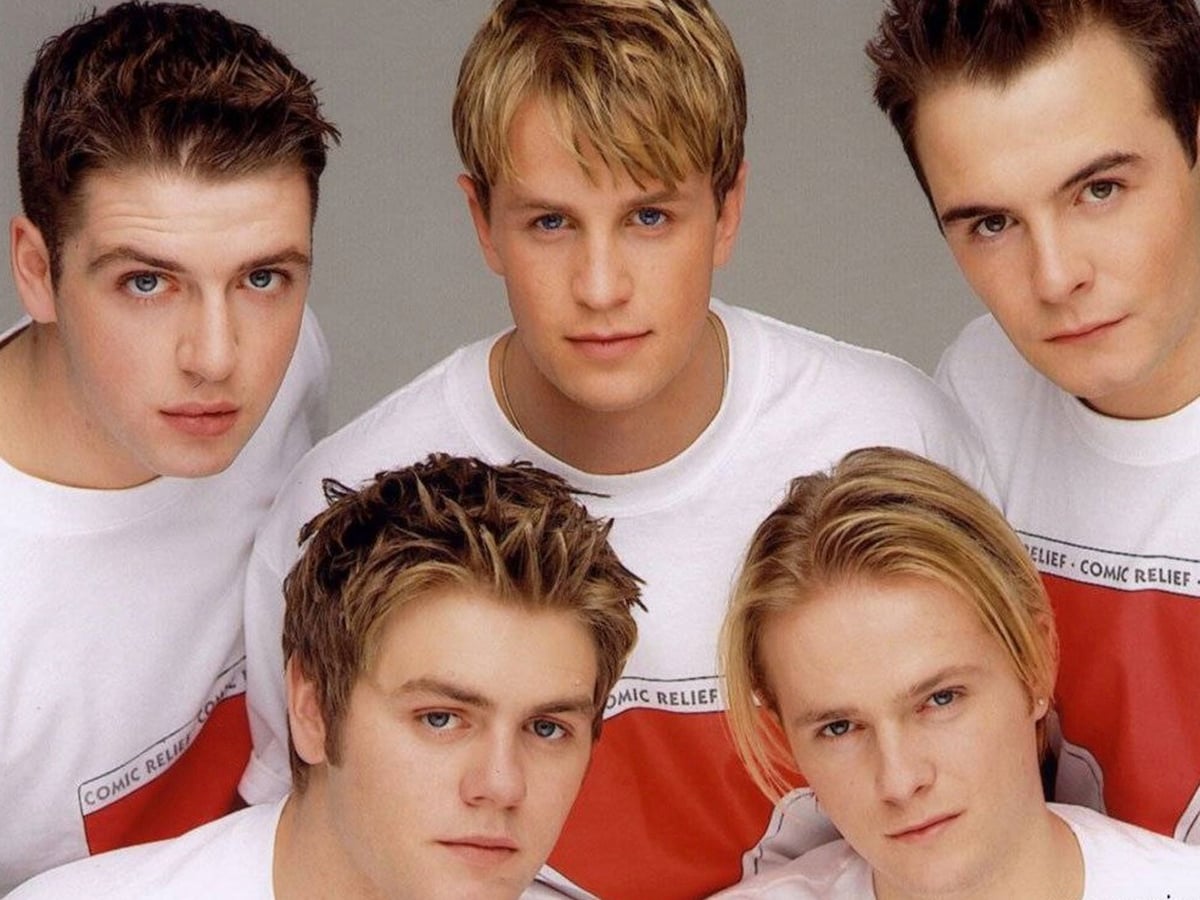
None of us over in the States were remotely aware of it at the time, but there was a parallel dimension existing across the Atlantic, with the Backstreet Boys and N Sync facing more than their fair share of viable British and Irish challengers from the ranks of the manufactured.
Following the success of Take That earlier in the ‘90s, a new wave of carefully crafted groups flooded the charts, guided by management teams unashamedly ready to usher in the age of reality show pop, with acts like Boyzone, Five and Westlife anonymous in America but massive sellers on their side of the pond, offering up the same sort of tightly choreographed routines and emotionally neutral love songs engineered for girls who like cutting pictures out of magazines.
Every group had the cute one, the bad boy, the weirdly old-looking one, and more stereotypes, and these groups were also joined by a new crop of Spice Girls-inspired outfits and co-ed bands like Steps and S Club 7. Compared to the messy individuality of Britpop just a few years earlier, this new wave felt like a retreat into safe, focus-group-approved entertainment, with very little room for risk or self-determination, where if you didn’t follow the gospel of the manager, or if the awful, sensationalist UK tabloids turned on you, you were basically thrown onto a lorry in the dead of night and dropped into a ditch somewhere.
Jennifer Lopez stopped lip-syncing

One of the more genuinely amusing developments of the late 1990s was the so-called Latin pop boom, sparked by crossover hits from artists like Ricky Martin, Shakira, and Enrique Iglesias, their success bringing a fresh rhythmic energy into the mainstream charts, more accurately reflecting the tastes and traditions of a growing part of the US population.
Unfortunately, at this same moment, a talented young actress named Jennifer Lopez was pondering whether to break into the music business, having played the role of a pop star very effectively in the 1997 biopic Selena, to even lip-syncing all her vocals in that film, but nonetheless, people could see her adapting her already established skills as a trained dancer and stage performer into the music sphere.
The Latin pop boom further inspired Epic Records to finance Jennifer’s experiment, and her 1999 debut album, On the 6, was a big success. It was also quite awful, with some of the blandest, paint-by-numbers dance-pop songs ever committed to tape, including the predictable smash hits ‘If You Had My Love’ and ‘Waiting for Tonight’, but because the record made money, more actors were encouraged to do the same thing, making the 2000s a hellscape of singer-actor ‘dual threats’. Famously, Mariah Carey would respond to a question about her opinion on Lopez’s singing by simply declaring, “I don’t know her”.
The fiery disaster of Woodstock ’99
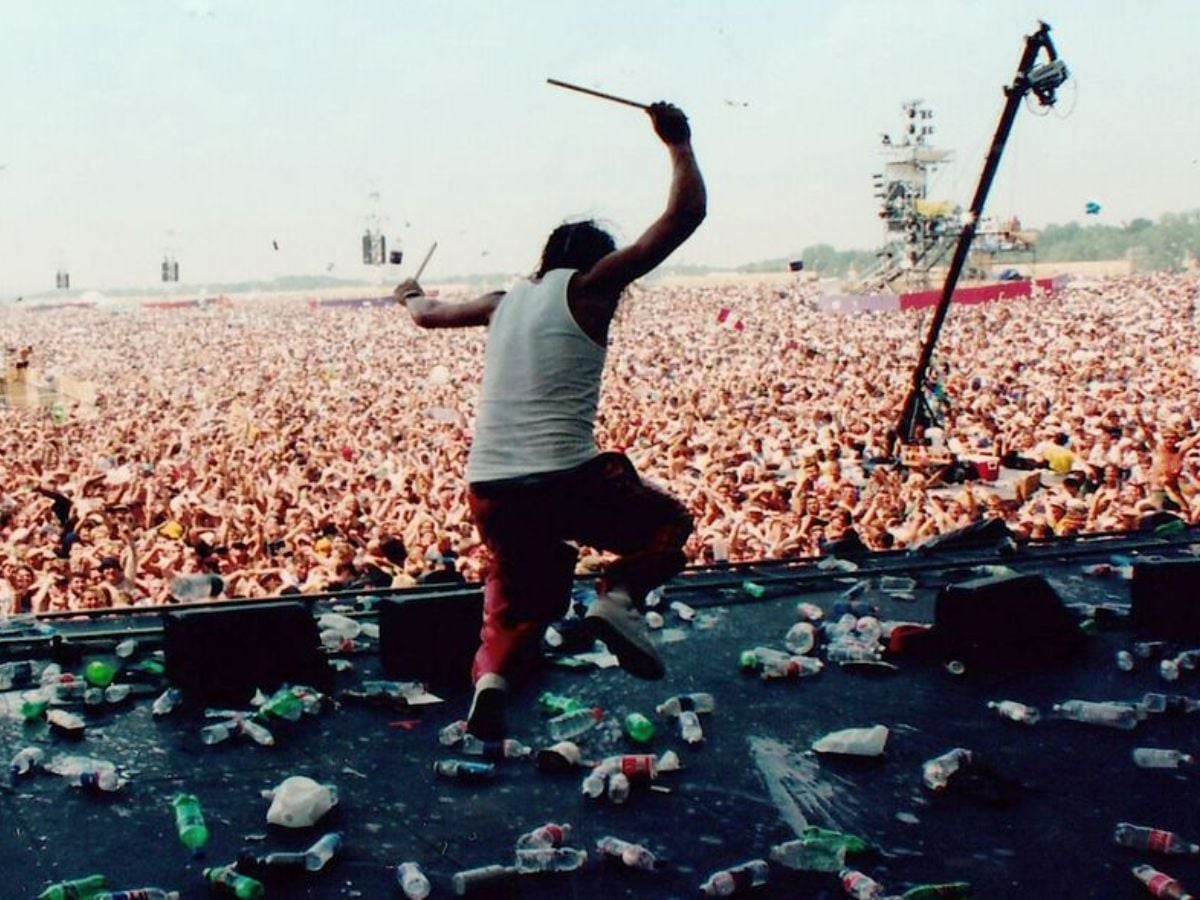
If you were looking for a single event to symbolise everything that had gone wrong with late-‘90s music culture, Woodstock 1999 would be a strong contender, which was intended as a nostalgic echo of the peace-and-love ideals of 1969, or at least a repeat of the fun mud-flinging party of Woodstock ’94, but it instead devolved into chaos, marked by fires, riots, and widespread reports of violence and misconduct.
Musically, the lineup leaned heavily into the aggressive, testosterone-driven sounds of the era, with acts like Limp Bizkit and Korn amplifying an already volatile atmosphere, which combined with poor organisation, exploitative pricing, and an increasingly hostile crowd created a perfect storm. Rather than celebrating unity, Woodstock ‘99 exposed the darker undercurrents of the time, of anger without direction, rebellion without purpose, and a music industry more interested in profit than responsibility, standing less as a festival and more a cautionary tale.
Napster was launched, spelling the end
While much of the music industry was still busy cashing in on CD sales in ‘99, a quiet revolution was already underway, starting in June, when a college student named Shawn Fanning launched Napster, a peer-to-peer file-sharing platform that allowed users to download music, new or old, for free. At first, it seemed like a novelty, an underground tool for tech-savvy fans, but it didn’t take long for its impact to become clear, and Napster fundamentally disrupted the traditional business model, undermining the very system that had made 1999 such a profitable year for record labels.
Within a few years, lawsuits from artists like Metallica and industry bodies would shut it down, but the damage, or transformation, was already done, with the genie out of the bottle, as Xtina might have said. Not only did Napster signal the end of an era, but it marked the beginning of a new, uncertain one, where control over music distribution would never quite return to the hands of the industry, and small and mid-size bands could never again expect to survive off record sales alone.
