


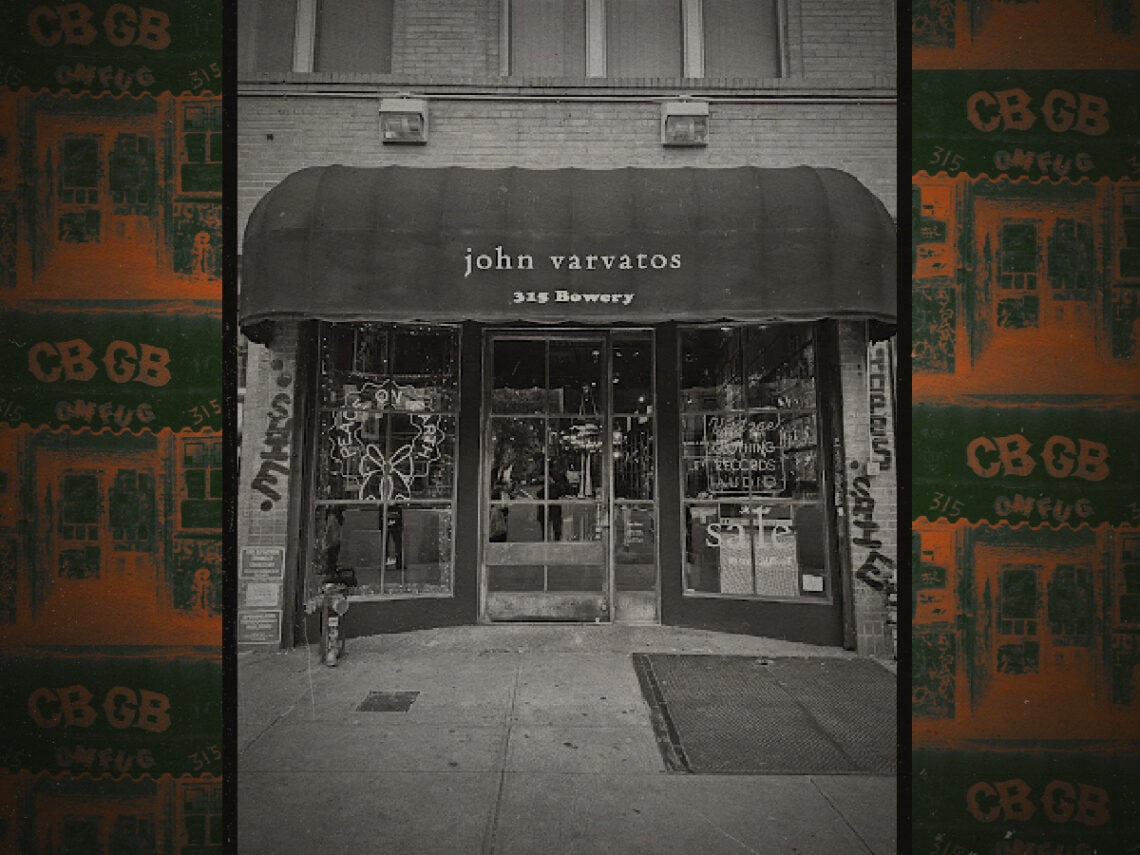
The fashion-focused fate of CBGB

“CBGB was the neighbourhood – the artists and poets and musicians – and we all inspired each other,” Patti Smith professed upon the club’s closure in 2008. “CBGB validated our mission.”
Opening the doors of 315 Bowery in December of 1973, CBGB & OMFUG (“Country, Bluegrass, Blues and Other Music for Uplifting Gourmandisers”) was a home for wayward musicians looking for a space to loiter and perform, after the literal collapse of the Mercer Arts Centre that August.
Bands and artists like Jayne County and Suicide made CBGB their new home, while soon-to-be legends like Debbie Harry (first with The Stillettoes, then Angel and the Snake, renamed Blondie), Patti Smith and Television found their way onto its stage.
CBGB saw the likes of Richard Hell, the Misfits, Dead Boys, the Dictators and more take its stage, later making space for the hardcore punk scene with bands like Bad Brains, Agnostic Front, Cro-Mags and more, but even with every ounce of legend etched into its dirt-caked walls, the club could not stand the test of time.
In 2005, its founder and owner, Hilly Kristal, was sued for $90,000 in unpaid rent allegedly owed to its landlord, the Bowery Residents’ Committee, alongside the usual monthly rent of $19,000. The subsequent legal battle saw the rent raised to $55,000 and later dropped to $35,000, but even then, it was out of Kristal’s budget. Attempts to save the venue were unsuccessful, and on October 15th, 2006, headlined by Patti Smith, CBGB held its final show. Nearly a year and a half later, after CBGB’s assets were purchased by anonymous investors, an unlikely replacement spawned in its place: a John Varvatos clothing boutique.
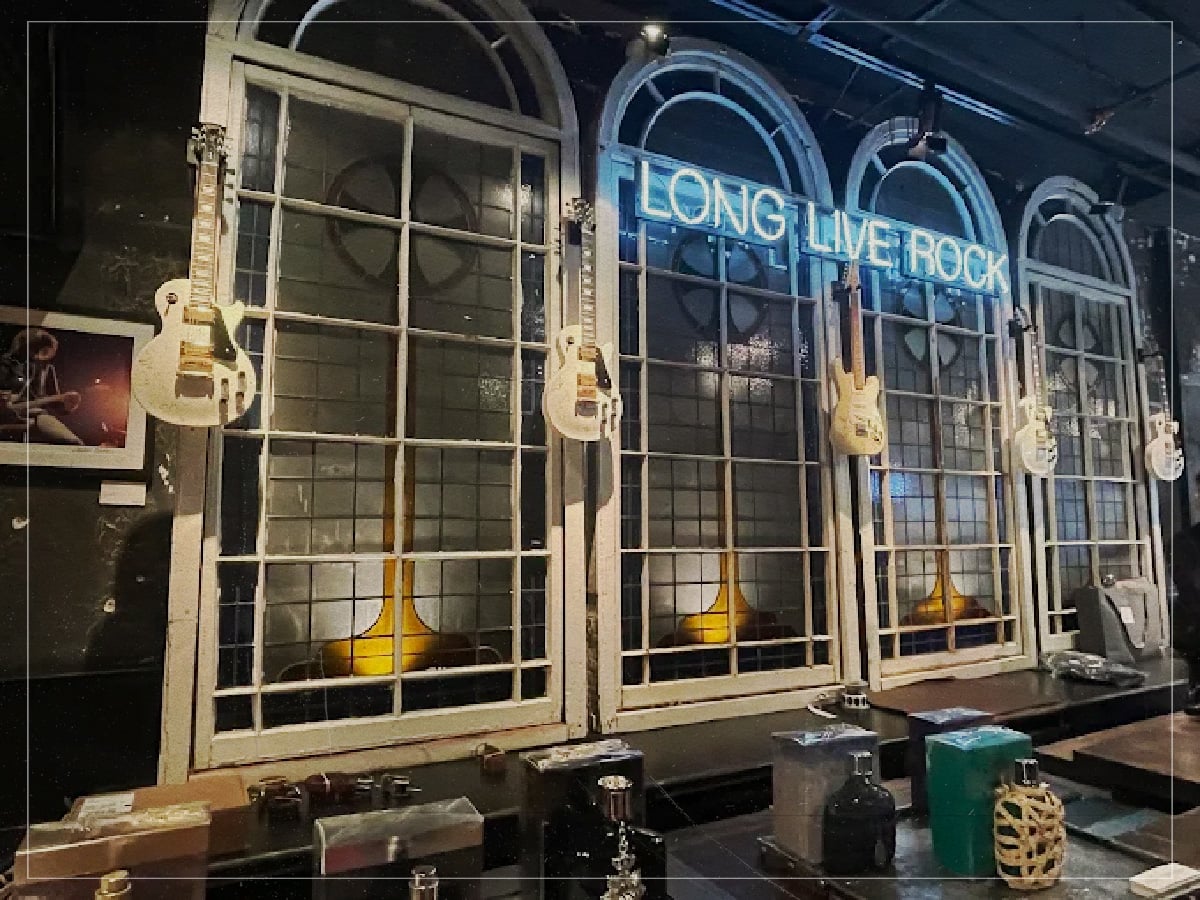
Founded in 1999 by its eponymous John Varvatos, a menswear veteran with tenures at Calvin Klein and Polo Ralph Lauren, the American luxury men’s fashion brand is rooted in rock ‘n’ roll aesthetics, from the leathers and denim that frequently appear in its clothing to the rock icons who model such clothing in their advertisements, from Iggy Pop to Chris Cornell, Kiss and Scott Weiland. Michigan-born Varvatos had seen the Ramones play in the same space in 1979, travelling from home just to see them and CBGB, in the flesh.
“I walked into that space not so much looking for a retail opportunity, but as a fan with a reverence for the history that happened there,” Varvatos explained to Robin Finn of The New York Times, after the store’s opening in April of 2008. “No, we don’t sell $10 shirts, and we aren’t punk, but I don’t feel like I have to make excuses for bringing a fashion store to the Bowery. If some other tenant, like a bank or a deli, you name it, had taken over the space, would they have preserved the walls? Would they stage free monthly concerts? The decision to move into CBGB’s wasn’t about ringing the cash register.”
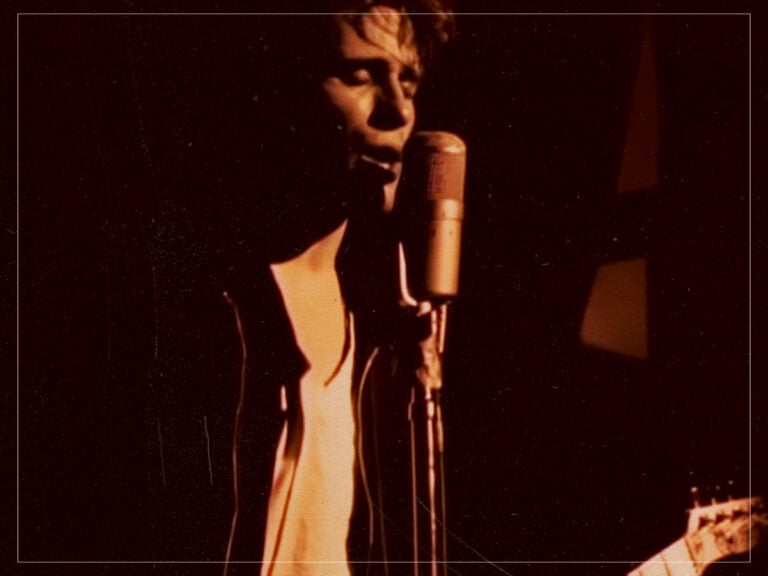
As recently as last year, the John Varvatos brand quoted the ethos, “Where heritage meets rebellion,” when describing its Bowery location. It is an interesting one to consider, as cultural landmarks continually disappear in the wake of rising costs, lack of support and overarching gentrification. Indeed, the store’s opening was met with protestors outside, demonstrating against the unaffordable cost of living in Lower Manhattan, contributed to by a store like John Varvatos, whose prices as a high luxury brand pose a massive wealth contrast to the foundational morals of punk.
As quoted in The New York Times, one protestor shouted, “$40,000-a-month rents, $1,600 jackets and $800 pants are closing music spaces in New York.” Is it, perhaps, rebellious of Varavatos himself to preserve pieces of CBGB enshrined in his boutique? Is the very idea “punk” itself?
Walking into 315 Bowery today feels like entering a liminal space, with punk ephemera contrast by designer clothing lined on racks that appear near-intimidating to even touch. On the walls – which appear to be painted over black, yet crumbling – you’ll spot icons from Iggy Pop, to The White Stripes, to Johnny Rotten, alongside old tour posters, album promotionals and album covers, all framed for preservation. Also kept intact are some of the space’s more decrepit elements, such as enclaves covered in graffiti and stickers from years gone by, protected under glass.
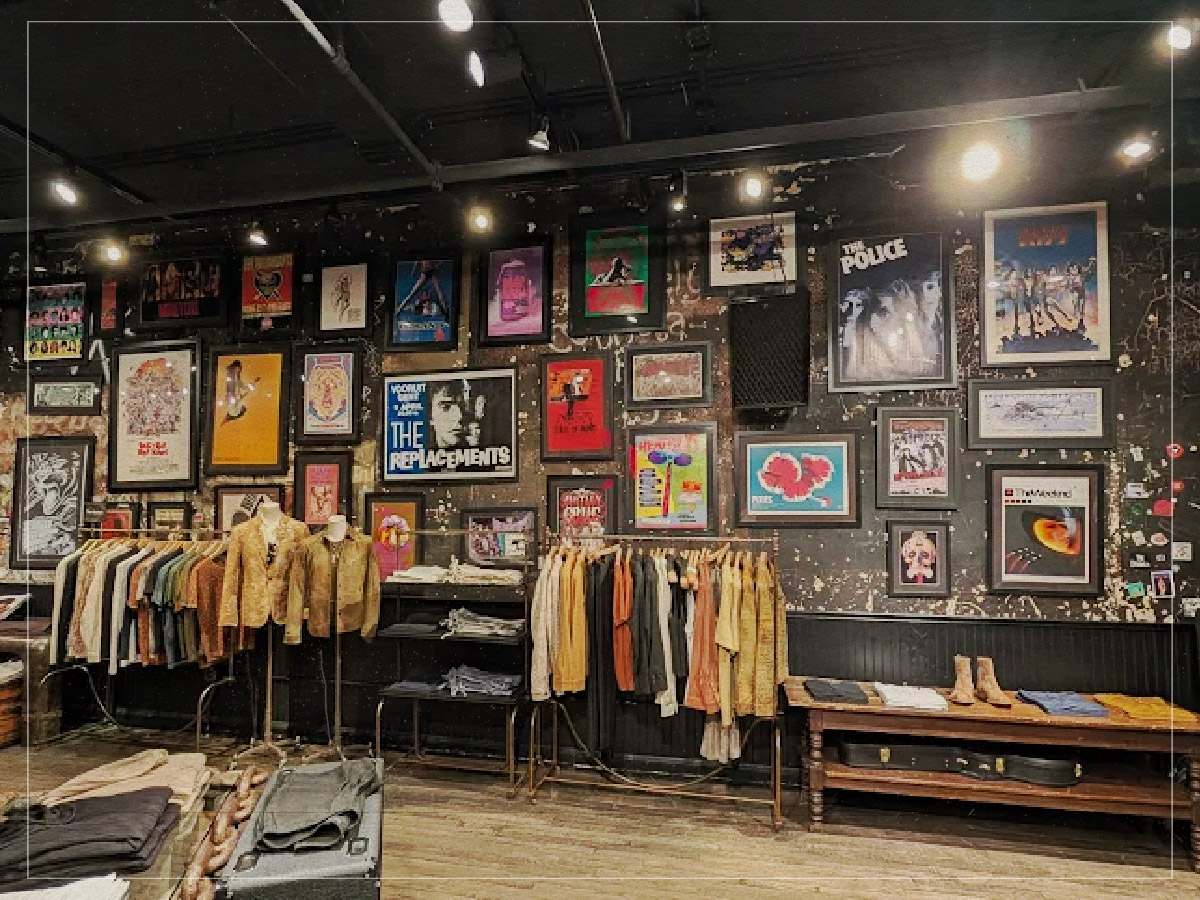
But, of course, in all of Varvatos’ efforts to preserve what he could of the former rock club, much had to be removed. The infamous smell of cigarettes, alcohol and other unmentionables is (thankfully) gone, as are most of the decaying structural elements not safeguarded for nostalgia’s sake, instead replaced by new flooring, rugs, leather furniture and a massive chandelier hanging from the ceiling.
In lieu of a stage, there are clothing racks. Where rock icons once wandered, you can now find them immortalised in Varvatos’ advertisements in large coffee-table books to be flipped through and photographs in-store, odes to the designer’s unwavering admiration for the music that shaped him and his clothing.
“The whole purpose of coming here was to retain part of the history,” Varvatos explained to Ben Sisario of The New York Times, at the store’s opening party in 2008, “so that anybody can walk in off the street and experience part of what was here.” That is exactly what I did a few years back, wandering the city on my day off when I happened to spot the signature curved awning of the store from down the block.
I recognise that, as a member of Gen Z who did not live through the heyday of CBGB, I look at its semi-preservation in Varvatos’ store with slightly rose-coloured glasses. I believe the term “anemoia” describes it best: the emotion of yearning for a time one never actually experienced. Still, I can’t help but feel that a brand like John Varvatos, one founded on its namesake’s love of rock ‘n’ roll and respect for the musicians behind it, is apt to “carry the torch,” so to speak, and maintain CBGB’s legacy – albeit, in an unexpected way.
It is difficult to let go of a nostalgia so distinct as that of CBGB, especially one that was the very heart of music’s shift into punk. On the surface, it was a dingy rock club, quite literally falling apart. But it represented something that New York desperately needed: a spark of change, an act of rebellion, a nucleus from which art could transform into something greater.
For 33 years, CBGB represented this, even as punk blazed and faded, stifled in the wake of the next music scene to follow in its footsteps. Now, nearly 20 years after its forced closure at the hands of an unrecognisable New York, what is left of it at John Varvatos serves as something of a museum, a chance to (for a moment) be brought back in time through tangible, literal pieces of history stored in its walls.
“This place is not a fucking temple,” Patti Smith asserted while on stage performing CBGB’s final show. “It’s just what it is.” If a random club like CBGB could be the home of a revolution, any other club could do the same. In Smith’s eyes, it was not the club itself that held the power, but the people behind it.
