


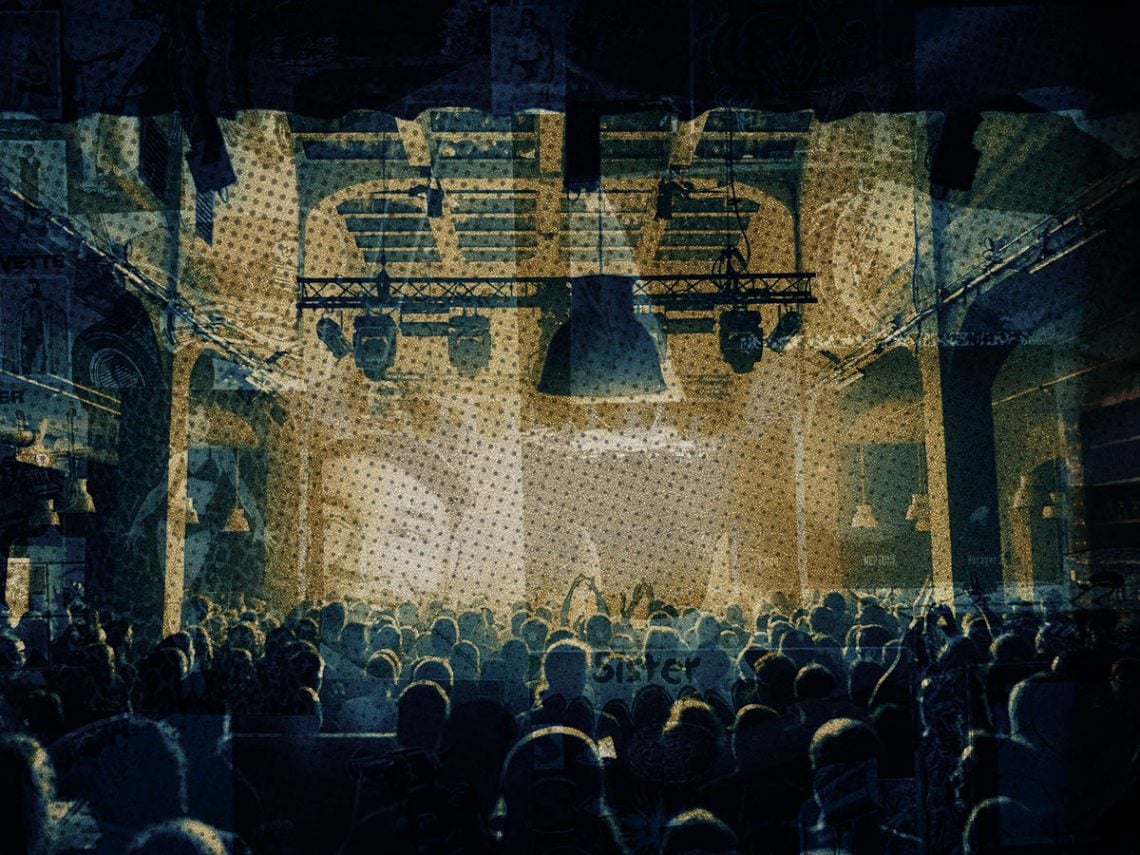
How a club can change the world: The importance of cultural institutions

Our cultural institutions are in danger. Frankly, everything is. However, often it seems like small independent venues are left to the wayside of regulation simply because they are touched by the notion of fun. Strangely, they are deemed not quite as important as less buoyant centres of commerce and civility. It is as though governing bodies shrug their shoulders and say, ‘Sorry, but budgets don’t allow us to protect good fun in these sober financial times’ and it is forgotten that acts like The Beatles still bring in £82 million a year to the Liverpool economy alone. The fact that without The Cavern Club there would be no ‘Fab Four’ is dismissed within this magic financial windfall.
So, with a whopping 35% of the UK’s Grassroots Music Venues sadly being forced to close their doors in the last 20 years, and more likely to follow as issues are continually exacerbated with no ladder being offered, we ask: Where are the next Beatles going to come from? How can profitable culture flourish when there is nowhere to house it? And in a more philosophical sense, where does it leave the future of art when zeitgeist-changing institutions are turned into coffee shops with an uncaring autonomy that goes against what we live for?
If you take a trip to Rome – Europe’s cultural utopia – you won’t find that the streets there are paved with gold, the glorious aesthetic is actually more akin to rubble. The place is a force to behold. Its art has fostered some of the greatest steps of liberation in human history, and it is all there to see. These edifices to culture have seen empires fall, economies crash, and wars waged, but they still stand proud for us to enjoy. However, you can be certain in the modern age that at the first sign of a downturn, any red arrows on the stocktake of the Villa Farnesina, and it would be turned into flats or a local express supermarket in a heartbeat.
In fact, the proof of this comes from New York. In 1974, the streets of Manhattan had descended into a crumbling dystopia forecast in a thousand bad acid trips from the decade before. With concrete and urban decay sprawling in equal measure the denizens of the city sunk into the plashy mire of crime and punishment. Things were changing for the worse faster than the racetrack rabbit. In the preceding five years the city lost 500,000 manufacturing jobs. Subsequently, a million homes depended on welfare, rapes and burglaries tripled, drugs ran rampant, and murders hit a high of 1690 a year.
However, plenty of artists relished in the glut of grime, and it resulted in a cultural zenith that changed the world forever. Society seemed like an ash heap and punk arose from the rubble like a phoenix. Soon, snarling pop culture toppled the bourgeoisie approach to art once and for all. When times were stilted, this uprising was the greatest engine of social mobility around. The likes of Richard Hell who could barely get off the sofa a few years earlier were now assailing a movement with something to strive for.
This all started with one single institution: The CBGB. it was, in many ways, a spiritual East Village Acropolis, and it served beer for less than a dollar. Inside it might have stank foo festering booze, and an assortment of slop stuck your shoes to the carpet like the wrapper to a warm toffee, but it was here that the youth defibrillated the future. It continues to exercise its positive seismic reverberations around the world to this day.
As Patti Smith said, the CBGB offered up youth the “freedom to create, freedom to be successful, freedom to not be successful, freedom to be who you are.” Things would never be the same after punk, but where is it now? What remains? Where can old romanticists go for a beer-sodden whiff of it? Where can a young punk go to cut their teeth? Now, you go to the space where the great CBGB used to stand, and you find a boutique fashion outlet. There’s not even a plaque. The same goes for Max’s Kansas City, the old haunt of poets, Iggy Pop, Lou Reed, and the place Debbie Harry served car tire steaks… it’s now a deli, as if New York hasn’t got enough of them!
The same drive of fast and unsustainable commercialism has laid waste to thousands of places all over the world. Each time snubbing out the potential for a liberating revolution that offers opportunities to those who need it most, a place for people to enjoy themselves, and a source of societal unity. This is a huge problem that is only getting worse. And it’s global too.
Take, for instance, Australia. “Everyone wants to leave Australia,” Nick Cave once ventured, “We’re raised to think that culturally everything happens elsewhere. Australia has no inherent culture amongst its white inhabitants… So, anyone having any interest in art or music or whatever left Australia.” Now, however, it is an indie hotspot with one of the best music scenes in the world. Until the pandemic, this helped to drive a yearly increase of visitors to the land down under as youngsters in their millions were attracted to their booming culture.
And yet this morning brought huge queues of revellers to the doorstep of Sydney’s beloved institution Frankie’s Pizza as it makes way in a few days for a pointless Metro station. One angry fan fumed: “Sydney has this uncanny ability to sniff out joy and life and then demolish it. It’s the worst city I have ever lived in, if an IG influencer was a city it would be Sydney.”
While another added: “Frankie’s Pizza is iconic and it’s a shame they couldn’t have put the Metro somewhere slightly different. I do hope it moves because the city needs places open late.” With a generation of youths left disenfranchised by the government’s decision, they will inevitably venture elsewhere no matter how many attractive train stations you offer them and that simply isn’t a healthy thing for any society. Furthermore, in an age where so many of us work from home, this community element is all the more essential; how many people had a night to remember in a train station? How many people met the love of their life in a Primark?
As the Music Venue Trust told us: “GMVs are at the heart of their local communities, providing early-stage access for artists and creatives to experiment, grow their skills and develop their talent. They are the Research and Development labs of the £5.8 billion per annum UK Music Industry – a world leader in music and culture. They foster and develop new talent in an open, non-profit driven model which enables creativity to flourish. In many locations, they provide an outlet for people otherwise left behind by other local creative and cultural offerings.”
Culture also offers us a route out of harder financial times, both mentally and in real-world economics. As Factory Records founder Alan Erasmus told us, tough times “release different avenues of creativity because [artists] will be going somewhere they haven’t been before.” And these avenues can drive “fresh change” acting as an engine of social mobility and community-driven innovation.
On the grassroots level, players have to work together. Whether that is bands earning money while bringing revenue to venues, or local breweries entering the supply chain and other sustainable cycles of regional income, a venue doesn’t have to change the world like the CBGB to be a vital cog in the local community, it is simply an added bonus that the potential for the next Arctic Monkeys lies in wait thanks to threatened hubs like The Leadmill in Sheffield.
As the emerging band, The Snuts recently told us: “Grassroots venues are so crucial to the live music / touring infrastructure in the UK. The likes of the Leadmill in Sheffield, The Sugarmill in Stoke, King Tuts in Glasgow… these venues promote countless positives for the local community, artists and fans. We must do everything we can to support them and keep them open at all costs.”
It’s this collectivism and one hand washing the other that is helping to keep everyone afloat. It is a sign of how pivotal these places are that huge names have been returning to the venues that made them to offer their support. However, all too often there seems to be no top-down assistance from elsewhere. These places may be volatile, but they are truly sustainable if managed correctly. Just look at The Cavern Club, it might be awaiting the next Beatles, but because it has been maintained it continues to rake in revenue and offer revelry, opportunity, community and a sense of identity in equal measure. You don’t get that from fast commercialism.
The Adelphi Club in Hull is no different. It has been running since 1984 and has opened its doors to the likes of Oasis, The Stone Roses, Green Day, Pavement, Pulp, Idles, Franz Ferdinand and Radiohead. The venue manager Paul Sapel told us: “Most grassroots venues are on the bones of their arse all the time anyway. I’m on less wages now than I was 20 years ago, I put in more hours than I get paid for, but it’s a labour of love, and across venues, you’ve got highly skilled people who can react to events because that’s what we’ve always done.”
They are doing that now more than ever, but they need support where they can get it because these places really can change the world. After all, before punk, you had to know how to play in tune before you could sell millions of copies like Never Mind the Bollocks, but here we are.
