


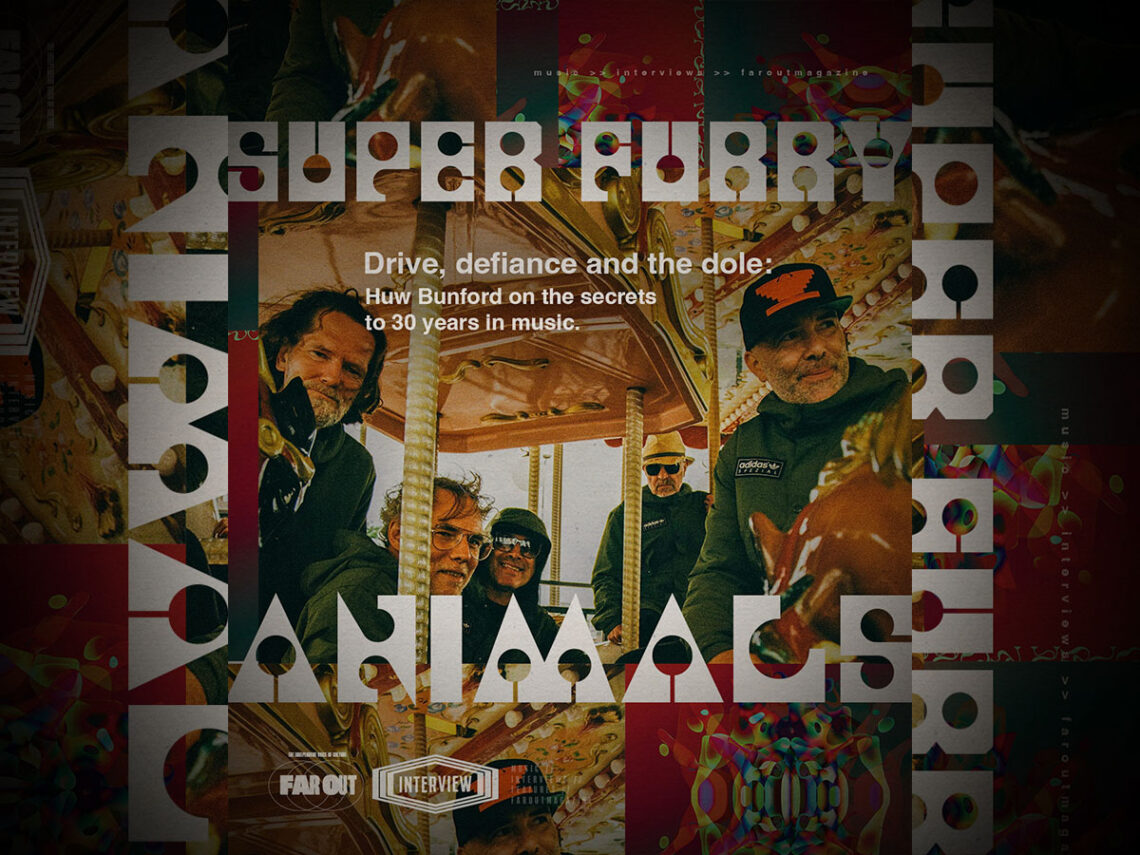
Drive, defiance and the dole: Huw Bunford on the secrets to Super Furry Animals’ 30 years in music

There’s plenty of discussion in the modern world about how difficult it is for a band or an artist to break through and achieve a reasonable degree of popularity, enough so for them to be able to earn a decent living from their creative pursuits.
Unless you’ve already come from a privileged position where you can afford to publicise yourself without incurring any financial trouble, or are based in a city which has plenty of connections to the industry, the odds of you becoming a beloved rock band are firmly stacked against you.
Rewind 30 years, and aspects of this were already proving themselves to be true, but perhaps not to the same extent as they are today. Very few active groups in the modern era are going to be able to say three decades down the line that they’re in a comfortable enough position to still exist, let alone choose to tour as and when they wish. In that regard, Super Furry Animals can be seen as a fortunate example of a band who have been able to defy the life expectancy of an act from their generation.
It’s perhaps even more remarkable that they managed to worm their way into the spotlight, given their constant refusal to play by the recognised rules of the industry, and while this might endear you to a cultish fanbase, making these bold creative decisions rarely leads to commercial success. From singing in a language spoken only by a minority of the country’s population to merging genres that were ostensibly at odds with one another during their formative years, there’s little that ought to have worked in the favour of the Welsh psychedelic band.
And yet, here we are. Readying themselves to embark on their first tour in ten years in order to celebrate the 30th anniversary of their debut album, Fuzzy Logic, and set to perform to capacity crowds up and down the UK, Super Furry Animals are seemingly still thriving in spite of the multitude of reasons that could have hindered them along the way. While a commitment and conviction about doing everything their own way has certainly helped, guitarist Huw Bunford believes that there are far simpler things sitting at the core of their maintained popularity.
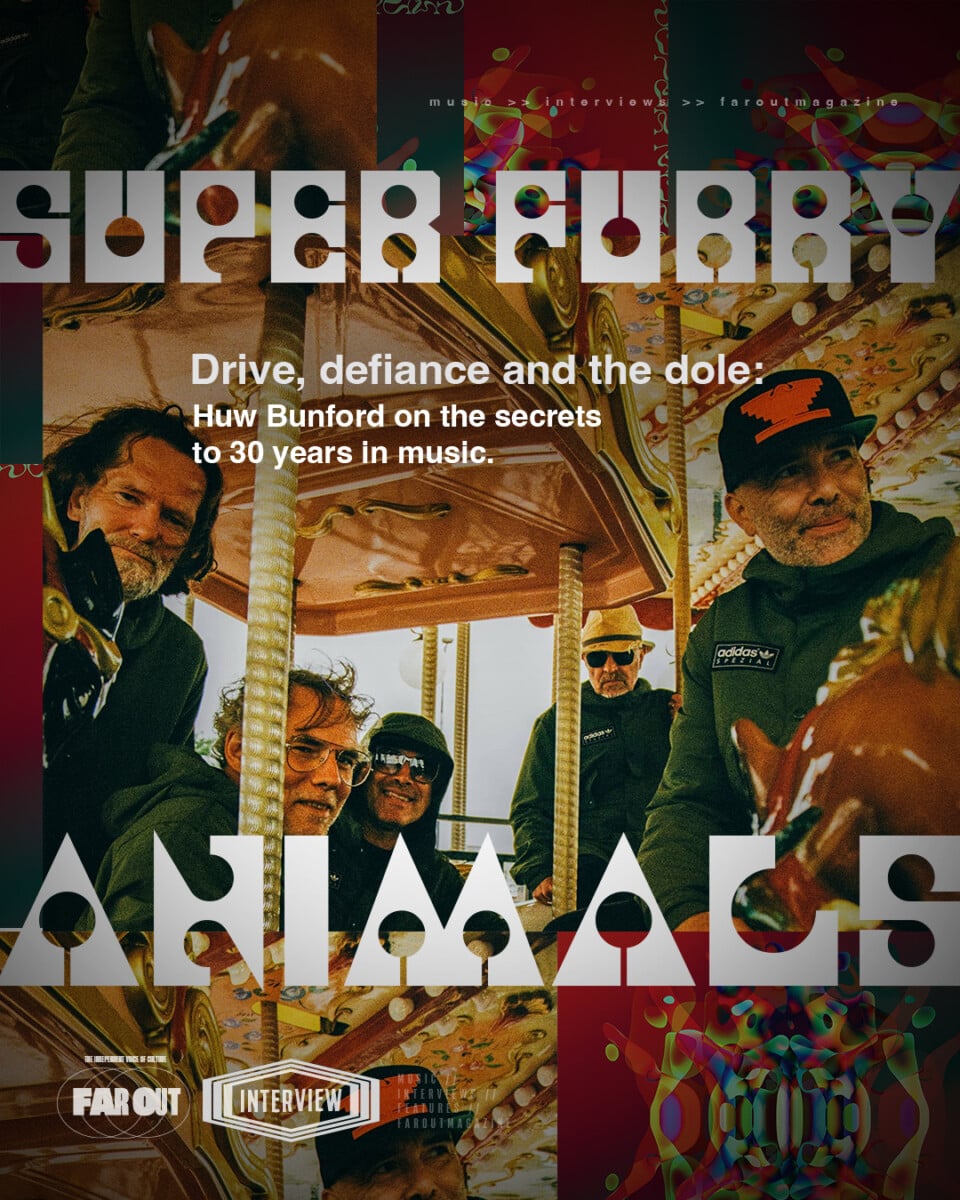
“The good news is we don’t hate each other,” he chuckles, referring to the unbreakable bond shared between the five members. “Sometimes, you’re almost married creatively, but we haven’t had to send in the lawyers yet. I’ve still got my hair too.”
SFA haven’t released a new album since 2009, but their significance hasn’t waned in the slightest despite a 17-year dry spell. “We’ve been asked every year for the past ten years,” Bunford says about their decision to go on the road again. Some might want new material from the band, but in the eyes of the vast majority of their dedicated fanbase, simply having another opportunity to see them perform after a hiatus and being able to quell any concerns about the band being done for good is more than enough.
You could argue that this, along with their previous tours that have celebrated album anniversaries by playing the records in full, is nothing more than a nostalgia trip, and the concurrent release of Precreation Percolation, an album compiling the band’s first two out-of-print EPs along with early demos and previously unheard recordings from 1993 to 1995, only amplifies these thoughts.
However, while some bands repeatedly trying to turn back the clock to reflect on their early career can seem self-indulgent, with the Furries, it feels as though they’re choosing to open up on a much-mythologised period of their career that even hardcore fans haven’t been completely privy to. Precreation Percolation and the anniversary tour are, if anything, a history lesson on one of Wales’ most important acts of the 1990s, something Bunford is proud to be sharing with fans.
“Welsh language music goes as far back as the ‘60s,” he explains, attempting to justify the idea that he and the band weren’t the first of their kind. “There’s always been popular music in the Welsh language with artists like Meic Stevens and Edward H Dafis, they’re kind of the stalwarts.”
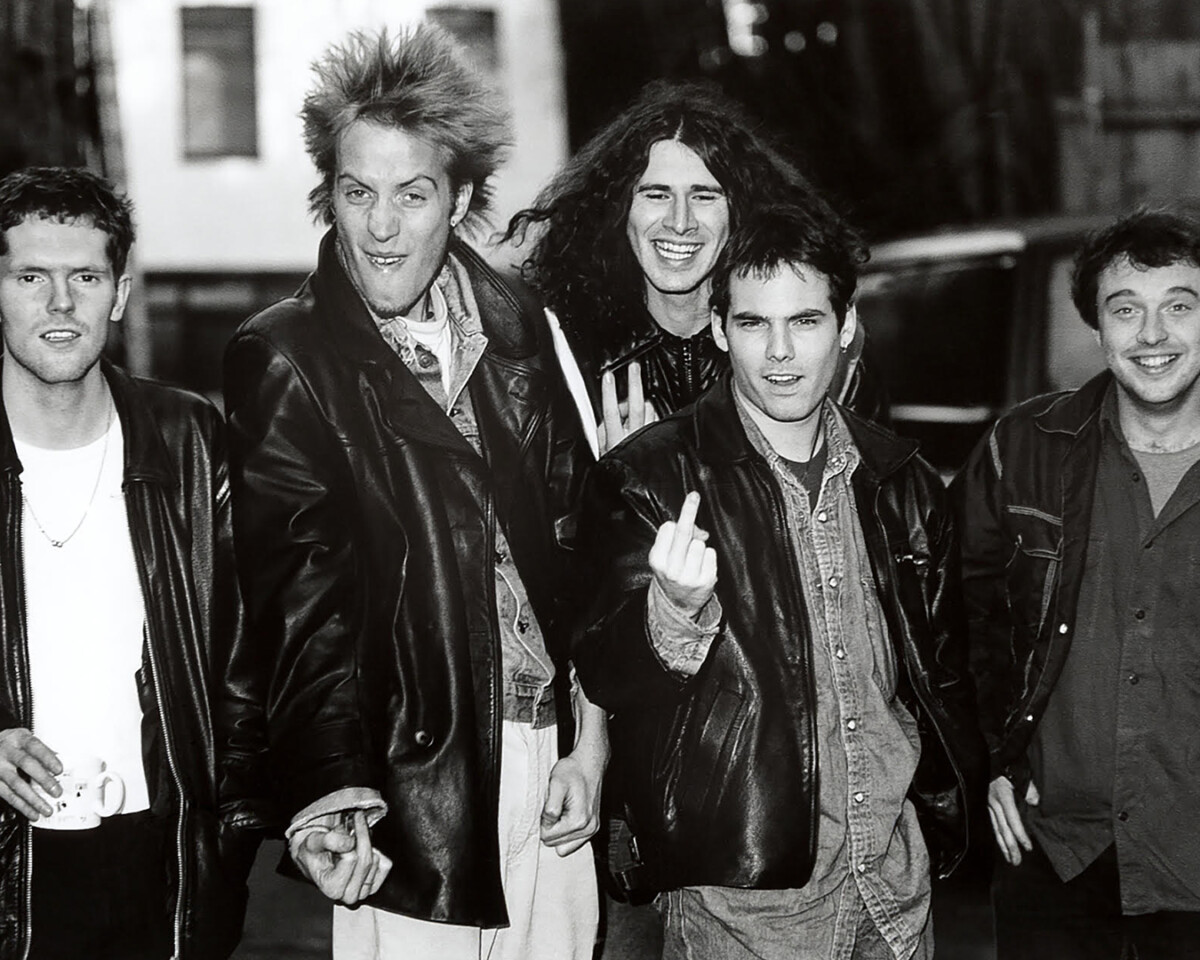
It was within this Welsh language music scene that the five members of the band first met, with Bunford and bassist Guto Pryce having both been part of Cardiff-based post-punk group U Thant in the late ‘80s and early ‘90s, while frontman Gruff Rhys and drummer Dafydd Ieuan were in indie rock outfit Ffa Coffi Pawb in the north of the country, along with Ieuan’s younger brother, Cian Ciaran, who was in various techno projects.
“Cut a long story short, Gruff, Daf and eventually Cian would move from North Wales down to Cardiff in the early ‘90s,” Bunford continues, slowly leading me towards the formation of Super Furry Animals. All of their previous projects hadn’t so much split up, but they were naturally reaching the end of their lifespan, which Bunford attributes to there having been a lack of financial upturn.
“Like with so many things, you just wouldn’t be able to make a living from it,” he said, referring to the niche crowds that both U Thant and Ffa Coffi Pawb were drawing in at the time. “A lot of the time, you were going on the dole. A lot of creative people who are now massive household names started their craft while signing on”.
“There should be a blue plaque or one of those statues like in Parliament Square, saying this is where Britain’s talent started”.
Being on the dole and living in Wales, far away from the English cities that formed the main hub of the UK’s music industry at the time, were undoubtedly significant obstacles that bands like Super Furry Animals were faced with, raising the question as to whether their collective pursuit of a new project would be any more worthwhile than their previous ones. However, a brewing hostility between bands using guitars and electronics would also prove to be tough for the band to navigate their way around, given how important both were to their identity.
“In Cardiff, rave and dance music was kind of taking off to the point where it was almost uncool to play guitar,” Bunford recalls. “I wasn’t in that camp, but I can see why things like that happened, because it was liberating and you got a great mixture of people and culture. It was a very closed, ring-fenced kind of culture before then, but rave and dance music opened everyone’s eyes a bit, and that’s how we ended up hanging out.”
Their refusal to accept the mutual dismissiveness of both camps only spurred them on more, with them wishing to make this embrace of variety a crucial feature of their work. “Everyone was saying, ‘oh, it’s the end of guitar music’ and that it was all going to be electronic,” he adds. “We never saw music like that, and the last thing we would think of doing is pigeonholing something. We just like melody; we’re just massive fans of The Beatles, The Beach Boys, Neil Young, Curtis Mayfield – all iconic tuneage – but we also loved a TB-303. That had its own kind of sexiness.”
As for how other people perceived this hybridisation that they were exploring, that wasn’t important. “I know it sounds a bit arrogant, but we didn’t give a shit what people thought. In hindsight, that’s probably a very healthy way to go about it.”
Having played their first handful of gigs as an electronic collective, where whoever was available to do a gig would turn up and press play, these ended up in disaster the vast majority of the time, and the band soon found themselves settling further into a more traditional songwriting style that felt like a logical progression from the material Rhys and Ieuan had left over from their Ffa Coffi Pawb days.

One final change would take place before the group, as we know it, would truly spring into life. “We had a singer called Rhys, he’s very well known,” Bunford coyly explains, massively playing down the fact that they were originally fronted by acclaimed actor Rhys Ifans. “Originally, there was going to be six of us. In the end, Rhys went a different way, and we went on to work with a record company called Ankst. They released our first two EPs, which are entirely in the Welsh language, bar one song.”
These two EPs, 1995’s Llanfairpwllgwyngyllgogerychwyrndrobwllllantysiliogogogoch (In Space) and Moog Droog, aren’t drastically different from the material that they’d recorded with Ifans prior to his departure, with all of this available to hear on the new compilation. Attention rapidly began coming their way, and English language songs like ‘Hometown Unicorn’ and ‘If You Don’t Want Me To Destroy You’ began creeping into their set.
This is ultimately how they sparked interest from Creation Records, a label that Bunford says the band already had a soft spot for on account of their work with seminal British and Irish bands of the period, such as Slowdive, My Bloody Valentine and, as we’d mockingly call them, that band from Manchester – Oasis. While their direct relationship with label head Alan McGee was relatively hands-off, Bunford distinctly recalls their first encounter at a show at The Monarch in London.
“It was all A&R people there,” Bunford recounts. “There was no audience. I remember, because Alan McGee wanted to sign us, then said we should try and sing some songs in English, but we were singing in English by then. They had a very good A&R man, Mark Bowen. I think he got the zeitgeist of what was going on outside of London, and that it wasn’t just Britpop. There was more music out there, but Britpop was what was pushed down your throat.”
Bunford calls this decision one of the most crucial they ever made in their career, allowing the band a sense of creative freedom that they’d never experienced before. “It wasn’t a wake-up call, but more of a paradigm shift,” he reflects. “It wasn’t going to be perfect, but being given a chance to do those experiments that maybe were a bit mad did give you complete freedom and time.”
However, sudden attention and signing to a label didn’t mean that the band got ahead of themselves. “It wasn’t like we had the hubris of thinking this is going to last forever, but gradually, we got more confident with what we were and what we could do,” Bunford admits.
The band’s signing to Creation takes us to the end of the period covered by Precreation Percolation, which leads us to look ahead to the tour that begins at the same time as the compilation’s release. “I know we’ve got this album of early stuff, but it’s not like we’re doing an album tour as we have done,” Bunford insists. “This is just kind of 30 years of Super Furry Animals, you know?”
Taking the pressure off themselves in this sense has allowed the experience of reuniting for the first time in a decade to be more of a fun experience, although Bunford, now in his mid-50s, does admit that he can’t quite handle things in the same way as he used to. “I’ve had to get my fingers hardened,” he jokes, mocking the inevitable decline of his body. “I took about four or five days just trying to work out one chord. It’s bloody knackering as well. The St John’s Ambulance won’t just be there for the audience.”
The band may have been away for ten years, and even longer in the sense that they haven’t released anything new, but that doesn’t point to any level of inactivity. “Gruff has got a solo career, and I think he’s written more albums than SFA has now,” he says, before pivoting towards the ventures of the other members. “The four of us in Das Koolies have gone and got a lot of our itches scratched. We do soundtracks for people and stuff like that, so we’re busy, you know?”
However, the elephant in the room about whether new music will ever arise is yet to be confirmed or denied. “I think the only way it would happen would be by accident,” he swiftly replies when asked about the possibility. “But yeah, I always think that it would be good to have [album number] ten.”
Anyone worried that the band may have lost what made them so beloved in the interim years can rest assured that, at the very least, the sense of humour has remained wholly intact. Brief discussions on the band’s fabled ‘banned instrument list’ prompt Bunford to exclaim, “The saxophone, in the wrong hands, is a very dangerous instrument, and so is the electric violin,” while the band’s propensity for extravagant purchases, much like the tank they sold to Don Henley, is still a whim they appear to live by.
“We recently bought a Norwegian foghorn,” Bunford tells me. “It’s in a wooden box, and it’s got a handle on the side that you turn, which generates the buildup of the horn. It was terrible. I mean, it sounded like a doorbell. I don’t think it’s going to save any ship from coming aground. That was going to be our opening gambit for the shows, but we had to shelve it. 152 quid it was. They saw us coming.”
Over 30 years of existence is no mean feat, and the special nature of this achievement is not lost on Bunford or his bandmates. When asked whether they believe they’d even be able to have a fraction of the support they’ve gained in that time if they formed today, Bunford admits that the modern landscape probably wouldn’t be so benevolent to a band like them.
“Technology has come a long way,” he surmises. “It’s nuts what you can do now, over these last two years, especially with AI. The whole thing would be quite a challenge. Name something from the record industry 30 years ago, like publishing; you have to do it all yourself now. I mean, if you really want to put your own mark on something, it is possible now to do that, but on the other hand, you’ve got the whole room shouting ‘listen to me, listen to me’, and there’s always people trying to bump the most important music you need to listen to every week. That hasn’t changed, the gatekeepers are just different.”
Once again, we return to the dole office where the band were given a safety net in their formative years. “The other thing is the money,” he adds. “Like I said, we had time, and we had an umbrella. You couldn’t fall into complete disaster. Now, you either need a bit of luck or a lot of help, and maybe you do just have to get into debt. Maybe that’s the game.”
Times have certainly changed in the three decades since Super Furry Animals formed with a sense of ambition, and yet, they’re as beloved as they always were, thanks to an unwavering commitment to a philosophy of doing things their own way, and a true acceptance of the fact that whatever happens, happens.
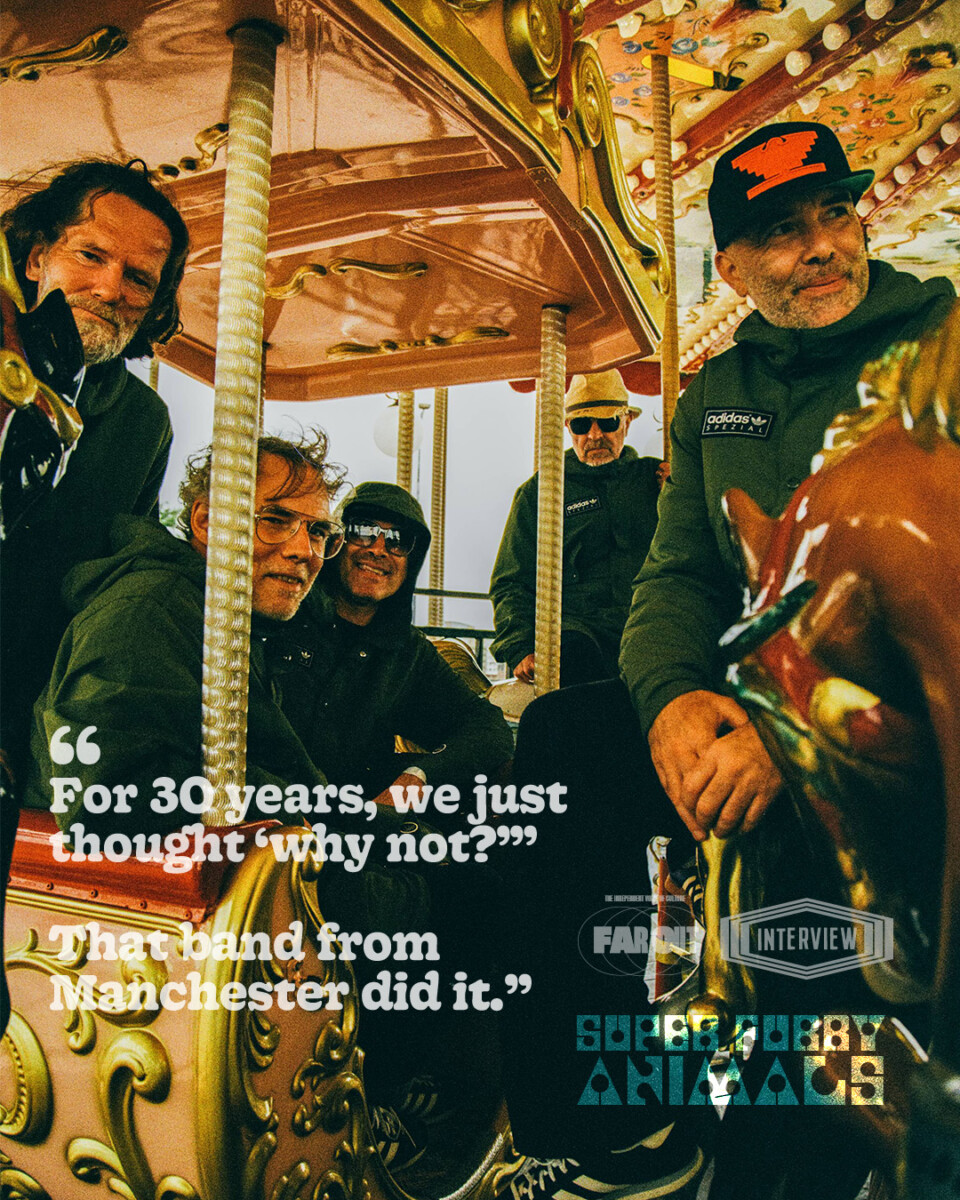
“For 30 years, we just thought ‘why not?’” Bunford proclaims. “That band from Manchester did it.”
