


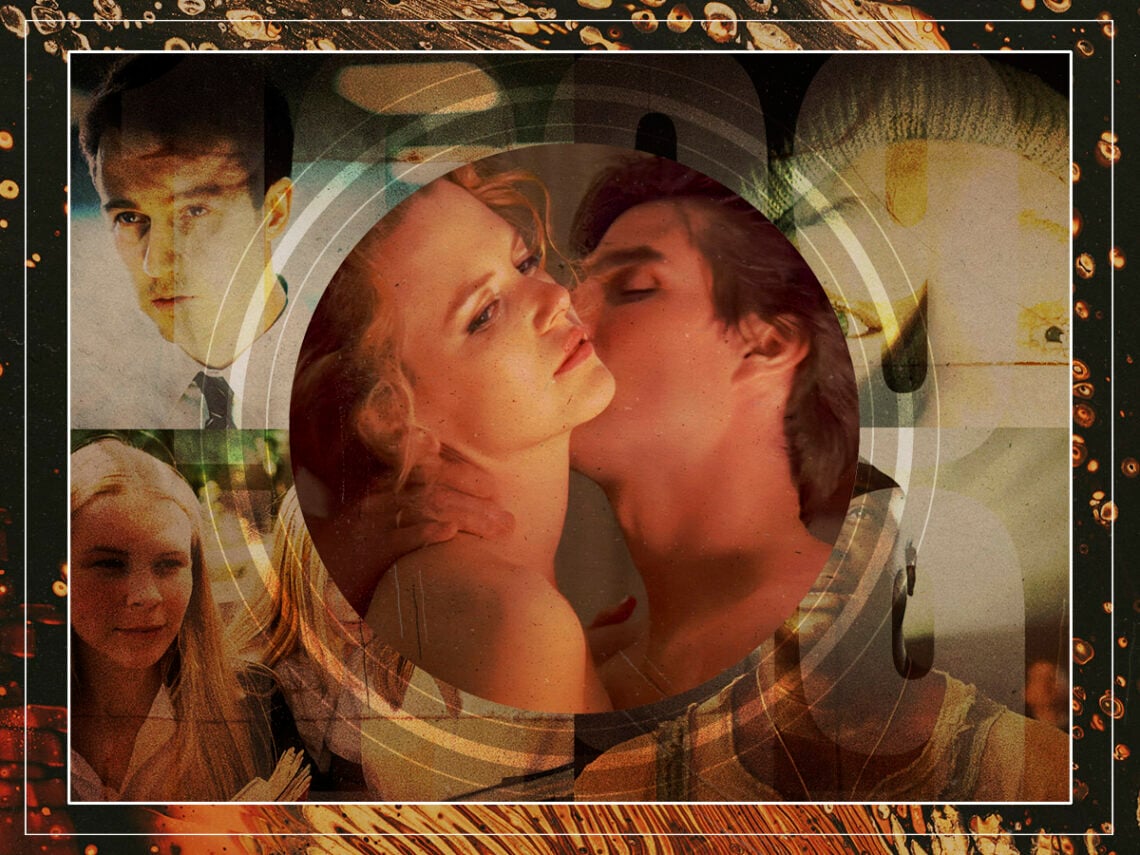
Was 1999 the greatest year in movie history?

Defining the greatest year in movie history is, in some ways, a fool’s errand. After all, when talking about the quality of one film, it’s a subjective opinion, but when discussing the cumulative quality of a year’s worth of movies, it becomes something else entirely. It’s a numbers game at that point, or a battle of subjective opinions on far too large a scale to comprehend.
Having said that, 1999 is often bandied about as a contender for the title of greatest movie year ever. It’s not hard to see why, either. The number of genuinely great movies released by Hollywood alone in that year is staggering, and that’s before you even count the contributions of British, Japanese, German, and Spanish cinema.
What are some of these “great” movies, I hear you ask? Well, in truth, 1999 offered many excellent examples of almost every genre, with several being truly transformative for the culture. In terms of drama, there was Magnolia, Boy’s Don’t Cry, Eyes Wide Shut, The Virgin Suicides, American Beauty, and All About My Mother; in action/blockbusters, we had The Matrix, Run Lola Run, and The Mummy; in comedy, there was American Pie, 10 Things I Hate About You, Office Space, South Park: Bigger, Longer, & Uncut, and Austin Powers: The Spy Who Shagged Me; and horror gave us The Blair Witch Project, Audition, and The Sixth Sense.
What exactly was in the water at the end of the 20th century, though? Why did so many enduring cinematic works come out in that calendar year? Writer Jeff Gordinier was already of the opinion that 1999 was special in November of that year, and he scribbled down something that would prove prophetic: “Someday, 1999 will be etched on a microchip as the first real year of 21st-century filmmaking. The year when all the old, boring rules about cinema started to crumble.”
Indeed, 1999 seemed like the intersection of several different kinds of filmmaking and a tipping point between the past and the future. In the late ’80s/early ’90s, the boom in American independent cinema made icons out of Quentin Tarantino, Kevin Smith, and Steven Soderbergh, and those filmmakers inspired the young, passionate voices who were closely following in their footsteps.

In some ways, the atmosphere in the late ’90s in US mainstream film was akin to that of the New Hollywood era in the ’70s, where it seemed like nothing was off the table, and experimentation was not only encouraged but major studios actively needed it. 1999, for example, was probably the only year in history when a studio would give a director like David Fincher $65 million to make a movie like Fight Club, which – spoiler alert – isn’t really about fighting at all.
“Fincher was at a place where he could get a good cast and good money,” Brian Raftery, author of Best. Movie. Year. Ever: How 1999 Blew Up the Big Screen, told NPR. “Brad Pitt was a big enough star that he could say, ‘Hey, I want to make this crazy, nihilistic, violent, look at the dark underbelly of America’s soul,’ and get it made at a big budget. That’s kind of remarkable.”
Indeed, many of 1999’s biggest hit movies were the furthest thing away from the cookie-cutter superhero sequels, video game adaptations, and brightly coloured kids’ fare that dominate the box office today. 1999’s movies saw filmmakers working through the anxieties they were feeling about technology, politics, capitalism, and alienation, but doing it in an entertaining way that could still appeal to the masses. Crucially, though, the masses seemed to be on the same wavelength with these filmmakers, and these types of films were what they wanted to see, too.
All in all, perhaps this is why 1999 could feasibly be called the GOAT of movie years: its movies aligned with the wants and desires of both filmmakers and audiences. As Tom Tykwer, director of the video game-inspired German action movie Run Lola Run, waxed lyrical about 1999’s drive to “do something completely different”. He pinpointed how a movie like The Matrix “still serves all of our traditional desires in cinema”, but also plays with the audience’s minds and makes them think.
“Ten years ago,” he mused, casting his mind back to 1989, “I don’t think people would have even been ready for it.”
What happened in movies in 1999?
January, 1999

A slow start
The best movie year in history has an inauspicious start, with the biggest hit of January being the teen rom-com She’s All That. It may have a cult following today, and made a lot of money, but it ain’t good.
February, 1999

A cult comedy is born
Mike Judge’s hilarious Office Space is released in February, and goes down like a lead balloon at the box office. However, it will later sell like hotcakes on DVD and VHS, and birth countless memes on its way to cult classic status.
March, 1999

America meets Guy Ritchie
While Guy Ritchie’s cockney gangster classic Lock, Stock, and Two Smoking Barrels had taken the UK by storm in August 1998, it took until March 1999 for Vinnie Jones, Jason Statham and company to go Stateside.
March, 1999

An icon leaves us
Stanley Kubrick passes away on March 7th, only days after a family and friends screening of Eyes Wide Shut. The movie is later released in July and becomes the 70-year-old icon’s final cinematic statement.
March, 1999

‘The Matrix’ changes everything
There is Hollywood blockbuster filmmaking before The Matrix, and Hollywood blockbuster filmmaking after The Matrix. Lily and Lana Wachowski’s heady blend of cyberpunk, hard sci-fi ideas, martial arts, and revolutionary CGI comes out of nowhere and blows everybody away.
April, 1999

Reese Witherspoon arrives
Reese Witherspoon became a star in 1999 with the one-two punch of Cruel Intentions in March and her incredible turn as the uber-ambitious Tracy Flick in Alexander Payne’s biting satire Election in April.
May, 1999

‘The Phantom Menace’ ruins childhoods
Star Wars: Episode 1 – The Phantom Menace becomes far and away the biggest movie of the year when it is released in May.
Unfortunately, it’s also the most hated movie of the year, and the warm reception to The Mummy, released 12 days earlier, takes away some of its steam.
July, 1999

Found footage horror is born
The Blair Witch Project becomes a cultural phenomenon in July thanks to some savvy internet marketing and the general gullibility of the ’90s populace. What a time to be alive.
August, 1999

The world sees dead people
M Night Shyamalan’s The Sixth Sense becomes the sleeper hit of the year when it rakes in more money worldwide than anything except The Phantom Menace.
The phrase, “I see dead people,” is said in more offices and around more dinner tables than anyone could ever care to remember.
October, 1999
The future ‘Best Picture’ winner busts blocks
While it’s hard to extricate American Beauty from its star these days, Sam Mendes’ dark, psychological tale of suburban malaise really was an enormous deal at the time, both critically and at the box office.
October, 1999

The ‘Fight Club’ controversy
David Fincher’s Fight Club is released in October, baffling critics and audiences with its darkly satirical take on modern masculinity. It later becomes a cult classic, as is a theme with many movies from this special year.
October, 1999

Even the weirdest movie of the year is embraced
Spike Jonze’s Being John Malkovich proves that, sometimes, being weird as hell is no barrier to becoming a hit. Cameron Diaz has arguably never been better, and Malkovich, Malkovich, Malkovich.
October, 1999

‘Audition’ terrifies the Vancouver International Film Festival
Takashi Miike’s startling horror film premieres in Canada in October, announcing a new auteur has hit the horror scene. It receives a wide release the following year.
November, 1999

Pixar solidifies its domination of animation
Toy Story 2 proves that, when it comes to making animated movies beloved by children and adults alike, they have no parallel.
December, 1999

PTA ends the year with a masterpiece
Paul Thomas Anderson’s Magnolia ends 1999, the ’90s, and the century, in fitting fashion – although the frogs raining down from the sky still divide opinion. What’s up with that?
The best movies from 1999:
- 10 Things I Hate About You (Gil Junger)
- All About My Mother (Pedro Almodóvar)
- American Beauty (Sam Mendes)
- American Pie (Paul Weitz)
- Angela’s Ashes (Alan Parker)
- Any Given Sunday (Oliver Stone)
- Audition (Takashi Miike)
- Austin Powers: The Spy Who Shagged Me (Jay Roach)
- Being John Malkovich (Spike Jonze)
- The Blair Witch Project (Daniel Myrick and Eduardo Sánchez)
- Boys Don’t Cry (Kimberly Peirce)
- Bringing Out the Dead (Martin Scorsese)
- Election (Alexander Payne)
- Eyes Wide Shut (Stanley Kubrick)
- Fight Club (David Fincher)
- Galaxy Quest (Dean Parisot)
- Go (Doug Liman)
- Girl, Interrupted (James Mangold)
- The Green Mile (Frank Darabont)
- The Hurricane (Norman Jewison)
- The Insider (Michael Mann)
- The Iron Giant (Brad Bird)
- Lock, Stock, and Two Smoking Barrels (Guy Ritchie)
- Magnolia (Paul Thomas Anderson)
- Man on the Moon (Milos Forman)
- The Matrix (Lana and Lily Wachowski)
- The Mummy (Stephen Sommers)
- Notting Hill (Roger Michell)
- Office Space (Mike Judge)
- Run Lola Run (Tom Tykwer)
- The Sixth Sense (M Night Shyamalan)
- Sleepy Hollow (Tim Burton)
- South Park: Bigger, Longer, & Uncut (Trey Parker)
- The Talented Mr Ripley (Anthony Minghella)
- The Thomas Crown Affair (John McTiernan)
- The Virgin Suicides (Sofia Coppola)
- Three Kings (David O Russell)
- Toy Story 2 (John Lasseter, Ash Brannon, and Lee Unkrich)
