


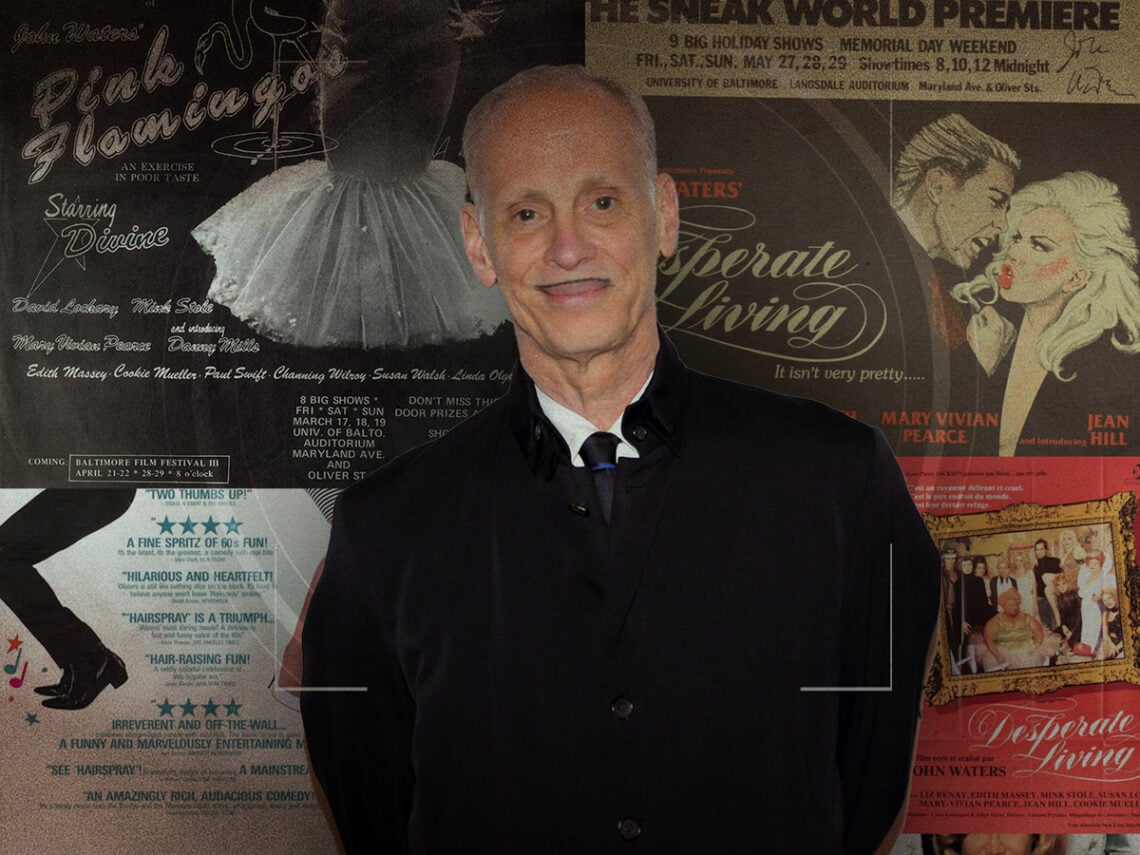
If iconic filmmakers like John Waters can’t get funding, then cinema is doomed

If you need one major sign that cinema is in a precarious place right now, you just need to look at the established filmmakers who can’t get any funding to make another movie.
John Waters recently expressed his struggle to get a movie financed, despite the fact that he is one of cinema’s most beloved auteurs, a cult figure who has been raising sickening cinematic hell since the late 1960s. With movies like Pink Flamingos and Female Trouble, he has already left an indelible mark on cinema, or some might call it a shit stain, but not everyone saw it that way. Some of us love Waters’ work and would do anything for another film, but it looks like it’s not going to happen anytime soon.
The filmmaker’s last movie was 2004’s A Dirty Shame, an admittedly strange film that certainly isn’t one of his greatest efforts, but it’s great, campy fun nonetheless. Unfortunately, it only made $1.9million at the box office against a budget of $15m, and ever since, he just hasn’t been successful in securing funding for a new film. Sure, his films don’t exactly have mainstream appeal, but he certainly found greater success with Cry-Baby, Hairspray, and Serial Mom a few decades ago, so he definitely knows what he is doing and deserves another chance.
The filmmaker has been planning a movie adaptation of his novel Liarmouth since 2022, and in 2024, it was announced that he would be going ahead with it, but he has since also revealed that he can’t get the project off the ground. “I was going to adapt my first novel,” he told Variety, “It was optioned. I wrote the script. Aubrey Plaza was going to star. Nobody will give us the money”.
It can’t really be too risky a cause to fund the ‘Pope of Trash’, plus it’s been such a long time without any new Waters movies that we’re all gagging for one more than ever. Then there’s Todd Solondz, who, like Waters, is also known for his transgressive approach to filmmaking and has never shied away from taboo topics, like incest and abuse, across films like Happiness and Welcome to the Dollhouse, with his most recent project, 2016’s Wiener-Dog, being a sort of follow-up to the latter, that saw Greta Gerwig playing a grown-up Dawn Wiener, grossing $700,000, while his previous film, 2011’s Dark Horse, made just $255,025, but does that mean Solondz shouldn’t be entitled to make any more movies?
It’s a difficult situation to be in, because movies aren’t cheap, and you can’t expect a studio to throw money at a project that could very likely fail, yet we’re consistently witnessing unique filmmakers like Waters and Solondz struggling to secure funding, while big names like Ridley Scott are able to make whatever they want on a huge budget with little care for what they’re creating, even though his last few movies have felt soulless, and his on-set behaviour, such as his laziness, has been criticised by many.
Regardless, since he makes the kinds of movies that will guarantee an audience and considerable box office success, of course, he’s able to keep going, and the same goes for people like the Russo brothers or Shawn Levy, so if you’re a filmmaker with ideas that might disrupt mainstream thinking, don’t expect funding to come easily.
Even someone like Spike Lee, whose films are much more accessible than those of Waters and Solondz, has admitted to struggling to gain funding for projects, and in 2011, he expressed his attempts and subsequent failure to fund an Inside Man sequel. “We can’t get the sequel made. And one thing Hollywood does well is sequels. The film’s not getting made. We tried many times. It’s not going to happen,” he declared at a PromaxBDA Q&A conference.
His preoccupation with ‘heavy’ themes like politics, race, and gender has surely contributed to his struggles to get funding over the years, because it’s not like he’s an incompetent filmmaker who’s guaranteed to make a flop. What this tells us about Hollywood is that if you’re not interested in conventional cinema or you’re not a straight white man, you’re not going to have an easy time getting your film funded; it’s as simple as that.
I know that’s depressing to read, and there are plenty of great initiatives out there to help budding filmmakers, particularly those from marginalised communities, but the truth is, it’s always going to be ten times harder, and that’s just to land funding to bring your idea to the big screen in the first place. Perhaps cinema is doomed, but the best we can do is continue to support independent filmmaking as much as possible, showing Hollywood that there’s a market for it, and that it’s worth the investment.
