


The camp subversion of John Waters’ ‘Female Trouble’

“It is not a natural mode of sensibility, if there be any such. Indeed the essence of Camp is its love of the unnatural: of artifice and exaggeration. And Camp is esoteric – something of a private code, a badge of identity even, among small urban cliques,” writes Susan Sontag in ‘Notes on Camp’. Her seminal essay describes the definition of Camp in immense detail, also noting that Campness often goes “against the grain of one’s sex. What is most beautiful in virile men is something feminine; what is most beautiful in feminine women is something masculine”.
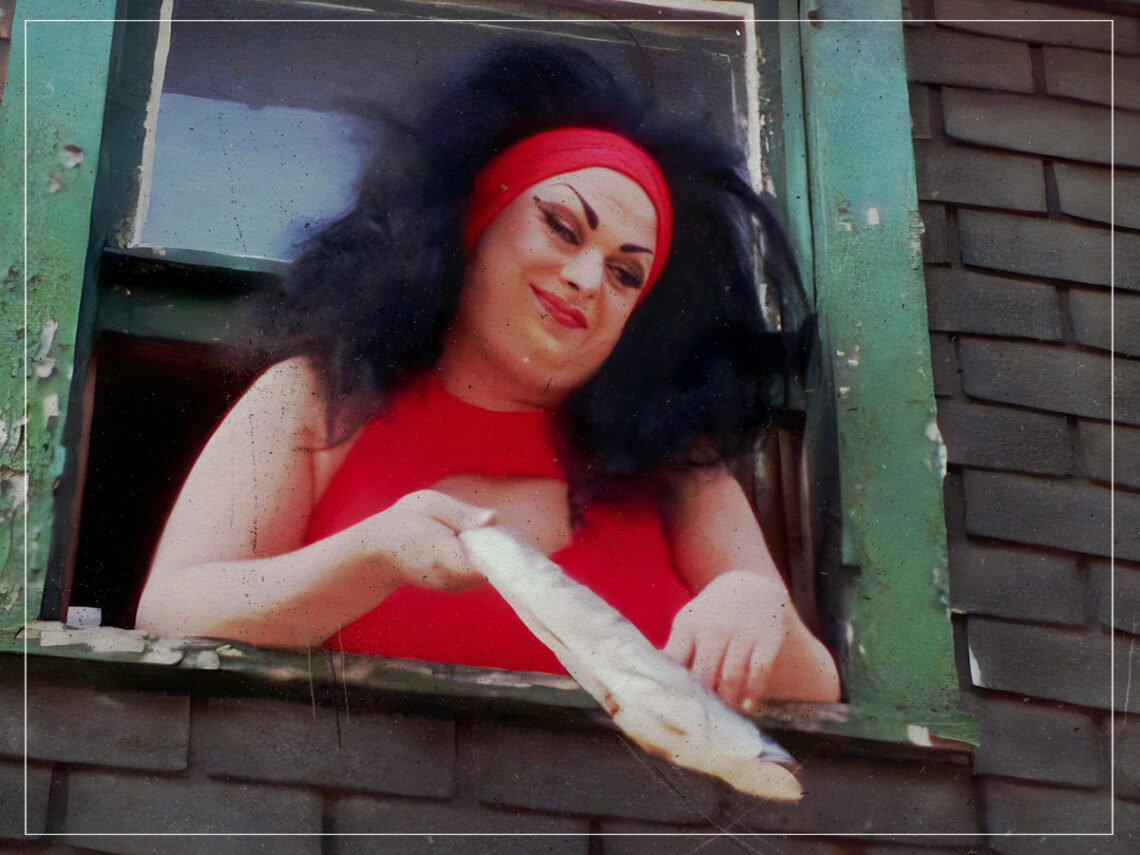
Evidently, the work of John Waters more than fits these descriptions. In his cinematic world, drag queens, effeminate men and butch women intersect – gender becomes a mere concept to be played with. The outfits worn by his characters are often over-the-top and outrageous, none more than the series of dresses sported by Divine (real name Harris Glenn Milstead) in Female Trouble.
Playing Dawn Davenport, Divine wears a bright orange dress with see-through mesh exposing her stomach, a completely sheer white wedding dress with nothing underneath, and silver sequined trousers with a cropped white blouse. Dawn’s outfits are paired with extravagant up-dos and over-drawn makeup, making her an unforgettable on-screen presence. The other characters wear equally dramatic costumes, like David Lochary’s black outfit with a collar made of hair curls or Edith Massey’s tight cut-out one-piece.
Divine as Dawn is an unconventional leading woman, not least because she’s a man in drag but also because she hardly looks like the other leading ladies who graced the screen at the time. Squeezing into dresses considerably too tight for him, Divine embraces ultra-feminine styles with a vicious edge, pairing every ‘sexy’ outfit with a terrifyingly psychotic smile, and by the end of Female Trouble, a partly shaved head and a burnt face, peeling with skin.
Released a few years after Waters’ notorious film Pink Flamingos, Female Trouble is slightly less shocking (there’s no prolapsed anuses or shit-eating here), but it’s arguably his best. The movie starts with Dawn as a teenager, causing trouble in class and dreaming of a better life. After receiving the wrong shoes for Christmas, she destroys the room and storms out, getting picked up by a disgusting man driving by, who also happens to be played by Divine out of drag. They have sex on a dirty mattress by the side of the road, with the camera zooming in on the man’s shit-stained underwear.
Then, we skip to Dawn’s life with a new child, giving birth by pulling her baby out while lying on the sofa. Naming her Taffy, she quickly realises motherhood is not her forte, and her daughter (played by the adult Mink Stole) soon grows up to be a nightmare child. Meanwhile, Dawn is taken under the wing of the beauty salon owners Donald and Donna Dasher, who photograph her committing crimes in a twisted attempt to document what they believe is the true meaning of beauty.
After marrying one of the hairdressers, Gator, Dawn becomes the victim of an acid attack by Gator’s aunt Ida, who wants Gator to be gay. The movie subsequently descends into pure madness as Donald and Donna encourage Dawn to embrace her scarred skin, turning her into a mini-celebrity. As Taffy seeks out her father and Dawn comes to hate her daughter even more, murder, torture, and various other sickening acts follow, with some brilliantly unforgettable dialogue sprinkled throughout: “I wouldn’t suck your lousy dick if I was suffocating and there was oxygen in your balls!”
The set design is lurid, and the characters are all disgustingly unlikeable, yet the ridiculous plot and comedic lines prevent us from actually hating anyone. Waters crafts a world that is so heinous yet so appealing. Who wouldn’t want to be an anonymous spectator of their world just for a day, getting your hair done by the bizarre hairdressers at the Lipstick Beauty Salon or watching Dawn’s trampolining nightclub act (from a safe distance)? Unashamedly stupid, Waters proves his genius by creating a self-aware piece of cinema defined by themes that offer closer inspection after a first watch.
The director asks us: What makes something beautiful? And can even the ugliest things, like crime, be considered beautiful if enough people see them as such? The low-budget film itself—made up of bad acting and a distinctive lack of Hollywood glossiness—encapsulates these questions. Waters seems to ask his audience whether low art can also be considered high art and whether a piece of art that many people would deem ugly could actually be classed as beautiful. Maybe beautiful isn’t the right word to describe Female Trouble, but it’s certainly ambitious, hilarious and accomplished.
