


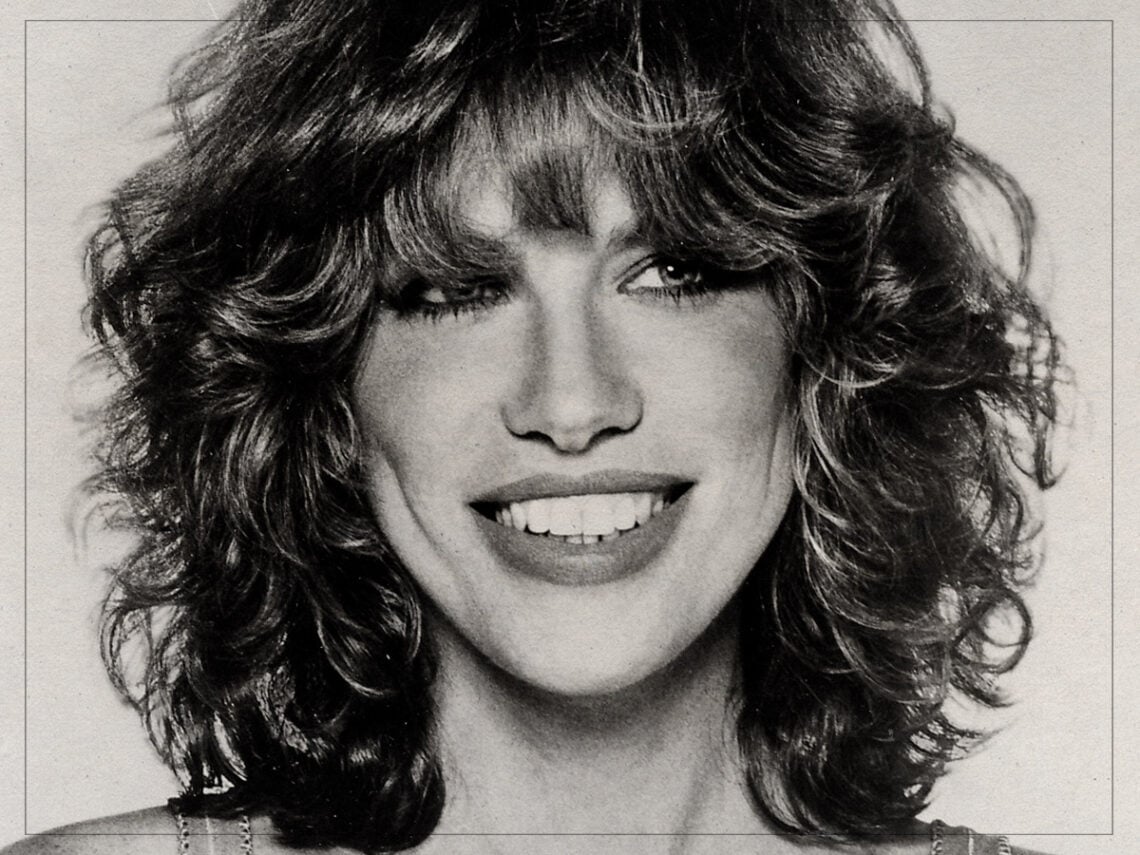
Carly Simon’s ‘You’re So Vain’ rewrote the rules for women in pop in 1972

Tearing up the rule book is one thing, but Carly Simon created a whole new way of living for women in pop when she released ‘You’re So Vain’.
Some people may or may not agree with the song being the first-ever feminist anthem, but it’s certain that the 1972 soft rock hit took on an unmistakable prescience not just in its sonic quality but also its lyrical innovation, separating Simon as a standout songwriter of her generation and a beacon, who injected some much-needed feminist energy into the overly patriarchal canon.
Of course, the lore behind the track is almost as famous as the bones of the song itself, as the New York singer blazingly eviscerated her string of shallow former lovers, most notably the actor Warren Beatty, as it emerged afterwards. But as much as ‘You’re So Vain’ was commercially lauded for its in-your-face sentiments, it also represented a much more significant change in heralding women in the music industry as a force to be reckoned with.
Female power in pop music was largely unheard of prior to Simon storming in with the song, and, as such, it came to symbolise a huge turning point in how women were portrayed and also advocated for themselves in the sphere. No longer were they limited to the boring narrative trope of simply fawning over men or declaring their undying love. Instead, here Simon was serving a plate of male egotism straight back onto their plates for all to see, and in many ways, it just left them gawping in response.
In a lot of ways, though, it also reflected a unique path that the singer had been set on for a number of years up to that point. She rejected the hedonistic notion of rock and roll in the ‘60s with one of her first bands, Elephant’s Memory, preferring a much more honest way of making her mark, rather than the supposed default of sex and drugs.
“I hated the gigs,” Simon later recalled. “We played clubs where everyone smoked dope and cigarettes at the same time. The sound systems were so dreadful I lost my voice easily and regularly, and after a summer I quit.” Clearly, she always knew deep down that she was destined for greater things, whether that was eviscerating men or blazing a bright pop career of her own.
Yet it would equally be naive to pretend that Simon was some kind of revelation when ‘You’re So Vain’ came around. By that point in the early ‘70s, she had already released three albums, been nominated for multiple Grammys, and received glowing wall-to-wall adoration for the lot. You could easily see her as the pop poster girl of the era, but even through the shiny image that perpetuated, Simon was still keen to stress that she was no walkover.
It goes without saying that ‘You’re So Vain’ hardly invented the notion of feminism all on its own, and it didn’t take until its release in 1972 for themes of empowerment to first appear in song. But the historical crux the tune found itself in undeniably propelled its success. Arriving onto the scene just as the height of the Women’s Liberation Movement was at its peak, it was a track that invigorated a spark in the female masses that music could also reflect their rage and not just be bogged down by permissiveness.
There were other songs that had embodied similar pretences, looking at Aretha Franklin’s ‘Respect’ from 1967 as just one example, but none had thrown man’s own arrogance back in his face quite like Simon did, especially in the hilarious self-awareness of the line “You probably think this song is about you”. For the first time, a woman was well and truly wearing the trousers, and the command of that sight led to a volcanic eruption of feminism that would change the industry status quo forever.
Think of the female-led musical movements that have happened since. From riot grrrl to the force of the Spice Girls’ ‘Girl Power’, none of it may have happened if it weren’t for Simon throwing the supposed convention of male dominance out the window and setting some new ground rules. Even to this day, where female agency is the mode of choice with artists like Chappell Roan, Charli XCX, and Taylor Swift taking command of their identities and sexual personae, there’s no doubt they have Simon to thank for ploughing out that path.
When Simon’s ex-lovers walked into the party with their apricot scarves and hats “strategically dipped below one eye”, they naturally thought they’d be the command of the room. But, perhaps, they never considered being the subject of feminist wrath for the rest of time. It’s the eternal warning we take from that naivety: never get too big for your boots because your woman might just blast it in a song.
