


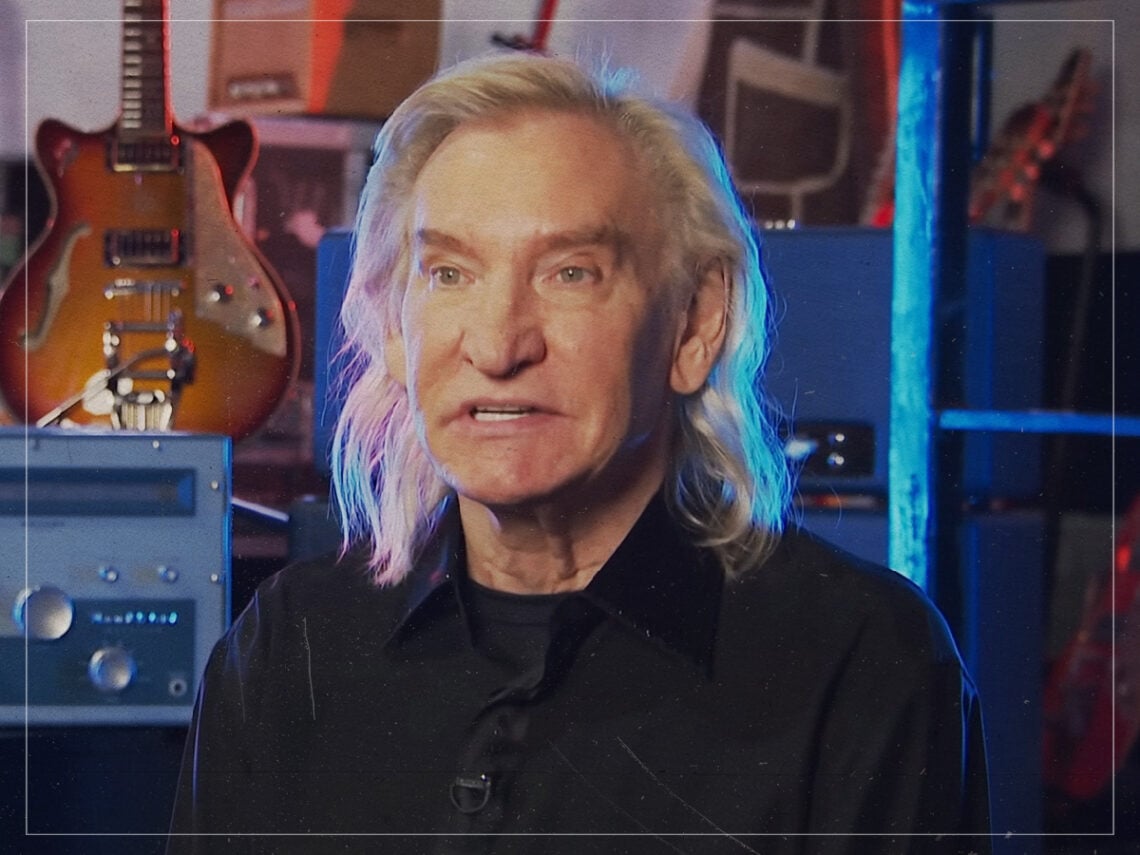
The album Joe Walsh made at his lowest point: “I was pretty pitiful”

Born in 1992, Miley Cyrus rose to fame as one of the defining pop stars of her generation, and by 2012, she’d already begun shedding her Disney image, cutting her hair into an infamous quiff and gearing up to release ‘Wrecking Ball’, leaving the Hannah Montana avatar behind once and for all in a flurry of brick dust.
Remarkably, her entire lifetime up to that point is exactly how long it took Joe Walsh of the Eagles to release the follow-up to his 1992 solo album, Songs for a Dying Planet.
While the likes of Radiohead and The Strokes are noted for choosing to eschew conventional, predictable, multi-year album cycles to protect the organicness of their creative processes, for Walsh, it was less about artistic sacrosanctity and more about simply having the time.
A couple of years after he released Songs for a Dying Planet, the unthinkable happened: pigs grew wings, and Walsh found himself participating in a full-blown reunion of the Eagles, one that has remained largely intact ever since, with the band celebrating its 55th anniversary this year.
With that level of commitment, it would have been easy to assume he might never release another solo album, which was one of the reasons he cited when discussing the album age gap with Classic Rock: “I’ve been a full-time Eagle, in the last ten years we’ve been around the world twice”.
The second reason was more personal. Before delivering a second solo album, he wanted to clean up and get sober so he could deliver the creative antithesis to Songs for a Dying Planet, which had been made at the height of his drug use. “I was pretty pitiful. I had lost myself,” he told Louder Sound about this period, “I always thought, ‘Well, if I need to, I can stop’. And then I realised that wasn’t the case, and I did not know what to do.”
Across rock and roll’s long, decade-spanning history, few artists appeared to be enjoying the ride quite like Joe Walsh. The Eagles themselves were famously heavy cocaine users, with Black Sabbath’s Geezer Butler once claiming his band had to clean a studio after the Eagles because “they’d left about a pound of cocaine in the board”.
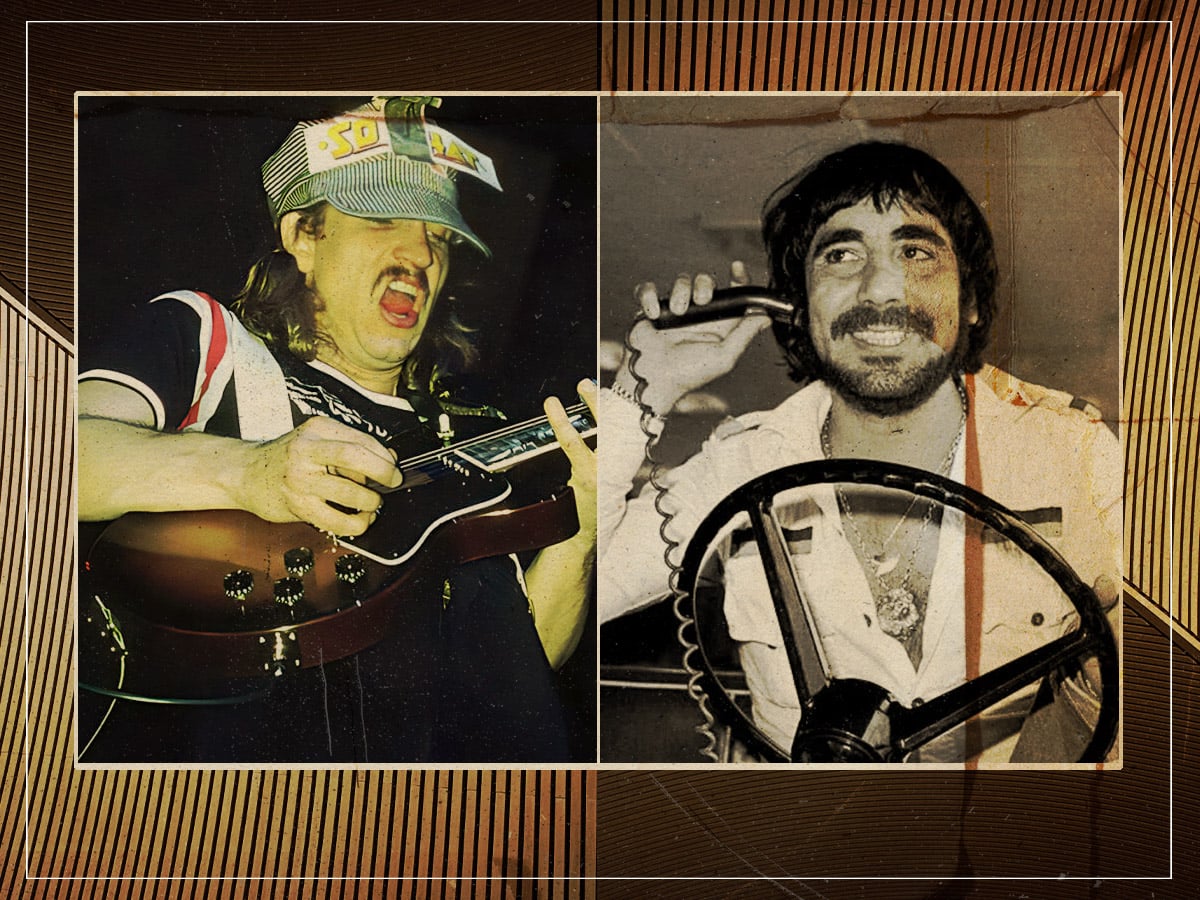
Walsh himself was arguably the most hedonistic member of the group, from relationships with fellow rock royalty like Fleetwood Mac’s Stevie Nicks to touring with The Who and partying alongside Keith Moon, fully embracing the excesses of the era. He was also close friends with comedy legend John Belushi, with the pair once racking up $23,000 in damages after destroying a hotel room, or, as Glenn Frey put it, they “set about to set the world record for room trash”.
For decades, rock culture has blurred the line between creativity and self-destruction (or, in the above case, property destruction). In their heyday, figures like Jimi Hendrix, Keith Richards, and Ozzy Osbourne would all likely have attested to the idea that great art requires a heavy sprinkling of chaos, but even from a place of sobriety, Walsh remained convinced of this notion in 2024.
He posed, “Could [Jimi] Hendrix have played like that sober, straight and without acid? I don’t think so. Could [Ernest] Hemingway and [William] Faulkner have written like that unless they were alcoholics? Probably not. I always used that as a crutch in my denial, that artists should experience all extremes. But it never occurred to me that all those people are dead. Being a rock ’n’ roller and partying was part of the times back then. I took it as far as I could go, and it almost killed me.”
Thankfully, Walsh lived to tell the tale after getting sober in 1994, something which I’m sure hotel managers across the world are grateful for, too, and combined with the demanding tour schedule of The Eagles, navigating sobriety meant taking a little more time to reignite his solo career in the right way.
“Going into the studio still had some triggers, I’d get frustrated trying to write some stuff, and my mind would say, ‘Well, you know what would work…’ and that wasn’t an option,” he admitted.
Released 20 years after Songs for a Dying Planet, his 2012 album Analog Man stands as the clear, focused result of Walsh’s long journey back, carrying a sense of perspective, shaped by both an awareness of how fragile life can be and a renewed appreciation for everything worth holding onto.
