


Alexander Dorogokupetz: The strange disappearance of the boy who egged Frank Sinatra in 1944

“I don’t know why I did it, but I did” was the immediate response that 18-year-old Alexander Dorogokupetz had when confronted about why he decided to throw eggs at Frank Sinatra, during his performance at Times Square’s Paramount Theatre, in October 1944.
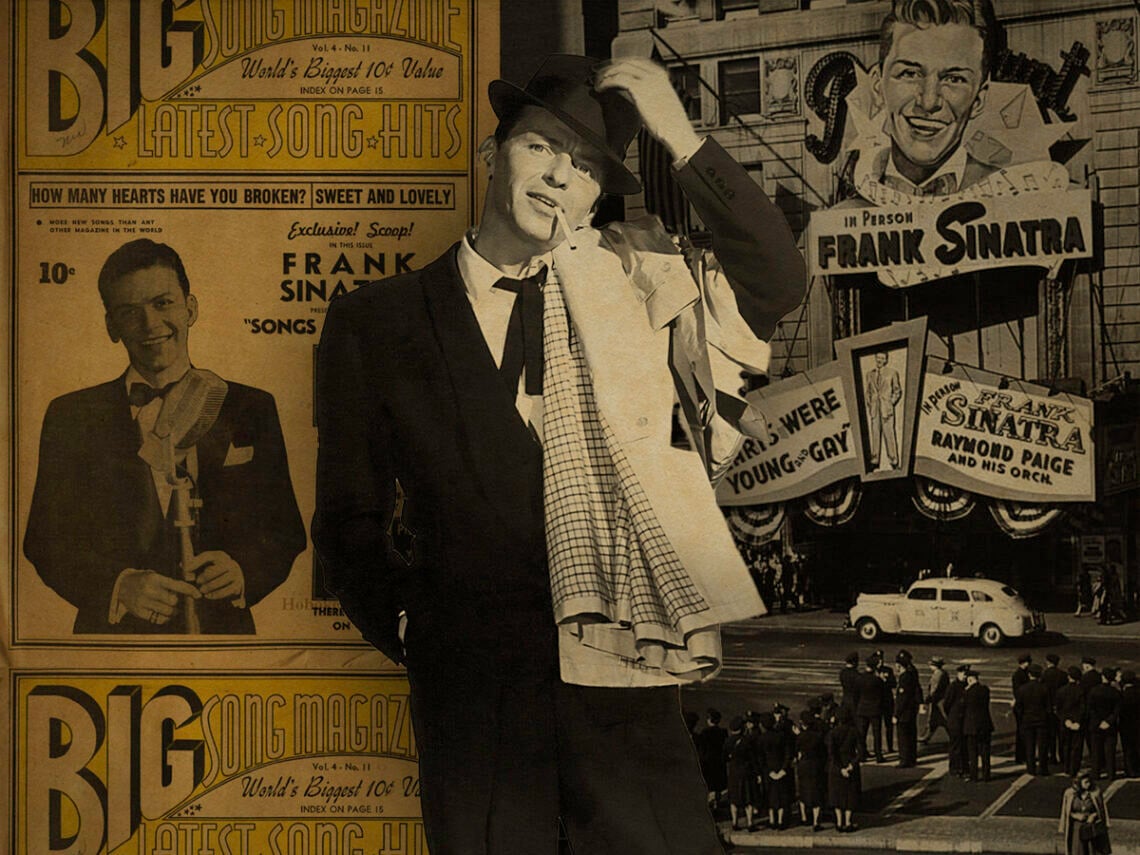
Just two years earlier, Sinatra’s opening show at the Paramount in December 1942 sparked what became known as ‘Sinatramania’, one of the earliest instances of fandom culture that saw waves of teenage girls arrive for even just a glimpse of the singer.
By 1944, Sinatra’s third season at the Paramount, the fanaticism towards the singer had escalated to the point of pandemonium. “These 22 months later…many remained puzzled at exactly how this skinny guy with the oversize bow ties and the wise-guy twinkle in his blue eyes was driving hundreds of thousands of young women into unladylike frenzies,” the New York Daily News wrote retrospectively in 2004.
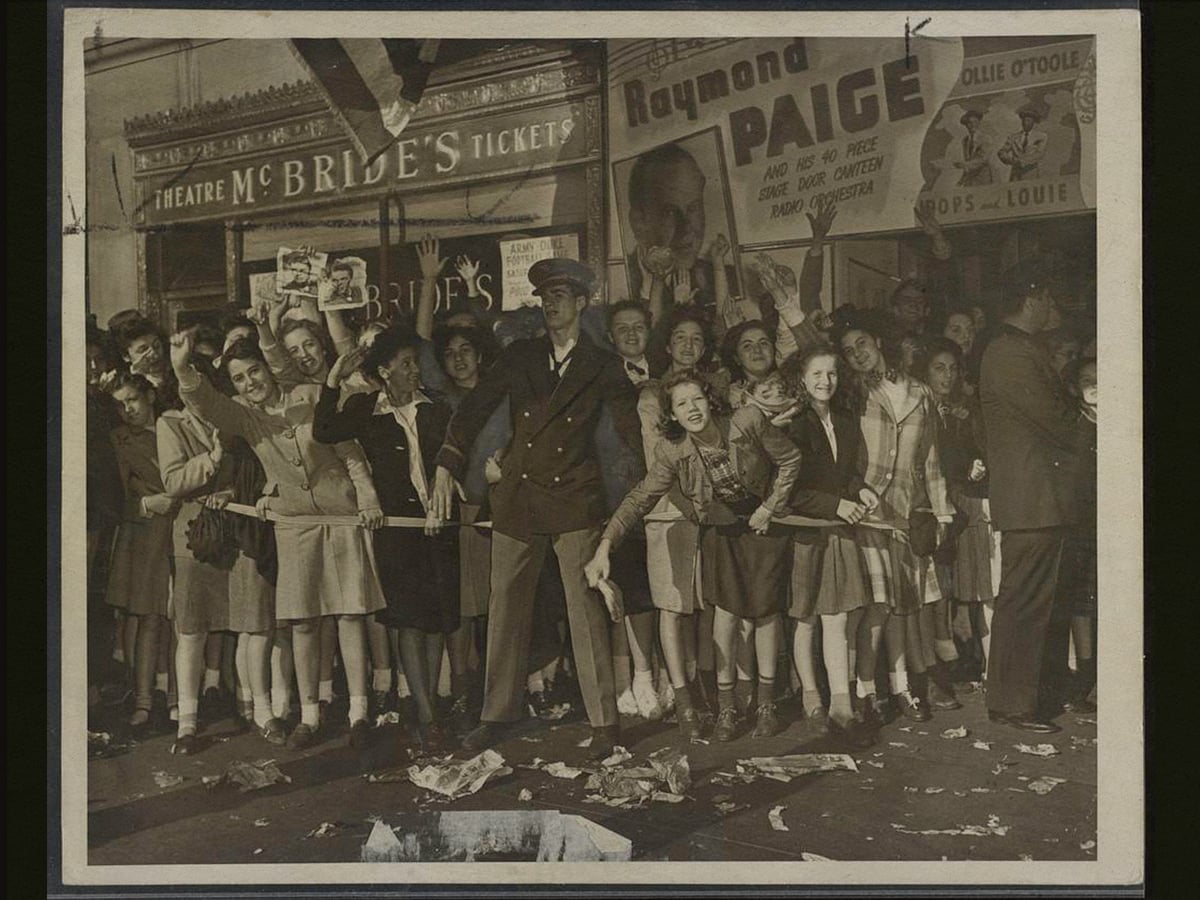
The ‘Bobby Sox Riots’ ensued, named after the ‘bobby soxers’, the teenage girls who defined themselves by their love of Sinatra and their wearing of white, ankle-length ‘bobby’ socks, when upwards of 30,000 young women took over Times Square. They’d begun to arrive around midnight, dressed in their customary socks, bow ties to match Sinatra’s, photographs of him pinned to their dresses and their shouts of ‘Frankie!’ echoing in the streets.
On October 11th, the day before Columbus Day, which meant that the girls had no obligation to go to school the next day, thousands stormed Times Square, blocking traffic and shoving their way towards the Paramount, in order to catch Sinatra in one of his five appearances. Such was a hysteria that American culture had not seen before: the emergence of the power of teenage girls.

Dorogokupetz was among a queue forming outside the Paramount two days later, and in his hand was a small bag holding three eggs. Apparently, he had read the news coverage of the Bobby Sox Riots and grew agitated: “I was getting madder and madder,” he told the Daily News. He managed to get inside the theatre, sitting 20 rows from the stage among the already-screaming fans.
“I happen to be in the midst of a swooning section,” Dorogokupetz recounted to the Daily News, “One on my right, one on my left, four behind me. And every single one of them wore a bow tie. I have an argument with the girls behind me. I said Frank Sinatra can’t even stand up himself, he must wear corsets, his only exercise being to hold on to the mike. ‘How can you fall for a guy like that?’ I ask them. ‘He has a wife and two kids. He looks starved’.”
By his account, once Sinatra took the stage, Dorogokupetz stayed in his seat among the fans who immediately stood up, screaming. He made his way closer to the stage, about ten rows ahead, and as Sinatra began to sing ‘I Don’t Know Why (I Just Do)’, he threw the first egg.
He missed the first attempt, so he tried again and got Sinatra right between the eyes. The crooner stopped singing, and Dorogokupetz threw the final egg, hitting the singer on the chest. With each throw, the crowd gasped. As one paper wrote, the “horde of female rug-cutters were confronted with the deliberate desecration of their bow-tie idol”.
The “swooning section” that surrounded Dorogokupetz swiftly attacked him. One young woman, 15-year-old Eileen Sandak, recalled hitting him with her handbag, while her friend hit him with her binoculars, and other weapons of choice were umbrellas, coats and lunch bags.
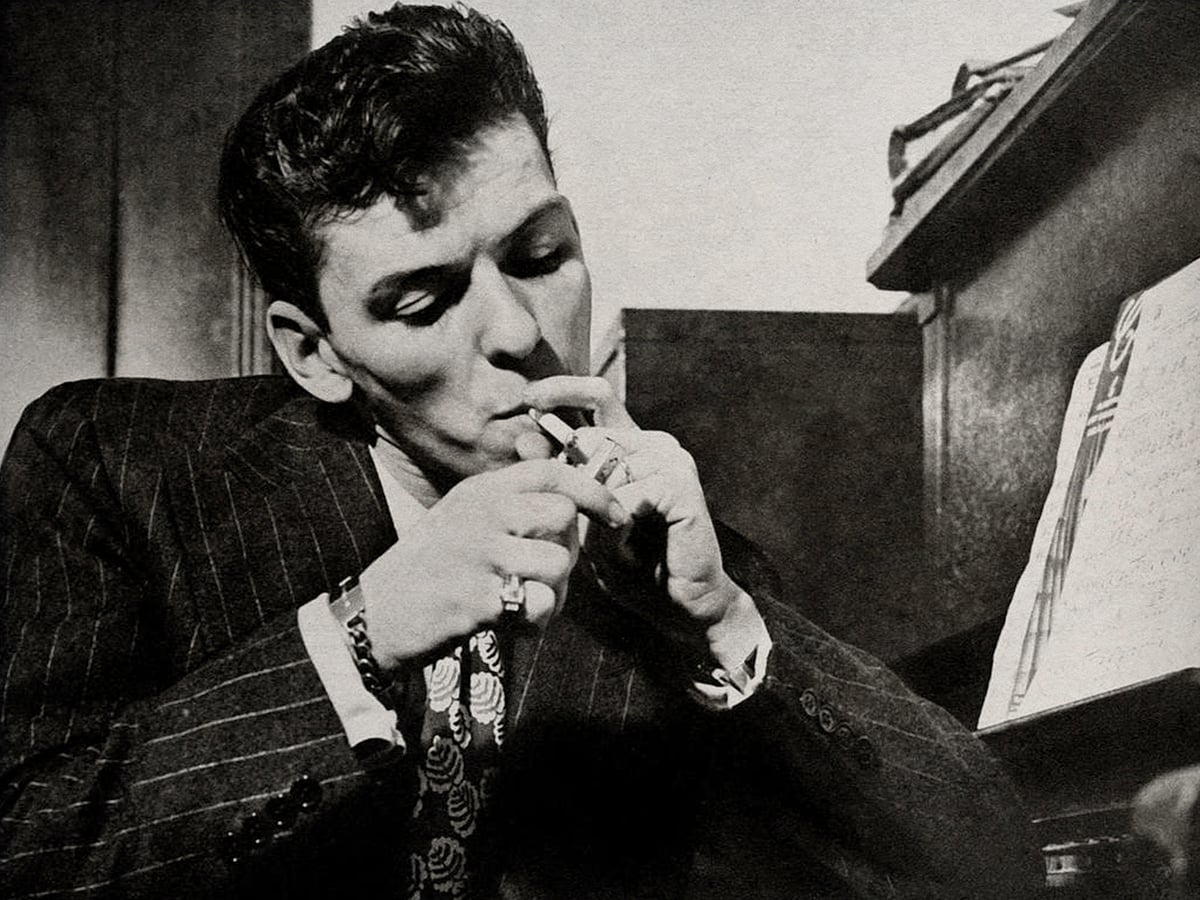
The police intervened, grabbing Dorogokupetz from the crowd that was described by one journalist as “the ranks of angry girlhood”.
The perpetrator was dragged into a back office, while Sinatra left the stage, and the theatre lights were turned on. The American flag was projected onto the stage as the orchestra played the national anthem repeatedly, until the crowd calmed down. It was in the back office that Dorogojupetz jokingly said, “I don’t know why I did it, but I did”.
To journalists who spoke to the teenager in the aftermath of what he’d done, he professed to a number of things: he was a “Sinatra hater”, and throwing the eggs at him “made me feel good”.
He “vowed to put an end to this monotony of two years of consecutive swooning”.
Where disgruntled Sinatra fans and fellow Sinatra haters wrote to publications like the Daily News, either in opposition to or in support of Dorogokupetz, the teenager posed for staged photographs for the Daily News, seen pretending to toss eggs while surrounded by women. The day after that infamous night, a group of Navy sailors were photographed throwing tomatoes at the large image of Sinatra that loomed over the Paramount.
Sinatra and his team brushed off the bizarre events. His press agent attempted to spin the incident as eggs were not thrown, but something else, like a wet napkin. “He wasn’t splashed,” he was quoted as saying, “As for his eyes being swollen, anyone can see his eyes are as bright and pretty as ever”. While he was “not amused” by Dorogokupetz’s attack, his press agent stated, he had concluded that “the pummeling of indignant teenagers” would suffice.
As for what happened to Dorogokupetz? For one, after his brief infamy, he was doxxed when the press printed his address at his parents’ home in Harlem, where he received hundreds of letters. He receded from the public eye, in turn, and wrote an apology letter to Sinatra a week later. Soon, no one would hear from him at all.
As it turns out, Dorogokupetz was not his name, really, but instead, he was Alexander Dorogoff; Dorogokupetz was his family’s given name. He carried on with his life once the attention from the public calmed, marrying Jeanne Jasek in 1952, having four children and moving to Jackson Heights, Queens. The couple then divorced, in the 1970s, moving from the city to New Jersey, where he joined the Capella Russian Male Chorus, based in Passaic; he was a baritone and became president of the choir.
He later married Marina Krasikova, the conductor of the choir, and they founded the Classic Chorale, a co-ed choir, together. They moved to New York state in the late 1980s, and later to Florida, where they lived until their respective passings: Marina in 2008 and Dorogoff in 2013.
Dorogoff’s supposed disappearance seemed to be a simple result of hysteria gone quiet. His actions, however peculiar they were, remain cemented in pop culture history, occurring as the introduction of a then-unknown facet of fandom culture took shape and reached its first peak. The uproar of the bobby soxers that Dorogoff incited even further marked a precedent for modern fandom: fans were not to be underestimated.
