


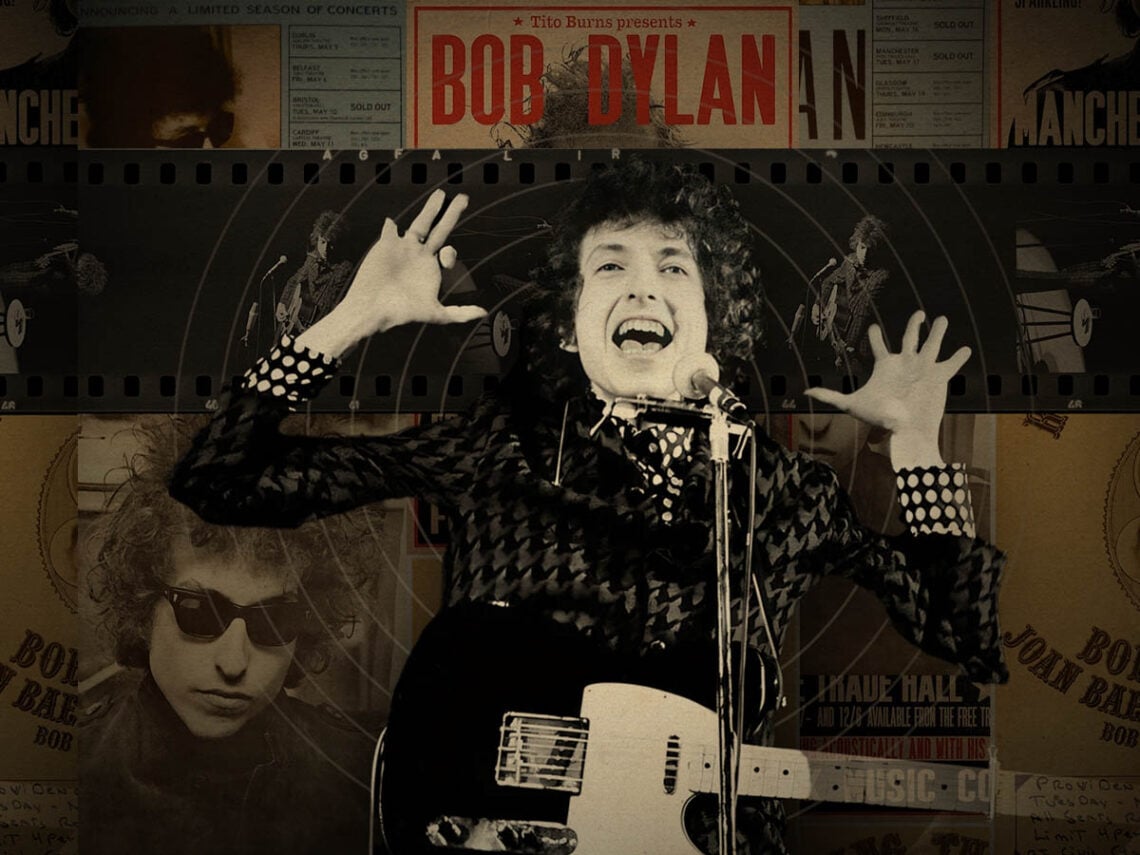
Choosing the right Bob Dylan concert for your time machine

In the lead-up to the release of his first new album in six years, Paul McCartney has made some unexpected headlines for ‘criticising’ Bob Dylan during a guest appearance on The Rest is Entertainment podcast.
“I’ve been to see a couple of Bob’s shows, and honestly, I couldn’t tell what song he was doing,” Sir Paul rather bluntly admitted, “Now, that’s a bit much, because I know his stuff!”
To be fair, this sort of assessment of the live Bob Dylan experience has been circulating among the hoi polloi for at least the past 30 years, if not longer, as the performer has clearly reached a point where the desires of his audience had no further bearing on his set lists, if they ever did to begin with. That said, it’s still a fairly rare thing to see a musician on the level of McCartney, a contemporary of Dylan’s, no less, point out that the emperor might not be wearing any clothes these days.
Obviously, Dylan, now in his mid-80s, has still managed to fill large venues on all his recent tours, and while no one has done us the favour of surveying those crowds, we can presume that some decent percentage of them are there not merely for nostalgia or to be in the presence of a legend.
Considering the prices of the tickets, a fair number of fans must still recognise and appreciate a level of artistry and intellect in how Dylan has chosen to construct his live show in the 2020s, playing a mix of new tunes, the odd cover, and unrecognisably reconfigured interpretations of some of his classics.

Dylan, as probably the single most revered songwriter of his generation, is understandably granted a hell of a lot of leeway on these things by both fans and critics alike. Picasso didn’t stay in the blue period forever, after all; great artists shouldn’t be expected to become their own tribute acts. As someone who can relate to Dylan’s current position perhaps better than anyone else on the planet, however, Paul McCartney has clearly expressed a very different perspective on how the artist and audience relationship ought to work, at least in the framework of popular music.
“I think we could do songs [most people] don’t know and have a lot of ‘black holes’, but they’ve paid a lot of money,” Paul explained, adding that he still remembered going to a Bill Haley & the Comets gig as a kid and being a bit bored when they diverged from the big hits.
As the guy who has performed ‘Hey Jude’ probably 52,000 times on stage at this point, Macca understands if Dylan doesn’t want to do ‘Mr Tambourine Man’ every night, “maybe he’s fed up with it”, but he also feels like there’s an unspoken contract in play when ticket sales become involved: “I would like to hear it. And I paid!”
In some ways, it’s easier to talk about the weirdness and lack of fan service at modern Dylan concerts than to discuss the other reason it’s not always worth the price of admission to see a rock star in their 80s. Whether you only know the hits or prefer the experimental deep cuts, the fact remains that Dylan, and Sir Paul himself, aren’t physically capable of recreating the same sound that made them famous. Dylan stopped playing guitar over a decade ago, and his vocal delivery, while still expressive, is a bit more akin to a storytelling beatnik grandpa than a seasoned rock ‘n’ roll singer.
Sometimes, the greatest competition an artist faces isn’t from younger people rising up to take their place, but from the younger version of themselves, creating a constant, inescapable point of comparison.
Dylan and The Beatles are so ever-present in media, in YouTube clips, in our record collections, that they seem to exist in multiple time periods and realities simultaneously. If you’ve recently listened to Dylan’s vocals on Blood on the Tracks, or watched his cheeky, youthful interactions with journalists in Don’t Look Back, it can be hard to square your fandom for that individual with the 84-year-old who’s coming to play a gig at the ballpark in your town next month.
Is this an ageist attitude? Maybe. But the common view of a lot of genuine Bob Dylan fans of the Gen X, Millennial, and Gen Z generations seems to be not so much a rejection of his current live show, but a sadness over missing out on seeing the Dylan they’d fallen in love with. When you’re born too late to experience the best version of a thing, it creates an odd, chronological version of Fomo; one that can also apply to places like Greenwich Village, or Laurel Canyon, or Swinging London, and a lot of the other places prime Dylan used to hang out and ride the zeitgeist.
So what if there were suddenly a solution to this longstanding problem, a way to attend the Bob Dylan gig you always wanted to? It’s a concept that might become disturbingly less hypothetical in the next few years, as AI and VR continue to mine and redeploy our backstock of nostalgia into increasingly immersive and multi-sensory ‘experiences’.
In the meantime, though, let’s just stick to the old-fashioned idea of a magical time machine; one specifically programmed to teleport you to any Bob Dylan concert from his entire 65-year career. Naturally, there’s only enough power in the machine for one journey, so you can’t pick a half dozen dates. Which show or era would you want to see?
A selection of popular Bob Dylan time machine gigs:
At the Gaslight in New York, 1962

This would be the choice for anyone who wants to witness Dylan before he became ‘Bob Dylan’ in the mythological sense. The Gaslight Café in Greenwich Village was tiny, smoky, crowded with beat poets, folk obsessives, and aspiring radicals, and Dylan was still just a wiry Minnesota transplant trying to absorb Woody Guthrie, Jack Kerouac, and old blues records into something recognisably his own.
When a time machine is involved, it’s always appealing to go back to the point before anybody knew it was going to be a thing, so just imagine hearing ‘Song to Woody’ in this intimate setting, or seeing Dave Van Ronk’s reaction when Bob stole his arrangement of ‘House of the Rising Sun’.
At Newport, 1964 or 1965
Just the phrase ‘Dylan at Newport’ carries the heavy weight of 60 years of folk rock history with it. In 1964, 23-year-old Bob was still the acoustic protest poet, the golden boy of the folk revival, performing for audiences who genuinely viewed him as a political spokesman for a generation, alongside his duet partner Joan Baez.
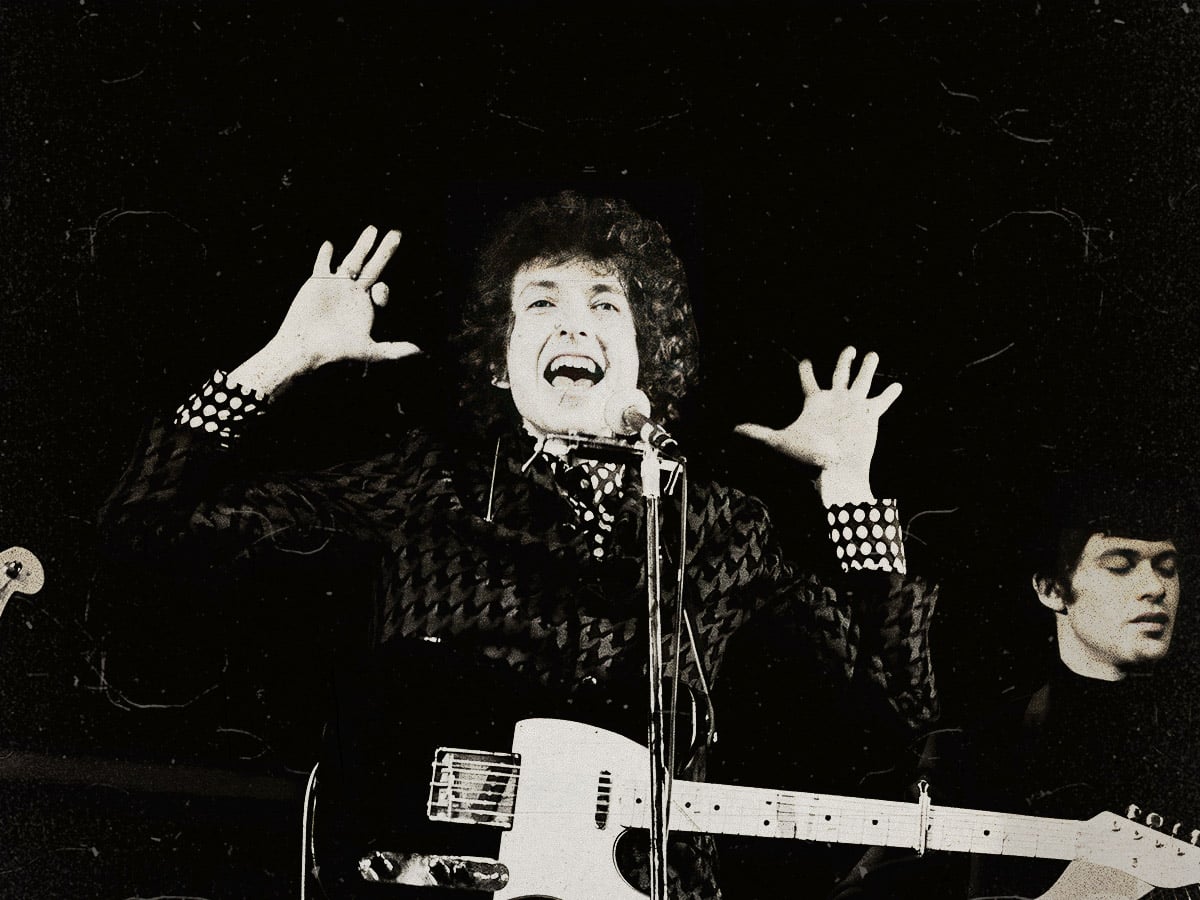
By 1965, of course, everything changed. Dylan showed up with a Fender Stratocaster and blasted through a set of new electrified ditties backed by the Paul Butterfield Blues Band, prompting a less-than-welcoming response from the crowd. People have been debating the exact nature of that response ever since, but if you plopped your time machine here in Rhode Island and checked out the scene yourself, counting the boos against the cheers, you could report back on the day Dylan went electric with a fresh, narrative-changing perspective.
Free Trade Hall, Manchester, 1966

This might be the ultimate choice for pure drama, or if you just want to get the British perspective on the Bobby D phenomenon. Dylan’s 1966 world tour with the Hawks was already tense and confrontational, with some attendees furious that their folk hero had become a leather-jacketed rock star playing deafening electric blues.
The Manchester show, long mislabeled as the ‘Royal Albert Hall’ bootleg, contains perhaps the single most famous heckle in concert history, when an audience member shouted “Judas!” at Dylan between songs. Dylan’s response, “I don’t believe you… you’re a liar!”, before instructing the band to “play fucking loud” has become part of rock folklore, even if the script for A Complete Unknown irritatingly transplanted it out of the UK altogether. Hearing this vicious version of ‘Like a Rolling Stone’ and feeling the sense of danger and defiance in the room, who could blame you for parking your time machine on Peter Street?
The Rolling Thunder Revue at Madison Square Garden, 1975

If the 1966 tour was combative Dylan, Rolling Thunder was theatrical Dylan, with a dash of renewed protest energy. In 1975, in his face-painted ringmaster persona, he assembled a chaotic travelling caravan of musicians, poets, weirdos, and guest-stars for his Rolling Thunder Revue, culminating in this legendary gig at New York’s most famous arena, where Joan Baez, Roberta Flack, Joni Mitchell, Robbie Robertson, Muhammad Ali, and Coretta Scott King all joined him on stage.
The music itself was ferocious and emotional, especially the Blood on the Tracks and brand new Desire material, which Bob was performing with probably the strongest and most emotive vocal performances of his career. This night, in particular, was all about drawing attention to the case of the wrongly imprisoned boxer Rubin Carter, and included a rousing performance of the newly released protest single ‘Hurricane’, with Scarlet Rivera on the violin. Plus, it was Christmas time in New York, and you just had to be there!
At the Roseland Ballroom, 1994

This is the sleeper pick for serious Dylan obsessives, ones who feel like they only narrowly missed the best version of their guy. By the early 1990s, Dylan’s reputation as a live performer had badly declined, with critics already accusing him of sleepwalking through tours and holding back the hits. The Roseland Ballroom shows in New York seemed to suggest a turnaround was in the works, however, a few years ahead of the Grammy-winning comeback of Time Out of Mind.
Here, the black-suited, sage-like version of Bob was praised, rather than ridiculed, for taking creative liberties with songs like ‘Positively 4th Street’, ‘Maggie’s Farm’, and ‘All Along the Watchtower’. The real draw of this time machine destination, though, is the encore, when Dylan is joined by Bruce Springsteen and Neil Young to tear through ‘Rainy Day Women’ and ‘Highway 61 Revisited’. They were all so much younger then, and so much older than that now.

Never Miss A Tale
The Far Out Bob Dylan Newsletter
All the latest stories about Bob Dylan from the independent voice of culture.
Straight to your inbox.