


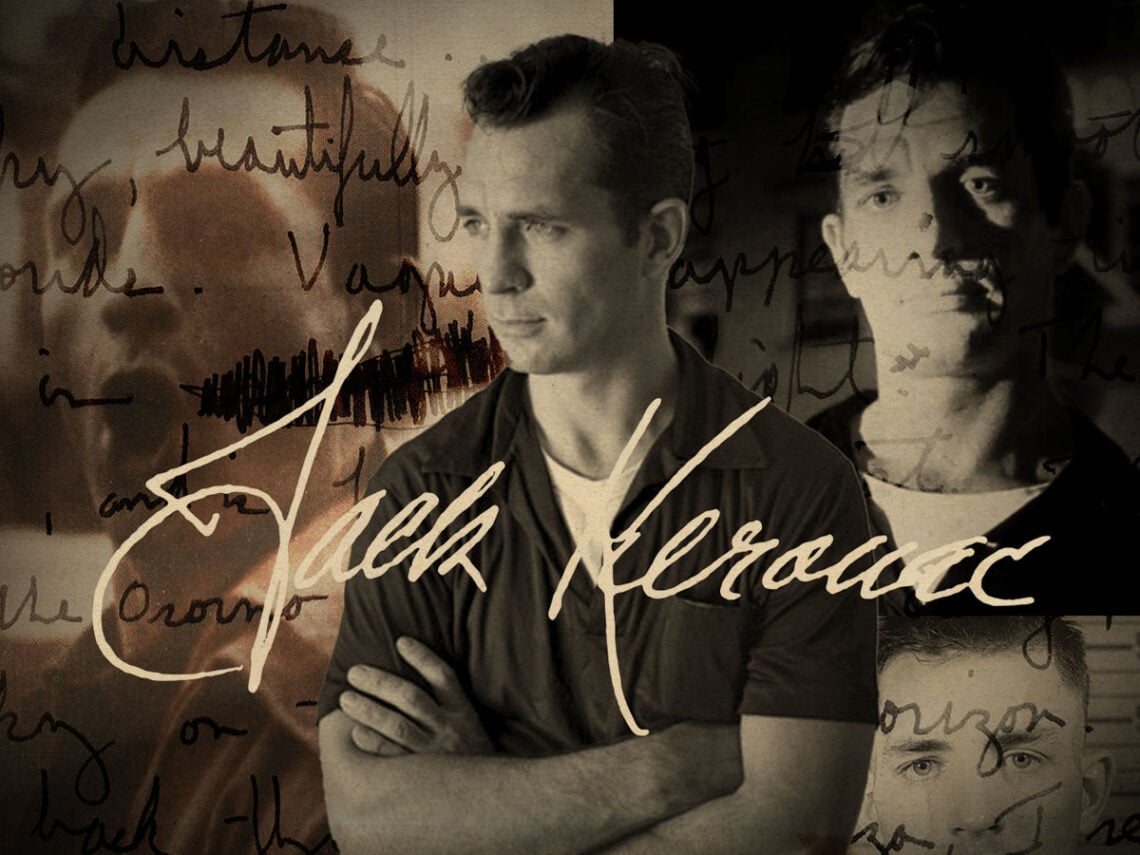
Jack Kerouac in the 1990s: One blue raincoat, fashion adverts and a tribute album

In the 1990s, Jack Kerouac went through something of a renaissance.
His work had become so ingrained in the American way of life and had become a defining image of a bygone youth culture that he seemed to only gain popularity in the years after his death in 1969, at just 47 years old. Kerouac himself was heralded as a hero of unconventional prose and a rebellious spirit in the American canon, if not a severely troubled one, from when his first work, The Town and the City, was published in 1950.
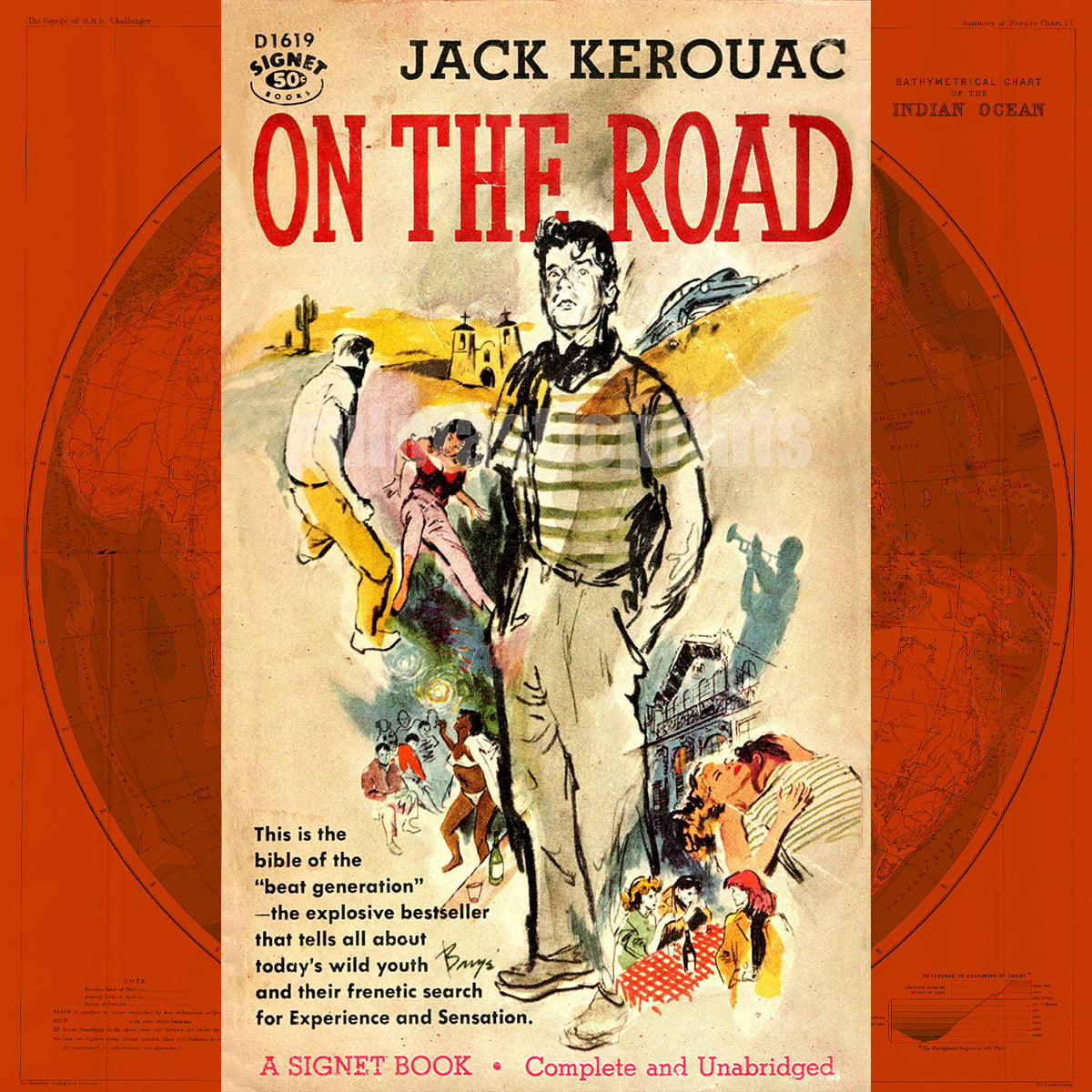
His influence is also seen in music, as well, with seemingly every rock musician who followed in his footsteps paying homage to the writer, whether through direct references in their lyrics or in their intentional mystique. As keyboardist Ray Manzarek of The Doors wrote in his book Light My Fire: My Life With The Doors: “I suppose if Jack Kerouac had never written On the Road, The Doors would never have existed”.
Curiously, though, in the 1990s, Kerouac continued to permeate popular culture through surprising forms. From the beginning of the decade, according to The New York Times, the sales of On the Road quadrupled in the years leading up to 1998. In 1993, Kerouac became an accidental model when the clothing brand Gap featured the writer in their ‘Who Wore Khakis’ campaign, appearing in a black-and-white photograph taken in Greenwich Village in 1958, smiling in a white button-down shirt and, indeed, khakis; “Kerouac wore khakis,” the ad read. A depiction of Kerouac appeared in David Cronenberg’s 1991 film adaptation of Naked Lunch, as the character Hank, and the following year, Johnny Depp purchased a blue raincoat of Kerouac’s from his estate for $15,000 (roughly $35,000 today).
There seemed to be a sense of wanting to revive a piece, at the very least, of Kerouac’s energy or, even more, what he represented: the Beat Generation’s revolution. As with every movement, the younger ones look to the past for sources of inspiration, from aesthetic to literary, and otherwise. As consumerism took to new heights, however, Kerouac was an unsuspecting force in not only championing this revolution, but in a way, selling it.
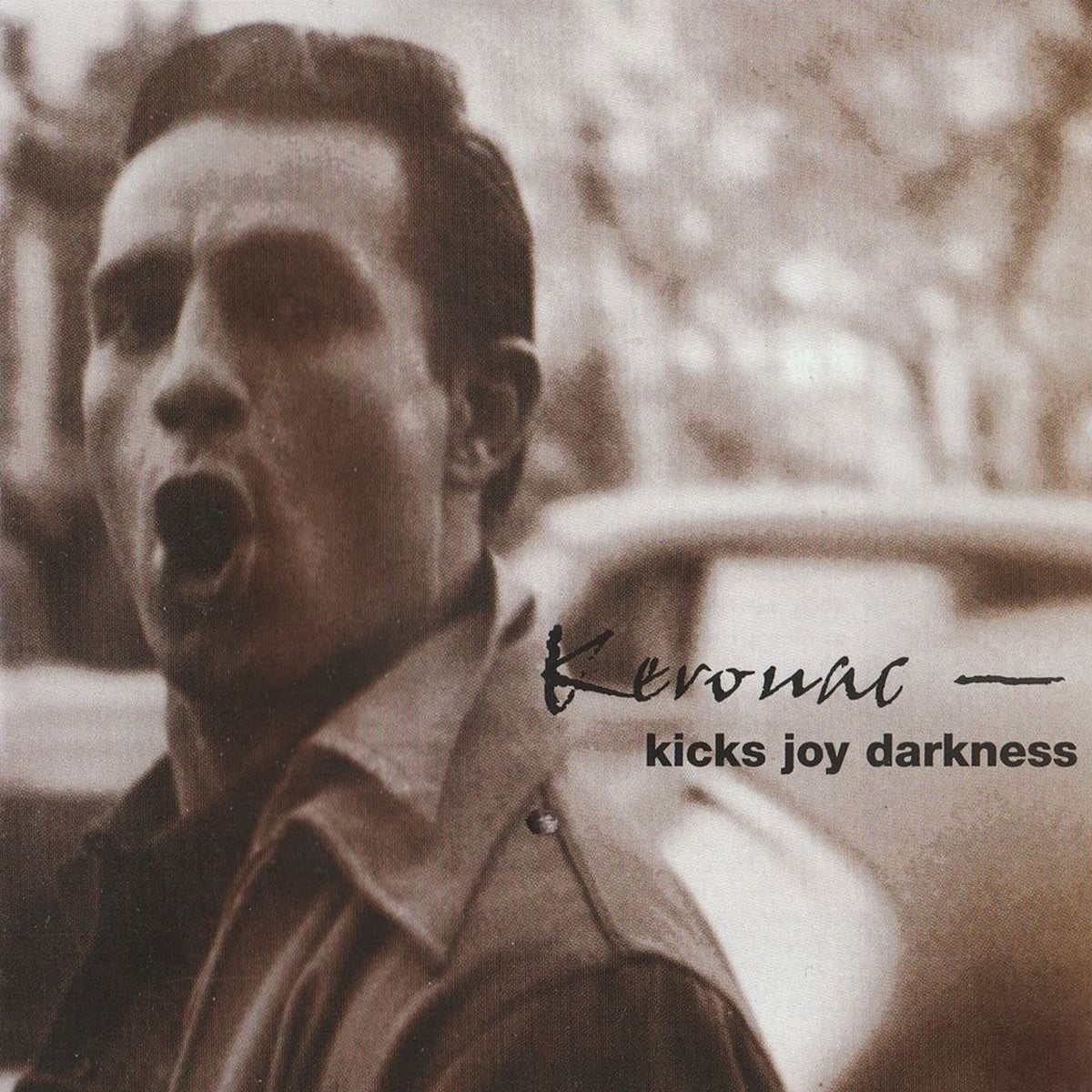
In the 1990s, Kerouac’s name was also resurfacing in the wake of a battle over his estate: with most of it inherited by his mother, Gabrielle, who then left it to his third wife, Stella Sampas. When she passed in 1990, the Kerouac estate was left to her relatives, who appointed her brother, John Sampas, as executor (a position he continued in until his death in 2017). In the midst of battles for control, an interesting project came about: a Kerouac tribute album titled Kerouac: Kicks Joy Darkness, boasting a celebrity-filled roster of spoken-word artists.
John’s nephew, Jim Sampas, a singer and guitarist from Boston, spearheaded the project. He had produced two events in Boston that saw Kerouac’s words performed with music: the first, by English singer-songwriter Graham Parker and American writer Jim Carroll, and the second by Mark Sandman of the band Morphine and artist Lisa King. These events sparked the idea for a recorded Kerouac tribute, with Jim producing and bringing along Lee Ranaldo of Sonic Youth as an associate producer.

“Once Lee got involved, the project really started taking off,” Sampas told Perfect Sound Forever. Ranaldo had long written his own books of poetry and hosted the first recorded event of the album, a Kerouac concert at New York’s Town Hall in 1995. Here, Allen Ginsberg and Lawrence Ferlinghetti were recorded live, with both writers reading previously unpublished poems of Kerouac’s. Ginsberg read ‘The Brooklyn Bridge Blues’ (the final tenth chorus is recorded instead by folk musician Eric Andersen because of a faxing error with Ginsberg’s copy of the lyrics), while Ferlinghetti read ‘Dream: On a Sunny Afternoon’, soundtracked by the indie rock band Helium.
At another event in 1995, the Lowell Celebrates Kerouac Festival in the writer’s hometown in Massachusetts, Patti Smith was recorded reading ‘The Last Hotel’, another posthumous work, with music from Lenny Kaye and Thurston Moore. “You might think differently after you hear it,” she humorously warned, after the applause. Together, they offered a haunting rendition of Kerouac’s words, ominous acoustic guitars paired with Smith’s echoes.
The majority of the album sees his unpublished material unleashed for the first time. “The mainstream books are more appealing, more accessible, but we wanted to do things people hadn’t heard before,” Jim Sampas explained, “Open people’s eyes to work never published before, or to a book like Visions of Cody, which is not that well known.”
Joe Strummer was brought in to soundtrack a revival of Kerouac’s voice, with synths and a drum machine coupled with faint guitars and bass to accompany the writer’s reading of ‘MacDougal Street Blues’, making for a surprising combination. As the project grew, Lee brought along the likes of Moore, Eddie Vedder, and Michael Stipe, the latter of whom read and played the music for ‘My Gang’ while Vedder did the same for ‘Hymn’, joined by the experimental industrial duo Hovercraft, creating a strange jangle of discordant sounds humming behind his voice.
Artist Lydia Lunch read one of Kerouac’s most well-known poems, ‘Bowery Blues’, the Gothic drone of her voice sounding as though recorded from an old answering machine, while, in contrast, Juliana Hatfield provided a cheerful tone to the album with her recording of ‘Silly Goofball Poems’, a lighthearted rescue from the otherwise dark atmosphere of Kerouac’s writing. Johnny Depp reappears, too, in a reading of ‘Madroad Driving…’ with the rock band Come.
One of Jeff Buckley’s last recordings in New York came about for this anthology album, when he joined his new friend, Inger Lorre, of the rock band Nymphs, for a reading of ‘Angel Mine’, providing guitar, sitar and saxophone, while Lorre read the poem; Buckley’s voice is heard in an ad-libbed outro.
Elsewhere on the album, Hunter S Thompson reads one of two pieces not written by Kerouac, ‘Letter to William S Burroughs’ and ‘Ode to Jack’, the latter being Thompson’s own writing. “Who remains one of my heroes,” Thompson outlined of Kerouac, and later, “Jack was an artist in every way”.
The entirety of Kerouac: Kicks Joy Darkness, 25 tracks total, is a star-studded tribute to one of the literary greats, done in an imperfectly charming way that centres rock ‘n’ roll and the Beat poet in the same tradition. Moreover, the project shows an interesting format in keeping Kerouac’s work alive, introducing him to a new generation through works that may be unfamiliar, but hold a similar emotional resonance.
Some four decades after Kerouac officially debuted as a writer, the 1990s showed that his work would continue to persist, whether in the fashion iconography of the day or the words that reverberated against some of rock music’s greatest voices and instrumentalists.
