


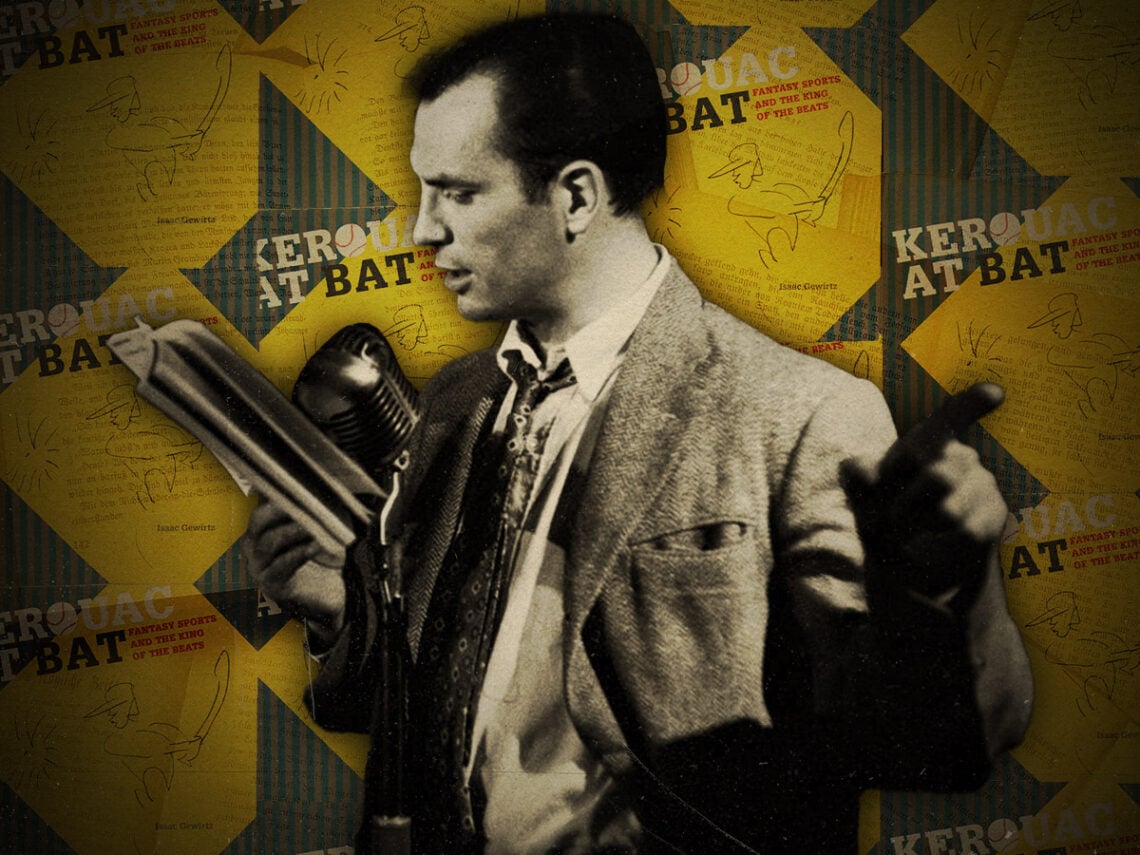
Wino Love of the New York Chevvies: Jack Kerouac’s bizarre fake baseball passion

Before he was writing with the voice of rebellion among the Beat Generation, Jack Kerouac was an athlete with an unassuming penchant for literature.
Born and raised in Lowell, Massachusetts, Kerouac began playing both (American) football and wrestling as a teenager, and it was the former that he leaned into most. As a running back for the team at Lowell High School, he was recognised for football scholarships to some of the country’s top universities, including Boston College, Notre Dame and Columbia University.
“Kerouac wanted to become an Ivy Leaguer,” Holly George-Warren, a biographer of Kerouac, told the Columbia Daily Spectator in 2023, “He wanted to live in NYC for all it had to offer. Football was his ticket out of Lowell.”
The man, of course, would move to enrol at Columbia in 1940, after completing a year at a preparatory school, Horace Mann, in the Bronx, where he would brush shoulders with his compatriots in the Beat circle, namely Allen Ginsberg, William S Burroughs, Lucien Carr and Herbert Huncke, whom he encountered on and around campus. During his tenure at the Ivy League university, he joined Columbia’s football team, again as a running back, but his prospects of becoming a star athlete were cut short when, during just his second game, he broke his leg and would never step foot on the field again, benched during his brief second season.
After a period of mourning for his bygone football career, Kerouac assumed his work within the sports realm, in his own way, by becoming a sports reporter for the Columbia Daily Spectator. He’d begun to feel the push and pull between football and literature, anyhow, and presumably, writing about the sport rather than actively participating in it was a way for him to exist between these two worlds, even if just for a short while.
Soon after his athletic career ended, however, Kerouac would drop out of Columbia, but the (unofficially-named) ‘Beat’ figures he immersed himself with would remain staples in his life, as he continued living in Manhattan’s Upper West Side and began writing, in earnest.
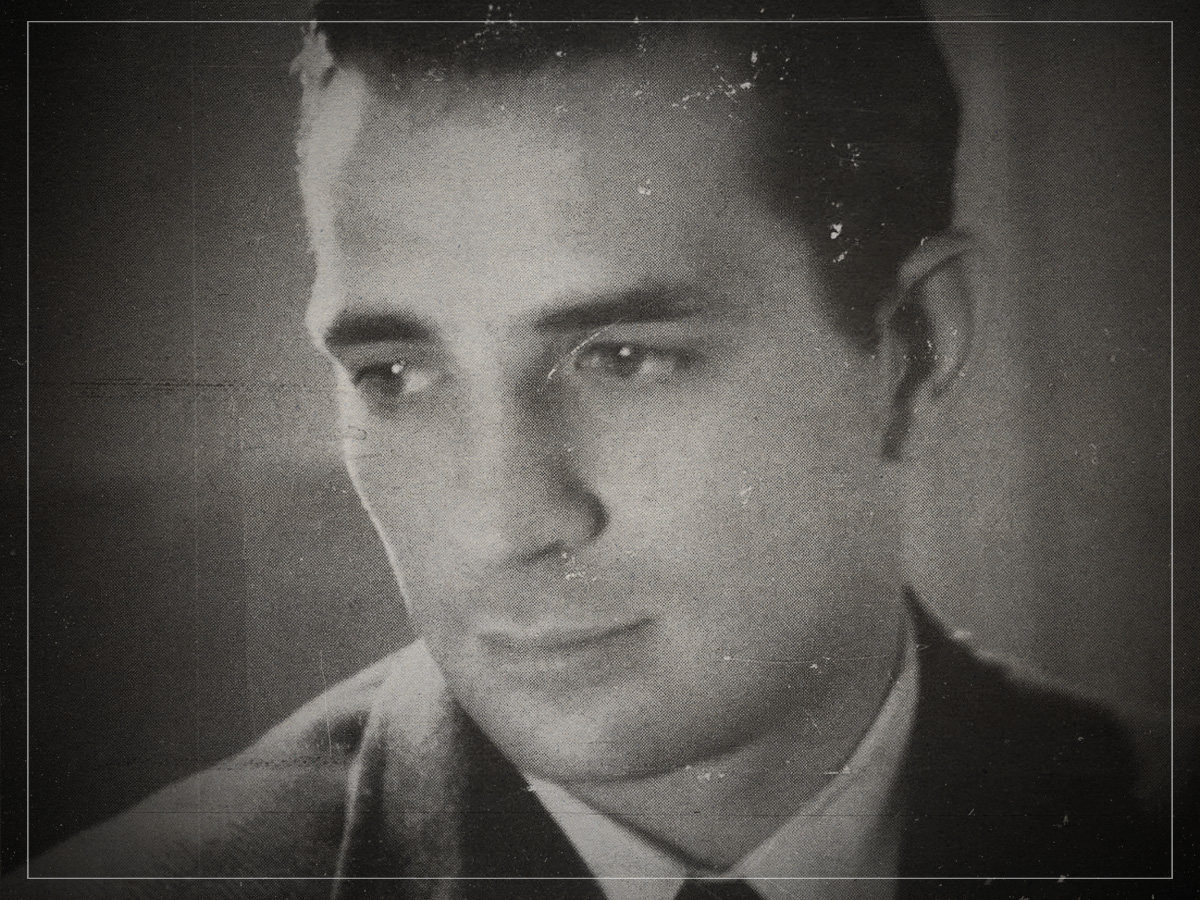
As it turns out, he had been writing about sports for years, beginning as a young teenager when he began creating fantasy baseball games alone, while growing up in Lowell. He imagined players for the teams with eccentric personas (Wino Love, Warby Pepper and Heinie Twiett, to name a few) who played for eccentric teams, named after cars or colours (the New York Chevvies and the Boston Grays, for instance). His imagination ran wild as he chronicled their statistics and critiqued performances, even writing about them in homemade newsletters and advertisements, while he also fictionalised arguments over contracts and financial news stories, offering early glimpses into his literary sensibility.



All of these childhood writings now live in the Jack Kerouac Archive at the New York Public Library, and some have been reproduced in Issac Gewirtz’s 2009 book Kerouac at Bat: Fantasy Sports and the King of the Beats.
Kerouac’s fantasy baseball games extended into his 20s as, in 1946, he made a set of cards with detailed descriptions of different outcomes for his games, dependent on the fictional pitcher and batter. He devised the game so that it could be played with these colour-coded team cards, and in 1956, he updated the game with a new deck that featured symbols rather than descriptors. He gave each of his imaginary players their own backstory, and the coaches, managers and team owners got their own biographies, too.
He also imagined every possible outcome of a given game, some each reaching the point of an All-Star or World Series, with precise detail. These were scribed in his fictional sports publications, of which Kerouac wrote the final one in 1958, in two imagined United Press International reports.
Still, he did not abandon his game, nor did he stop reinventing the ways in which it could be played. He continued up until the years just before his death in 1969, but largely kept his passion for baseball a secret from his friends and confidants. It is believed that Philip Whalen, the poet, Zen Buddhist and force within the San Francisco Renaissance of the 1950s, is the only one of Kerouac’s friends to know of his secret obsession.
Given that Kerouac would go on to expand the definition of the American literary canon in his own right, it is no wonder that from childhood, he showed a talent for acute storytelling.
