


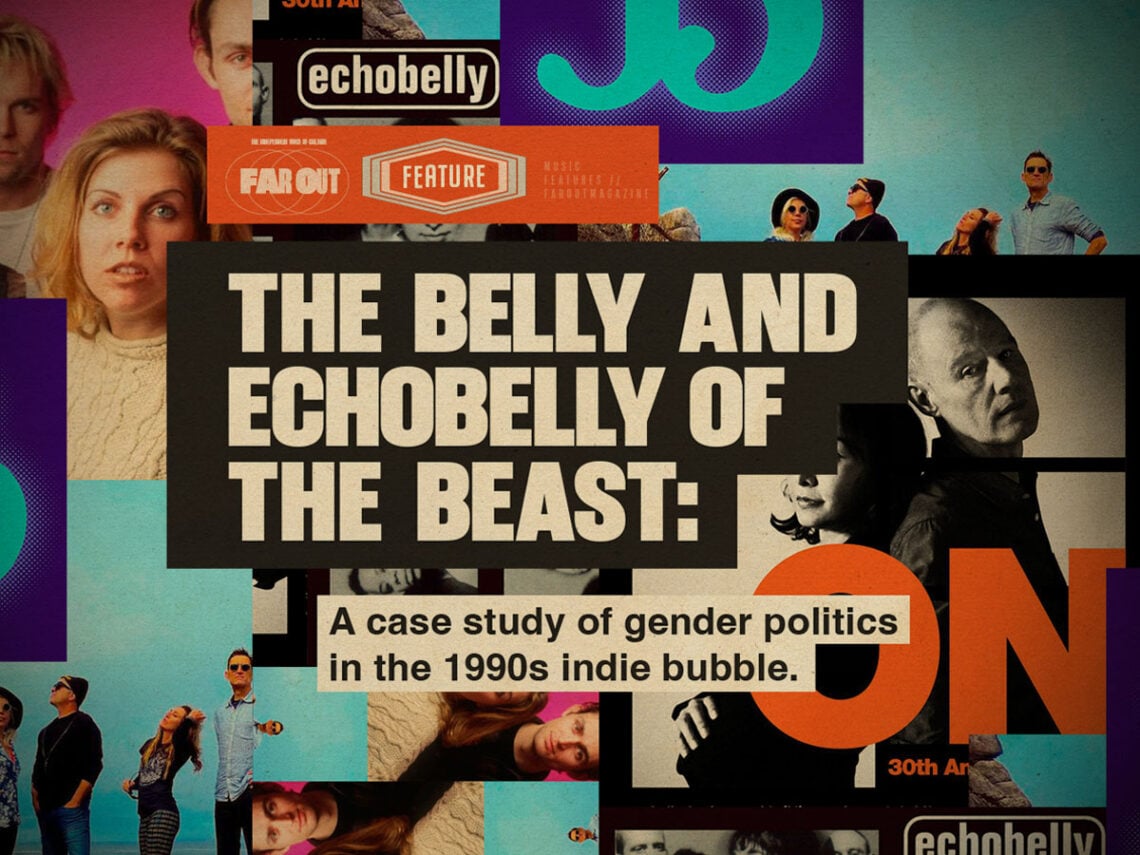
The Belly and Echobelly of the beast: A case study of gender politics in the 1990s indie bubble

Nostalgia tours, especially ones that involve shoe-horning in the random anniversary of an old album release, are exceedingly common these days, and for understandable reasons.
The phenomenon might have reached its peak moment last year, however, when my algorithm began informing me about a pair of 30th anniversary album gigs on the horizon; one by the US alt-rock outfit Belly, and the other by the British popsters Echobelly.
For the uninitiated, there is no direct connection between these two bands or their personnel. Belly was not formed as a rebel offshoot of Echobelly, nor was Echobelly created as an ironic tribute to the former. Not unlike the bizarre case of the two simultaneously created Dennis the Menace comic strips, one in America and one in Britain, these two bands formed at roughly the same point in time on opposite sides of the Atlantic, each grabbing an opportunity made possible by a brief changing of the rules for mainstream pop success in their respective countries.
Echobelly formed in London in 1992, led by the India-born, England-raised singer-songwriter Sonya Madan. She chose the band’s name as a sort of vague reference to “being hungry for something”, be it creative expression or rock ‘n’ roll superstardom.
That same year, the Rhode Island-based Belly released their debut EP, featuring frontwoman Tanya Donelly taking her first shot as a bandleader after stints as a guitarist with two noteworthy alternative bands, Kristin Hersh’s Throwing Muses and Kim Deal’s Breeders. Donelly had always liked the word ‘belly’ because it was “both pretty and ugly”, a concept she wanted to apply to her music.
The ‘90s are often remembered as a great time for underground bands to unexpectedly break through to the surface, as record companies suddenly decided, in the wake of Seattle and Madchester, that unconventional, offbeat, and independent-minded artists just might have broad appeal with the CD-buying public. Of course, the ones that ultimately dominated the zeitgeist, notoriously, tended to be those fronted by men, be it in the grunge scene in the US or the Britpop bands in the UK.
Tanya Donelly at least had the experience with her previous projects to know that a path could be carved through the boys club to some level of media attention, but both she and Madan inevitably found themselves, in interview after interview, talking about the novelty of their gender as much as the quality of their music. “I don’t like it at all,” Donelly told the Toronto Star in 1993, just as Belly’s fantastic breakout single ‘Feed the Tree’ was getting heavy play on MTV.
“First of all, we’re not an all-girl band, neither is Bikini Kill for that matter, neither is The Breeders,” Donelly added. “I don’t even like talking about [the idea of ‘girl rock’], because I’m not writing for that audience at all. It’s more personal than that…I’ve been doing this since I was 15. It never occurred to me when I picked up a guitar that I was a woman picking up a guitar.”
On the bright side, perhaps, the topic was repeatedly coming up because both Belly and Echobelly looked like potential threats to the indie rock glass ceiling. Echobelly’s 1994 full-length debut, Everybody’s Got One, hit the top ten in the UK charts, drawing favourable comparisons to Blur and Suede and generating a lot of attention around Madan as a unique new voice. Not only did she have fantastic pipes as a surround-sound pop singer, but her lyrics suggested a humour and cheeky confidence that was a refreshing change from some of the dense nonsense poetry of the shoegaze or rave scenes.
“Another show, another scene / And I can’t imagine the world without me,” Madan sings on one of that record’s singles, a track that ends with her repeating the word “me” about 15 times. Unsurprisingly, this sort of self-satisfaction caught the attention of no less than Steven Patrick Morrissey, who apparently showed up at Madan’s London flat one day, in person, to ask if Echobelly would open for him on tour.
“After talking, he said, ‘I’ll get my people to call your people’,” Madan told the Times-Transcript about the Moz encounter, “I had to laugh because I didn’t have people. It was just the band and our manager.”
Madan’s treatment by ‘90s music journalists was exactly what you’d expect: a lot of focus on her looks, her sexuality, and somewhat more uniquely, her ethnicity. Raised by strict parents who insulated her from a lot of pop culture, she did acknowledge having a different perspective from your average Britpop singer.
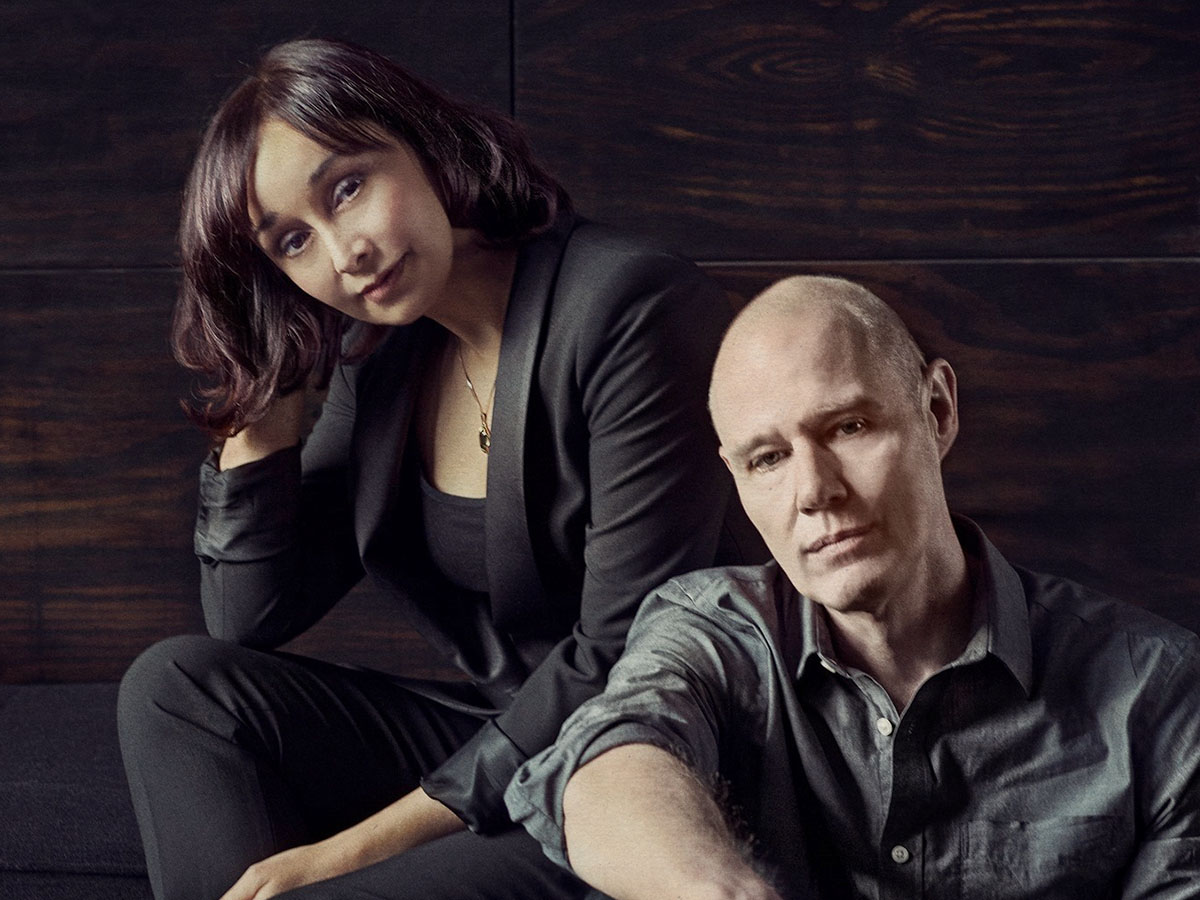
“Coming from a traditional background,” she said, “I never really understood rock ‘n’ roll. But I think that has helped form who I am and the way I write. I see things differently from someone who has grown up being in love with the rock industry.
“At the same time,” she added, “it’s very important for me to be taken seriously as an artist, as a writer first and foremost, rather than some sort of kooky mishap or whatever”.
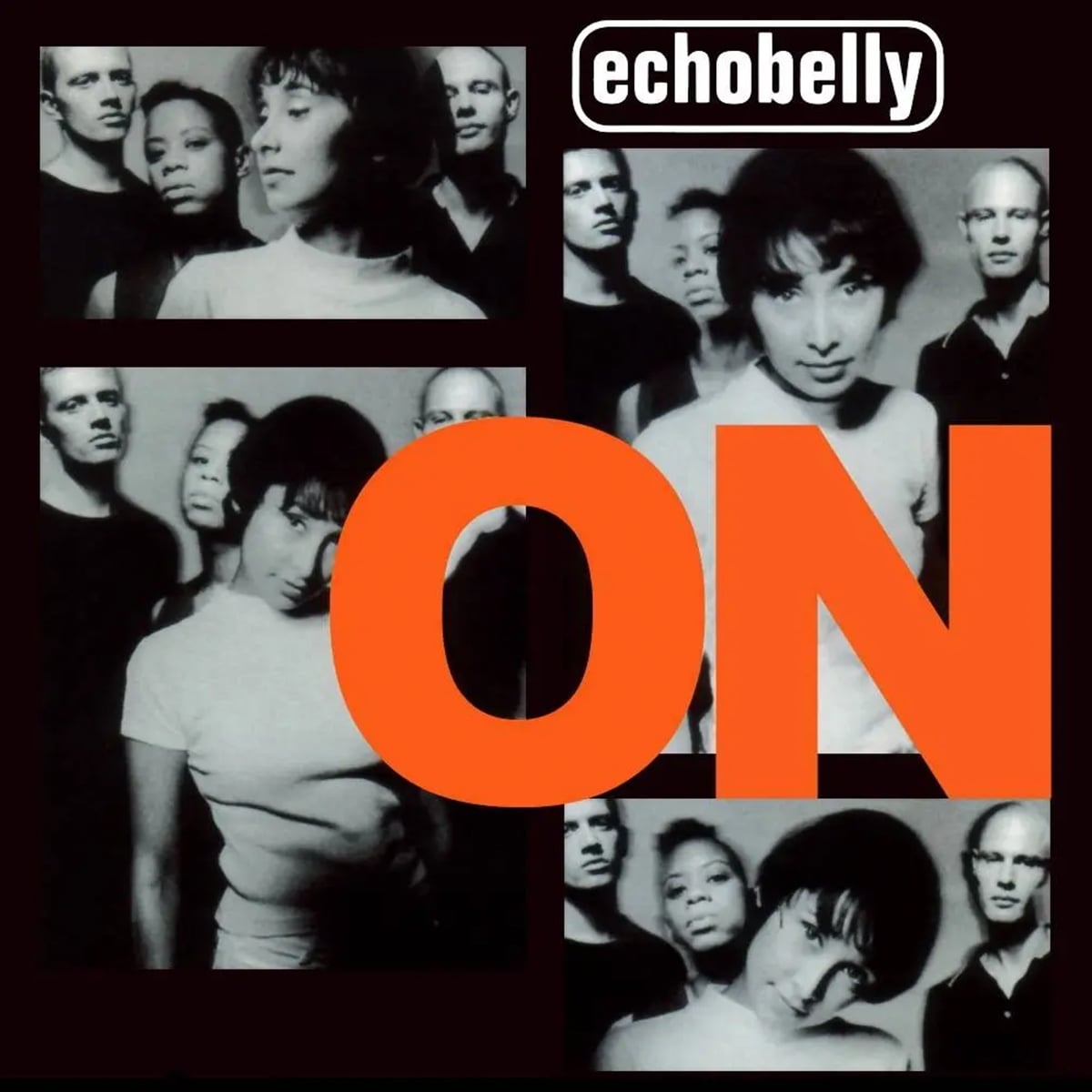
Echobelly hit the height of their success in 1995 with the album On, led by the hit single ‘Great Things’, which stands as arguably the most upbeat moment in the entirety of Britpop, a wonderful salve after the bloated Blur vs Oasis rivalry had overstayed its welcome. Attempts to break the American market never quite worked out, as was the case for the majority of Britpop acts, but Echobelly did find another high-profile admirer in the form of REM, who picked the band as an opener for some of their European tour dates in ‘95.
On that very same REM tour, naturally, Tanya Donelly and Belly were also one of the opening acts. The band’s first album, Star, had actually been an even bigger success in the UK than the US, and they were now out promoting its follow-up, King, which had enough attention around it to get Tanya and her bandmates on the cover of Rolling Stone magazine in the spring of ‘95.
Donelly, not unlike Madan, was seemingly very comfortable in her own skin, and her best-known songs communicated a similar level of commanding self-determination in the lyrics. “Take your hat off, boy, when you’re talking to me,” she orders with a countrified lilt on ‘Feed the Tree’.
“If you bore me / You lose your soul to me,” goes a key line from ‘Gepetto’.
Unfortunately, despite the REM boost, Belly’s second album fell victim to the sophomore jinx and failed to match the commercial success of its predecessor. By the following year, as both the alt-grunge and Britpop waves were receding, Donelly decided to pull the plug on the band.
“The first couple of years of Belly were a blast,” she told Q in 2007, “Star was a big hit, and we partied hard. But by the time we went to make King, there was a lot of negative stuff going on. King was a reaction to the bright shininess of Star, and we weren’t surprised when it didn’t sell. I regret not making another Belly album, but at the time I thought, ‘Screw it, I’m outta here’.”
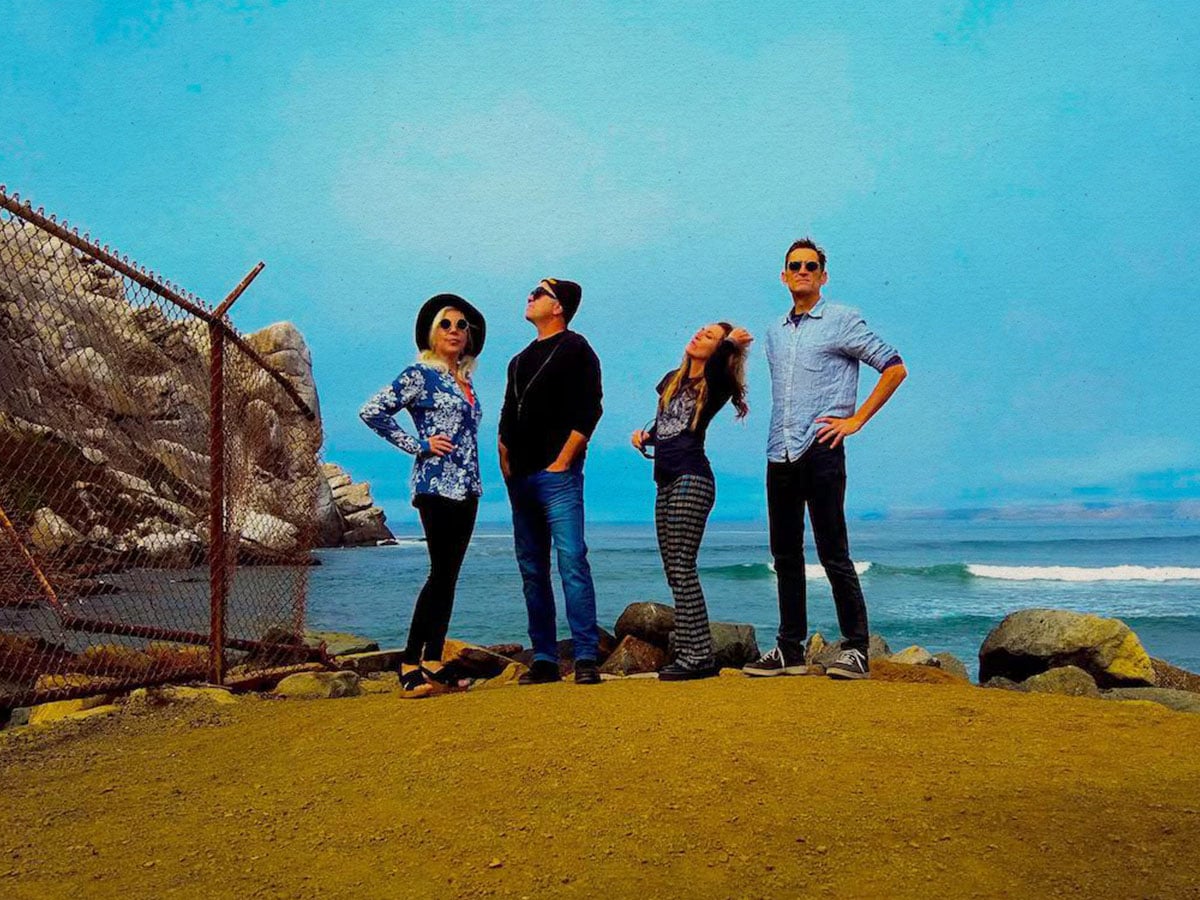
Echobelly hit a similar wall in the latter half of the ‘90s, going on hiatus for four years after the release of the disappointing 1997 album Lustra, with Madan tiring of the onslaught of hostility in trying to promote one’s art against the headwinds of the British music press. She and founding guitarist Glenn Johansson did reconvene for two records in the 2000s, but they went largely overlooked.
Eventually, both Belly and Echobelly felt the pull of nostalgia in the late 2010s, with each band reuniting to release their first new material in over a decade. Donelly, who put out a handful of excellent solo albums in the interim, said that the creation of the 2018 Belly album Dove was inspired by a pretty simple existential assessment from drummer Chris Gorman.
“He said, ‘There’s going to come a time when nobody’s gonna care anymore, and it’s not going to be an option, so let’s just do it,” Donelly told ABC News. “So that’s why we kind of jumped on it. And you know, we’re in a different place now personally, so it is much more peaceful, harmonious, and fun again.”
Neither Belly nor Echobelly have yet released a new album in the 2020s (though the latter reportedly has a new one in the can), but as mentioned in the intro, they both toured the 30th anniversaries of their 1995 albums, On and King, respectively, last year. The band’s frontwomen, Sonya and Tanya, are both about to turn 60, and they’re starting to see the narratives change around their work. While usually left out of the conversation of great, influential bands of the ‘90s, both acts are gaining more appreciation with the passage of time, aided by some helpful needledrops in TV series, streaming accessibility, and the evolution of music criticism beyond the gleefully sexist and cruel methods of the ‘90s.
“The pain [inflicted by the press] at that time is never really talked about,” Madan recently told Clash, recalling one well-known critic who jokingly wrote that she ought to be killed, “I mean, if you don’t like something, fine, you are a critic, you’re there to say it’s not my bag, but you’re not there to hurt someone.”
Fortunately, Madan isn’t just at peace with her band’s ‘90s catalogue; she’s taken great pride in playing the songs from On for a new crowd as well as those original fans who never forgot about them.
“On is full of positivity and hope,” she says, “but not on a superficial level. If you want to jump up and down, you can, but if you want to listen to the words and get something else out of it, it’s there. In a way, I think ‘On’ is one of the great Britpop titles. It’s so simple, and it captures the era.”
