


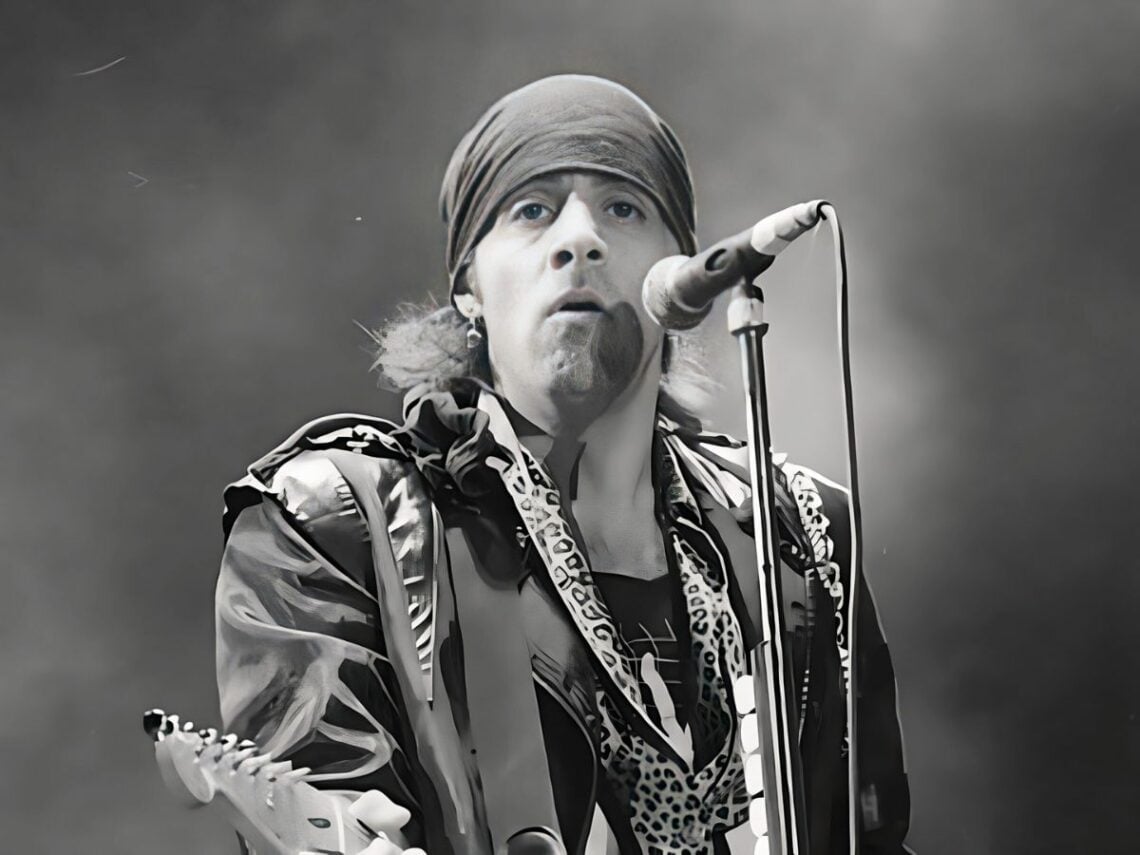
The tragic 2006 closure Steve Van Zandt said New York would never recover from

Musicians are incredibly important. When it comes to the development of genres like rock, the blues, and metal, it’s innovative musicians who help these styles truly evolve.
However, there is a lot more to it than just that. You can’t just have good musicians making music, they need to meet the right people, collaborate with others, and be given a space where they can truly push the boat out. If people are given the right room to be creative, then they’ll go on to do good things, but innovation cannot exist within a vacuum.
I went to Rockfield Studios a few months back to talk to people who were part of a songwriting course called Pro7ect. Everyone there was saying how important songwriting camps are in the modern age, as venues close down and studio work is becoming more and more rare. People don’t socialise as much in the modern music industry, and that can become a real problem when it comes to people really learning how to express themselves.
“We are real, we are human, this is actual human interaction, this is happening now. It’s not AI, it’s not being on your own in a room,” said Lisa Fitzgibbon, the camp’s founder, “This is human, the way we used to write, and the way we still write, but we’re really emphasising that this is human music creation. You know? Not the bots. Not the algorithms and shit.”
These kinds of songwriting camps are relatively new because, in the past, they were indirectly happening all of the time, thanks to different venues acting as their own independent community hubs. When you look at pivotal musical movements, each of them has been created within the confines of a few specific venues, as different artists are able to bounce ideas off each other and be inspired by various bands performing every single night.
A lot of these venues are in New York, with one of the most essential being CBGBs. It was this space where artists like Television and Patti Smith were able to carve out a new form of rock, something which seemed to straddle a line between punk and poetry. Smith has gone on record saying how much that space was influential in shaping her sound and allowing her to grow into the artist that we now all know and love.
“The sound was crappy, there was always things breaking down and glasses breaking and people vomiting and the rats scurrying around in the back,” she said, “It was our shithole, and that was the greatest thing. I’ve played a lot of places, and it was the only place I’ve ever played that felt like our place.”
Unfortunately, like so many iconic venues, CBGBs isn’t open anymore. It closed in 2006, which is a story that seems to surround a great deal of places that were once responsible for the birth of iconic musical movements. Steve Van Zandt spoke about the tragedies that continue to befall different venues, and highlighted CBGB as a specific example of a closure that a city has just never seemed to recover from. When talking about Hilly Kristal, he said that the closure of a venue wasn’t just a reflection of the music industry, but of New York as a whole. He said he was happy that the founder, Hilly Kristal, wasn’t here to see just how bad things were getting.
“CBGB was a tragic loss New York will never recover from,” he said, “And maybe it’s better Hilly doesn’t have to watch the town that invented personality slowly turn into the Mall of America. Rock and roll will miss him.”
