


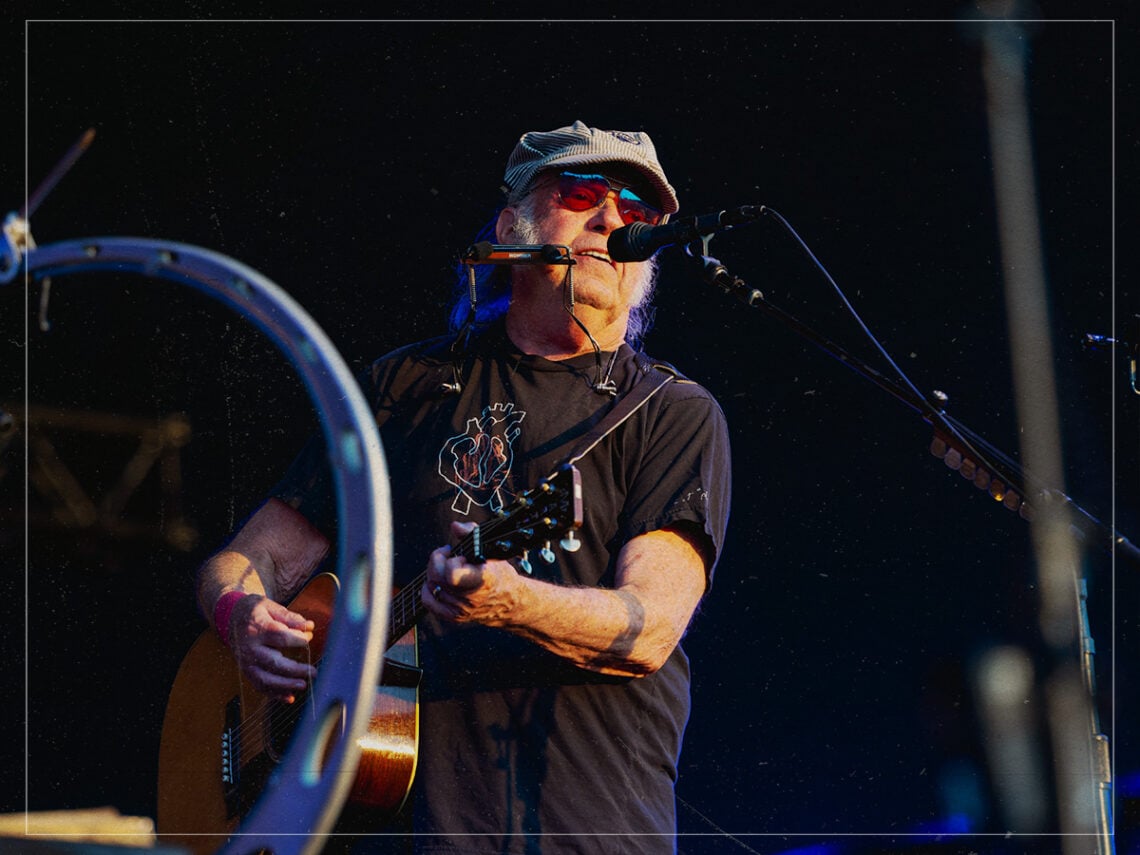
Is there a murder at the centre of a 1969 Neil Young classic?

The lyrics of Neil Young tend to fluctuate wildly from deeply personal to simply sublime storytelling, but just how much of those tales he chooses to tell about others is rooted in truth is often hard to tell.
There’s absolutely nothing wrong with fabricating stories to be told through lyrics, and sometimes the more fantastical tales that couldn’t possibly be steeped in reality are the ones that serve to be the most entertaining. After all, the things that stem from our imagination and our fantasies often outshine what we experience in real life, and this is exactly why we have a tendency as humans to dip into these worlds for the purpose of creating art.
That said, incredible tales such as ‘Cortez the Killer’ are allegedly loosely based on reality, with Hernán Cortés’ conquest of the Aztec Empire in modern-day Mexico serving as the inspiration for this bloody and brutal song. Although Young significantly embellished the actual events of Cortés’ mission for the purpose of being interesting and fitting them to the song, it’s still an example of how something based on truth can be spun into an equally fascinating work of art.
Evidently unafraid to write about more morbid subject matter, one of Young’s earlier songs, taken from his 1969 album, Everybody Knows This is Nowhere, also dives into a grisly tale, and is one that nobody has ever been too certain about the reality of.
‘Down By the River’ is notable for having been written by Young while he was sick in bed with a fever of 103 °F, writing ‘Cinnamon Girl’ and ‘Cowgirl in the Sand’ on the same day while in a completely delirious state. Unable to precisely recall the origins of the story he tells in the song, what is evident is that Young was in a somewhat morbid headspace when he came around to penning the words, with the chorus repeating the line, “I shot my baby.”
While the rest of the lyrics don’t necessarily have such a violent streak, many have questioned whether the lyrics are literal in the sense that the narrator kills his partner in a fit of jealous rage, but during an interview in 1970, Young refuted the idea that it had stemmed from a real-world crime. “There’s no real murder in it,” he protested. “It’s about blowing your thing with a chick. It’s a plea; a desperation cry.”
However, on future occasions, Young has been known to elaborate further on the story behind the song, and has since turned the story of the song into something a little more troublesome, explaining during a show in 1984 that the protagonist has had enough of his girlfriend cheating on him, and takes drastic action.
“[It’s about] a guy who had a lot of trouble controlling himself,” Young explained, while setting the scene for the song on the banks of the river. “He reached down into his pocket and pulled a little revolver out and he said, ‘Honey, I hate to do this, but you’ve pushed me too far.’”
It’s unlikely that there’s a real-world murder that inspired it, and it’s also more likely that the first response he gave is more true to what the actual origin of the story is. However, over the years, Young evidently learned that he could spin a yarn much better if he stopped focusing on what was obviously there in front of him, and instead turned to fabricating his own worlds where nefarious people run free and act in dastardly ways.

Never Miss A Tale
The Far Out Classic Rock Newsletter
All the latest Classic Rock content from the independent voice of culture.
Straight to your inbox.