


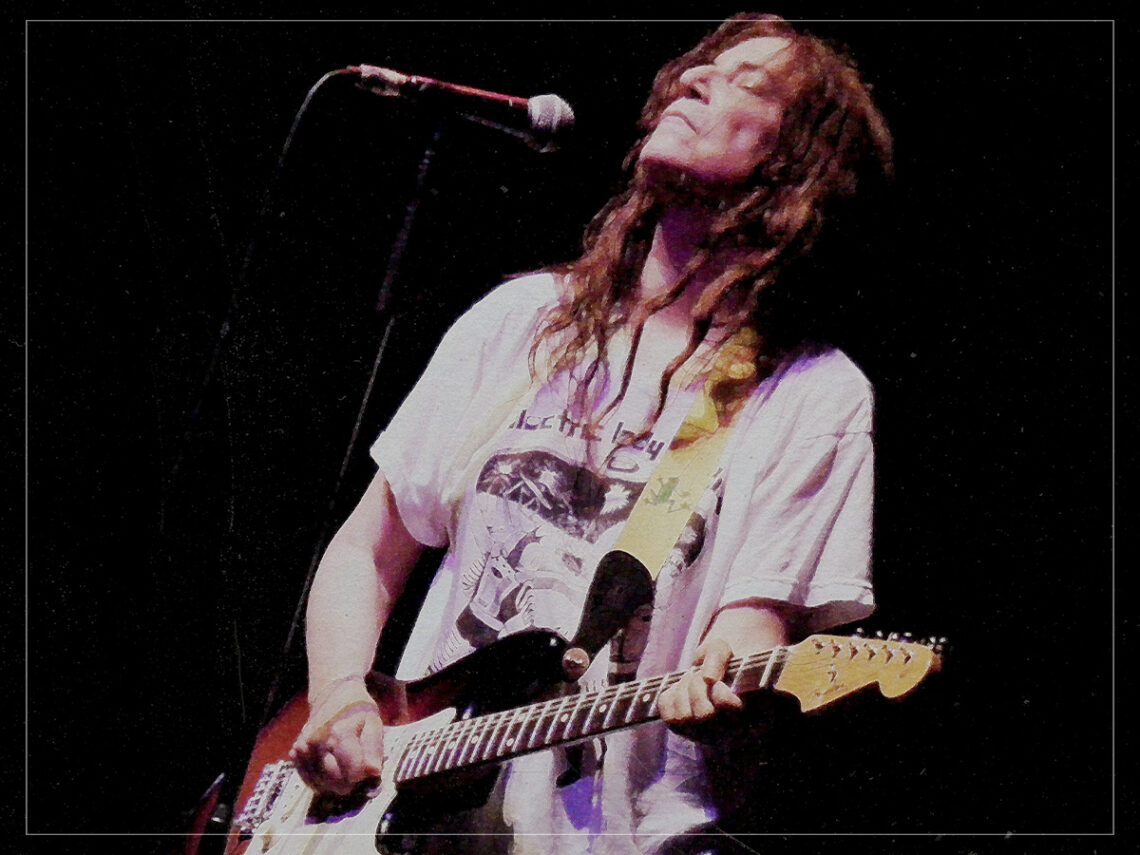
Vomiting, rats, Patti Smith, and the CBGB: “Our place”

Every prevailing culture needs its base camp: the Romans had Rome, the Aztecs had Tenochtitlan, and for the safety-pin clad punks of New York City, their home lay within the sweat-stained walls and sticky floors of the CBGB club – punk’s ultimate ground zero.
The New York City of the 1970s was a far cry from the fast-paced bombardment of tourists, advertisements, and chain corporations that it is today. Martin Scorsese’s Taxi Driver did an excellent job of summarising all the filth, grime, and seediness of NYC at that time, but one of the few beacons of hope within the otherwise smog-filled city was its blossoming music scene. From the squats and slums of the East Village came a new generation of artists, adopting a ‘no future’ attitude and a complete rejection of mainstream culture, and Patti Smith was at the forefront.
Smith, like countless others before her, had relocated to New York City during the countercultural boom of the late 1960s, with an aim of pursuing a career as a writer. All the while, though, she was soaking up the musical influences of her surroundings, which spanned the spectrum from Bob Dylan’s folk heroism to the underground experimentations of The Velvet Underground. By the early 1970s, Smith was establishing herself as a musical revolutionary in her own right, and CBGBs was like a second home.
Having originally opened as a biker bar in 1973, the East Village club soon became the natural habitat for this subversive new scene. A lot of the reasoning behind that came from the venue owner, Hilly Kristal, who seemed to recognise the potential of the blossoming punk sound while countless other proprietors were worried about the violence or anti-social behaviour it would bring to their venues.
In return, the CBGB became responsible for the creation and popularisation of everybody from the Ramones to Talking Heads, but Patti Smith was among the first to make her mark. It was on Valentine’s Day, 1975, when The Patti Smith Group took to the stage for the very first time, and it was only a few months later that the iconic Horses album hit the airwaves, officially launching this bold new era of punk rock expression.
It is easy to look back upon the CBGB years in a mist of rose-tint, particularly if you never went to the venue or experienced its charms, but Smith herself has repeatedly set the record straight on the realities of her surroundings during those years. “The sound was crappy, there was always things breaking down and glasses breaking and people vomiting and the rats scurrying around in the back,” she once recalled, per Rolling Stone.
Still, that was all part of the club’s charm. As the songwriter put it, “It was our shithole and that was the greatest thing. I’ve played a lot of places and it was the only place I’ve ever played that felt like our place.” Following on from that 1975 debut, Smith became a regular at the club, witnessing the rise and fall of countless now-iconic punk titans in real time.
As a testament to just how much the venue meant to her, Smith was the final person to perform at CBGB before its tragic closure back in October 2006, playing a three-and-a-half-hour show in tribute both to the golden age of punk in New York and the revolutionary power bestowed upon that legendary venue. Even today, multiple decades later, Smith is among those who still mourn its untimely loss, in spite of all the rats and vomit stains which adorned its stage.
