


Swapping hurdles for hills: How the digital age has made songwriting camps a must for modern musicians

“Which way am I going, mate?” My taxi driver asked me, just as lost as I am, and he means well, but respectfully, how the hell should I know?
It was only ten minutes ago, I was sitting in the heart of Monmouth, coffee in hand, surrounded by cafes, charity shops and pubs. That all feels like a lifetime ago now, as just a short drive, and suddenly I’m plunged into the middle of nowhere, with all roaming fields, mist and livestock, as far as the eye can see. And now this, a small sign next to a dirt road that stretches to an unassuming farm, which reads Rockfield Studios.
“Welcome to Rockfield!” Lisa Fitzgibbon wears a blue jacket with a feather collar. She’s a warm welcome on this cold morning, meeting me as I step out of the taxi. She takes me through a car park, surrounded by a litany of different vehicles, further surrounded by the ageing bricks and cement that keep this farm standing. Lisa is the creative director and founder of Pro7ect (pronounced Project 7), the reason I, and the owners of these cars, are all here.
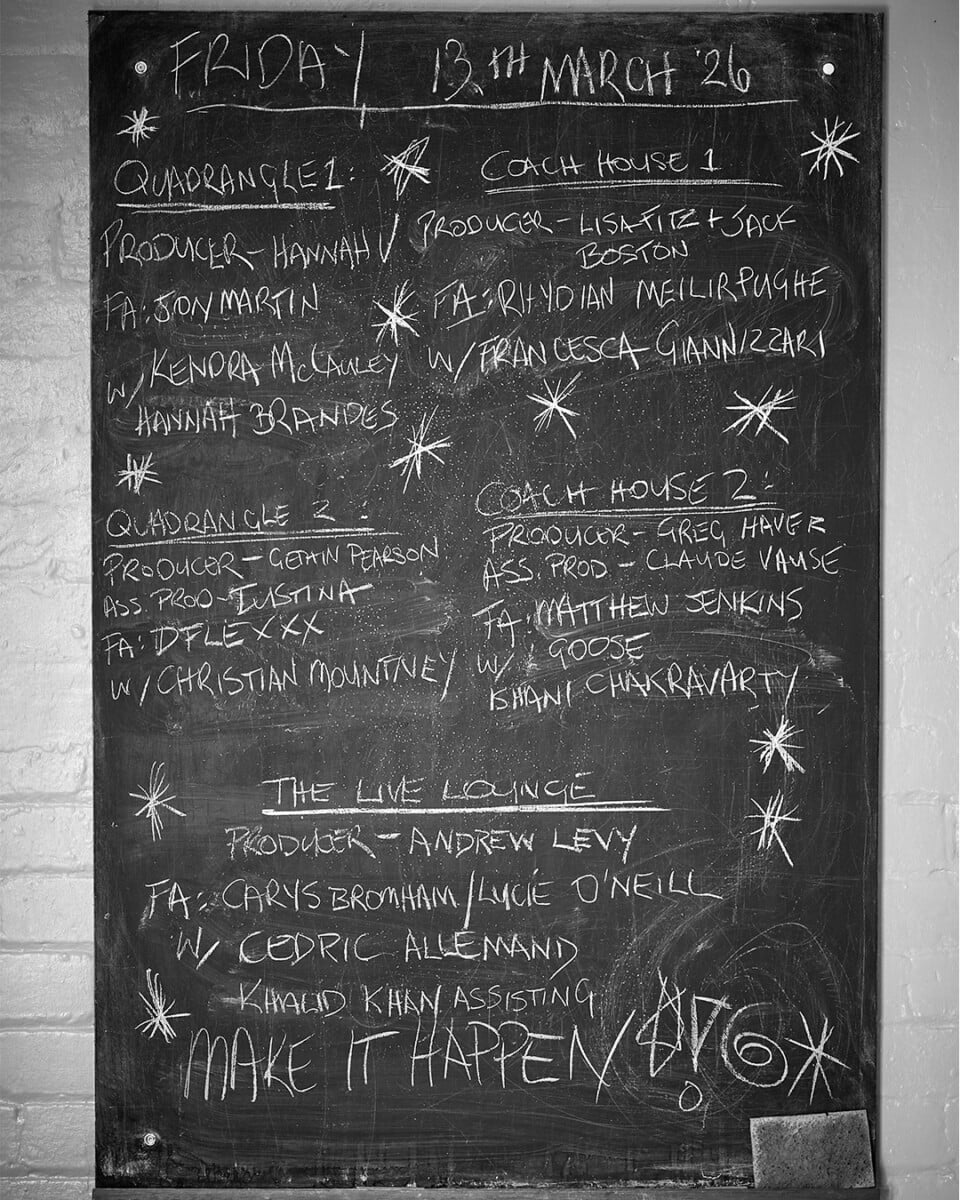
Walking into a small canteen, I’m introduced to a range of producers, engineers, writers and artists, all of whom have flocked to this small corner of South Wales in the hopes of making great music. The songwriting camp is open to anyone, but participants are chosen based on how well the group may be able to complement one another. Guitarists are paired with drummers, keyboardists are put with bassists, rappers with singers, all of whom head into separate studios within Rockfield to try and write a song from scratch in the span of eight hours. Each session is overseen by established producers and engineers, before tracks are traded over a glass of wine at the end of the day.
The idea came to Lisa after she had attended various writing workshops and found the process to be equal parts interesting and frustrating. Interesting because she was learning about writing music, frustrating because she would come away from these retreats with nothing to show for it.
“I just thought ‘I’m gunna go and do some songwriting camps’, so I went and did some. I did loads of research, lots of development work and stuff, and I learnt a lot,” she told me. We talk in a small office space with black coffees, the sound of the artist heavy canteen next door forces its way through the walls, “I thought ‘There’s no production here, what’s the point? We’re sitting around a tree with a guitar and Sheryl Crow’s keyboard player, why don’t we have production?’”
The solution was simple: start a songwriting camp which paired budding writers and musicians with established producers, so that all involved could learn about the recording process, receive advice from industry professionals, and come away with demos and contacts that could help further their careers. It started at Hotel Pelirocco in Brighton, but now, ten years later, it is an annual camp taking place at Rockfield Studios. So, why here?
“I always say to people, ‘It’s not the Ritz, it’s Rockfield’, you know?” said Lisa, “The fact that it is what it is. It’s very unpretentious. I mean, Kingsley [Ward, the studio’s co-founder] walked in with his jacket covered in cow shit, and Ann [Ward] is just as down to earth […] It’s a family-run business, and people come here, and they get touched by the magic of it. And I know magic sounds like a cliché word, on paper, and when you say it, it sounds cliché, but there is magic. I mean, can you feel it?”
I agree, I think the term “magic” is a bit cliché, but damn, there’s something in the air here. Stepping out of that taxi, seeing my confused driver reverse back up the road and (hopefully) find his way to civilisation, for a brief period, I was alone, but it didn’t feel like it. Ghosts of music’s past linger in every single corner of this place, as songs like ‘Wonderwall’, ‘Bohemian Rhapsody’ and ‘Yellow’ were all recorded here, while artists like Freddie Mercury, Ozzy Osbourne and Lemmy have parked on that gravel, walked on the grass, drunk coffee in this very office. The word ‘energy’ also feels cliché, but it’s the only one I can think of.
“When you come to Rockfield, whether you’re with Pro7ect or a band, you stand on the shoulders of giants. And that does change, the atmosphere does change,” said Lisa, “When people drive through the gates and see the sign, you sort of leave everything, and you’re now in a different time.”
Joe Jones, one of the engineers at Rockfield who has worked with the likes of The Cure, Pixies, and Dry Cleaning, agrees. “Just because of the history of the studio, that has an impact and makes people up their game a bit,” he said, “I think just being in a place with so much history, you walk into the rooms, and you know that for decades records have been made in these rooms, so that kind of immediately switches you on. But also, the nature of the place, you just get kind of left to your own devices to get stuck in.”
Jones added that Rockfield has bedrooms, and the people working here stay here, which also helps artists truly immerse themselves in their work. “You live your record,” he said, “I really feel like in a residential studio, and particularly here because of its location, it’s kind of rural and you’re left to your own devices. You live that record the whole time, and everything impacts what you’re doing. You never leave the process.”
While recording somewhere like Rockfield is undoubtedly a dream for plenty of these Pro7ect artists, it isn’t just the location that brings them here. Camps like this are now a crucial part of a musician’s trajectory, as the digital age means that scenes are dwindling, and the voices of tomorrow are trapped behind screens. These songwriting camps are relatively new, but don’t let that trick you into thinking they’re a phase.
Greg Haver, one of the producers offering guidance at Rockfield and whose credits include Manic Street Preachers and Tom Jones, spoke about the music industry’s recent dependency on such weekends. “Songwriting retreats are quite a new thing,” he said, “Certainly to the scale that they are at the moment. They’ve become an integral part of the music industry, that whole idea of collaborative songwriting”.
The practical pros of collaboration are one thing, but the real benefit of people coming to retreats like this is more psychological. As growing artists consume endless media on their phones, they are often constantly subjected to perfection en masse, which can make the trials and tribulations of the creative process seem even more daunting than they have been to previous generations. Songwriting camps give modern musicians what a lot of artists used to get from jams and being a part of bustling scenes: the realisation that before money, success and fame, this is all supposed to be fun.
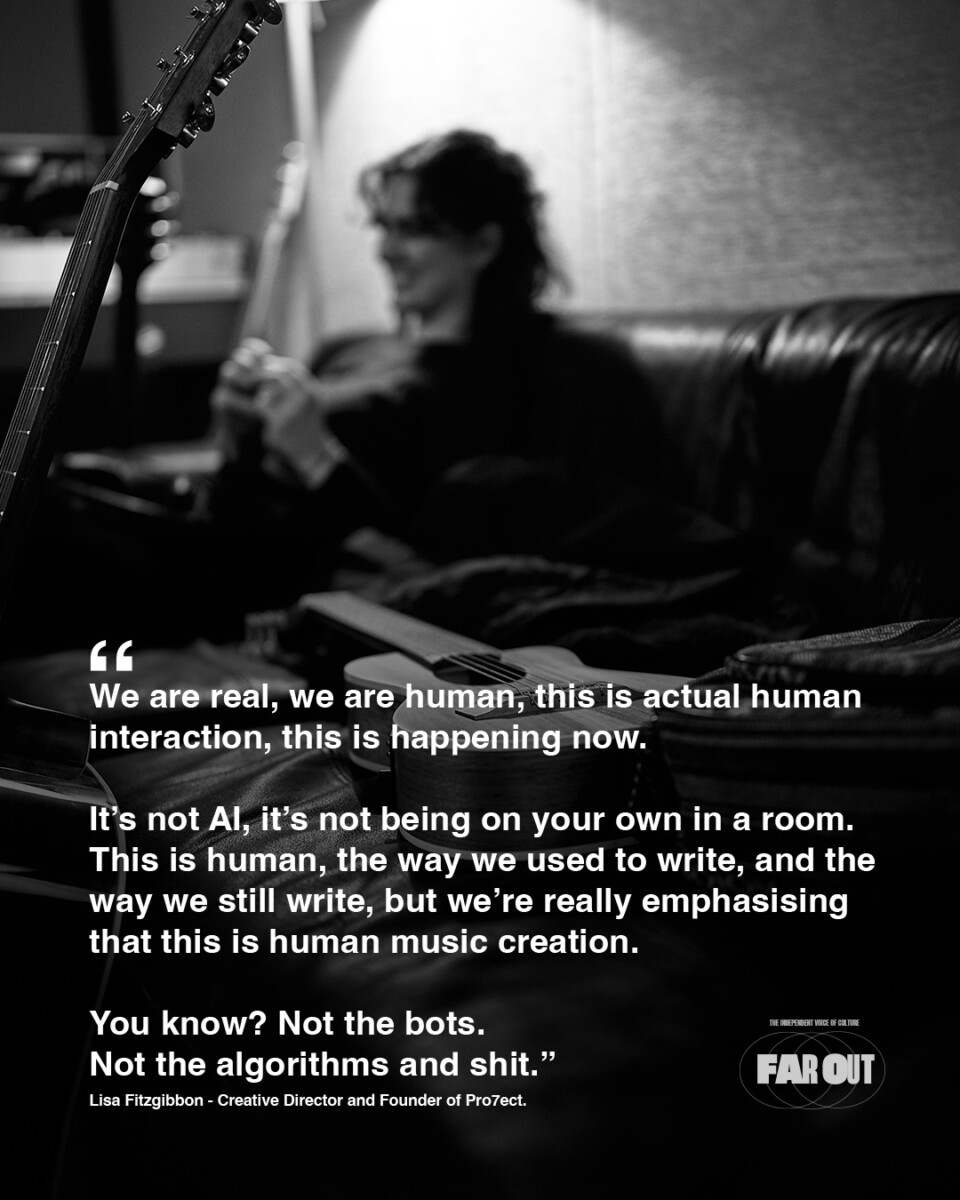
“We are real, we are human, this is actual human interaction, this is happening now. It’s not AI, it’s not being on your own in a room,” said Lisa, “This is human, the way we used to write, and the way we still write, but we’re really emphasising that this is human music creation. You know? Not the bots. Not the algorithms and shit.”
The artists attending the retreat seem to agree; no matter what studio you walk into, the secondary noise to the music being made is laughter. People are enjoying themselves, despite a lot of these artists being thrown headfirst into what is without question a stressful situation. Many haven’t written outside of their rooms or the same group of people before, and suddenly they’re penning lyrics for people who have worked with Charli XCX and Rihanna.
“It’s very exposing being a musician, being a songwriter,” admitted Greg, “You’re exposing a lot of your innermost secrets and fears, because that’s where all the best material comes from. You’ve gotta be able to do that and not let it affect you too much.”
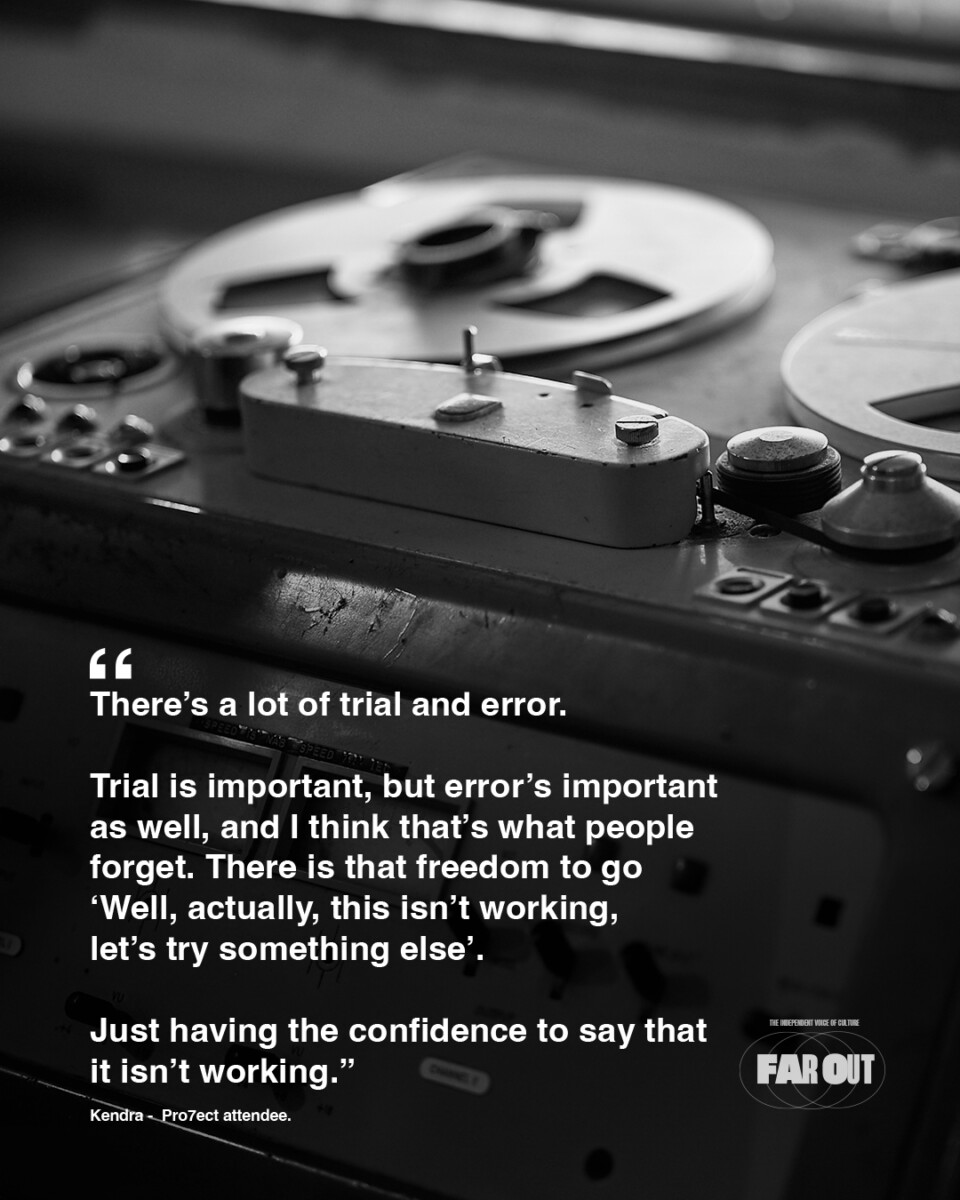
“There’s a lot of trial and error,” added Kendra, one of the artists attending the retreat, “Trial is important, but error’s important as well, and I think that’s what people forget. There is that freedom to go ‘Well, actually, this isn’t working, let’s try something else’. Just having the confidence to say that it isn’t working.”
A soul singer originally from Paisley but now based in Manchester, Kendra said Pro7ect’s rough and ready approach to writing a song is a breath of fresh air compared to the constant strives for perfection she experiences in usual circumstances.
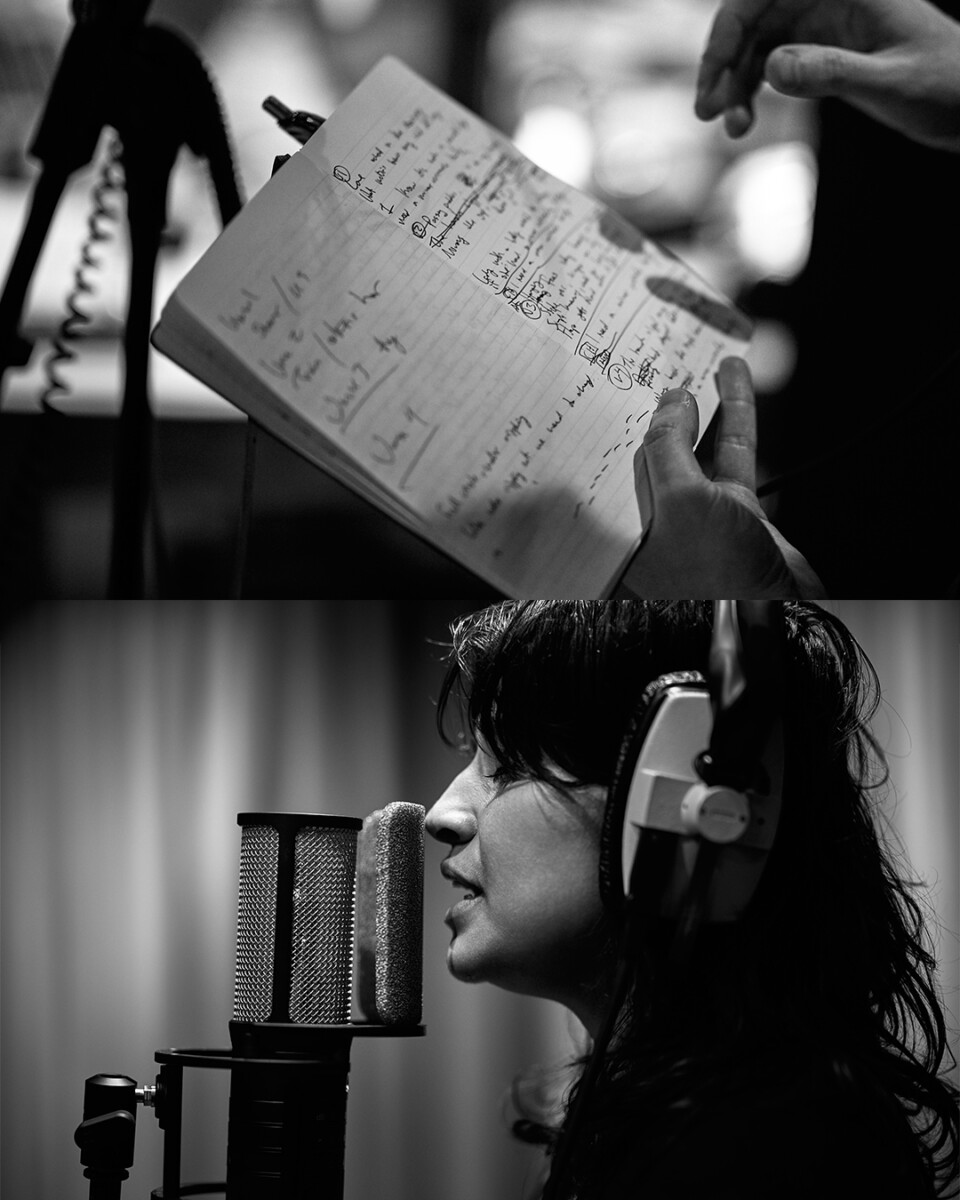
“I usually go into a studio with everything prepared and just work,” she said, “Here, there’s actually writing in the studio, and it’s so different. As much as you only have a day to complete each song, that’s actually really nice because as artists, you can get in your head a little bit, you want to be a perfectionist, and everything has to be right. This takes that away, it’s like ‘No, actually, we’re just going to get this done, and it’s not going to be delayed’.”
Welsh rapper D-Flexxx also praised the collaborative approach of everyone at the retreat: “It’s great that everyone’s open-minded and everyone listens to what people wanna say and do. I feel like a lot of the music industry, especially in Wales, it’s very close-minded and gatekept. So, places like this, where there’s five studios open, and you can just come in and out, work with different types of people, it’s very important for the creative process.”
He raises another good point about gatekeeping, as while these retreats are all well and good, they can be inaccessible for a lot of people, be it because of financial complications or artists simply not knowing they exist. This hurdle is also being addressed by Pro7ect, who have teamed up with Creative Wales, a government agency who provide funding for the arts in local Welsh communities. CW paid for the placements of six people on the retreat in a bid to help those who might not have been able to truly tap into the music industry and get their foot through the door.
“[I’m] very honoured to be given that space,” Carys Bromham is one of the recipients of the grant, “It basically means that our trip is paid for by Creative Wales, and we have been able to come here and write, get experience and record, just to feel out what it’s like to be part of the whole recording process and hopefully see what my future career could potentially be.”
Camps like this were once a luxury for a select few, but as the digital world continues to dominate artistic spaces, they’re becoming a necessity. Music is more accessible than it has ever been, as people can consume, create, and release all from the comfort of their own homes, just using a laptop. This accessibility is a good thing in terms of getting more voices into music, but what good is that if those voices can’t properly project themselves?
Retreats like Pro7ect take artists with something to say and show them the best way that they can say it, which means exposing them to influences and people outside of an algorithm. A soul artist works with a rapper, a writer works with a producer; a stranger works with another stranger. What were initially hurdles prove to be hills, something those involved can climb to the top of in order get a better view of a world they’re keen on immersing themselves in.
Connectivity has accidentally led to isolation, and singular mindsets have never excelled in creative fields. Retreats like this should be invested in, for if the collaborative nature of music is left by the wayside, artists will fall into a pattern of unadventurous repetition. Lisa Fitzgibbon put it best, as when I asked her why this retreat was important, she plainly said: “Because we need to do this!”
My taxi driver found his way to Rockfield for the journey back, and as he pulled away down the same dirt road I entered through merely hours ago, I had one more glimpse at the studios where Queen, Oasis and Black Sabbath once played; however, for those few hours with Pro7ect, it didn’t feel like people were dwelling too much on music’s past. They were all far too committed to its future.
