


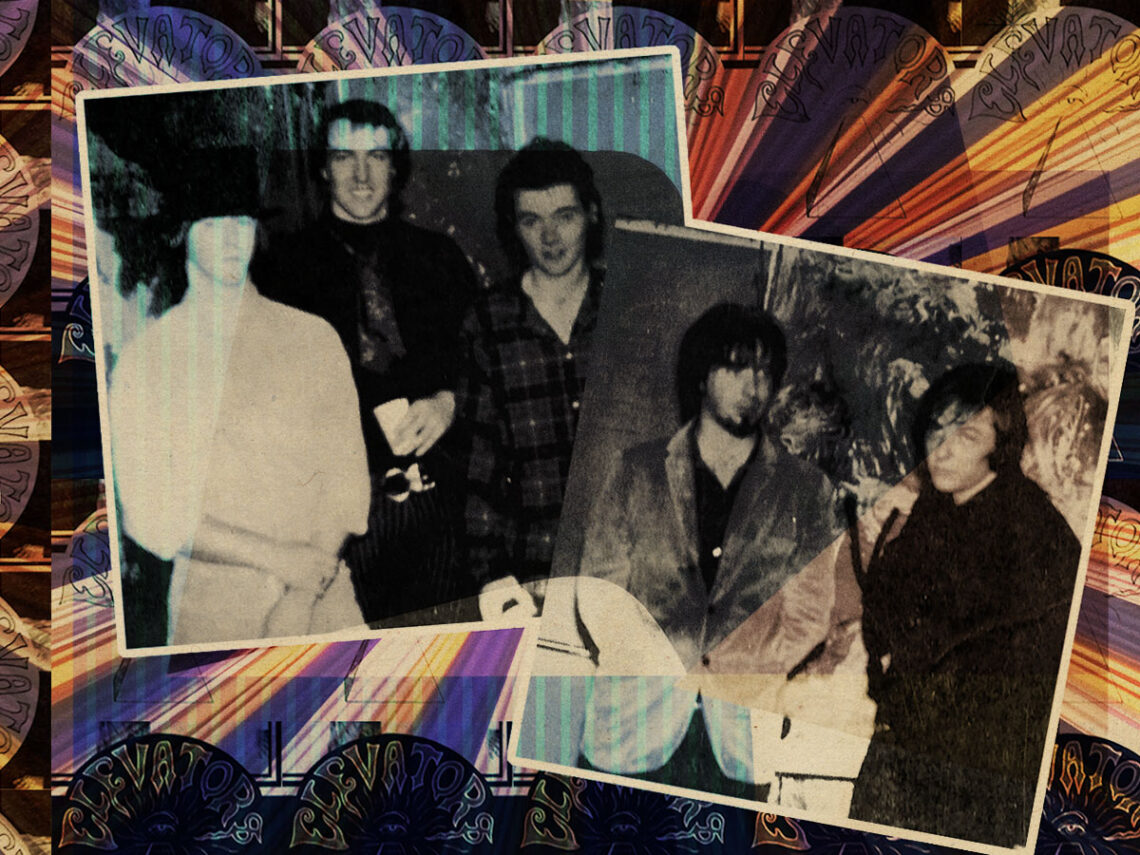
Acid Tests, UFOs and The 13th Floor Elevators: The story of the world’s first psychedelic band

Before psychedelics ran rampant across San Francisco and beyond in the late 1960s, a rock band from Texas was the first to use the term, expounding on the use of LSD while crafting early psych-rock.
The 13th Floor Elevators was born out of the Austin, Texas music scene in December of 1965, where their soon-to-be singer, Roky Erickson, left his group, The Spades, at the encouragement of Tommy Hall, a psychology student at the University of Texas who was conceptualising an LSD-influenced band, where he would be the lyricist and ‘electric jug’ player (creating a sort of wobbling sound by attaching a microphone to the jug). Soon, they were joined by the former members of The Lingsmen, guitarist Stacy Sutherland, bassist Benny Thurman and drummer John Ike Walton.
At the time, psychedelic music was still a relatively new notion; it was Hall, as legend has it, who coined the term ‘psychedelic rock’, with its first use being on the band’s business card in January 1966. In their native Texas, especially, psychedelic music was unheard of; still, their beginnings coincided with the likes of the Grateful Dead, but where they may have found similarities in their sounds, The 13th Floor Elevators preceded them in different ways.
The Grateful Dead famously made their debut at one of Ken Kesey’s infamous Acid Tests the same month that the Elevators formed, but they never took acid during their shows, while the latter were notorious for taking the drug before going onstage, following what was referred to by former members of the band as “the Tommy Hall schedule”. San Francisco’s burgeoning counterculture may have come to define the entire concept of psychedelia, but, in many ways, Texas came first.
Hall even admitted that he never quite saw himself as a musician and rather wanted to share with people the “ideas and insights” he gained through using LSD, and music became the language to do so. “Everything I wrote was inspired through my taking LSD,” he explained to The Austin Chronicle in 2004, “I invented the electric jug totally out of my desire to find a place onstage with this new group, so I could be a part of it, and so I could communicate my new ideas through the lyrics I wanted to write.”
As George Ripley, the band’s documentarian, said of the Dead to Psychedelic Baby in 2025, “They freaked out when they discovered that The 13th Floor Elevators always dropped acid and were peaking when they went onstage.” By his account, none of San Francisco’s psychedelic bands, ranging from the Dead, to Jefferson Airplane, Big Brother & the Holding Company and more, were playing psychedelic music until The 13th Floor Elevators’ first California tour in 1966, which saw them conquer Dick Clark’s American Bandstand and San Francisco’s legendary The Fillmore and The Avalon ballrooms.
In the summer of 1966, with their new bassist, Ronnie Leatherman, the Elevators earned a hit in ‘You’re Gonna Miss Me’, the first of their songs to reach outside of Texas and spread across the country, earning a following in the San Francisco Bay Area. The song captured the key elements of a rock classic: upbeat garage rock-influenced guitars, a rockabilly-meets-R&B groove, sing-along lyrics like a chorus of “I’m not coming home”, and Erickson’s raucous shouts, and of course, Hall’s electric jug serving as a melodic backbone.
It featured on their 1966 debut album, the aptly-titled The Psychedelic Sounds of the 13th Floor Elevators, which became something of a cult classic among the counterculture. In the album’s liner notes, Hall expanded on the LSD-influenced mindset that, in his words, prompted the “quest for pure sanity that forms the basis of the songs on this album”.
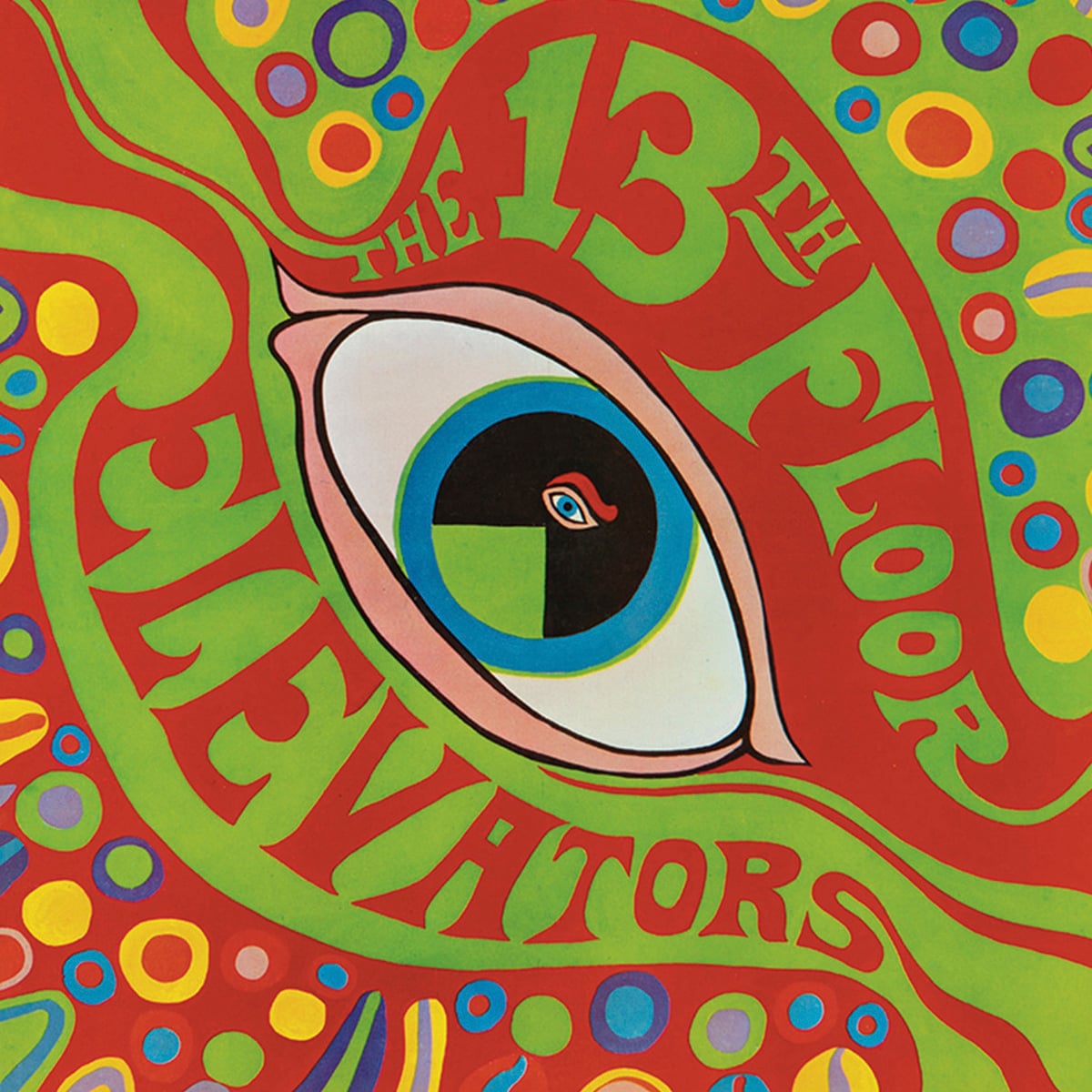
“Recently, it has become possible for man to chemically alter his mental state and thus alter his point of view,” Hall wrote, “(That is, his own basic relation with the outside world which determines how he stores his information). He then can restructure his thinking and change his language so that his thoughts bear more relation to his life and his problems, therefore approaching them more sanely.”
Such a championing of psychedelics co-signed by the band elevated their cult-like following, which saw their tour of California shared with the Quicksilver Messenger Service, The Great Society (then featuring Grace Slick, in her pre-Airplane days) and Moby Grape. Once they returned to Texas in early 1967, however, their foundation began to crumble. The band was mismanaged by their label, International Artists, who emphasised a mystery surrounding the band that warranted no press coverage for them, poorly planned tours with lessened exposure and little compensation (reportedly, each member was paid just $50 a week with no royalties).
Their second album, 1967’s Easter Everywhere, was not only lacking a hit single and was not to be reprinted, but it saw John Ike Walton and Ronnie Leatherman both leave the band. The former had had disagreements with Hall’s LSD-driven direction and was replaced by Danny Thomas, while the latter was replaced by Dan Galindo, with neither credited on Easter Everywhere. The band continued playing in their local Texas scene, which saw a young Janis Joplin open for them in Austin, and she considered joining them before travelling to San Francisco, remaining an undeniably foundational presence, but they never achieved the success that their debut afforded them in the year before.
The band’s third and final album, 1969’s Bull of the Woods, was recorded with a fractured lineup, largely composed by Stacy Sutherland, on account of Hall’s supposed irregular behaviours and Roky Erickson’s fragile mental state. The final concert of their last official lineup took place in April 1968, and the group disbanded by the end of that summer (Bull of the Woods was released in their aftermath).
The source of Erickson’s fragility came from a number of places: his use of LSD and his diagnosed paranoid schizophrenia, surely, as well as his later institutionalisations. In 1968, he received his diagnosis after a show in San Antonio, Texas, when he began to speak nonsensically onstage and was covered in sores. He was sent to a psychiatric hospital in Houston, where he was involuntarily subjected to electroconvulsive therapy and placed on anti-psychotic medication. The next year, he was arrested for possession of a single joint in Austin and pleaded not guilty, by reason of insanity, to avoid prison; he was only 22 years old.
His next three years would be spent in different Texas hospitals and mental institutions, with various escapes and recaptures peppering his stints. While institutionalised at Rusk State Hospital, he was subject to more electro-therapies and Thorazine, an antipsychotic. He also wrote songs and poetry, which friends and family smuggled out and self-published as a book, Openers, in 1972, to raise money to hire a lawyer.

Once he was released that year, he remained on a continual decline as he struggled with his mental health and substance abuse. Still, he wrote and recorded music, playing live, traversing further into the unusual with a sudden fixation on horror and the occult. In 1980, Erickson coined the term ‘horror rock’ for his band, Roky Erickson and the Aliens, which saw him travel further into hard rock music inspired by classic horror films and science fiction.
“I thought I was a Christian, then I signed my soul to the devil,” he once described himself in a documentary from the early 1980s (quoted by The Fader), “[The third stage] was the one where I know who I am. I feel like I’m a monster…a demon, a gremlin, a goblin, a vampire, a ghost and an alien.”
After a performance at the 1993 Austin Music Awards, Erickson virtually disappeared from public life, secluded in his home with televisions, radios and police scanners playing constant noise to block out the voices he said he heard in his head. After a lengthy struggle for legal guardianship, Erickson was placed under the care of his younger brother, Sumner, who saw him through getting mentally and financially stable, slowly but surely performing again and getting his once rotted teeth replaced with a full set of dentures, paid for by a fan, Henry Rollins.
“Roky’s told me that if he had to do it all over again, he’d leave out the drugs,” Sumner told The Guardian in 2007, which Erickson countered with, “It didn’t really affect me”. As for his longstanding belief of being an alien, he claimed to have had the “fact” of his being from another planet notarised by a lawyer. “I had pictures in books of flying saucers, and they looked familiar to me,” he explained. Erickson would pass away in 2019.
As for his fellow Elevators, Sutherland continued to play music, though his efforts were marred by drug addiction and subsequent imprisonment. After a domestic dispute, he was killed by his wife, Bunni, in 1978. Benny Thurman joined a number of other bands, including Mother Earth, before his passing in 2008, and Dan Galindo played in Jimmie Vaughan’s band Storm in the 1970s and died in 2001. Danny Thomas played in multiple bands across Texas and North Carolina, where he still lives, while Walton remains in his hometown of Kerrville, Texas, as does Ronnie Leatherman. Hall continued to dedicate himself to his research on “horizontal thinking”, guided by mathematicians that dated back to his starting of The 13th Floor Elevators.
“Most people got caught up with illusions, failing to see truth provided by the psychedelic experiences,” Hall said to The Austin Chronicle, of the misuse of LSD in hippie culture, “You must look past the pyramid, into its shadow, to find the truth.”
