


‘Let’s Shake Hands’: The origin story of The White Stripes

In the dying light of the 20th century, Jack and Meg White went down to the crossroads together and made a deal to form a musical duo. A one-generation dynasty, and one of our great modern bands, there and then, The White Stripes were born.
All the best blues music comes from ‘the crossroads’, that mystical place where the path forwards can take any direction, where you’re liable to enter into some kind of Faustian pact in order to find your way forwards, sideways or maybe even just to find your way back. Well, that’s the story anyway, and especially the story of the white man’s blues.
The devil is always in the details, and one detail that is often missed in the mythology of the blues is that Robert Johnson himself never claimed to have any deals or bargains with any fallen angels at any sacred junctions, but, like Maxwell Scott says at the end of The Man Who Shot Liberty Valance, “When the legend becomes fact, print the legend”.
More recently, the mythology of the crossroads has been picked up, borrowed, utilised, embellished, bastardised and printed as legend by The Rolling Stones, Led Zeppelin, Eric Clapton, Bob Dylan and countless others, as well. In 2005, The White Stripes dealt with the devil themselves on Get Behind Me, Satan, but Jack and Meg didn’t really meet at the crossroads. In actual fact, they met at a Detroit barbecue restaurant, but that doesn’t sound quite as exciting, now, does it?
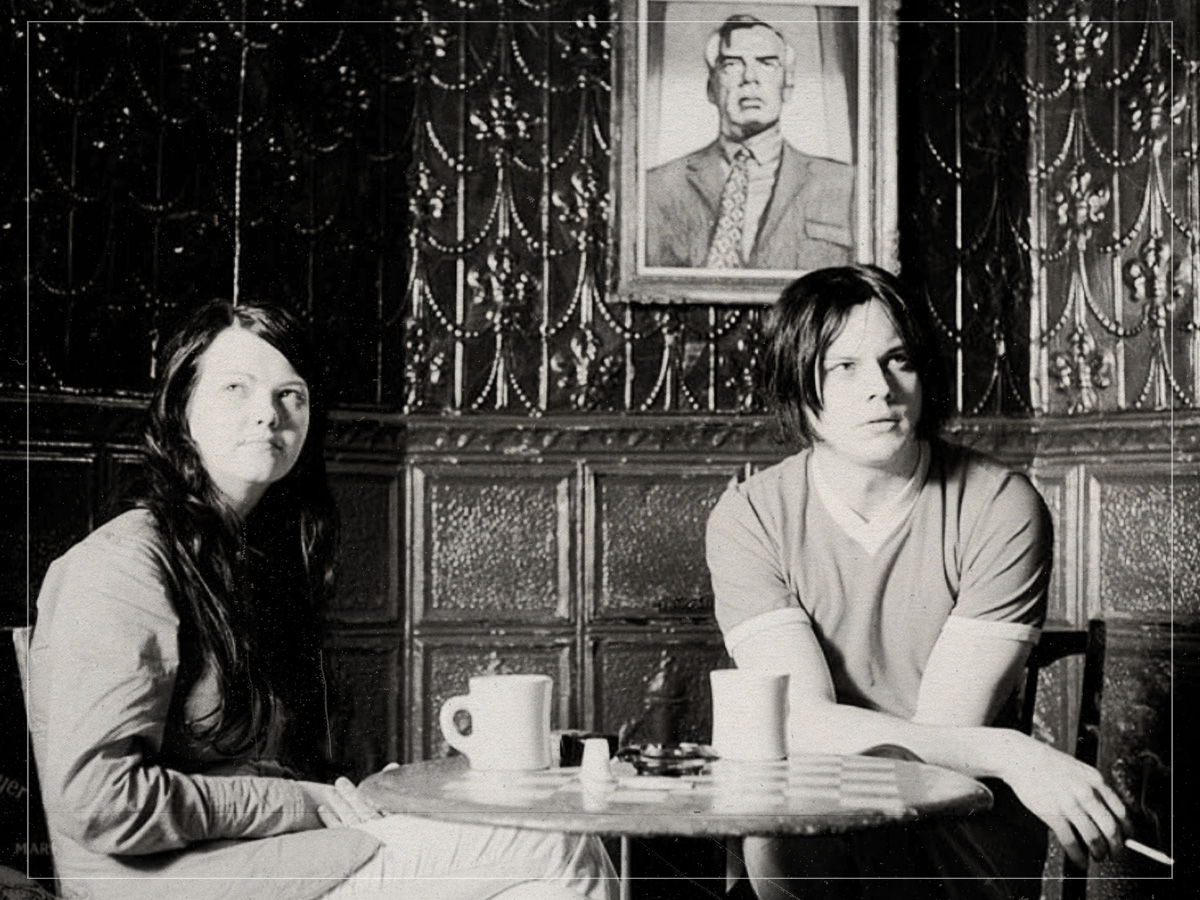
When high-schooler Jack, then Gillis, not White, met Meg at the Memphis Smoke, she was there working as a waitress, and he was there to read poetry at an open mic night. Before long, the pair struck up a friendship and then struck up something a little more beyond that. They started hitting the other local cafes and clubs, the used-bookstores and record shops around town, bonding over music, more and more. At the time, Jack was best-known around town for playing the drums, but was liberated from his seat behind the kit when Meg took up the sticks herself and started learning alongside him.

Jack had been playing the drums since he’d taught himself at 11 to keep a steady beat. The tenth child, and seventh son, of Teresa and Gormon Gillis, little Jack had also taught himself to play the guitar and piano, as well, picking up the discarded instruments from his older siblings’ childhoods. Later on, he’d go on to claim that he had three fathers, his biological dad, God and Bob Dylan; some might argue that those last two add up to the same exact thing.
In 1996, the pair were wed, and Gillis made the unorthodox move of taking his new wife’s name, and so John Anthony Gillis became Jack White and, before long, the pair became The White Stripes. By the time they’d turned their marriage into a band, Meg was still only two months into her journey as a drummer, but they didn’t let that hold them back from booking their first gig.
Speaking to the New York Times in 2012, Jack suggested that he’d had The White Stripes’ concept down pat from the get-go. They’d be a brother and sister two–piece all dressed in red and white, as cartoonish as possible, to contrast the heavy-hitting blues-rock music he wanted to make.
Jack White’s nephew, and White Stripes roadie, Ben Blackwell, suggests otherwise, though, and remembers that the pair had auditioned for a bass player to join their group and had tried on band names like Bazooka and Soda Power in their early days. But that’s not as glamorous as the idea of coming out of the gates fully formed, is it? Print the legend.
And whether Jack and Meg did or didn’t think about expanding the band, did or didn’t think about other monikers for their group, is really immaterial. Whatever they were called, it feels like they really did come out of the gates fully formed, and for that, you only have to listen to their debut single, ‘Let’s Shake Hands’.
It sounds just like The White Stripes and could have fit on The White Stripes, De Stijl, White Blood Cells, Elephant, Get Behind Me Satan or Icky Thump, as right off the bat, that aggressive, punked-up, amped-and-fuzzed-up blues basis was all there. That frenetic drive, the power of Meg White’s drums and that wail in Jack White’s nasal whine were in place from the first, bass-player or not. It was a sound that they’d consolidate, explode, expand and contract over the course of all their future songs, and all the other songs they sang as well.
Initially released in 1998 on a limited run of 1,000 pressings through the Detroit-based independent record label, Italy, the song had been recorded in the living room of the founder of the label, Dave Buick, who was an influential figure in the city’s burgeoning garage-rock scene. Following further successful singles, the group were picked up by Long Gone John and the Sympathy for the Record Industry label, who put out their eponymous debut album in 1999.
As their professional career was about to take off, their romantic one was already coming to an end, and in the same year that they released their first album together, the pair were quietly divorced. Jack had assumed that the band would go under with the marriage, but Meg convinced him that they should continue on their musical partnership.
Until the time came, nine years later, that she changed her mind. “Meg came up to me and said, ‘This is the last White Stripes show’,” Blackwell later remembered, “I said, ‘You mean, like, of the tour’. And she was like, ‘No, I think this is the last show period’.”
Blackwell and Jack White were both caught off guard, with the latter even saying in 2012 that “I’d make a White Stripes record right now. I’d be in The White Stripes for the rest of my life. That band is the most challenging, important, fulfilling thing ever to happen to me. I wish it was still here. It’s something I really, really miss.” And so does everyone who has ever heard any of the music by The White Stripes, and then any of the music that Jack White has made without Meg White keeping the beat behind him afterwards.
