


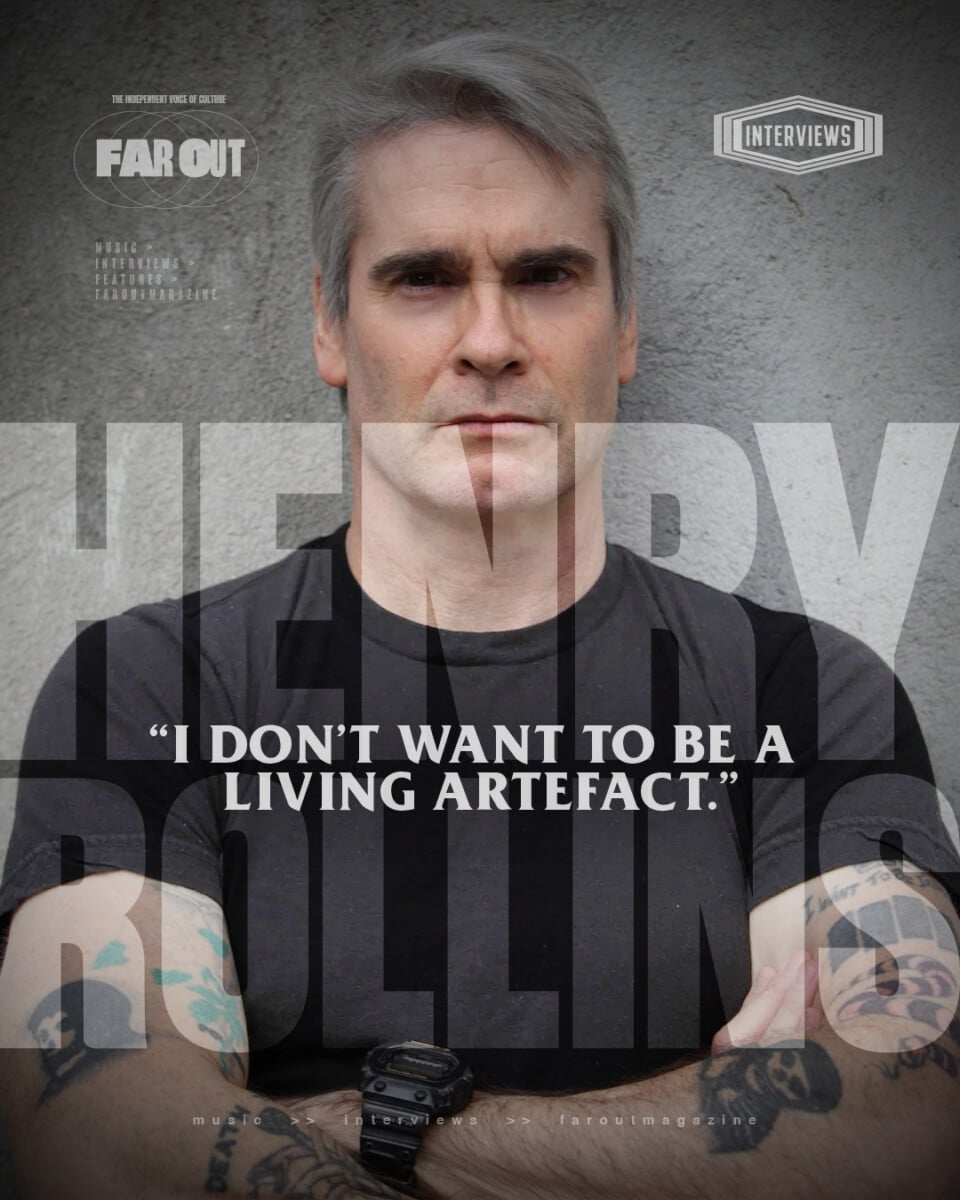
“I don’t want to be a living artefact”: Henry Rollins on leaving Black Flag behind to become a very different punk thanks to West Yorkshire

Whether the spark of punk rock revolution began in the damp surroundings of CBGBs or in the garage rock explosion of the 1960s, the scene has never truly subsided, preferring to splinter off into countless different subgenres and niche scenes. Among them, one figure whose influence has never really faltered is Henry Rollins.
If you ever went to a Häagen-Dazs ice cream parlour in Washington, DC, during the early 1980s, the chances are you might have met a young Henry Rollins, before he abandoned the realm of minimum wage work to become one of the defining frontmen of punk history, and a key figure in those magical early days of the DC hardcore scene. Now, 40 years on from his tenure with Black Flag, and with a discography as expansive as it is enduring, the performer tends to embrace a quieter lifestyle.
His most recent work, after all, has been within the world of spoken word, with records like Spoken Word Guy back in 2010 and the stand-up slanted Keep Talking Pal in 2018 – though, notably, he still tends to wrap the mic cable around his fist, as though he could launch into an onslaught of hardcore excellence at any minute.
Despite this somewhat mellow spirit the 21st-century Henry Rollins has embraced, even sending the man an email requesting an interview felt like an incredibly daunting task. After all, this was the harbinger of punk chaos, who made Kurt Cobain nervous and produced an entire album by Charles Manson.
Having spent countless hours of my adolescence sewing homemade Black Flag patches onto my jackets, listening to every album I could get my hands on, and watching endless videos of a young Rollins making music journalists squirm, never has sending an email felt more like approaching the Cave of Caerbannog.
Yet, only an hour or two after the willpower to send that request had been drummed up, a reply arrived, inviting any and all questions – perhaps meeting your heroes isn’t so bad after all.
Looking back over Rollins’ many exploits over the decades, it is a wonder the frontman ever found time to sleep. Whether it was within the hardcore heroism of his early days in D.C., his numerous appearances in film and TV, or even his extensive body of spoken-word work, there’s certainly a lot to get through.
Of that expansive output, though, Rollins admitted, “I probably shouldn’t have done half of the things that I did.”
“I had an interesting time, but I don’t think I was especially good at any of it,” he shared, in the kind of self-effacing manner that punk frontmen rarely adopt. “An interesting time” is certainly an understated way of encapsulating a career which includes, among other things, record some of the greatest punk albums of all time, performed a stand-out set in the mud of Woodstock ’94, and portrayed a white supremacist gang leader in Sons of Anarchy.
“As far as balancing all these things, it wasn’t difficult,” Rollins continued. “What I mean is, I see all those things as work that requires dedication, discipline, focus, and the stamina to stay with it until it’s finished.”
He explained, “That could be a film, a book, a tour, whatever it is, you go into it completely and give it the best you’ve got.”
After spending multiple decades in groups, though, it seems that independent work is where Rollins thrives most these days, hence his spoken word material: “Perhaps the primary thing I like about doing talking shows is that I’m alone on stage,” he shared.
“There’s no collaborative effort happening, and I will pass or fail on my own,” he added. “Also, I can change material very quickly and move to something else in a single breath.” Ever the DIY hero, he also noted, “It travels very well. It’s just me and a microphone.”
Primarily, though, those one-man shows and speeches offer a welcome break from everything that comes with being a member of a gang. “When I was younger, I liked being in a band,” the performer affirmed. “It’s an almost completely different headspace to occupy. You’re part of a group, there is ego, politics, drama. Even on a good day, it can be, by nature of what it is, complex.”
“I did it for a long time, until I had nothing left to give,” he added. “I have no regrets, but it was more work than some people might understand. On the other hand, there’s a lot of things that require a lot of work. I look at parents raising their children. That looks like a lot of work to me.”
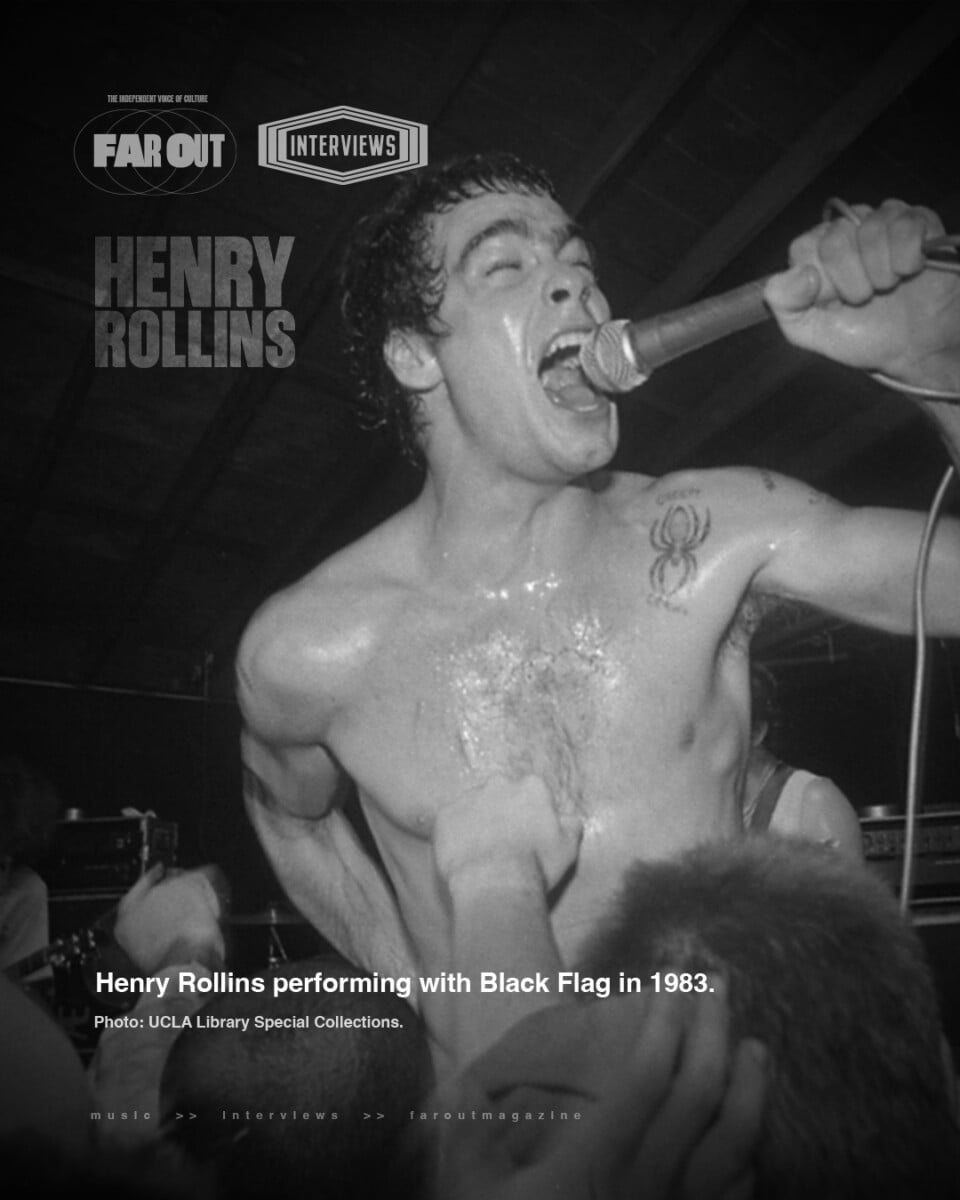
Harking back to those early days of band politics, later this year will mark the 45th anniversary of Damaged, Black Flag’s masterpiece of a debut album. Although Rollins had only joined the ranks of the band shortly before the record’s release, his incredible energy and aggression were essential in making the album the punk classic it is. The former frontman himself, though, doesn’t give much credence to that theory.
“I have no idea if the record has any longevity,” he wrote of the album’s anniversary. “It is old. If anyone finds it to their liking, my opinion is it’s because of Greg Ginn and Chuck Dukowski’s great songwriting.” He went on to reveal, “I haven’t heard the record since 1981. I may have heard a track here or there from it, but not because I put it on to listen to. I don’t like to listen to anything that I’m on.”
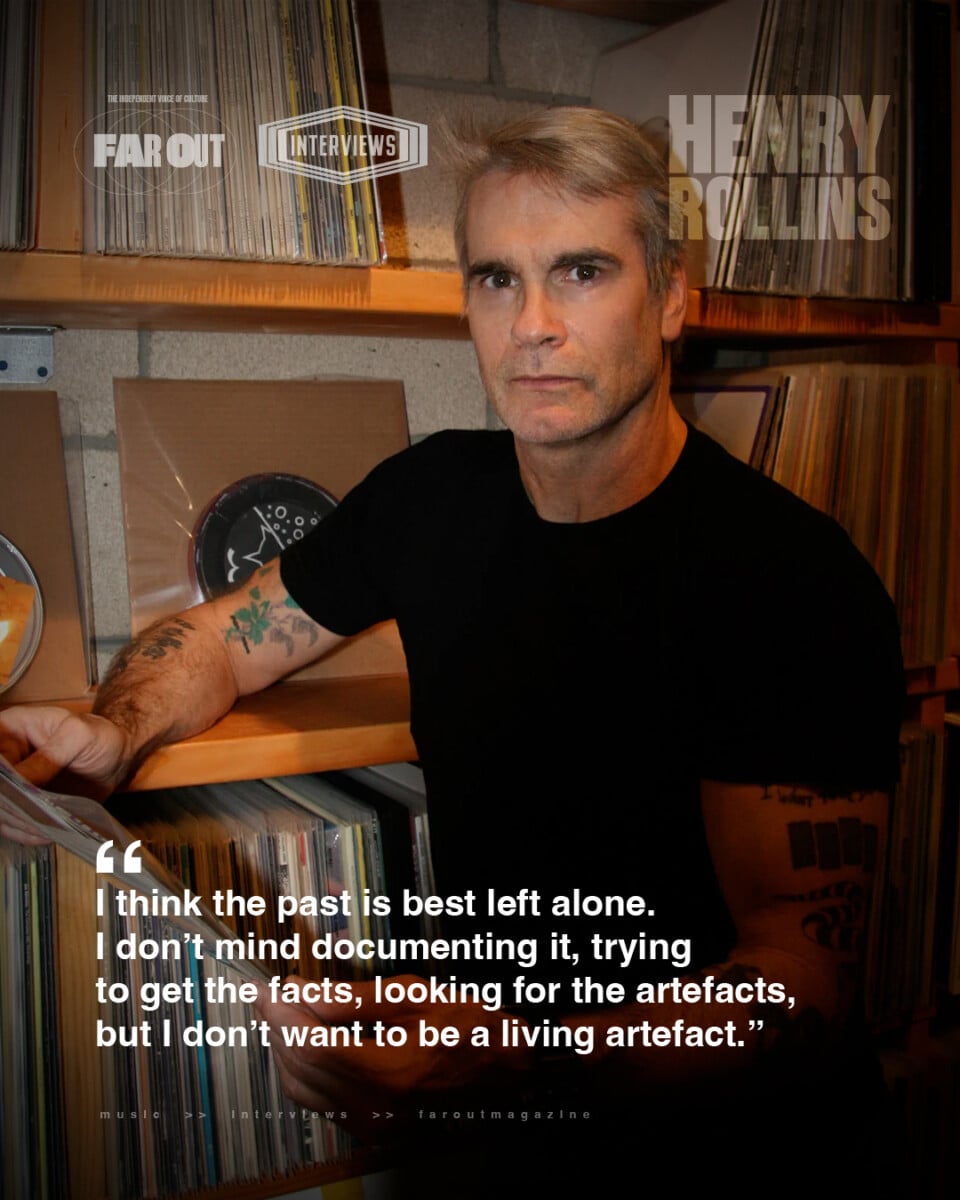
Now at the age of 71, Ginn still tours the world under the Black Flag name, but going back out on the road isn’t something that particularly appeals to Rollins. “I can only speak for myself,” he qualified, “But I think the past is best left alone. I don’t mind documenting it, trying to get the facts, looking for the artefacts, but I don’t want to be a living artefact.”
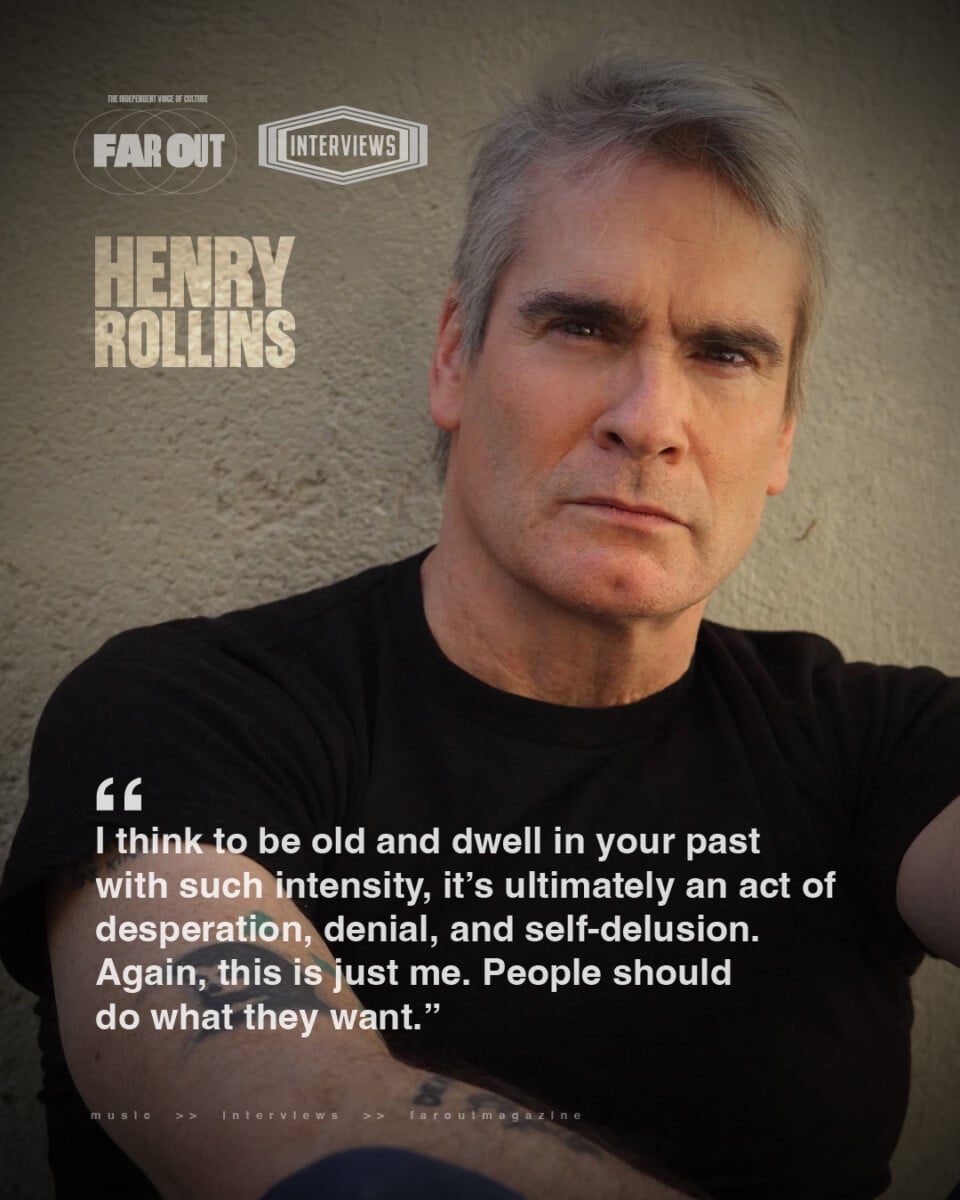
“There’s something perfectly time-wasting about playing 40-plus year-old material to me,” he continued, though he did note that he doesn’t have a problem with his punk comrades going out on those anniversary and reunion tours. “I think to be old and dwell in your past with such intensity, it’s ultimately an act of desperation, denial, and self-delusion. Again, this is just me. People should do what they want.”
Concluding, “For myself, I’d rather keep clawing forward, no matter what.”
That drive to move forward eventually saw Rollins leave Black Flag after 1986’s Who’s Got the 10½?, and it was in the unlikely surroundings of northern England that he began work on what would eventually become his first solo record, Hot Animal Machine.
As a Yorkshireman myself, it was inevitable that the topic of Rollins’ time in Leeds would come up, and it appears as though the songwriter still holds a special place in his heart for the city. “It was an exciting and nervous time,” he recalled. “I had no band, hardly any money, but I realised if I didn’t hit the ground running, I’d be severely compromised.”
“We would write songs in the guitar player’s less-than-warm bedroom in his flat at 52 Harold Mount,” he continued, namedropping the terraced house a mere stone’s throw away from the current epicentre of Leeds’ music scene, the Brudenell Social Club. In other words, Rollins was a long way from his Los Angeles stomping ground, but the unlikely surroundings of northern England nevertheless proved to be pivotal for his music career.
“We’d go to rehearsal space and bash through them, and then at one point we went into a studio and put everything we had on tape. I thought, for what it was, the record was pretty good.”
Adding, “It was fun to be that hellbent on getting something done.”
What’s more, those admittedly grey surroundings in Leeds ended up having a colossal impact on the final record, according to Rollins. “I was able to do a lot of walking around the city, and I really liked it there,” he remembered.
“To be in a country I’d been to a few times, but never lived in, was quite exciting,” the songwriter continued. “It seemed like a very cool thing to do. I was in England, making a record. It felt like something out of a book about someone else’s life,” offering a sense of romanticism to his Hyde Park surroundings.
“I don’t think the results would’ve been similar had I done the record in a more familiar setting,” he explained, which is perhaps why Harold Mount earned a shout-out on the back cover of that 1987 LP. “I got a cheap flight from Los Angeles to London and took a bus up to Leeds. It was a total adventure for me.“
“Obviously, taking a bus from one city to another in England can’t exactly be called an adventure,” Rollins went on. “But Black Flag had just broken up, I was very unsure as to what my future would be and the fact I was going to this length to try and make a record, there was a craziness to it that was inspiring.”
Snapping back to the 21st century, the defiance and anti-authoritarianism that have always been present within Henry Rollins’ work seem more relevant than ever, what with Donald Trump invading sovereign nations at the drop of a hat to plunder oil while the country descends ever further into the grip of fascism.
Back in 2006, Rollins penned a scathing satirical letter to conservative commentator Ann Coulter, but in the light of modernity, the state of American politics has gone far past the point of writing letters. “I could only write a letter like that, in that frame of reference,” he explained. “That is to say, the letter was written with a sense of humour. I don’t know Ms Coulter, and have absolutely nothing against her. She can say what she wants all day long.”
“As far as someone truly in power, like a president, or some other elected official, I could not be bothered to write a letter of any kind,” he added. Namely, because that letter would likely fall on deaf (And/or dumb) ears. “It is obvious to me that most of these people just do not listen to their constituents. It would be a waste of time,” he argued. “The feeling of powerlessness and futility such an exercise would engender would be frustrating.”
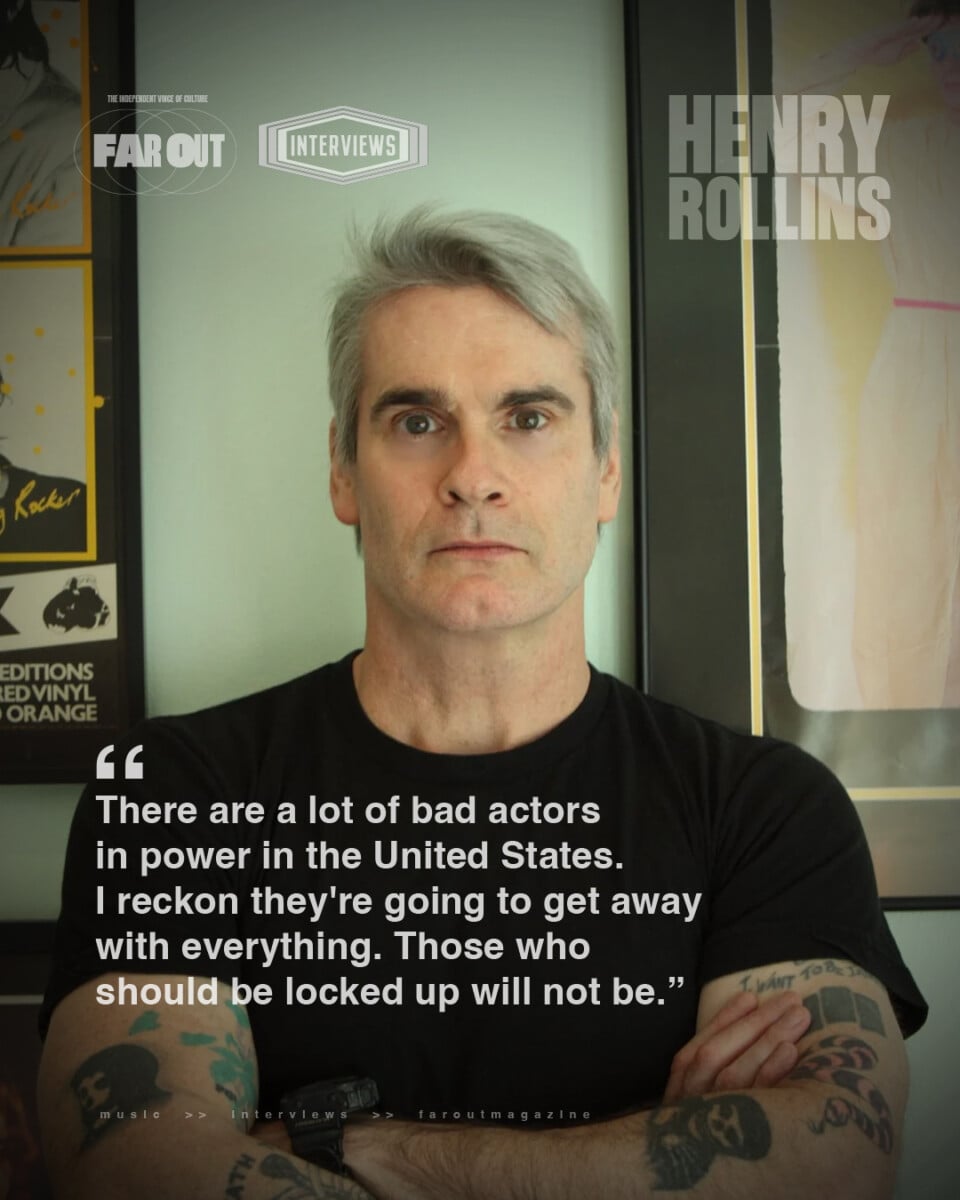
Nevertheless, Rollins did give his two cents on the current political landscape in the States. “There are a lot of bad actors in power in the United States,” he said. “I reckon they’re going to get away with everything. Those who should be locked up will not be. In the United States, the upper-level criminals perpetrate with impunity and die rich. Dick Cheney is the example I often use.”
In an effort to curb that nightmarish state of affairs, though, Rollins did prescribe one anti-authority record that the US should hear at current, in the form of Public Enemy’s 1988 masterpiece It Takes A Nation Of Millions To Hold Us Back.
That particular record, much like the majority of Rollins’ own discography, doesn’t appear to have aged a day since its first release. After all, that staunch anti-authority stance and utter devotion to the material – whether it’s in A Nation of Millions, Damaged, Hot Animal Machine, or whatever else – has a pretty timeless quality to it.
Nearly half a century on from when he first joined Black Flag, Henry Rollins remains a legend of the punk realm but, more than that, he stands as a beacon of inspiration for those willing to devote themselves to an artistic cause, whether that’s in anti-authority punk rock, or the spoken word shows of more recent times – and he isn’t quite as intimidating as some of those projects might suggest.

Never Miss A Beat
The Far Out Punk Newsletter
All the latest Punk content from the independent voice of culture.
Straight to your inbox.