


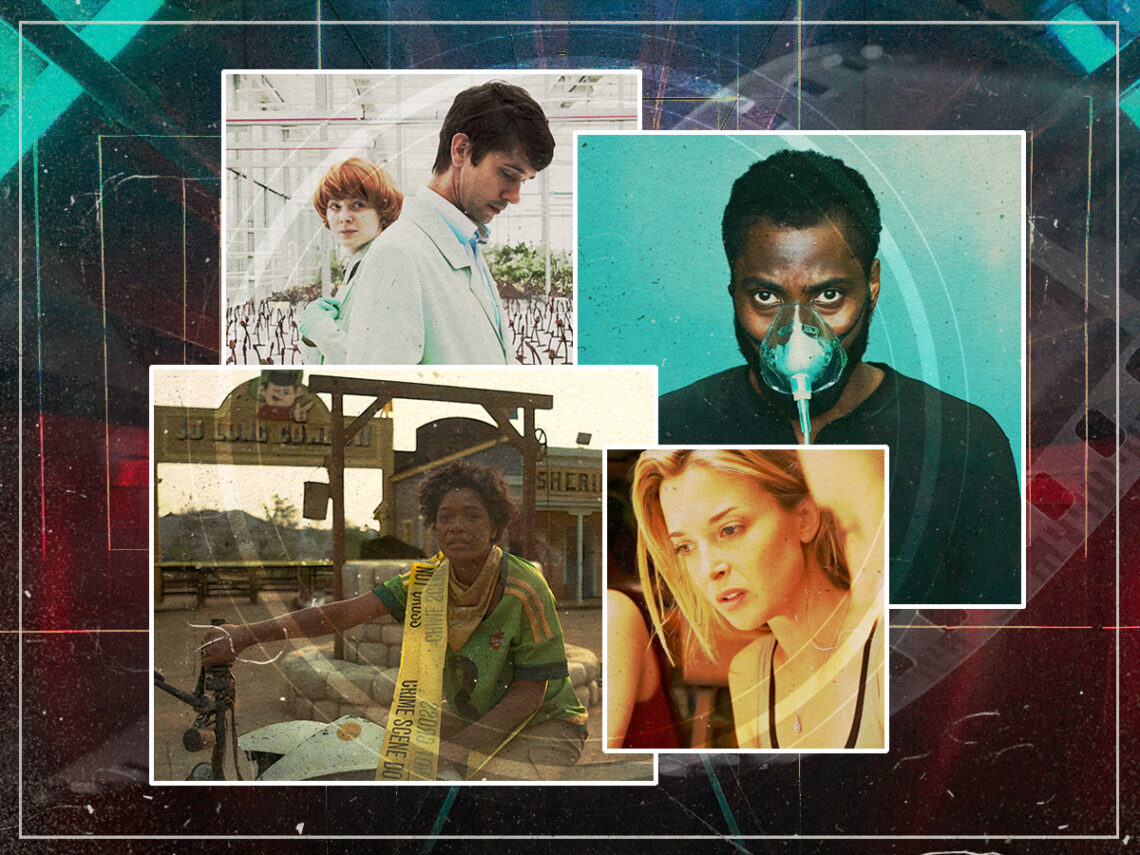
The 10 most underrated 21st-century sci-fi movies

Arguably, science fiction is the biggest genre in contemporary cinema. In fact, when you consider the 20 biggest financial hits of the past two decades, over half of the movies reside in the sci-fi genre, including four of the top five, which includes James Cameron’s two Avatar movies, the first in the recent trilogy of Star Wars films and Avengers: Endgame, Marvel’s box office crowning glory.
Yet, many would also admit that few of those aforementioned movies would make it onto a list of the greatest sci-fi flicks of the 21st century, even if they were the most popular. Instead, such movies as Denis Villeneuve’s Arrival, Christopher Nolan’s Interstellar and Jonathan Glazer’s remarkable Under the Skin would make the cut, paving the way for the future of sci-fi to blossom.
But what about all the other great sci-fi flicks that have been forgotten by the industry in the 21st century among the glut of superhero and comic book fodder? This forthcoming list will explore these underrated science fiction movies, detailing independent films that never got the audience, as well as major blockbusters that were unfairly treated during their moment in the spotlight.
Take a look at the list below, which includes movies from such directors as Christopher Nolan, Shane Carruth, Jordan Peele, Takeshi Koike and Jessica Hausner.
10 most underrated sci-fi movies:
10. Little Joe (Jessica Hausner, 2019)
A peculiar delight that went vastly under the radar, Little Joe, directed by Jessica Hausner, never saw much commercial success but proved to be a gem at the Cannes Film Festival, being nominated for the coveted Palme d’Or whilst also taking home the award for ‘Best Actress’, thanks to the work of Emily Beecham. A strange, complex piece of cinema, it’s a wonder why audiences never clicked with its eccentricity.
Likely being a little too detached for many audience members, Little Joe is a nicely constructed, thought-provoking drama that explores paranoia and fictional realities, telling the story of a plant breeder at a strange corporation who takes a plant back home for her son. The plant supposedly makes its owner happier, but unforeseen circumstances turn this reality on its head.
9. Coherence (James Ward Byrkit, 2013)
A fantastic example of a psychedelic low-budget gem, Coherence is a highly effective high-concept feature that takes a mundane event like a dinner party and transforms it into an unimaginably novel occurrence. A group of friends sit down to discuss the petty details of their boring lives, only to find out that a passing comet has somehow fractured their reality into something completely unrecognisable.
A stunning directorial debut by Byrkit, Coherence draws from the rich traditions created by sci-fi landmarks like The Twilight Zone as well as non-genre thrillers in order to maintain that narrative tension. It’s unlike anything you have seen before, almost creating a physical representation of psychological destabilisation as paranoia sets in amongst the group.
8. Tenet (Christopher Nolan, 2020)
At this point in time, the British filmmaker Christopher Nolan is seen as something of a Messiah of modern cinema, but this is not the fault of 2020’s Tenet. Proposed as the movie that would save the industry from the disastrous Covid-19 pandemic, Nolan’s film, all about an elaborate heist that played with different narrative timelines willy-nilly, was complex but far from a disaster despite its dismal commercial response.
Audiences wanted more of Nolan’s familiar challenging science fiction, and this is exactly what they got, with the director genuinely pushing the boundaries of science fiction, providing a film that demonstrated his proficiency in action filmmaking. A visual epic that pushes the filmmaking craft, Tenet may not be Nolan’s magnum opus, but it is a gem worthy of adulation.
7. You Are Here (Daniel Cockburn, 2010)
Undoubtedly one of the most overlooked fantasy sci-fi masterpieces of the 21st century, Daniel Cockburn’s 2010 work You Are Here feels like a profound philosophical thesis turned into a stellar screenplay. Structured as a meta-detective story, the film’s central subject is a woman who finds audiovisual remnants that are seemingly from other universes and grows confident that they have been purposefully left behind.
While that’s the primary narrative strand, You Are Here extends far beyond that by confronting many important philosophical concerns. Ranging from John Searle’s Chinese room thought experiment about AI to examinations of human epistemology through the archival process, Cockburn’s delightfully experimental work will leave you thinking about the world around you in a strikingly original way for a long time.
6. The Vast of Night (Andrew Patterson, 2019)
Whenever the sci-fi genre is brought up, one of the first associations that crosses people’s minds is a huge budget. With mega productions such as James Cameron’s Avatar series and Denis Villeneuve’s Dune, it’s no secret that studios are always willing to pump insane amounts of money into sci-fi spectacles. However, that’s definitely not a requisite to create a compelling genre movie, and The Vast of Night is undeniable proof of that.
Made on a budget of $700,000, the 2019 film borrows inspiration from real-life incidents while constructing an authentic small-town experience. Set in the 1950s, it follows a switchboard operator who picks up strange transmissions on the audio waves. While investigating the anomalies, the mystery unravels to reveal the presence of entities that are simply too incomprehensible to figure out.
5. Redline (Takeshi Koike, 2009)
When movie lovers discuss contemporary anime masterpieces, often the likes of Spirited Away, Ninja Scroll and Tekkonkinkreet are discussed, with far few people bringing focus to Takeshi Koike’s 2009 classic Redline. Telling the story of the biggest race in the galaxy, Redline paints a vivid picture of the eccentric outer cosmos, introducing viewers to a wide array of compelling characters.
Completely bonkers and totally immersive, thanks to a remarkable hand-drawn art style that includes over 100,000 individually-drawn cells and a thumping techno soundtrack, Redline is utterly breathtaking. If you’re looking for something dizzyingly psychedelic to fuel a wild Friday night, Koike’s Redline is the movie for you.
4. Save the Green Planet! (Jang Joon-hwan, 2003)
The sci-fi comedy subgenre doesn’t always get the same kind of attention as its more serious dystopian counterparts, but that doesn’t make it any less interesting. Jang Joon-hwan’s 2003 film Save the Green Planet! is a perfect representation of those sensibilities, telling the story of a young man who embarks on a strange journey after convincing himself that aliens are going to launch an attack on Earth.
Inspired by a conspiracy theory which claimed that Leonardo DiCaprio was actually an alien, Save the Green Planet! examines the thin line between recognising the problems of a collapsing world and succumbing to the paranoia of engineered psyops designed to distract from the problem at hand. It’s a hilarious but simultaneously unsettling look at the absurdity of our civilisation’s last days.
3. Hard to Be a God (Aleksei German, 2013)
Contemporary science fiction is too often linked to wild CGI visual effects and the high-flying displays of action movies, but the very best of the genre is often small, subdued and ponderous. Whilst Aleksei German’s 2013 movie Hard to Be a God could hardly be called small, it is certainly an artistic and reflective piece of cinema that leads the audience on a trip without a return ticket.
Created over the course of seven years, the film, based on the novel of the same name by Arkady and Boris Strugatsky, is a challenging piece of cinema that tells the story of a team of scientists who are tasked with gathering information on a distant earth-like planet whose progress hasn’t moved past the rudimentary Middle Ages. A wondrous, baffling piece of cinema, Hard to Be a God is a sci-fi trip like no other.
2. Upstream Colour (Shane Carruth, 2013)
One of the major problems with modern sci-fi is that the visual language shared by some of the most prominent works feels thoroughly uninspired. That’s not the case at all when it comes to Shane Carruth’s ingenious 2013 indie opus, Upstream Colour. It’s a film that feels organically alive, just like the peculiar biological processes that form the basis of its remarkable journey into the unknown.
Viewed through the context of a parasite’s life cycle, Carruth’s movie studies the complex relationship of a man and a woman whose psychological constitutions are deeply impacted by the organism’s presence. Incorporating interesting symbolism and allegorical trajectories that require a lot of time to be properly processed, Upstream Colour isn’t just one of the greatest sci-fi movies of the century but also one of the most unique love stories in recent memory.
1. Nope (Jordan Peele, 2022)
When the independent horror movie Get Out was released in 2017 to the tune of $255million at the box office and an Oscar-winning screenplay, people began to sit up and take notice of the comedian-turned-filmmaker Jordan Peele. Yet, no film of his has been able to match the success of Get Out, despite the fact that the 2022 alien flick Nope was actually far better.
Starring Daniel Kaluuya and Keke Palmer, Peele’s movie tells the story of a family business which is put into crisis upon the emergence of a strange moving cloud that threatens life in the community. A deconstruction of cinema that explores the thrill of the cinematic spectacle and the dogged, almost misinformed efforts of filmmakers to capture that ‘new big thing’ no matter what, Nope is a smart, funny and utterly terrifying piece of sci-fi cinema.
