Mick Jagger explains the huge difference between his competitive rivalries with David Bowie and John Lennon
Two very different relationships.


Under the Starman’s strained belt are 50 years of relentless creative metamorphosis and groundbreaking music. After a skyward launch in the early 1970s, David Bowie created a legacy that has gone largely unparalleled in popular music. Long before his experimental spell in Berlin with creative mastermind Brian Eno, or his humbly-admitted ‘Phil Collins era’ of the mid-1980s, Bowie was just a young whippersnapper, then-named David Jones, circling the streets of London that teemed with the creative energy the ’60s had to offer.
Throughout the 1960s, Bowie would make regular earnest attempts toward public recognition beginning with small function gigs with his first band, the Konrads, whom he quickly moved on from to form the King Bees after feeling increasingly solitary in his ambitions and wary of his bandmates’ comparatively limited aspirations. After leaving school in his late teens, a wide-eyed Bowie told his parents of his aspirations to become a world-renowned rockstar.
Bowie’s subsequent rise to stardom wasn’t as hasty as most of the other prominent acts emerging from the ’60s. He was limited by the nature of his early material, which was somewhat detached from the preconceived boundaries of pop music with its tongue-in-cheek nursery rhyme sound. Alas, Bowie’s 1967 debut album was a critical disappointment and so marked the beginning of a difficult few years for the frustrated artist.
Bowie’s first commercial breakthrough came with the release of ‘Space Oddity’, an album that still wasn’t critically acclaimed. Still, its eponymous lead single was timed perfectly with the US moon landings with its release in 1969 and became his first major international hit. This saw Bowie’s name begin to circulate ahead of his next, even stronger album, ‘The Man Who Sold the World’. However, it wasn’t until the release of his fourth record, ‘Hunky Dory’, in 1971, that Bowie truly caught his flight to the top.
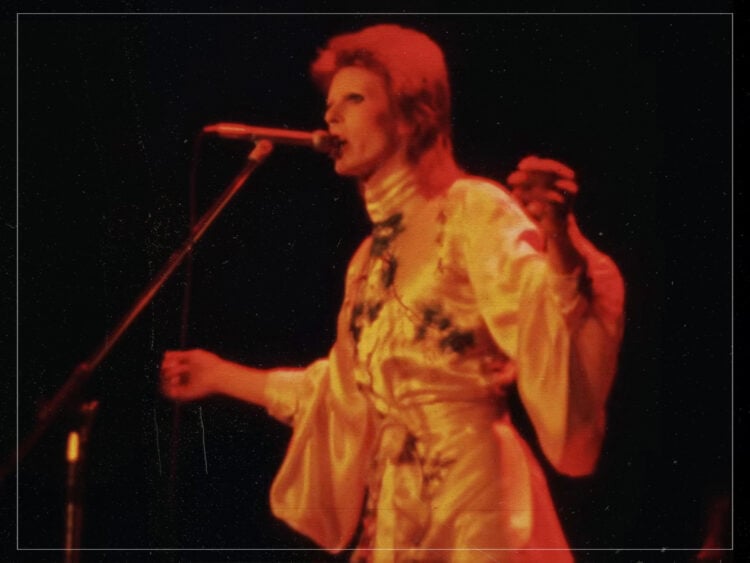
Leaving very little time to reflect on the success of ‘Hunky Dory’, Bowie launched into ‘Ziggy Stardust and the Spiders from Mars’, the 1972 album that would change his career, and music in general, forever. At around this time, Bowie had befriended American stars Lou Reed and Iggy Pop and flexed his production muscles on Reed’s second solo album, ‘Transformer’, and The Stooges’ ‘Raw Power’.
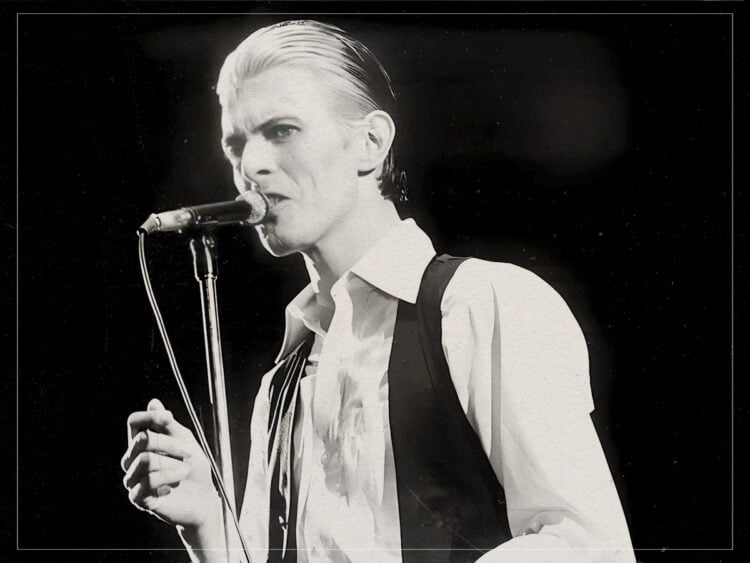
Through the 1970s, Bowie shifted between his famous personas: Ziggy Stardust, Aladdin Sane, Halloween Jack, and The Thin White Duke. This stretch saw the Starman through a series of seminal albums of broad stylistic scope in the run-up to his years in Berlin with Iggy Pop and Brian Eno in the late 1970s.
By the 1980s, Bowie had done most of his defining work before he set the stage for the synth-pop era with ‘Scary Monsters and Super Creeps’ and showed his eye for jaunty chart toppers in 1983’s ‘Let’s Dance’.
Sadly, we had to wave goodbye to Bowie in January 2016, as it was announced that he had lost a battle with cancer aged 69. The world was left bereft, but with one final album, ‘Blackstar’, which was released just two days before his death. The album marked a poignant return to form after a string of uneven releases.
In ‘Lazarus’, the album’s lead single, Bowie sings: “Look up here, I’m in heaven/I’ve got scars that can’t be seen/I’ve got drama, can’t be stolen/Everybody knows me now”. The music video shows Bowie lying on his deathbed with bandages over his eyes as he bids farewell to his fans, introducing one final persona, The Blind Prophet.
Two very different relationships.

“Played a big part in our future successes…”
The best kind of friend to have.
The best and the worst.
The start of the genius work.
“It was a by-product of my life.”