


Tin Machine: The best live band David Bowie assembled was also his most hated group

There’s no point in beating about the bush here: David Bowie knew Tin Machine was shit. But the thing was, he absolutely loved it.
Bearing in mind, this had come directly off the back of his most pop-based and commercialised era of the 1980s. Let’s Dance had represented the peak of his life, and as such, he was somewhat forced into a juggernaut of fitting into the chart mould with albums like Tonight and Never Let Me Down, which he later loathed.
Subsequently, although he didn’t quite throw the toys out the pram, when that period came to an end, it was time for Bowie to take back the reins as his weirdest, most unorthodox self. That was how Tin Machine was born, and you could either like it or leave it. Not many people liked it, as it turned out, but that suited him absolutely fine.
You see, as much as many fans hated the sight of Bowie morphing into the background of the band, for all he was meant to be the effervescent Starman, this actually proved something to him that no one else would realise. Those who walked out the door were never true followers in the first place. Those who stayed and enjoyed the music for what it was were the real diehards.
“I’m telling you, the audiences for Tin Machine had the greatest nights,” he recalled with affection in a 2003 interview. “When it was bad, it sucked a big one, but that’s what that band was all about.” That might sound counterintuitive to everything a rock star should stand for, but this was sorting the weak from the chaff, from the industry bigwigs right down to the humble audience member.
For Bowie, it was never about chasing the chart highs he had experienced the decade before. “It was a terrific experience and really made me feel good, because now I felt I could make decisions about what I wanted to do over the coming years,” he explained. “There was nowhere to hide with that band. We had everything against us – and it was good!”
Indeed, as much as it seemed like a car crash to the outside world, Tin Machine actually gave him a new lease of life, with which he could burrow even further down the rabbit hole of his own sonic weirdness. The rest of the ‘90s heralded his electronic era, something that many couldn’t understand, but that Bowie himself served as a signal that he was right where he was meant to be.


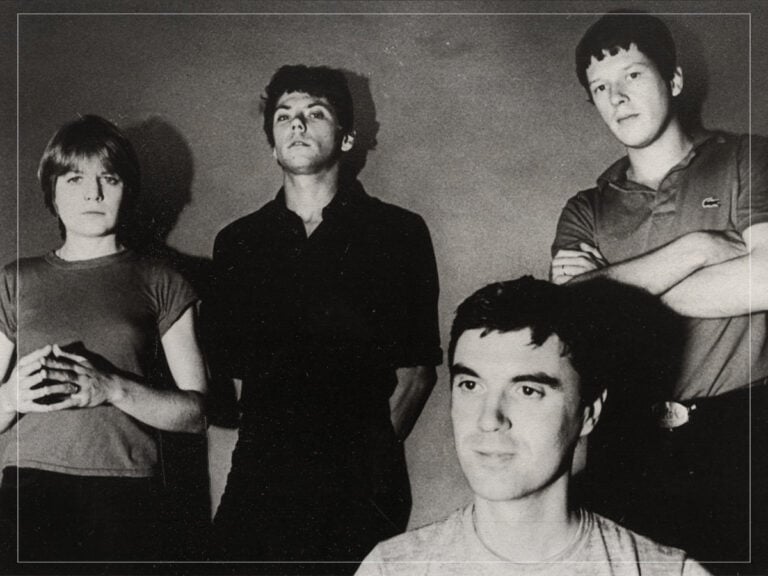
It’s not like the man was an entirely misunderstood artist in the way that certain other tortured geniuses may be made out to be. At the end of the day, he was one of the most famous rock stars to ever grace the world, and nothing could spare him the scrutinous glare of the limelight. His decision, as a result, was to be rebellious in the face of it.
Tin Machine came across as very much the test of how far he could stretch things before people reached their limit. But for every mere mortal who turned their back, the ones who stayed on proved that they could take the rough with the smooth and appreciate anything Bowie would throw at them. The weirder the better, because really, all life’s outcasts were there.

Never Miss A Tale
The Far Out Classic Rock Newsletter
All the latest Classic Rock content from the independent voice of culture.
Straight to your inbox.