


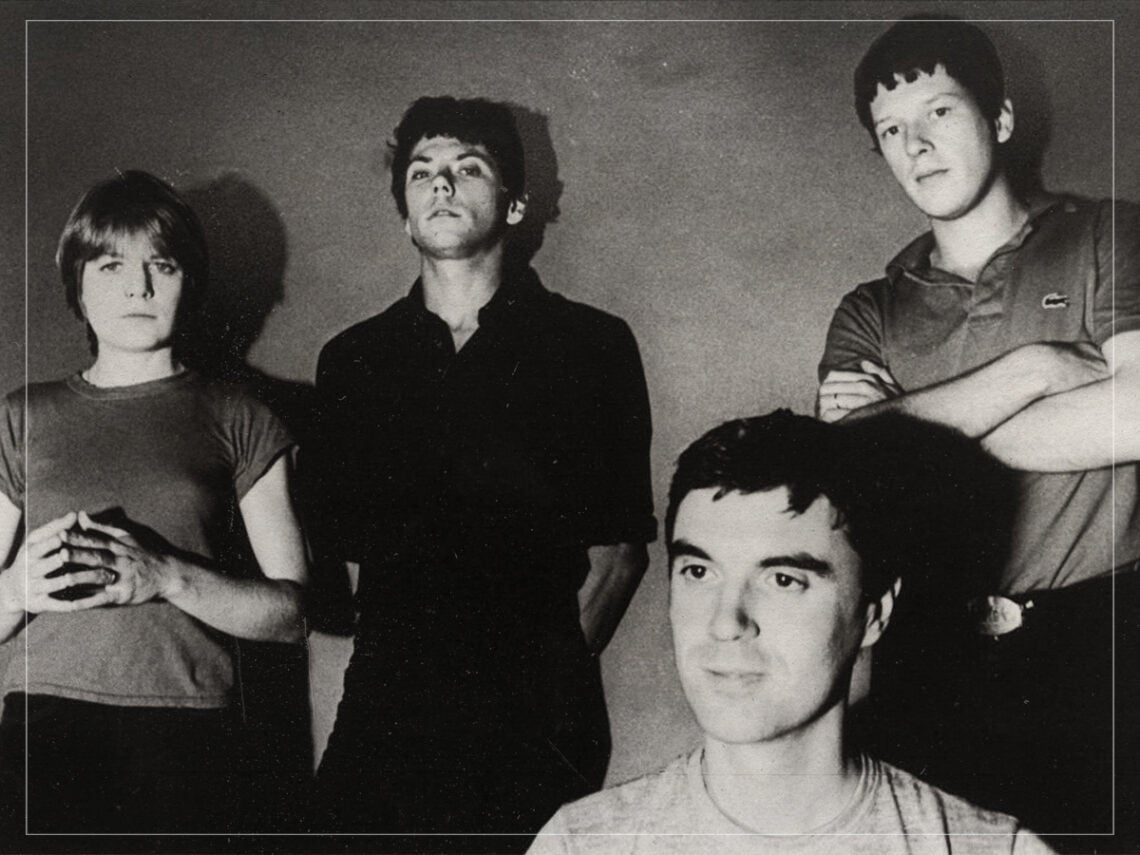
The 1979 song that unlocked Talking Heads’ second chapter: “A further exploration”

Even from their earliest singles, it was obvious that Talking Heads weren’t your typical band, and people were rightfully tipping them to have a significant impact on the trajectory of rock music.
There was a groove within their work twinned with an awkward jankiness that didn’t seem to have been present anywhere else in contemporary music, at least when it came to what was familiar to Western audiences. On top of this, frontman David Byrne adopted a bizarre approach to lyricism that deliberately avoided typical subject matter, and while he was evidently good at writing love songs, he much preferred to zoom in on more abstract themes, inanimate objects and the minutiae of everyday life.
‘Love → Building on Fire’ and ‘Psycho Killer’ were tremendous early indicators of Byrne’s genius, and their second album, More Songs About Buildings and Food, would only amplify their quirks, even if it didn’t mark a significant step forward from what they’d done on their debut album.
However, because it wasn’t abundantly clear at this point where they’d end up going in the future, nobody knew whether they’d quietly continue peddling the same brand of inventive rock songs or if they’d push the boat out further to create something more confounding. They were already hard to predict, and frankly, their third album, Fear of Music, was not something that many could have foreseen coming.
With Brian Eno having been at the helm for the production of their second album and invited back to do the same for its follow-up, it was clear that they wanted to use his expertise to push on and create more expansive and elaborate works like Eno had already demonstrated through his work as a solo artist, with Roxy Music, and as producer for David Bowie on his Berlin Trilogy. Throughout the creative process, the band and Eno were dining out on a healthy diet of music from all corners of the world, with Byrne and Eno developing a particular fascination with the Afrobeat stylings of Fela Kuti.
This worldly approach that became more apparent on Fear of Music is something that keyboard and guitar player Jerry Harrison believed was the greatest sign of the band having moved things forward as a unit, and he proclaimed during a 1997 interview with Liquid Audio that the album’s opening track, ‘I Zimbra’, was the greatest turning point for the band.
Going as far as to call it his favourite song he ever made with the group, he said that the groove-laden track with all of its overlapping rhythms and indecipherable Dadaist chanting formed the basis of where they were heading as a group, and unofficially marked the start of their second chapter as a group.

“We knew that our next album would be a further exploration of what we had begun with ‘I Zimbra’,” Harrison proclaimed, noting that their 1980 album, Remain in Light, couldn’t have existed without them having created the blueprint a year prior on Fear of Music.
Arguably their most challenging song to that point, and a surefire indication that they didn’t care so much about being accessible as they did simply creating boundary-pushing music that borrowed from various genres and sounded like little that had come before it, there’s an incredible argument to be made that ‘I Zimbra’ is indeed their finest three minutes. It might be completely unintelligible to most listeners, and it might sound alien to others, but by god it’s hard to deny as a masterpiece.
