


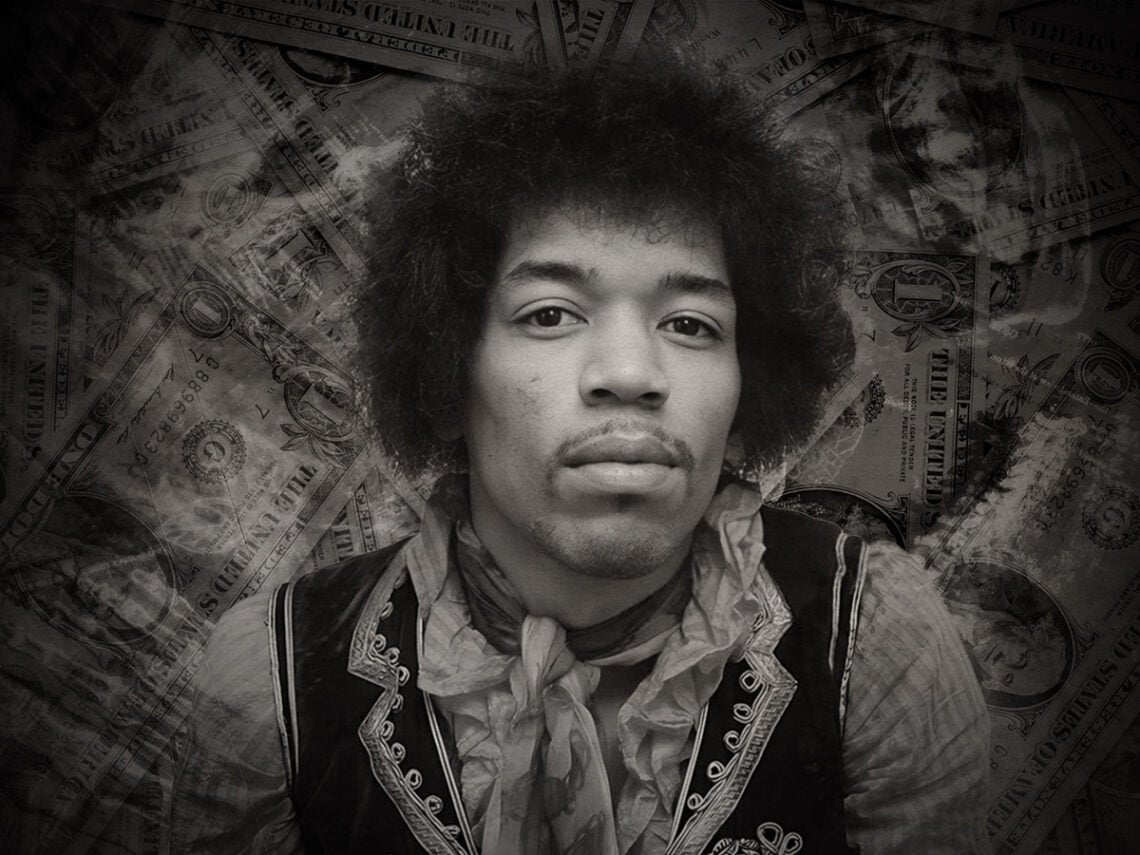
“Sell him”: the disturbing 2002 scheme involving Jimi Hendrix’s corpse

Up until 2002, any fan wishing to pay their respects to the late Jimi Hendrix may have been surprised by the modest and unassuming headstone marking his place of rest.
Passing away in London in 1970, Hendrix was flown back to his Seattle home on September 29th, where his body was interred at Renton’s Greenwood Cemetery in a family plot near his mother’s grave. A simple flat-to-the-ground granite headstone displaying “forever in our hearts”, his name and 1942–1970 dates, the only marker of his guitar virtuosity and rock-and-roll stature was the etching of his iconic Fender Stratocaster in the upper corner.
Such a humble resting place was never his father’s intention, however. Reportedly, it took all of Al Hendrix’s finances to pay for his son’s transfer across the Atlantic, unable to afford any extra memorial flair for the countercultural figurehead. Jump to 1995, and Al managed to gain control of his son’s music with the help of billionaire and Hendrix super-fan Paul Allen, and was finally able to realise the grand resting place befitting his son’s enduring legacy with his newfound funds.
No expenses were spared. Designed by architect Mark Barthelemy, Hendrix’s grave was given the extravagant upgrade of a granite-capped gazebo supported by three pillars, featuring laser-etched portraits of Hendrix and his lyrics in handwriting surrounding a central sculpture of his immortal guitar.
While some may have felt the original grave possessed a humble pertinence in Hendrix’s honour, the real controversy arose from the fact that the rock star’s body was to be exhumed and relocated to the new flashy memorial.
The Greenwood Cemetery management embraced the move. A grander site meant more visitors, as well as the surrounding ground of the original grave, avoiding all the trampling and erosion of numerous fans and well-wishers. The news of Hendrix’s relocation couldn’t have gone down any worse with those who knew him, however.
“It’s like Burke and Hare,” old Experience bassist Noel Redding said scathingly at the time. “This is the most awful thing I’ve ever heard. Why don’t they just leave the man alone?”

His disgust for the whole affair was also coloured by the commercial aspects of the grave upgrade. In 1999, the Hendrix estate was offering fan name engravings on the edge of the tomb for every $25 donated, or for a hefty $250, a CD-shaped slice of granite straight from the block used to make the mausoleum. Redding urged fans to stay well away from the scheme.
Hendrix’s girlfriend at the time of his death, Kathy Etchingham, was equally as incredulous, saying, “If the family really cared for him, they would leave him alone. The next thing they’ll be putting his remains in a glass case, and taking him out on tour again.”
Yet, despite protestations, Hendrix’s body was secretly transferred on November 26th, 2002, on the eve of what would have been his 60th birthday. Al and Hendrix’s stepmother, Ayako, would join the rock star in the central vault, but the siblings would be embroiled in a bitter legal dispute over their brother’s legacy. According to Hendrix’s younger brother, Leon, he was never informed of the transfer during the mausoleum preparations and had unwittingly visited an empty tomb when passing by to pay his respects.
