


“Loud, raucous sex”: The 1966 Bob Dylan song that soundtracked the most harrowing night of Yoko Ono’s life

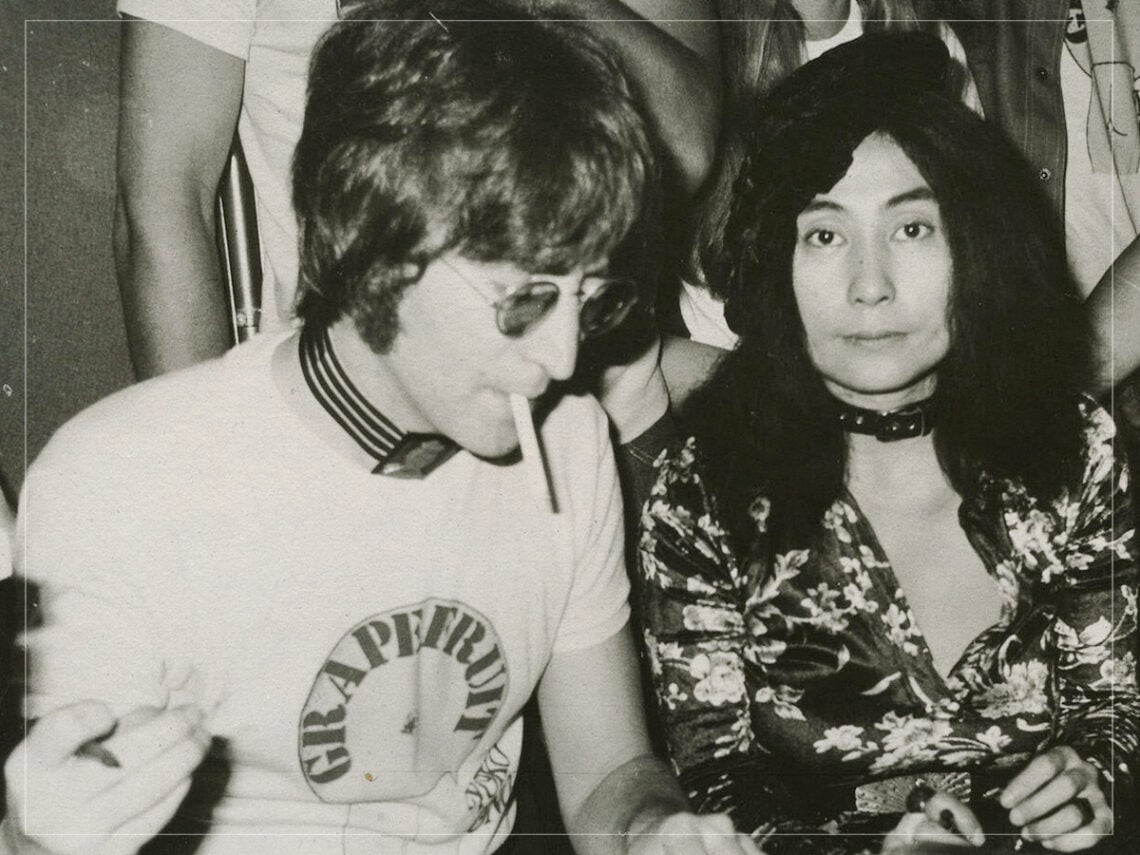
John Lennon and Yoko Ono‘s relationship is not measurable by normal standards.
They met at a point when he was the most famous person in the world, or perhaps more accurately, the most famous person in history… and he was little more than a boy. They quickly fell in love, but everything unfurled in the public eye, casting their existence into an unprecedented realm of scrutiny and scandal.
Nothing was straightforward for the pair. Even Lennon’s widely documented Lost Weekend days, when he fled the relationship with his assistant, were far from a typical tryst. If you ask May Pang, she’ll tell you there was always tenderness at the heart of their galavanting days, right from the beginning.
“Listen May, John and I are not getting along. We’ve been arguing. We’re growing apart,” her book, Loving John, startlingly opens, documenting a discussion between the young PA and Yoko Ono. Contrary to all conventional imaginings, according to Pang, the whole thing was largely started, orchestrated, and terminated by the Japanese artist.
The cracks had begun to show in a damning public display a few months prior to this supposed chat in 1972. Lennon and Yoko were at a party at Jerry Rubin’s (the American anti-war activist) apartment in New York. The premise was an election watch-along, but alcohol soon began to take over.

This became particularly apparent when it became clear that Richard Nixon – a candidate that Lennon loathed – was about to win. The intoxication escalated from there. In fairness, Lennon was right to be wary. Unsealed documents years later would prove that Nixon was actively plotting to have the former Beatle deported during his tenure on a drummed-up charge.
However, this can serve as little excuse for his reprehensible behaviour that night, even if his relationship was decidedly unique and stresses were abounding. While the party was still in full swing and his wife was chatting to the fellow guests, a drunken Lennon slunk away from the crowd to a bedroom with another party guest, where they began loudly having sex.

The couple’s friend, Elliot Mintz (Lennon and Yoko’s publicist at the time), was also at the party and he recalled in his memoir, We All Shine On: John, Yoko, and Me, the crushing events of that sad night. Mintz had witnessed Lennon rather unsubtly abscond with the unnamed party guest. But he didn’t expect what followed to be quite so bold.
”They proceeded to have such loud, raucous sex that everyone sitting around the TV in Jerry Rubin’s living room – including Yoko – could clearly hear them going at it,” Mintz unfortunately recalled.
It was loud, unmistakable and shameful. Worse still, it was inescapable. Lennon had chosen the room where all the guest’s coats were being stored. So, everyone was trapped in the living room, listening. “Throughout it all, Yoko sat on the sofa, in stunned, mortified silence, as other guests began awkwardly getting up to leave,” Mintz added. They soon realised they couldn’t, because their keys were being held hostage at the scene of the toe-curling crime.
Their only hope was to drown it out. What song do you turn to in such a moment? What track could possibly mask the unspooling, awkward shame? And be long enough to guarantee that it masked it in its entirety? Well, one guest, clutching at straws, decided to play Bob Dylan’s classic ‘Sad Eyed Lady of the Lowlands’.
It certainly has an 11-minute runtime in its favour, but the 1966 classic was perhaps a rather solemn song for the situation. Still, it was a gesture that brought a small semblance of comfort to Yoko Ono. Even as Dylan sang “in the missionary times” and “your ghostlike soul” in an uncomfortable excursion through love.
There was also a peculiar irony in the air as these words rang out over a gruesome mire of groans. ‘Sad Eyed Lady of the Lowlands’ is Dylan’s sprawling love letter to his then-wife, Sara, that sprawls out as an 11-minute act of devotion so all-consuming that it occupied an entire side of Blonde on Blonde. As Lennon conducted his drunken act of self-sabotage behind a closed door, Dylan’s voice filled the apartment with a reminder of the very thing he was squandering. This wasn’t lost on Yoko.
She would later tell Mintz that she could indeed forgive Lennon for his behaviour but that she was not sure she could forget the harrowing incident that cast a dark shadow over their future. Soon after, the pair would take a break from each other, and he would set off on his Lost Weekend.
When he returned, and they rekindled their relationship against the odds, he commented, “It’s like – and this is no disrespect to anybody else I was having relationships with – but I feel like I was running around with me head off, and now I’ve got me head back on.”
All it took to curtail his affair was a phone call from Yoko Ono saying, ‘Come back home’. They marked the new chapter of their marriage with a small ceremony, and when Lennon did pick up songwriting once more, he would write his own reams of devotion.
“It’s like I went out to get a coffee or a newspaper somewhere and it took a year – like Sinbad. I went on a boat and went around the world and had a mad trip, which I’m glad is over,” he told NME. “Yoko and I have known each other for nine years, which is a long friendship on any level. It was a long year, but it’s been a nine-year relationship and a seven-year marriage. Maybe it was the ‘seven-year itch’. And apart from the pain we caused each other it probably helped us.”
He concluded: “We knew we were getting back together. It was just a matter of when. We knew. Everybody else might not have, but we did.”
Well, there was certainly a room full of people in a New York apartment who might have doubted that. Tales of infidelity are hardly uncommon in rock history, and those gathered were far from prudes, but what made this episode so brutal was its public nature. Lennon wasn’t merely betraying Ono with a series of excruciating grunts, he was doing so within earshot, forcing her to sit through a humiliation from which there was no dignified escape.
If there was any consolation to be found in the troublesome episode, it is that neither Lennon nor Ono allowed it to define them. The years that followed would prove turbulent, but they would also reaffirm the bond that had brought them together in the first place. As they sang on Double Fantasy, “I believe in Yoko and me. And that’s reality.”

Never Miss A Tale
The Far Out Bob Dylan Newsletter
All the latest stories about Bob Dylan from the independent voice of culture.
Straight to your inbox.