


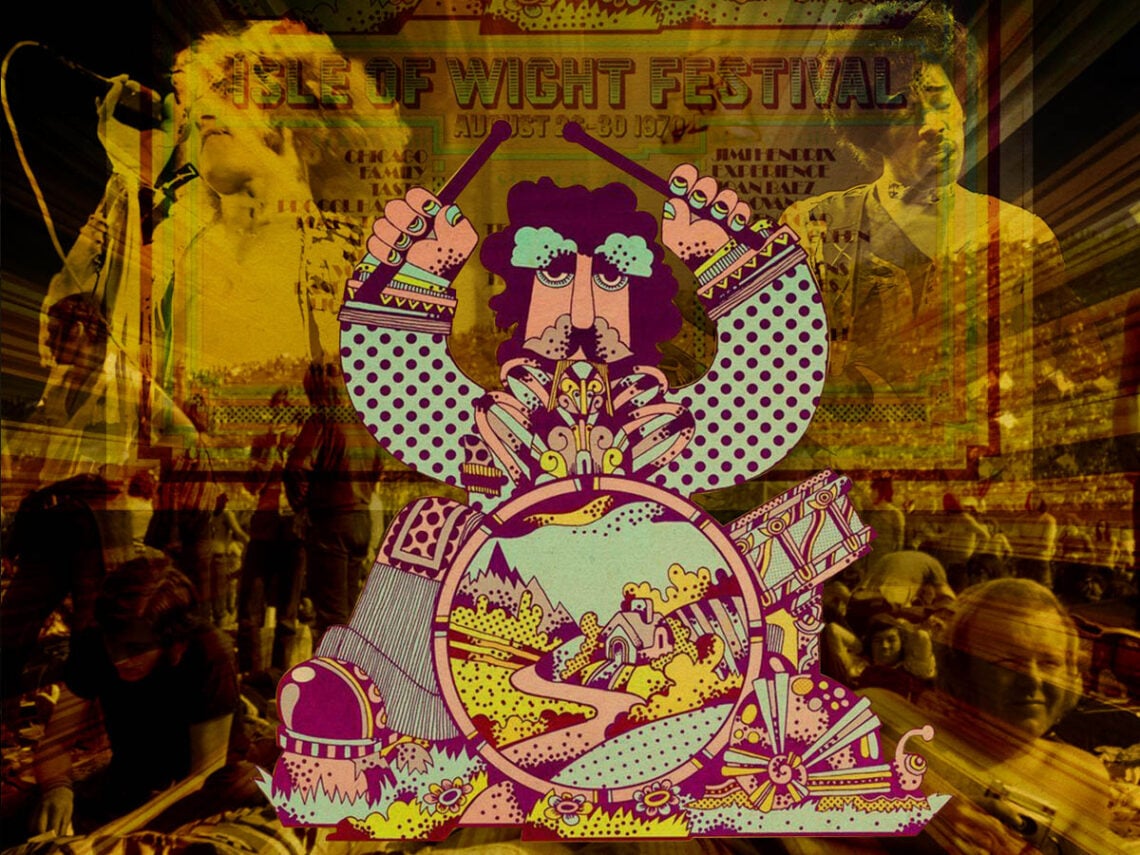
Riots, curry powder, and priests at Isle of Wight Festival, 1970: The British Woodstock

“We put this festival on, you bastards, with a lotta love! We worked for one year for you pigs! And you wanna break our walls down? And you wanna destroy it? Well, you go to hell,” came the outcry from Rikki Farr, the master of ceremonies for the Isle of Wight Festival in 1970.
It was directed at the sea of hundreds of thousands of people who flooded the island, after days of chaos and unrest (later immortalised in the documentary Message to Love and an infamous Oasis tune). What had led the festival to descend from a celebration of music and community to utter carnage is a story of drug-induced madness, stubborn greed and other series of unfortunate events.
While the full story behind Farr’s scathing “pig“ decree cannot be determined, it seemed that the unstable nature of those few days in August had reached its boiling point when she bellowed the hostile remark about “hell“.
The inaugural Isle of Wight in 1968 saw Jefferson Airplane headline, with T Rex, Fairport Convention and other rock bands of the day. The following year boasted the likes of Bob Dylan, The Band, The Who and more on the lineup. For its 1970 iteration of the five-day festival, the roster was an enviable one: Jimi Hendrix, The Who, Joan Baez, Joni Mitchell, Miles Davis, Sly and the Family Stone, Leonard Cohen, The Doors and Jethro Tull were some of the many recognisable names, a rival to the star-studded events of Woodstock.
The festival’s organisers began the celebrations with an ‘official festival disc’, a song called ‘Let The World Wash In’ by I Luv Wight, a sometimes-moniker of the English psychedelic rock band Kaleidoscope (they would later open the festival, billed as Fairfield Parlour). “Could we all be part of something else, or something part of us?” they sang, “You know we stand within the circle and together we shall be”.
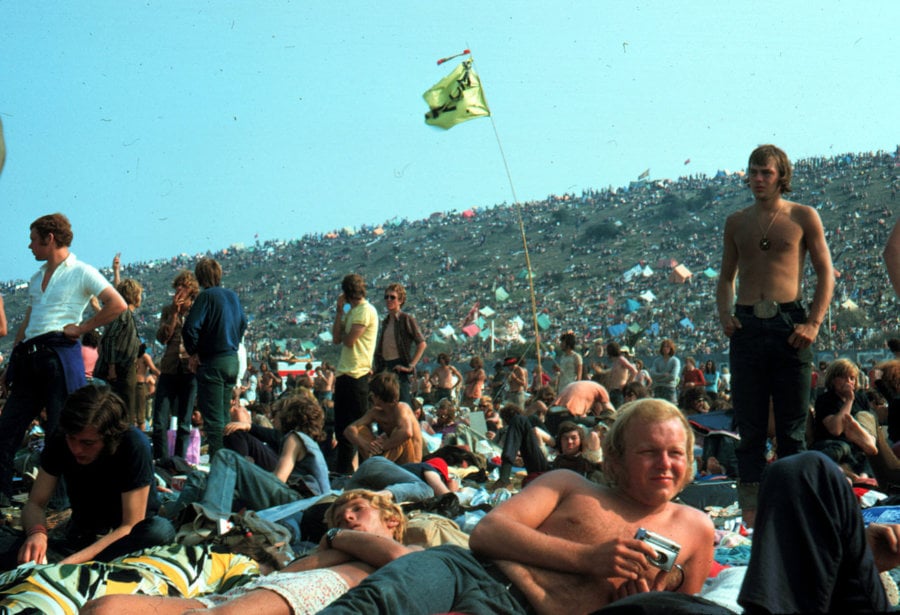
As the droves of fans arrived for the first night on August 26th, controversy followed nearly as quickly. Not even an incredible lineup such as this one could ease the expectations of fans, as Freddie Stone of Sly and the Family Stone was hit with a beer can, while Kris Kristofferson was booed offstage. Joni Mitchell’s set was interrupted by a man named Yogi Joe, whose ramblings about the fans watching from a nearby hill were met with Mitchell’s remark, “I think that you’re acting like tourists, man. Give us some respect“.
Amidst the onstage chaos, rumours began to swirl of drugs circulating the festival grounds, as the Daily Mirror reported on August 28th: “The police thought that the pop fans had cannabis. The pop fans themselves thought that they had cannabis. But when the ‘drug’ was analysed it was found to be…curry powder.” This led to investigations across the festival of a potential “black market ring passing off [curry] powder as cannabis”, and simultaneously, substances that were sold as ‘pep pills’ were exposed to be the artificial sweetener ‘saccharin’.
Chief Inspector George Cutcliffe explained to the media, on behalf of Hampshire’s then-Chief Constable, that he was “very worried about young people who may be inveigled by older people into trying and buying drugs”. He did clarify, however, that “no action would be taken against anyone aged under 17 who had drugs and handed them over to the police”.
Continuing with the parallels to its Stateside companion in Woodstock, Isle of Wight showed another unfortunate instance of drug use infiltrating the supposed ‘sentiment’ behind the festival, that of a communal-driven gathering being turned into a site of illegal activity and subsequent danger. In both national and regional coverage, reports of violence overtook the music event; the Daily Mirror, for instance, published a headline ‘Riot At The Big Pop Show’, on August 28th, 1970, reporting that a “mob of French fans tried to ‘gatecrash’ [the] show”, resulting in a “big riot”.
Further reports talked of barriers being crashed and torn down, with the Coventry Evening Express the same day, alleging that fans rushed the festival grounds but were held back by security, while a “snatch squad” of ten guards with dogs awaited any further trouble. As warnings of “petty thieves” circulated, police advised festival-goers “to tighten up tent security and try [to] form their own vigilante group,” as printed in the Daily Mirror.
Of the size that the audience had grown to, Message to Love‘s director Murray Lerner explained, “That’s why the crowd became an entity in itself. We felt a living presence that we had to deal with all the time. In a conversation with me, Joni Mitchell once called it ‘The Beast.’ There was a feeling that if it turned on you, that would be it.”
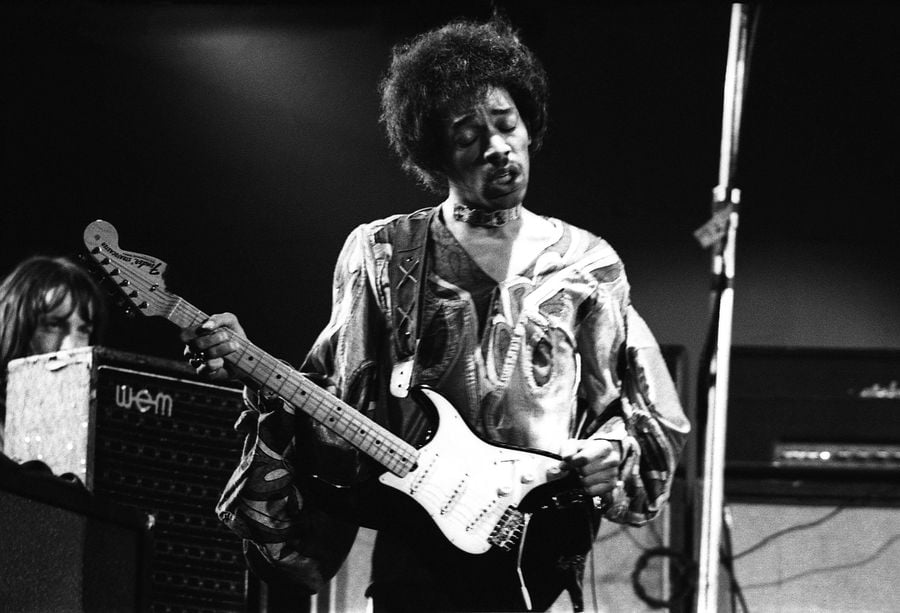
As the Isle of Wight reached its closing days, the chaos had come to a point where its organisers considered cancelling the event altogether, even in light of its headliners, Joan Baez and Jimi Hendrix, being scheduled to take its stage. Such threats circled because of fans allegedly attempting to scale a spotlight tower, aiming for a better view of the stage, while others were attempting to avoid paying the festival’s ticket price (£3) by watching from the nearby spot known as ‘Devastation Hill’, which looked over the arena.
Their performances would continue, with Hendrix giving one of his best ever for his two in the morning festival slot.
By the final day, a total of 120 festival attendees, as reported by the Sunday Mirror, had been arrested for drug possession, while massive queues of people wrapped around the festival’s on-site hospital, citing drug-induced sickness or general cold symptoms. Women who had had their birth control pills stolen on-site went to the medics seeking help and, per the British Newspaper Archive, were given a general statement of, “Of course, we cannot supply their needs, we are not here to sort out their sex lives”.
In tandem, riots transpired, with the Daily Mirror reporting that “rioting gangs looted souvenir shops”, while multiple press sources blamed foreign festival attendees for inciting the chaos, hinting at political motivations. Allegedly, flyers were handed out to festival-goers that promoted the looting that transpired (the Toronto Globe and Mail named “Hell’s Angels and French anarchists” as the culprits), supposedly angered by the cost of the festival and the capitalist sentiment of the event, altogether.
On that note, the issue of finances persisted. The last two days were made free, somewhat out of necessity, after being unable to control the influx of people arriving without pre-sold tickets. Still, the number of attendees was unprecedented, breaking the former record by nearly 200,000 people.
Between the lack of entrance fee payments and the performers’ fees being a bit too high to bear, the publicity director, Peter Harrigan, did not immediately cite concerns over finances, though he did note that an additional £92,000 was needed for the festival to “break even”. To soothe some of the costs, Harrigan mentioned reducing some performers’ fees, and the festival saw its final day ensue.
“I would certainly never organise another festival.”
Ron Foulk
Towards the end of the final day, a priest, Reverend Robert Mowyer, took the stage, appealing to festival-goers to offer their spare change to help the teenagers who had had their wallets stolen and/or their money spent over the five days, which was to be taken to the local church. He was met with retaliation, allegedly heckled and spat at by members of the audience.
It was then that Farr took the stage and delivered his infamous outburst, exclaiming, “I think you’re disgusting. You people haven’t the manners to listen to that good man. I hope you never visit the island again.”
Not all went sour, however, as there was a majority of the audience who minded their own and caused no trouble, happy to simply attend and watch the performances being offered. As the Chief Inspector Cutliffe said, the “vast majority of the thousands of young people here are extremely well-behaved”. It is unfortunate, then, that the five days were outweighed by such negativity that seemed uncontrollable. But, as the Hampshire Chief Constable D Osmond was quoted as stating, the event saw “militant extravagances” that were to be “blamed on the lunatic fringe”.
Isle of Wight’s promoter, Ron Foulk, said in the aftermath of the festival, to the Toronto Globe and Mail, “To think I spent nine months defending these people, saying how peaceful they were, fighting for them. Now look what they’ve done. They’re vandals. Nothing else. I would certainly never organise another festival.”
And indeed, the Isle of Wight would cease after 1970, not returning for another 32 years, until 2002. For a moment, it seemed that the demise of the pop festival was near, with the unruly nature of the festival signalling an end to the culture, entirely. But of course, the traditions continued, with new counterparts in the likes of Glastonbury Festival following in its footsteps.
