


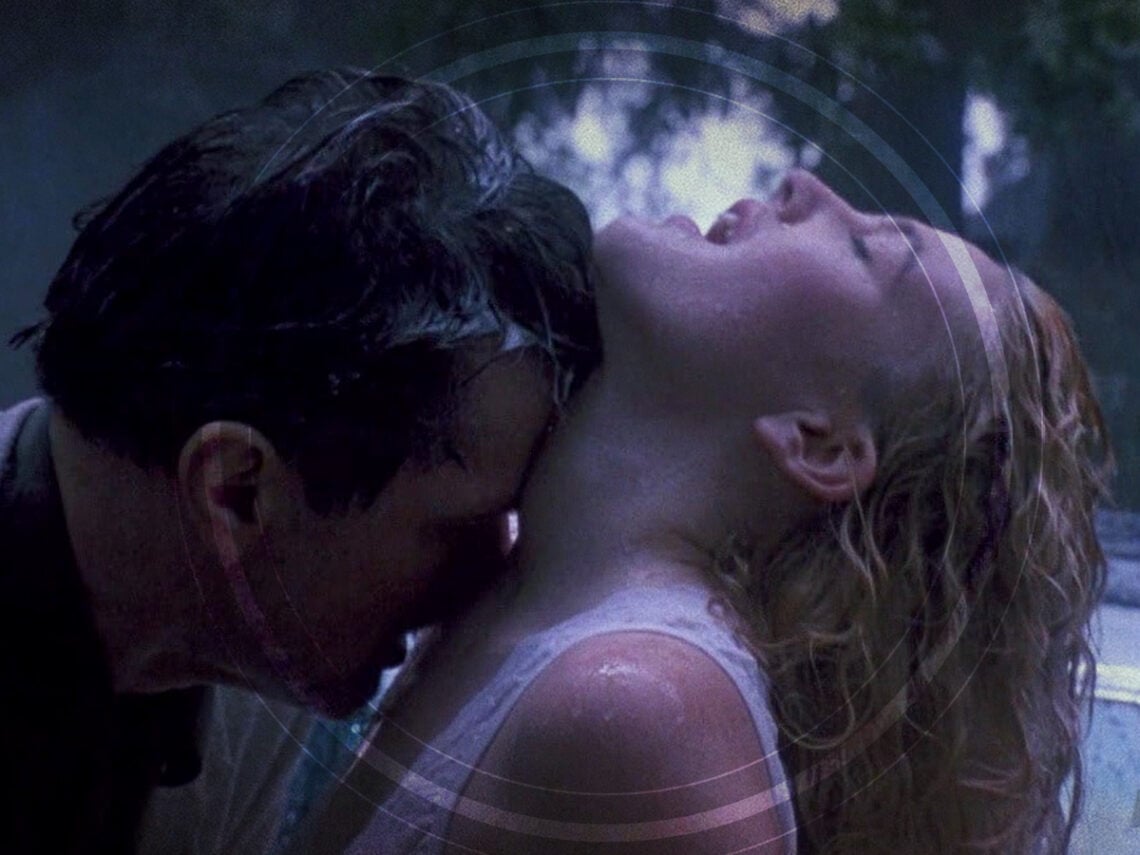
‘Poison Ivy’: how did this Drew Barrymore erotic thriller make it into production?

Hollywood has never been great at protecting its employees, especially not the ones who need looking out for the most.
It has practically become cliché to watch a former child star go off the rails, using their teenage years and early ascent into adulthood as a playground for experimentation, but doing all of these acts of rebellion, of trying to figure out their identity, in the public eye, only makes for more controversy – and often more harm.
Drew Barrymore is one of the ultimate examples, and it’s a miracle that she is so well-adjusted today. But back in the 1980s and ‘90s, Barrymore built quite a reputation for herself, having entered the industry pretty much as soon as she was born. Growing up in a prestigious acting family, Barrymore was always destined for the silver screen, first making her mark on Hollywood when she was just six years old playing Gertie in ET the Extraterrestrial.
It certainly helped that Steven Spielberg was already her godfather, but regardless of her nepotistic connections, the young actor charmed audiences, and she soon appeared in a few Stephen King adaptations, like Firestarter and Cat’s Eye, as well as the Nancy Meyers-penned Irreconcilable Differences. Her career was looking promising, but behind the scenes, Barrymore was partying alongside adults, where she began taking drugs and drinking from the age of nine.
By age 12, Barrymore was addicted to cocaine. She was totally neglected by those who were meant to look out for her, and despite the fact that she was taken to rehab, she kept acting. Unsurprisingly, then, the roles that Barrymore started to take on were ones well beyond her years, like Far From Home, in which the 14-year-old was portrayed in an overtly sexual and deeply uncomfortable manner.
Her next role came in 1992’s Poison Ivy, which featured a 17-year-old Barrymore as the rebellious Ivy, a poor girl who befriends a rich outsider named Sylvie, eventually moving in with her family. Sylvie’s mother is sick, and she often tries to kill herself, while her father, the slightly older Darryl, portrayed by Tom Skerritt, is a pretty detestable figure. Ivy provides excitement in Slyvie’s boring and unhappy life, but all of this soon turns into tragedy when Slyvie starts flirting with Darryl.
The ‘90s had its fair share of age-gap movies, like The Crush from 1993, and the 1997 adaptation of Lolita, but in Poison Ivy, Barrymore’s character is portrayed much more as a ‘bad girl’, a troubled figure who barges into Sylvie’s life like a bull in a china shop, sending all hopes of true friendship crashing to the ground as she tries her luck with Darryl.
Stories like these aren’t inherently bad, of course… Poison Ivy had the potential to explore this twisted dynamic between Darryl and Ivy with nuance, but instead, the film lingers on the most exploitative moments in a way that is difficult to watch. Barrymore was not yet 18, don’t forget, yet in one sequence, Skerritt’s character performs oral sex on her while his wife is passed out unconscious on the bed.
While the scene doesn’t feature any nudity, it’s uncomfortable to watch this knowing that Barrymore was 17 (and Skerritt was 59). There are scenes in which they kiss, and another where we almost see the actor’s fully naked breast. What’s baffling is that Poison Ivy was directed by a woman, Katt Shea; you’d think that a female filmmaker would have more sense than to feature an underage actor so carelessly.
That same year, Barrymore posed nude on the cover of Interview Magazine with her then-fiance, 23-year-old Jamie Walters, and three years later, she posed for Playboy, resulting in Spielberg sending her a quilt with a message that read ‘cover yourself up’. These various incidents, including these erotically-charged movies that she was cast in before she’d even reached adulthood, were only further evidence of just how damaging Hollywood can be.
If she’d been taken care of as a child, then she wouldn’t have resorted to drugs and alcohol while she was still in single digits, and she wouldn’t have grown up too fast, taking on roles that she was just too young for. The lack of protection that surrounded Barrymore led to her exploitation, and it’s films like Poison Ivy that you see and wonder how they were ever greenlit – there’s a way to explore such challenging topics, but employing a 17-year-old as the star of your erotic thriller is not the best way to go about them.
