


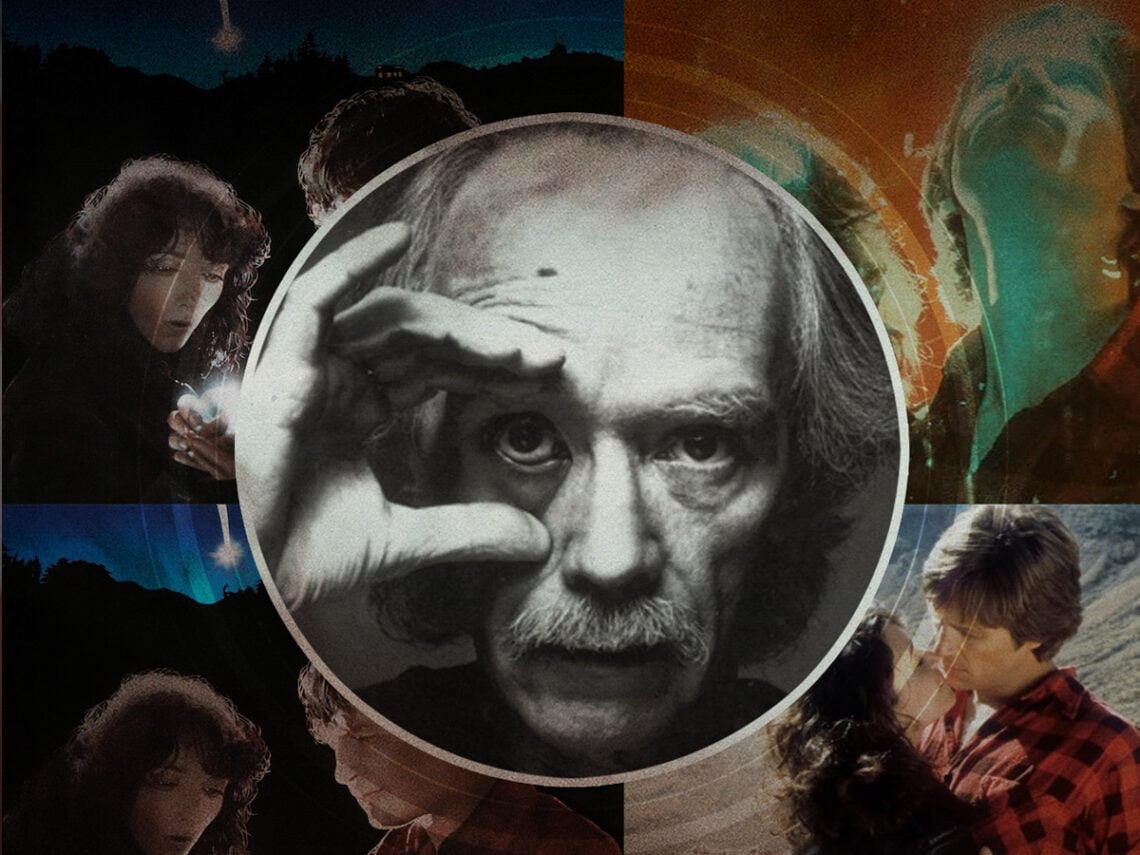
John Carpenter’s most underappreciated film is a sentimental road movie about an alien

Almost every director has their wildcard. David Lynch made The Straight Story, Wes Craven made Music of the Heart, and Francis Ford Coppola made Jack, unfortunately. John Carpenter is no different.
Although he made a name for himself in the 1970s and early ’80s with gritty exploitation movies like Assault on Precinct 13, Halloween, and Escape from New York, he took a detour in 1984 with the extraterrestrial romance, Starman.
By this point, Carpenter was well-versed in science fiction, but this film only uses the genre as a framework for exploring love, loss, and middle America. It begins when an alien spacecraft receives a message from an American space probe inviting them to come to Earth.
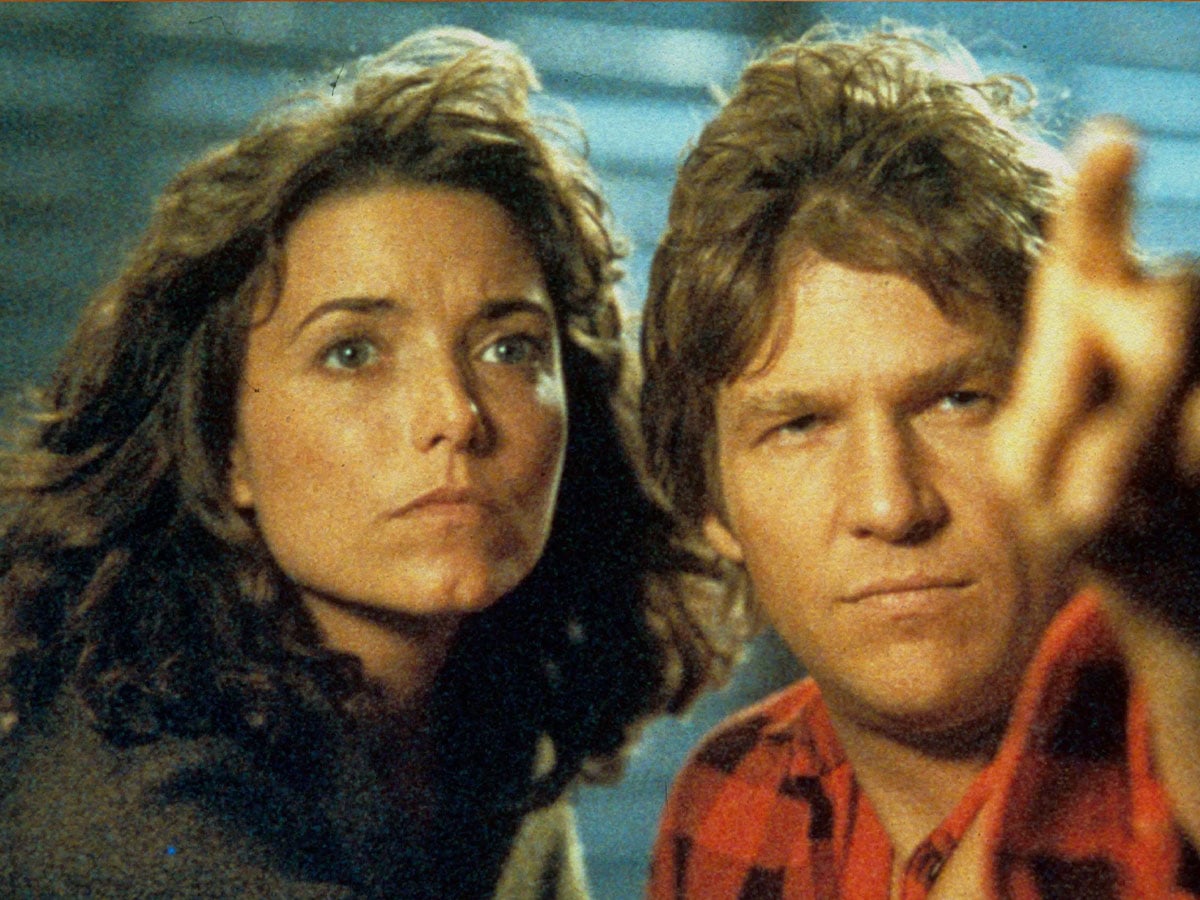
When they send a scout, however, the military shoots him down, and he crash-lands somewhere near the home of widow Jenny Hayden (Karen Allen) in rural Wisconsin. The alien takes the form of Jenny’s late husband Scott (Jeff Bridges), and convinces her to drive him across the country to Arizona, where he will rendezvous with a rescue ship and return home.
Jenny tries to escape at first, leaving signs in gas station bathrooms that she has been kidnapped, but eventually, as she learns more about Starman and he learns how to communicate in the human world, they develop a bond. There is an uncharacteristic sweetness and sentimentality in the story that Carpenter usually avoids as if his directorial credentials depended on it. That inclination likely saves the film. In the hands of Ron Howard or even Steven Spielberg, the childlike innocence of Starman and his budding romance with Jenny would almost certainly become mawkish. In Carpenter’s hands, it has a light thawing effect that avoids manipulation.
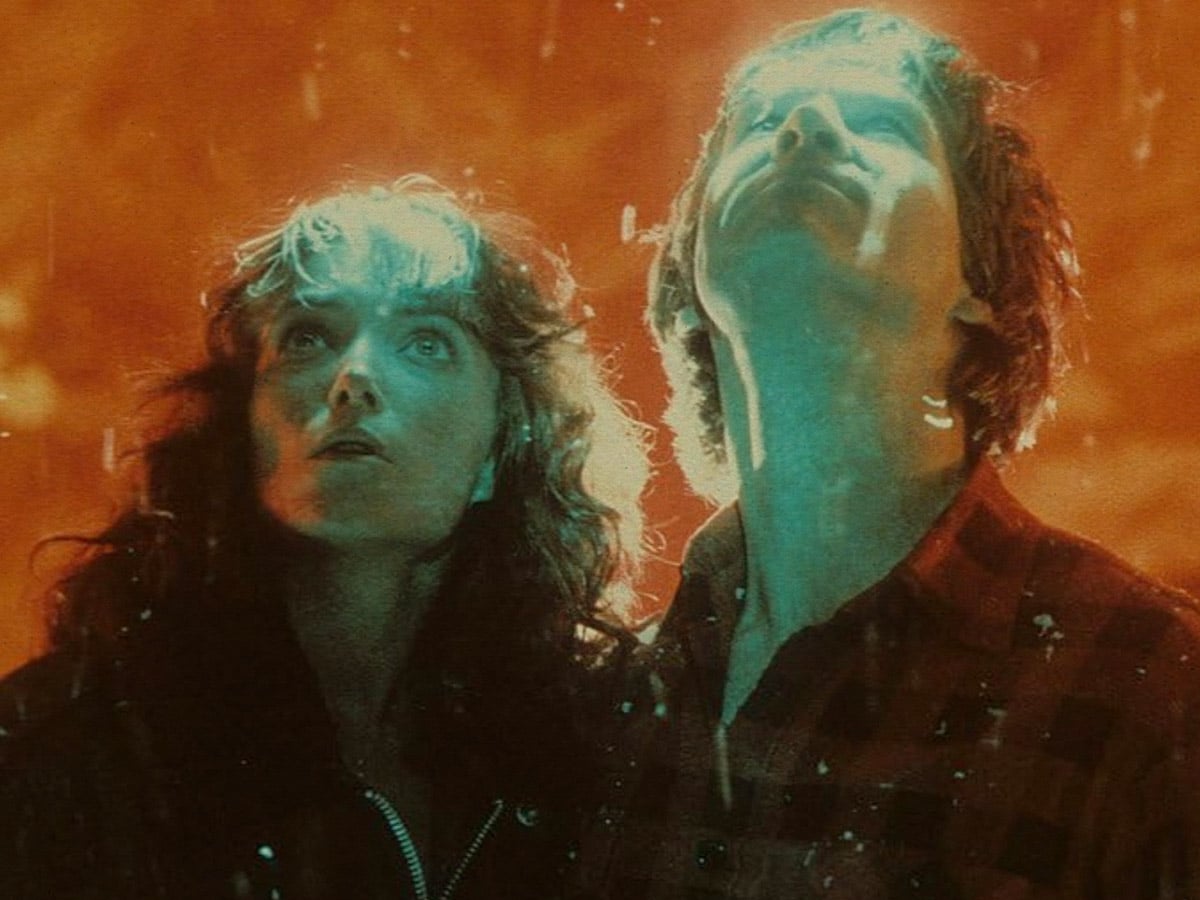
Despite being well outside his wheelhouse, the film represented a long-awaited opportunity for the Halloween director. “I just realised at some point that they were never going to let me do a romantic comedy,” he said. “I was just going to be in horror and stay there, which is fine. But I wanted to get my shot at it.”
The science fiction angle allowed him to get the job, but he made sure to downplay it in the script. He made the savvy decision to limit the special effects to the very beginning, when we see the spaceship, and the very end. Although they have aged poorly, they are so minimal that you barely notice. He also avoided having to devise the alien’s appearance by making him take the form of Jeff Bridges.
The actor earned an Oscar nomination for his performance, in which he plays a creature learning to navigate a human body. He learns to smile even though he doesn’t at first seem to understand the emotion it signifies. He discovers the sensation of hunger. He misinterprets hand gestures.
All of this is done with a childlike openness that finds some much-needed balance in Karen Allen’s flinty performance as Jenny. She buries her grief over her husband’s death under a layer of cynicism, and she isn’t charmed by her companion for much of the journey. It’s only when she starts to see the world through his eyes that she begins to change.
Carpenter compared the film to David Lean’s 1945 tearjerker Brief Encounter and Frank Capra’s classic 1934 romantic comedy It Happened One Night. Although Starman has some of the heartbreak and seriousness of the former, its DNA lies firmly in the latter.
In Capra’s film, Clark Gable plays a cynical reporter who agrees to help a runaway heiress (Claudette Colbert) evade her father, knowing that he has the scoop of the century. Colbert’s character has been so coddled throughout her life that she is helpless in the real world, and although she and her companion detest each other from the outset, they slowly discover that they are soulmates.
Starman follows a gender-swapped narrative in which the alien has all the helplessness of Colbert’s character, and Jenny has all the pessimism of Gable’s character. The screwball comedy is downplayed in favour of a quiet throughline of doomed romance, but the formula still holds up. Even for those who love Carpenter’s flair for gore, violence, and nihilism, the film has plenty to offer. It has just as much visual style, from the on-location cinematography of America’s open roads to damp city streets bathed in neon light. It also has that tactile quality that makes all of his films feel as if you could step into them, whether you want to or not.
When it was released, Starman earned largely positive reviews from critics but couldn’t seem to find its audience. Coming shortly after ET the Extra-Terrestrial, only a few months after The Terminator, and the same day as Dune, it’s possible that audiences had had their fill of messianic non-humans at the multiplex, and Carpenter’s fans probably weren’t expecting a Capra-esque tragicomedy.
Regardless of why the film failed to land with audiences in 1984, it deserves a re-evaluation now. At a time when cynicism is the default worldview and science fiction is either depressing, gory, or painfully tongue-in-cheek, this earnest little romance is exactly the type of palate cleanser we need. Luckily, it’s available to stream on Netflix.
It might not change your life, but it will help ease your existential dread for a couple of hours, and that is no small thing.
