


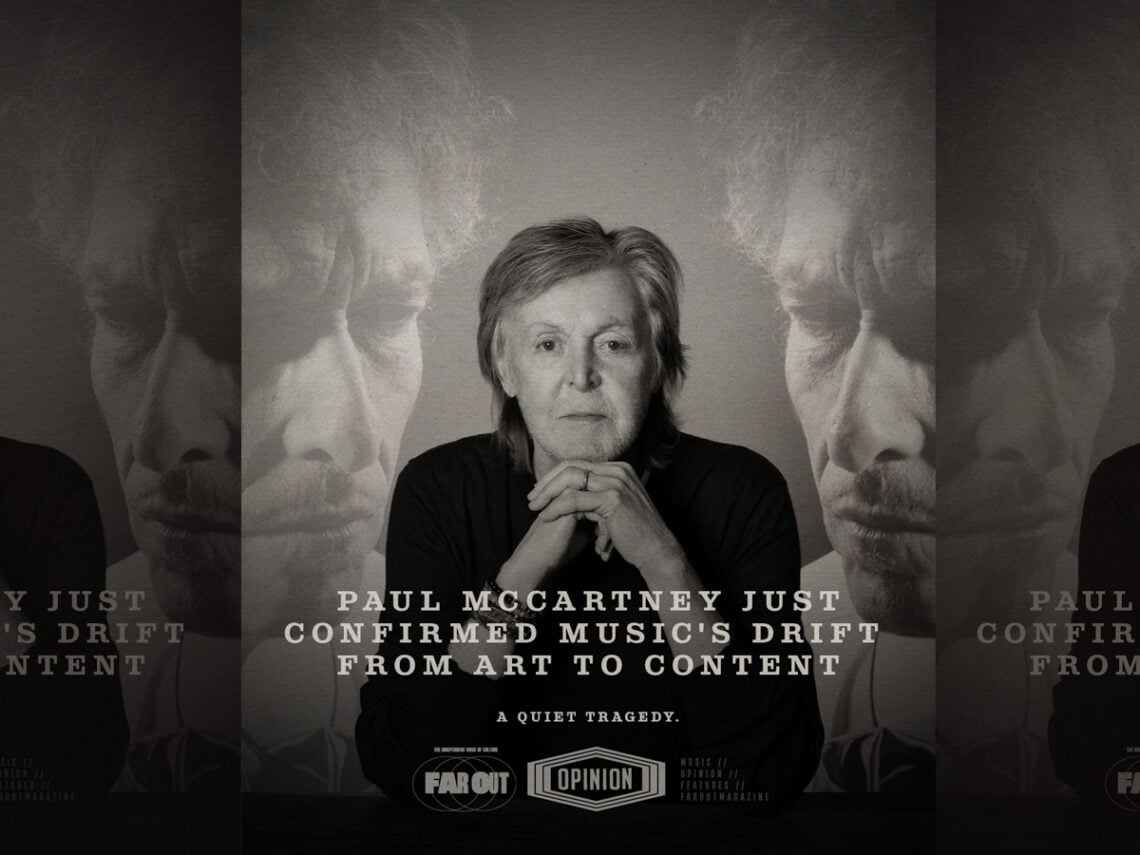
Paul McCartney just confirmed music’s drift from art to content

In a recent interview, Paul McCartney got talking about his old idol, Bob Dylan.
“I’ve been to see a couple of Bob’s shows and honestly, I couldn’t tell what song he was doing,” he told The Rest is Entertainment. “Now, that’s a bit much, because I know his stuff. And I get it if he doesn’t want to do ‘Mr. Tambourine Man’ – maybe he’s fed up with it. But I would like to hear it. And I paid.”
It’s a quote that encapsulates a quiet tragedy. The fact of the matter is, people don’t know what they want to hear. Or at least they didn’t in the 1960s, an era widely reflected on as the golden age of music and undoubtedly the creative apex of Paul McCartney’s own life.
Were people piling into the Cavern Club night after night because they knew what to expect from The Beatles? Did fans flock to make Sgt Pepper a global phenomenon, because they knew they were paying for more of the same-old from the Fab Four?
Art, at its best, has never played to the gallery. It has always thrived on inspiration and the vitality of unbridled creativity. The second that it starts to revert to type and becomes shackled by expectation is the moment that it becomes a defanged product rather than an important creative pursuit.
Dylan didn’t become the revolutionary hero that McCartney once hailed as his “inspiration” because he was freewheeling around Greenwich Village wondering what people wanted and what they would pay for. So, why do we want that from him now?

Literally, the singular seismic shift that launched Dylan, and pop culture as we know it in the process, was his decision to endeavour not to play the dusty folk songs everybody else was and offer something new. We don’t want that now. Or at least we think we don’t. And that feels like a despairing symptom of our product-obsession. In a world of four shrink-wrapped Granny Smiths for £1.90, we walk blindly by the orchard.

As I previously argued when a few grovelling concertgoers foreshadowed McCartney’s argument last summer, you wouldn’t go to see Liverpool vs Newcastle next season and ask the players to enact a play-by-play repeat of the 1996 classic 4-3. What would be the point? That’s been and gone.
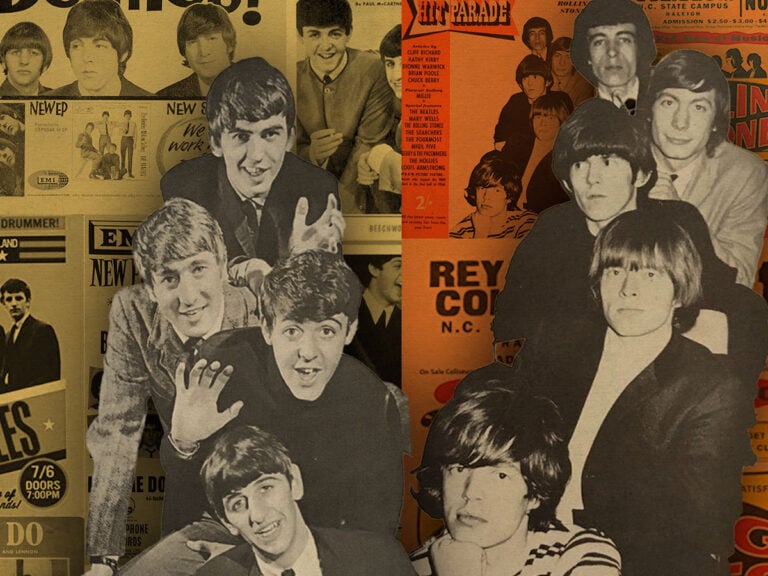
It felt tragic enough when so-called fans bemoaned Dylan’s continued F U to convention, but it’s particularly worrying when the same appraisal comes from a Beatle – a man whose band were renowned for their bold evolutions and nose-thumbing to the expectation of their own fans.
In fact, The Beatles changed the world doing that. But half a century and a co-opted counterculture shake-up later, change is on hold, and even the old radicals are after more of the same-old. We’re so used to being spoonfed ‘product’ rather than having our tastebuds tested by art unfurling in the moment, that even our most legendary artists now prefer choreographed commerce over live music.
I’m sure if you asked McCartney what he thought of Dylan going electric at the Newport Folk Festival, he would’ve hailed it as heroic in the ’60s, but six decades later, his protestation that Dylan shouldn’t play his own songs as he pleases positions him as someone proverbially yelling ‘Judas’, and through the lens of capitalist realism it is easy to see how even he got there.
That’s no small tragedy. Even psychologists have decreed that missing out on the novelty of newness is a damning misstep for humanity. After all, there’s a reason Dylan didn’t sing:
“Hey, Mr Tambourine Man, play this song for me,
Not Bob Dylan
Play it in drop D exactly like you did in 1963…”

Never Miss A Tale
The Far Out Bob Dylan Newsletter
All the latest stories about Bob Dylan from the independent voice of culture.
Straight to your inbox.