“This is not a Russian story. This is universal”: Olivier Assayas on the exhilarating challenge of bringing ‘The Wizard of the Kremlin’ to life

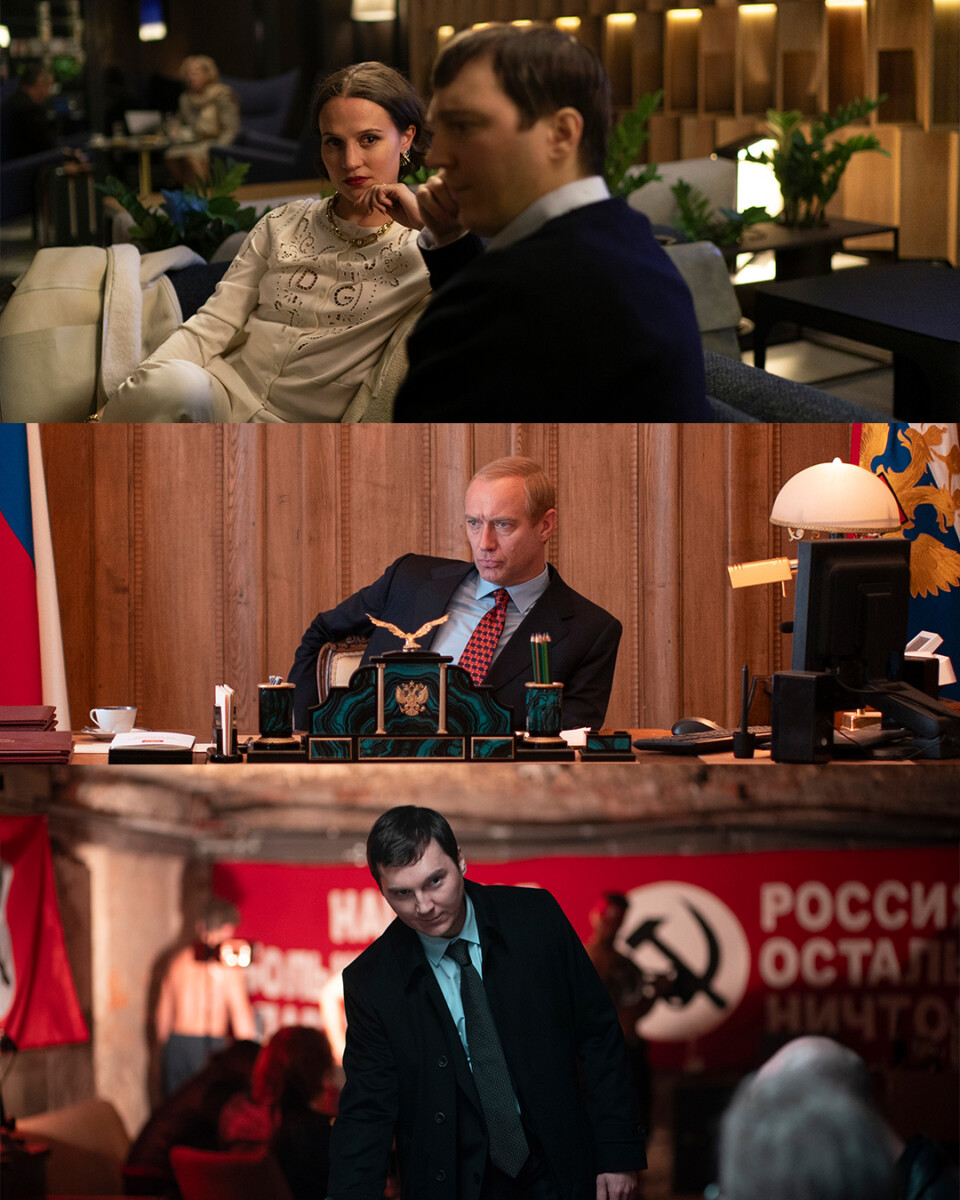
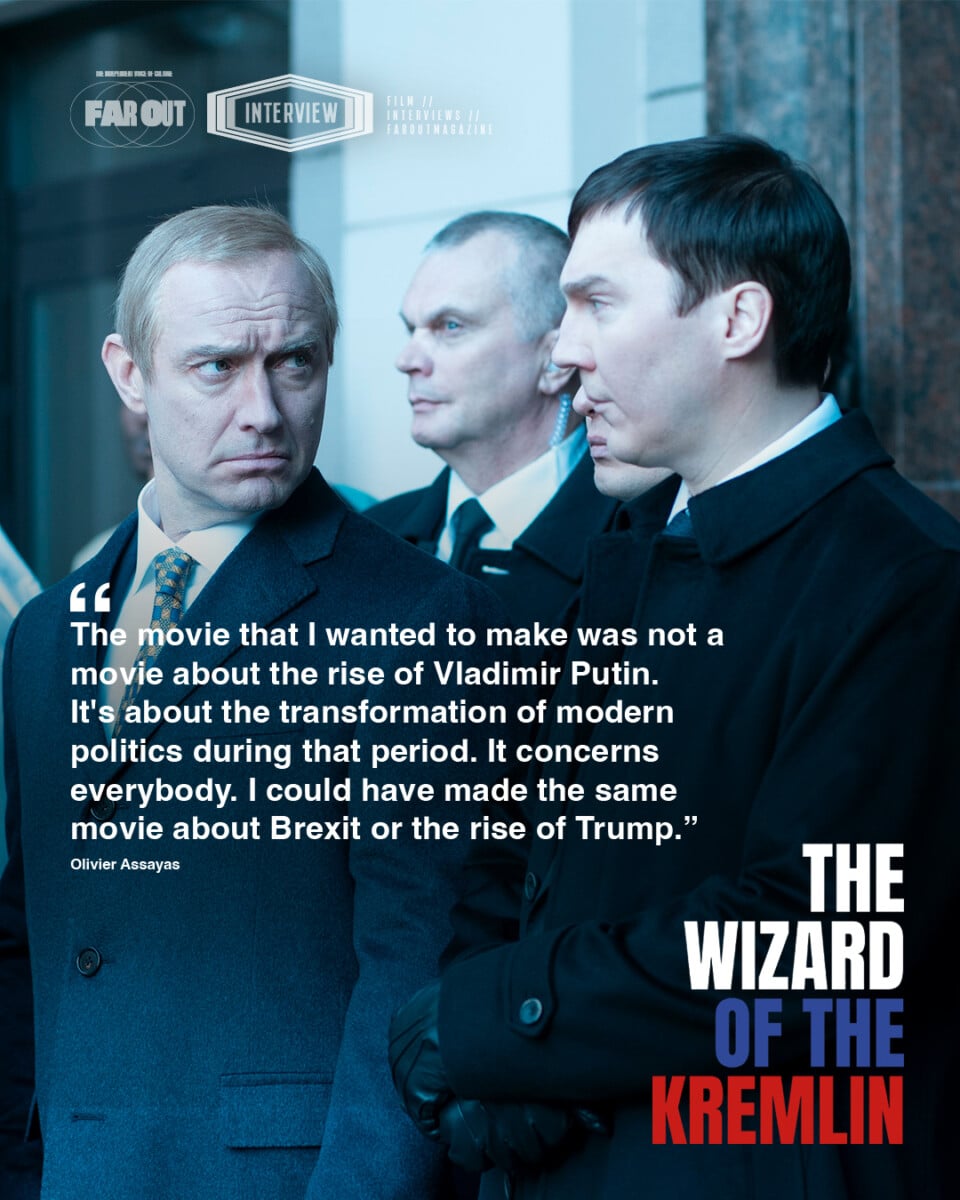
Taking on the responsibility of making a film that features Vladimir Putin’s rise to power was never going to be easy, but French filmmaker Olivier Assayas wasn’t afraid of the challenge. Recruiting Jude Law for the role, he positioned the story among a wider narrative about a fictional spin doctor played by Paul Dano, who similarly rises to power as the Soviet Union comes crashing down.
The resulting film, The Wizard of the Kremlin, is one of Assayas’ most ambitious, which is saying something considering past projects like the experimental Demonlover or the five-and-a-half-hour-long study of terrorist Ilich Ramírez Sánchez, Carlos. Assayas has never veered away from a project that brings real people to the big screen, though, as his bridging of fact and fiction is key to his cinematic approach.
While Putin isn’t the primary character in The Wizard of the Kremlin, his presence looms large even when he’s not onscreen, although he is uniquely depicted with a rather disorientating British accent courtesy of Law, who, with thinning slicked back hair, looks far-removed from his days as a Hollywood heartthrob in the likes of The Talented Mr Ripley and The Holiday.
For Assayas, making a project about a real-life political figure is something he enjoys the challenge of; he likes being able to make a piece of political commentary in real-time. Having made films about real people in the past, as was the case with Carlos and Wasp Network, Assayas told Far Out, “I’m fairly familiar with what you are allowed to do and what you are not allowed to do”.
In fact, it’s something that artists have done for centuries, indifferent to the potential threats that come with painting a portrait of someone so powerful, so “dangerous and nasty,” as Assayas describes Putin to me.
“I mean, I’m certainly not William Shakespeare, but you know, for the political movies I’ve been making, my inspiration has always been Shakespeare’s political and historical plays,” he explains. “He fictionalised the politicians of his time in many ways, and once in a while, I like to make a movie that embraces modern history in one way or another”.
And really, the film could be about any authoritarian political regime, not necessarily Russia. Basing the film on Giuliano da Empoli’s novel of the same name, Assayas was slightly shocked to discover that the writer actually had no experience in Russian politics, having only visited the country about three times in his life. He’d previously worked as an advisor for Italian Prime Minister Matteo Renzi, though, so Empoli brought an astute knowledge of the “inner workings of politics” to the novel.
“The inner workings of politics are not specific,” Assayas counters, “They’re global. They’re eternal. They never ultimately change. It’s always about how you manage to grab power and how to stick to it, and to keep it. What evolves are the techniques you use, and ultimately, what this movie is about is ‘what are the inner workings of modern politics?’”
To emphasise this point, and to ensure that this wasn’t simply a movie about Russia and about Putin, Assayas knew that using the English language and actors from across the globe, be it America, England, or Latvia, where the film was shot, would work best. “This is not a Russian story. This is universal,” he tells me.
“The movie that I wanted to make was not a movie about the rise of Vladimir Putin. It’s about the transformation of modern politics during that period”.
Olivier Assayas
“It concerns everybody. I could have made the same movie about Brexit or the rise of Trump. So I think English makes that point clear.”
To Assayas, “English is not just English, it’s also some kind of international lingo that allows people from various cultures to communicate.” Besides, there’s no way he’d have been able to film the movie in Russia with Russian actors, he admits, “It was never on the table, really”.
As a result of using a strange mix of accents, we get an unusual softly-spoken English lilt from Dano, yet thinly veiled in his voice is an unnerving quality, making for the sound of someone who should be more ashamed of themselves, but isn’t. Assayas believes that actors are “part of the creative process in major ways,” so he allowed Dano to conjure up that voice himself. “It was not what I would have imagined,” he admitted, “but I thought it was pretty brilliant”.
Clearly, then, Assayas rose to the challenges of such a dense political film with the resilience that only someone as experienced as he could possess, even when he couldn’t initially see himself making the movie. Empoli had sent him the novel “before it was out in the bookshops”, but he couldn’t help thinking that a potential film adaptation “spelt trouble”, despite enjoying the novel. He’d not long completed the mammoth undertaking that was Carlos, anyway; could he move straight into a film as thematically complex so soon?
But as these things often go, when a project is meant for you, it’ll find its way back. It wasn’t long before a discussion with his friend Emmanuel Carrère, whose mother is Russian, convinced him that there was real promise in making the movie. “I think that he was more confident than myself with the idea that there was a movie there,” he says, “But then it’s easy to be more confident, because he’s not the one who’s going to spend six months in Latvia!”
Once Assayas did some more research for himself, he and Carrère penned the screenplay together, taking Empoli’s story from the page to the silver screen. Carrère “knows much more than I do about post-Soviet Russian politics,” the director admits, “He made documentaries there, he wrote about the Soviet world”.
So, while Carrère brought this in-depth understanding of Russian politics to the screenplay, Assayas reckoned with that fine line that exists between reality and fiction, something that is vital to the film, with its fictional character at the centre of its otherwise overwhelmingly truthful narrative.
“It’s about not being hostage to the way fiction twists reality, and just trying to draw a line between what is invention and what is a way of cheating with actual reality, and what is your best shot at expressing the truth of the world you live in, and of whatever you are representing in your movie,” he says.
“You do your best to be as honest as you can, but at the same time, you are aware that this is fictionalised, it involves technique. It involves a camera. It involves a crew,” he explains, and the result is a film that uses fiction to bring justice to real life, because Assayas found the idea of a happy ending simply “unbearable”.
The Wizard of the Kremlin is a surprisingly funny film, but this humour floats alongside perpetual darkness, a harsh reminder that the world is run by criminals and corruption, and yet, sometimes, satire is the only way to make sense of it.